


Common Industrial Design Mistakes and Solutions
While industrial interior design is widely loved for its raw textures and open layouts, many homeowners encounter unexpected challenges after implementation. These industrial design mistakes often stem from overusing raw materials, poor lighting balance, or neglecting comfort in favor of aesthetics. In many modern urban homes and loft-style spaces, industrial design can feel too cold, too echo-heavy, or visually unbalanced if not planned carefully. Issues like cold industrial interiors, harsh lighting, and acoustics problems are especially common in large open layouts.
The key to solving these problems is understanding that industrial design is not just about exposed brick or metal finishes, it requires thoughtful balancing of texture, warmth, lighting, and spatial planning. This guide breaks down the most common interior design mistakes in industrial spaces and provides practical, homeowner-friendly solutions to make these environments more comfortable, functional, and visually balanced.
What Are Industrial Design Mistakes?
Industrial design mistakes occur when the core principles of industrial style are applied too heavily or without balance, leading to spaces that feel uncomfortable, unfinished, or impractical. While industrial interiors are meant to highlight raw materials and structural elements, overemphasis can quickly reduce livability. One of the most common issues is overusing hard surfaces like concrete, metal, and exposed brick without introducing softer textures. This often results in cold industrial interiors, especially in large loft-style homes where sound and warmth are already challenging to manage.
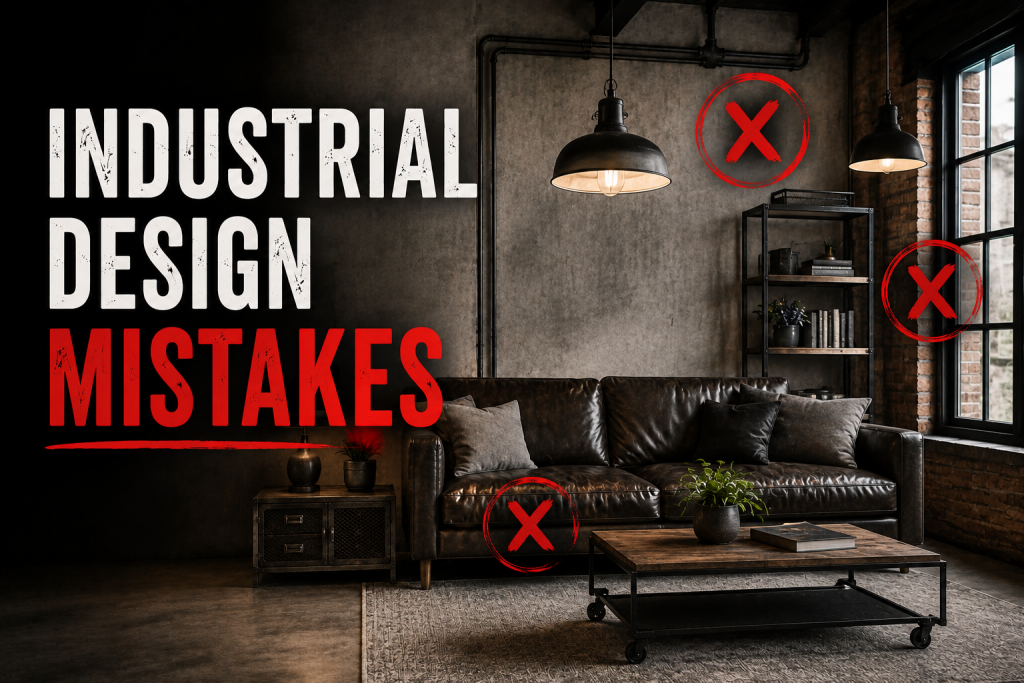
Another frequent mistake is ignoring scale and proportion in industrial home layouts. Oversized furniture or poorly planned open spaces can make rooms feel empty or disconnected rather than cohesive. Lighting and acoustics also play a major role. Without proper layering, industrial lighting problems and echo issues can make even well-designed spaces feel harsh. Understanding these mistakes is the first step toward creating a balanced and functional industrial home environment.
Mistake #1 – Cold Industrial Interiors
One of the most common industrial design mistakes is creating spaces that feel visually striking but emotionally холод or uninviting. These cold industrial interiors usually happen when homeowners rely too heavily on raw materials like concrete, steel, and exposed brick without balancing them with warmth or texture. In many modern urban homes, this issue appears in open layouts where large surfaces amplify the feeling of emptiness. While industrial design benefits from minimalism, too much restraint can make a space feel unfinished rather than intentionally designed. The solution lies in industrial home comfort ideas that introduce softness without compromising style. Adding layered textiles such as rugs, curtains, and upholstered furniture helps break up hard surfaces. Warm wood tones and ambient lighting also play a major role in softening the overall atmosphere. Even small adjustments, like incorporating fabric seating or warm-toned lighting, can significantly improve comfort while preserving the core industrial aesthetic.
Mistake #2 – Poor Industrial Lighting Problems
One of the most overlooked industrial design mistakes is poor lighting planning, which often leads to uneven brightness, harsh shadows, or overly dim spaces. These industrial lighting problems are especially common in loft-style homes where high ceilings and open layouts require layered illumination rather than a single light source. A frequent issue is relying too heavily on exposed bulb fixtures or basic pendant lights without balancing them with ambient and task lighting. While these fixtures are visually appealing, they are not always sufficient for full-room functionality in modern urban homes. To fix this, homeowners should adopt a layered lighting approach. Combining overhead fixtures with wall sconces, floor lamps, and under-cabinet lighting helps distribute light evenly across industrial home layouts. Warm LED bulbs also reduce the harshness often associated with industrial aesthetics. Proper lighting balance not only improves visibility but also enhances comfort, making industrial spaces feel more livable and visually cohesive.
Mistake #3 – Ignoring Loft Acoustics Issues
A major but often overlooked industrial design mistake is ignoring sound control, which leads to loft acoustics issues in open-plan spaces. Because industrial home layouts typically feature hard surfaces like concrete floors, exposed brick, and metal finishes, sound easily bounces around the room, creating echo and noise amplification. This problem is especially noticeable in modern urban homes and loft-style homes, where large, open areas lack traditional walls that would normally absorb sound. As a result, conversations can feel loud, TV audio may distort, and the overall space can feel acoustically uncomfortable. To solve this, homeowners need to introduce soft, sound-absorbing elements without losing the industrial aesthetic. Area rugs, heavy curtains, upholstered furniture, and fabric wall panels can significantly reduce echo while maintaining design integrity. Strategic placement of bookshelves and layered decor also helps break up sound reflection. Addressing acoustics is essential for turning visually appealing industrial spaces into comfortable, livable homes.
Mistake #4 – Overusing Metal and Concrete
Another frequent industrial design mistake is overusing hard materials like metal and concrete without balancing them with softer or warmer elements. While these materials are core to industrial home layouts, too much of them can quickly create an uninviting and visually heavy environment. In many modern urban homes, this issue appears when homeowners fully commit to raw finishes but forget to introduce contrast. Excessive concrete flooring, steel furniture, and exposed structural elements can make a space feel cold and overly rigid instead of intentionally designed. To fix this, industrial decor balancing tips focus on introducing warmth through natural textures. Reclaimed wood, upholstered seating, and layered textiles help soften the overall look while maintaining the industrial identity. Even small additions like wooden shelving or fabric-based decor can make a noticeable difference. The goal is not to remove industrial materials, but to balance them so the space feels both authentic and livable.
Mistake #5 – Lack of Industrial Decor Balancing Tips
One of the more subtle industrial design mistakes is failing to properly balance décor elements, which can make a space feel either too empty or overly harsh. Without thoughtful industrial decor balancing tips, homeowners often end up with rooms that lack cohesion or warmth. In many modern urban homes, industrial design is applied too minimally, leaving large open spaces feeling unfinished. On the other hand, over-decorating with too many industrial accents, such as excessive metal fixtures, signage, or exposed shelving, can create visual clutter that overwhelms the space.
The solution is intentional layering. A successful industrial interior should combine structural elements with softer, grounding features. Mixing materials like reclaimed wood, textiles, and greenery helps break up hard surfaces while maintaining the industrial identity. This approach is especially effective in industrial home layouts where openness can otherwise feel stark. Effective balancing ensures that industrial spaces remain visually interesting, functional, and comfortable for everyday living.
Mistake #6 – Poor Layout in Open Spaces
A critical industrial design mistake in many homes is poor space planning within open layouts. While industrial home layouts are designed to feel open and flexible, they can easily become disorganized or disconnected if furniture and zones are not carefully defined. In modern urban homes, this issue often appears when large rooms lack clear functional areas. Without proper zoning, living, dining, and workspaces can blend together in a way that feels chaotic rather than cohesive. This reduces the effectiveness of open-concept interior design, which relies on structure within openness. The solution is strategic zoning using furniture placement, rugs, and lighting. For example, a sofa can define a living area, while a pendant light can establish a dining zone. This helps maintain flow while still giving each area a distinct purpose. When done correctly, layout planning transforms open industrial spaces into organized, functional, and visually balanced environments.
Industrial Home Comfort Ideas That Fix Everything
Many industrial design mistakes ultimately come down to one issue: prioritizing aesthetics over comfort. While industrial interiors are visually striking, they can feel harsh or uninviting without thoughtful adjustments. That’s where practical industrial home comfort ideas become essential. One of the most effective solutions is layering warmth into industrial home layouts. This includes adding soft textiles like rugs, throw blankets, and upholstered seating to counterbalance hard surfaces such as concrete and metal. These elements immediately improve comfort without disrupting the industrial identity.
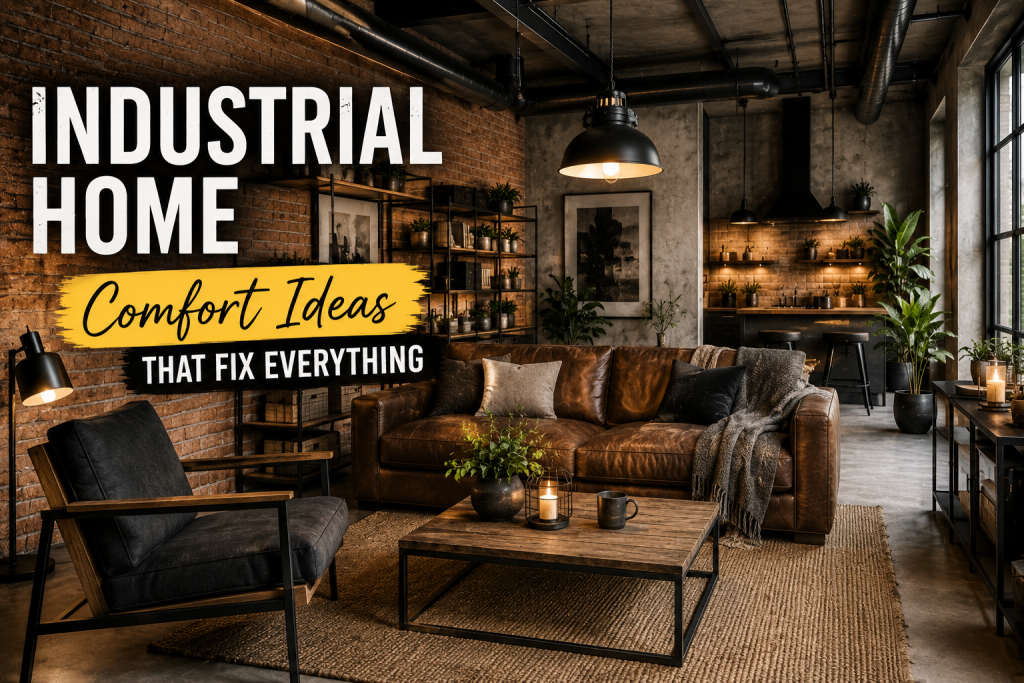
Lighting also plays a major role. Switching to warm-toned bulbs and adding ambient lighting sources helps reduce the harshness often found in modern urban homes with industrial styling. This softens shadows and creates a more welcoming atmosphere. Even small additions like indoor plants, wood accents, and fabric curtains can significantly improve livability. The goal is to maintain the raw industrial aesthetic while ensuring the space feels comfortable for everyday use.
Industrial Decor Troubleshooting Checklist
When addressing industrial design mistakes, having a simple industrial decor troubleshooting checklist can help homeowners quickly identify and fix common issues in their space. Many problems in industrial home layouts are not caused by the style itself, but by missing balance between materials, lighting, and comfort. Start by evaluating comfort. If the space feels too cold or empty, you are likely dealing with cold industrial interiors. This can be corrected by adding layered textiles, warm lighting, and natural materials like wood or fabric. Next, assess lighting quality. If rooms feel dim, uneven, or overly harsh, you may be experiencing industrial lighting problems. Layering ambient, task, and accent lighting will improve visibility and atmosphere. Finally, check acoustics and layout flow. If echo or cluttered zoning is present, address loft acoustics issues and improve spatial definition using rugs, furniture placement, and soft furnishings. This structured approach ensures industrial spaces remain functional, balanced, and livable.
Conclusion
Avoiding industrial design mistakes is key to creating homes that are both stylish and livable. While industrial interiors are known for their raw, architectural beauty, they require balance to prevent issues like poor acoustics, harsh lighting, and overly cold spaces. By applying thoughtful industrial home comfort ideas and proper industrial decor troubleshooting, homeowners can transform industrial spaces into warm, functional, and visually cohesive environments.
FAQ About Industrial Design Mistakes
What are the most common industrial design mistakes?
The most common industrial design mistakes include overusing metal and concrete, poor lighting balance, ignoring acoustics, and creating overly cold industrial interiors without warmth or texture.
Why do industrial interiors feel cold?
They feel cold when hard surfaces dominate the space without soft materials. Adding textiles and warm lighting helps fix cold industrial interiors effectively.
How do I fix industrial lighting problems?
Most industrial lighting problems can be solved by layering lighting, combining ambient, task, and accent lighting instead of relying on a single fixture.
What causes loft acoustics issues?
Loft acoustics issues are caused by open layouts with hard surfaces that reflect sound. Rugs, curtains, and upholstered furniture help absorb noise.
How do I balance industrial decor properly?
Use industrial decor balancing tips like mixing raw materials with softer elements such as wood, fabric, and plants.