

Common Japandi Design Mistakes and How to Avoid Them
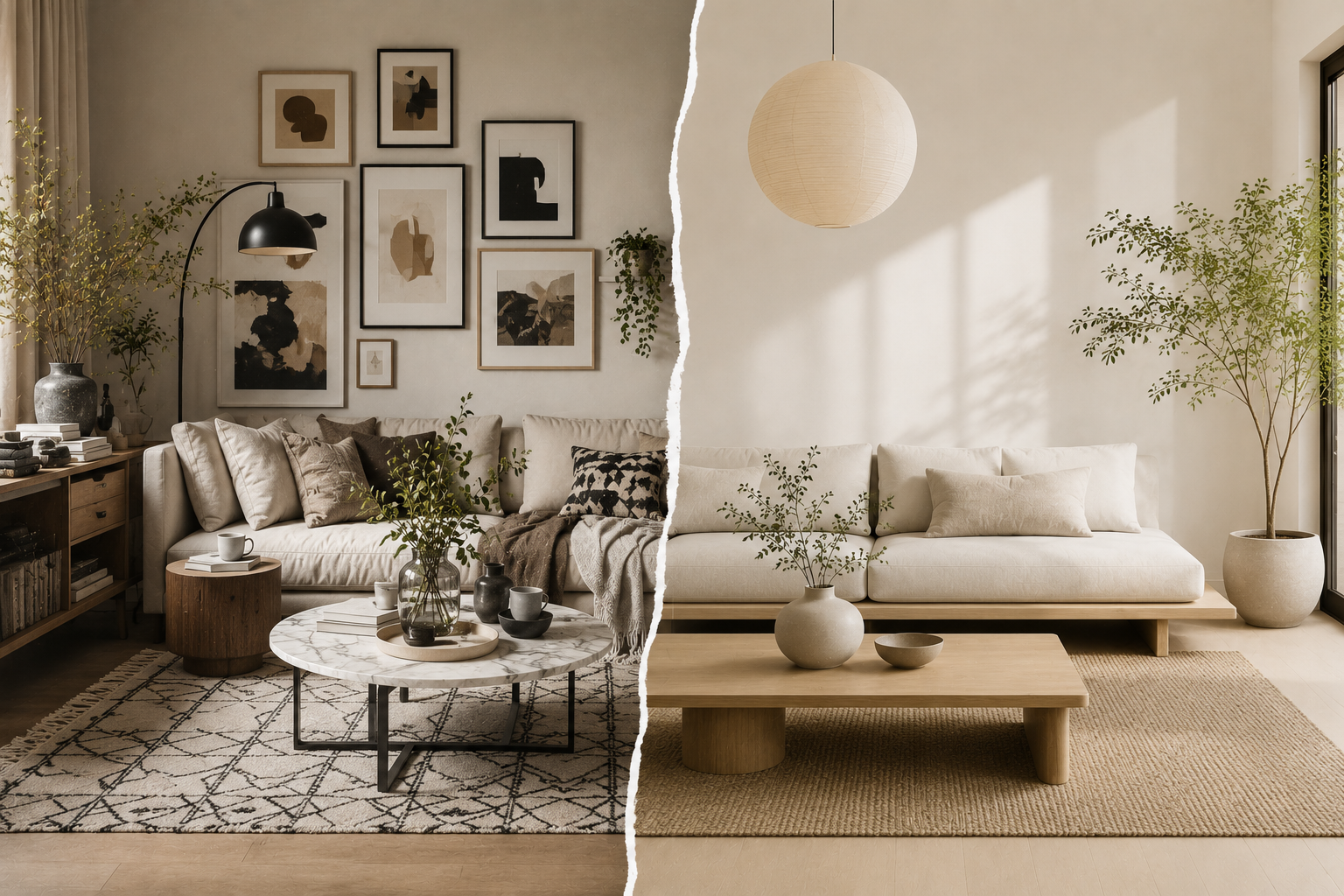
Understanding Japandi design mistakes is essential for anyone trying to create a calm, balanced, and intentional interior. While Japandi style appears simple on the surface, many homeowners unintentionally misapply its principles, leading to spaces that feel either too empty, too cluttered, or visually inconsistent. The most common Japandi design problems usually happen when people focus only on aesthetics instead of the underlying principles of simplicity, function, and natural harmony. n Without this foundation, even well-designed rooms can lose the calm, grounded feeling that defines Japandi interiors. In this guide, we’ll break down the most frequent Japandi design, explain why they happen, and show you exactly how to avoid them so your home stays cohesive, functional, and visually balanced.
What Are Japandi Design Mistakes?
Japandi design mistakes refer to common errors homeowners make when trying to achieve the Japandi aesthetic but unintentionally break its core principles. Instead of creating a calm and balanced space, these mistakes often lead to interiors that feel either too empty, too cluttered, or visually disconnected. Most Japandi design problems happen when people misunderstand the balance between minimalism and warmth. Japandi style is not just about removing items; it’s about choosing the right elements that support harmony, functionality, and natural flow.
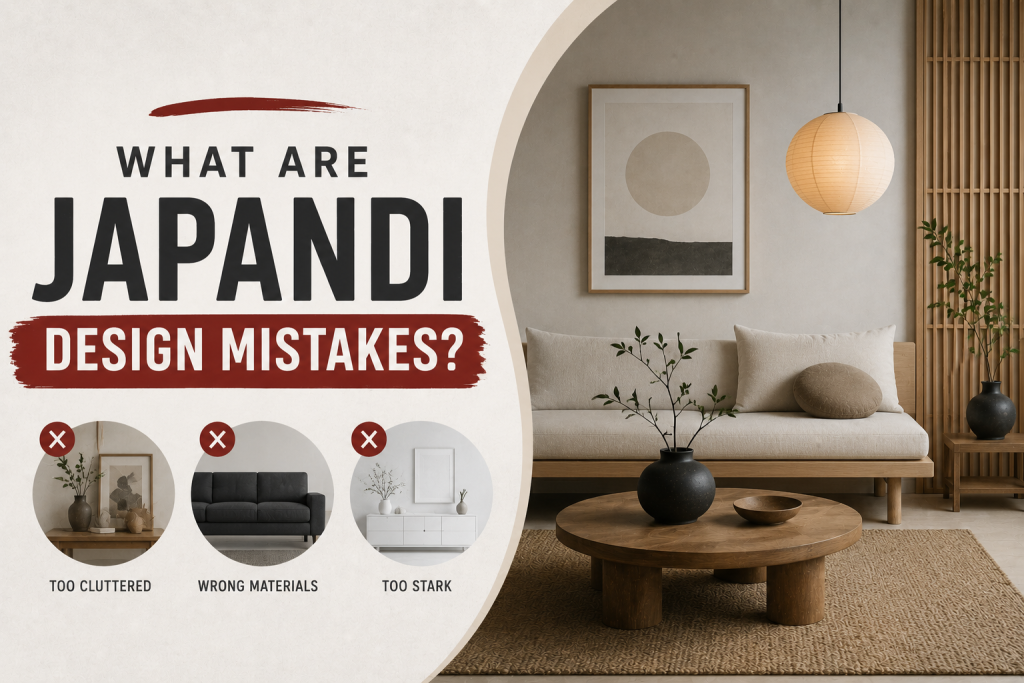
When this balance is ignored, the space can quickly lose its intended calming effect. These issues are often seen in furniture selection, color coordination, and layout planning. Understanding Japandi design mistakes is the first step toward correcting them and creating a home that truly reflects the simplicity and intentionality the style is known for.
Mistake #1: Overdecorating Spaces
One of the most common Japandi design mistakes is overdecorating, which directly conflicts with the style’s core principle of simplicity. Many homeowners try to enhance their space by adding too many decorative objects, but this often leads to visual clutter and disrupts the calm atmosphere Japandi design is known for. A key issue behind this is misunderstanding minimalist decorating mistakes, where decoration is added for style rather than purpose. In Japandi interiors, every item should serve a function or contribute meaningfully to the overall balance of the room. When surfaces are overcrowded with accessories, plants, or mixed decor styles, the space loses its sense of openness and intentional design. The solution is to embrace restraint, allowing negative space to become part of the aesthetic rather than filling every corner. This helps maintain the calm, structured feel essential to Japandi living.
Mistake #2: Wrong Color Balance
Another frequent issue among Japandi design mistakes is using an unbalanced or overly complex color palette. Japandi interiors rely heavily on harmony, so introducing too many contrasting tones can quickly disrupt the calm, unified feel of the space. Instead of creating a soothing environment, the room may start to feel visually chaotic. A common example is poor use of Japandi decor errors, where homeowners mix bright accent colors with muted earth tones without a clear visual structure. This breaks the subtle flow that defines Japandi style and reduces the sense of cohesion. To avoid this, it’s important to stick to a restrained palette of neutrals and soft natural shades. Consistency in color across furniture, walls, and decor helps maintain balance and supports the overall minimalist philosophy. When done correctly, the space feels calm, intentional, and visually connected.
Mistake #3: Oversized Furniture
One of the more practical Japandi design mistakes is choosing furniture that is too large for the space. Japandi interiors depend on balance, proportion, and openness, so oversized sofas, bulky cabinets, or heavy dining sets can quickly overwhelm a room and disrupt its calm structure. This issue is often linked to ignoring the principles of clutter-free interior design, where every piece should support both function and spatial harmony. When furniture dominates the room, it reduces negative space and makes the layout feel crowded rather than intentional. To avoid this, it’s important to prioritize low-profile, well-scaled furniture that fits the room’s dimensions. Choosing lighter visual forms and open-leg designs helps maintain airflow and visual balance. Proper sizing ensures the space remains open, calm, and aligned with Japandi principles.
Mistake #4: Ignoring Functionality
A major Japandi design mistake occurs when homeowners prioritize appearance over usability. Japandi interiors are not just about looking minimal; they are built around practical living. When furniture or decor lacks purpose, the space may look styled but quickly becomes inconvenient in daily use. This problem often appears in homes that overlook Scandinavian Japanese decor tips, where functionality and comfort are meant to work together with visual simplicity. Without this balance, rooms may feel incomplete or impractical, even if they appear aesthetically pleasing at first glance. To fix this, every item in the space should serve a clear function, whether it’s storage, seating, or subtle decoration. Multi-purpose furniture and thoughtful layout planning help ensure the home remains both beautiful and livable. This restores balance and keeps the Japandi style true to its purpose-driven foundation.
Mistake #5: Mixing Too Many Styles
One of the more subtle Japandi design mistakes is combining too many conflicting interior styles within the same space. Japandi design relies on consistency, so introducing unrelated aesthetics, such as industrial, bohemian, or overly modern accents, can break the visual harmony and make the room feel disjointed. This issue often appears alongside neutral palette mistakes, where homeowners try to blend multiple design directions without maintaining a unified color and material language. The result is a space that lacks cohesion and feels visually scattered rather than calm and intentional. To avoid this, it’s important to commit to a clear design direction and maintain consistency across furniture, textures, and finishes. Sticking to Japandi principles ensures that every element supports the overall aesthetic, keeping the space balanced, unified, and true to its minimalist foundation.
How to Fix Japandi Design Mistakes
Correcting Japandi design mistakes requires a step-by-step approach focused on simplifying, balancing, and refining your space. The first step is to remove unnecessary items that contribute to visual clutter and disrupt the calm foundation of the room. This immediately restores a sense of openness and order. Next, reassess your furniture and layout to ensure everything serves a clear purpose and fits the scale of the space. Adjusting proportions often resolves many common design issues without requiring major changes.
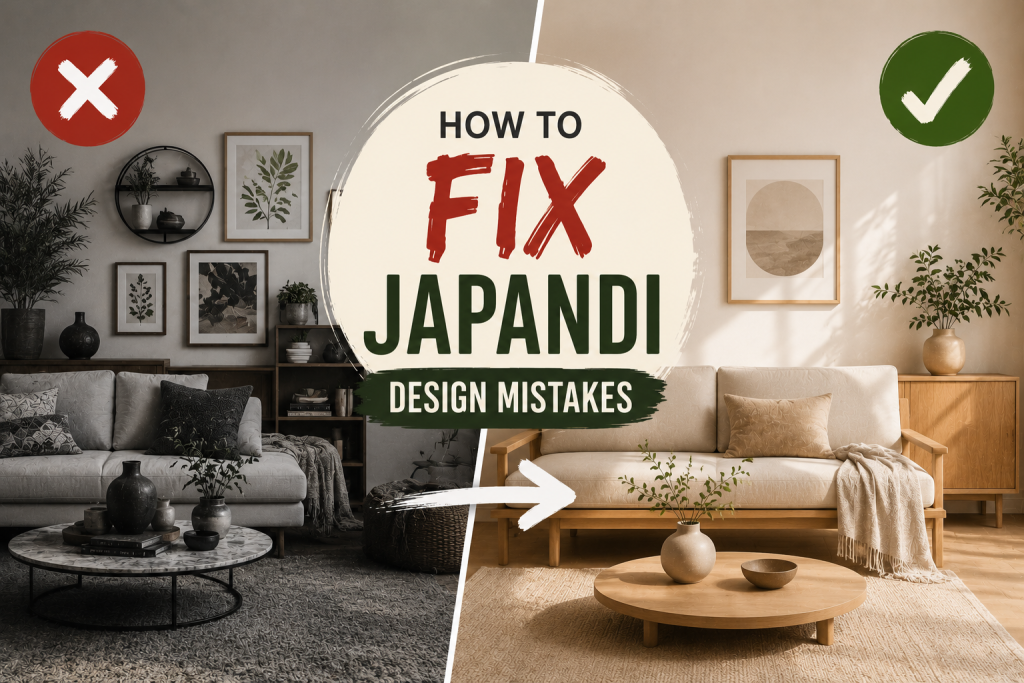
This is especially important when working with warm minimalist interiors, where comfort and simplicity must exist in balance. Finally, unify your color palette and materials to create consistency across the entire space. When these adjustments are made together, the result is a more intentional and cohesive environment that aligns with true Japandi principles and eliminates most styling errors.
Prevention Checklist for Homeowners
Avoiding Japandi design mistakes becomes much easier when you follow a clear prevention checklist during the planning and styling process. Start by ensuring every item in your space has a defined purpose, whether functional or aesthetic, to prevent unnecessary clutter from building up over time. Next, maintain consistency in materials and colors across all rooms. This helps preserve visual harmony and prevents disjointed design choices that can weaken the overall Japandi look. Be mindful of furniture scale as well, ensuring pieces are proportionate to the room size to keep the layout open and balanced. Another key step is regularly reassessing your space to avoid interior styling mistakes that can accumulate as new items are added. By staying intentional with each design decision, homeowners can maintain a calm, organized, and cohesive environment that aligns with Japandi principles long-term.
Final Thoughts
Avoiding Japandi design mistakes ultimately comes down to understanding that this style is built on intention, balance, and restraint. When these principles are overlooked, even well-decorated spaces can lose the calm and cohesive feel that defines Japandi interiors. By focusing on simplicity, functional layouts, and consistent materials, homeowners can prevent most Japandi design problems before they happen. The key is to design with purpose rather than decoration, ensuring every element contributes to harmony rather than visual noise. In the end, mastering Japandi design mistakes is less about strict rules and more about developing awareness of how space, proportion, and simplicity work together. When applied correctly, Japandi design creates homes that feel structured, peaceful, and naturally balanced for everyday living.
Frequently Asked Questions
What are common Japandi design mistakes?
Common mistakes include overdecorating, poor color balance, oversized furniture, and lack of functionality.
Why does Japandi design look cluttered sometimes?
It usually happens when too many decorative items are added or styles are mixed incorrectly.
How do I fix Japandi decor errors?
Focus on simplicity, remove unnecessary items, and use consistent natural materials and colors.
Can I mix Japandi with other styles?
Yes, but it should be done carefully to maintain balance and avoid visual confusion.
What colors should I avoid in Japandi design?
Avoid overly bright or saturated colors that disrupt the neutral and calming palette.