


Cost to Paint a 2,000 Sq Ft House Interior: Labor, Materials and Budget Tips
The cost to paint 2000 sq ft house interior varies widely in the United States, but most homeowners can expect a range based on materials, labor, and surface conditions. A home of this size typically falls into the mid-range category for whole house painting price, making it one of the most commonly estimated project sizes. Pricing is usually calculated using paint price by square footage, which takes into account wall surface area, not just floor size. A 2,000 sq ft home often includes multiple bedrooms, living areas, hallways, and ceilings, all of which increase total coverage requirements. Another key factor is labor price for painting, which often represents the largest portion of the total budget. Professional painters include preparation, priming, cutting in, rolling, and cleanup in their estimates.
Homes with textured walls, high ceilings, or detailed trim work will naturally fall on the higher end of interior repaint costing. Material selection also affects cost. Premium paints from brands like Sherwin-Williams or Benjamin Moore may increase upfront expenses but often reduce the number of coats required, improving efficiency. Overall, interior painting evaluates for a 2,000 sq ft home depend heavily on condition, layout complexity, and finish quality expectations.
Cost to paint 2000 sq ft house interior by Square Footage
When estimating the cost to paint 2000 sq ft house interior, one of the most common methods used in interior painting evaluates is pricing by square footage. However, it’s important to understand that this is based on wall surface area, not the home’s floor plan alone. In most professional average painting prices calculations, contractors measure total paintable surface area, which includes walls, ceilings, trim, and sometimes closets. A 2,000 sq ft home can easily translate into significantly more square footage of actual painting surface due to multiple rooms and vertical wall space. The paint price by square footage model typically includes both materials and labor. Materials cover paint, primer, rollers, tape, and preparation supplies, while labor includes surface prep, application, and finishing work.
This combined approach helps standardize whole house painting cost estimates across different home layouts. Ceiling height also plays a major role in pricing. Homes with 9-foot or vaulted ceilings require more paint and additional labor time, which increases the overall home painting finance. Similarly, open-concept layouts may reduce some labor efficiency but increase wall exposure. Ultimately, square footage pricing provides a baseline, but true cost depends on complexity, finish quality, and surface conditions.
Labor price for painting a Full Home
When breaking down the cost to paint 2000 sq ft house interior, one of the largest components is labor price for painting, which often accounts for 60–75% of the total project budget in professional estimates. This makes labor the single most important factor in understanding real-world pricing. Labor includes far more than just applying paint. A professional crew handles surface preparation, patching small wall defects, sanding uneven areas, applying primer, cutting in edges, rolling full walls, and completing final touch-ups. Each of these steps adds time and directly impacts interior repaint pricing. The complexity of the home significantly affects labor requirements. Houses with multiple floors, tight hallways, textured walls, or detailed trim work require more precision and time. These features increase interior painting evaluates, even if the square footage remains the same.
Room layout also matters. Open-concept spaces may reduce some setup time, while segmented homes with many smaller rooms increase cutting-in work and transitions between areas. This variation influences overall whole house painting price. Regional labor rates across the US also play a major role. Urban areas typically have higher hourly rates compared to suburban or rural locations, which is why average painting prices can vary widely even for identical home sizes. In most cases, labor is not just execution; it is the foundation of quality, consistency, and durability in a full-home interior paint job.
Whole House Painting Price Breakdown
Understanding the cost to paint 2000 sq ft house interior becomes much clearer when you break the project into a full whole house painting price structure. Instead of looking at one lump sum, professionals divide pricing into materials, labor, prep work, and finish details. Materials typically include paint, primer, tape, rollers, brushes, and protective coverings. For most 2,000 sq ft homes, material costs remain a smaller portion of the total home painting finance, but they still vary based on paint quality and brand selection. Premium options from Sherwin-Williams and Benjamin Moore can increase upfront costs but often reduce the number of coats needed. Labor remains the largest cost category. This includes wall preparation, priming, cutting in edges, rolling, and cleanup. The more detailed the home, such as trim work, ceilings, or textured walls, the higher the labor price for painting becomes within the total estimate.
Prep work is another major contributor. Homes that require patching, sanding, or repainting dark colors into lighter shades will see increased interior repaint costing due to additional time and materials. Finally, finish expectations also influence pricing. Higher-end finishes or multi-color designs increase complexity and directly affect interior painting evaluates, especially in larger homes where consistency across rooms is critical. Overall, breaking the project into components gives homeowners a realistic view of how average painting prices are actually structured.
Interior Repaint Costing Factors in 2026
When evaluating the cost to paint 2000 sq ft house interior, it’s important to understand that interior repaint costing in 2026 is influenced by more than just square footage. Several structural, material, and labor-related factors can significantly shift the final estimate. One of the biggest pricing drivers is the existing condition of the walls. Homes that require heavy prep work, such as patching cracks, repairing drywall damage, or covering dark colors, will increase both labor time and material usage. This directly raises labor costs for painting and overall project expense. Another key factor is paint quality and selection. Premium products from brands like Sherwin-Williams or Benjamin Moore often cost more upfront, but they can reduce the number of coats required and improve durability, which affects long-term home painting finance planning.
Home layout complexity also plays a major role. Features such as vaulted ceilings, stairwells, open-concept spaces, and detailed trim work increase difficulty and extend project timelines. These elements are commonly reflected in higher interior painting evaluates. Regional labor rates across the United States continue to impact pricing in 2026 as well. Urban markets typically see higher contractor rates compared to suburban or rural areas, contributing to variation in average painting prices for identical home sizes. Ultimately, repaint pricing is a combination of condition, materials, design complexity, and location, not just square footage alone.
Interior Painting evaluated by Room Type
When breaking down the cost to paint 2000 sq ft house interior, it becomes easier to understand pricing by looking at interior painting evaluates on a room-by-room basis. Different spaces require different levels of labor, preparation, and material usage, which directly affects the overall home painting finance. Bedrooms are typically the most affordable rooms to paint. They usually have simpler layouts, fewer fixtures, and less surface area compared to larger living spaces. This keeps both material usage and labor costs for painting relatively low, making them a common starting point in a full-home project. Living rooms, on the other hand, tend to have higher costs due to larger wall spans, higher ceilings, and additional design features like accent walls or built-ins. These factors increase both time and complexity, which raises the whole house painting price contribution from this space.
Kitchens and bathrooms often fall into a moderate-to-high cost range. These rooms require more prep due to moisture exposure, cabinetry edges, and tighter working spaces. This increases both preparation time and interior repaint costing. Hallways and staircases can also add unexpected costs due to their awkward geometry and limited access, even though they may seem small in size. These areas often require extra care during application, affecting the final average painting prices. By evaluating each room individually, homeowners can better predict total project cost and avoid surprises in their overall estimate.
Home Painting Finance Planning Guide
Creating a realistic home painting finance is one of the most important steps when evaluating the cost to paint 2000 sq ft house interior. Without a structured budget plan, homeowners often underestimate total expenses, especially when labor, prep work, and finish quality are not fully accounted for. A strong budgeting approach starts with separating the project into core cost categories: materials, labor price for painting, and surface preparation. Materials include paint, primer, tools, and protective supplies, while labor typically represents the largest portion of the whole house painting price in professional projects. Next, homeowners should factor in room-by-room variability. As seen in interior painting evaluates, bedrooms tend to be more affordable, while living rooms, kitchens, and staircases can significantly increase total costs due to complexity and time requirements. This helps avoid relying on a single flat estimate that may not reflect real conditions.
It’s also important to plan for upgrades or unexpected needs. Repairs such as drywall patching, stain blocking, or switching from dark to light interior repaint costing can add to the final bill if not included upfront. Finally, selecting paint quality affects long-term budgeting. Premium paints from Sherwin-Williams or Benjamin Moore may cost more initially, but they often reduce maintenance and repaint frequency, balancing the overall average painting costs over time. A well-planned budget ensures smoother execution, fewer surprises, and more control over the entire renovation process.
How to Reduce the Cost to Paint 2000 Sq Ft House Interior?
Reducing the cost to paint 2000 sq ft house interior is possible without sacrificing finish quality if you focus on preparation, smart material choices, and efficient planning. Most savings come from reducing unnecessary labor costs for painting, which is the biggest expense in most projects.
Cost to paint 2000 sq ft house interior: Handle Basic Prep Work Yourself
One of the easiest ways to lower interior repaint costing is by completing simple preparation tasks before professionals arrive. Cleaning walls, moving furniture, and patching small nail holes can reduce billable labor hours while keeping quality high.
Choose a Simple Color Strategy
Using fewer colors across the home helps streamline the project. A consistent palette reduces complexity, speeds up application, and lowers the overall whole house painting price by minimizing cutting-in and color change time.
Buy Paint Efficiently
Purchasing the correct amount of paint upfront prevents waste and repeat store trips. Using high-quality products from Sherwin-Williams or Benjamin Moore can also reduce the number of coats needed, improving efficiency and lowering long-term average painting prices.
Schedule the Project Strategically
Coordinating rooms in a logical order helps painters work more efficiently. Avoiding downtime between rooms and reducing setup repetition can significantly improve labor efficiency in interior painting evaluates.
Compare Multiple Contractor Quotes
Getting multiple estimates helps ensure fair pricing. Contractors may structure home painting finance proposals differently, so comparing scope, not just price, is essential for making the best financial decision.
DIY vs Professional Painting Cost for 2,000 Sq Ft Homes
When evaluating the cost to paint 2000 sq ft house interior, one of the biggest financial decisions is whether to choose DIY interior painting or hire professionals. The difference goes beyond price; it also affects time, quality, and long-term durability. DIY painting significantly reduces labor costs, which are usually the largest portion of a whole-house painting cost. Homeowners only pay for materials such as paint, primer, tape, rollers, and basic tools. However, for a 2,000 sq ft home, material costs alone can still add up, especially when using premium paints from Sherwin-Williams or Benjamin Moore.
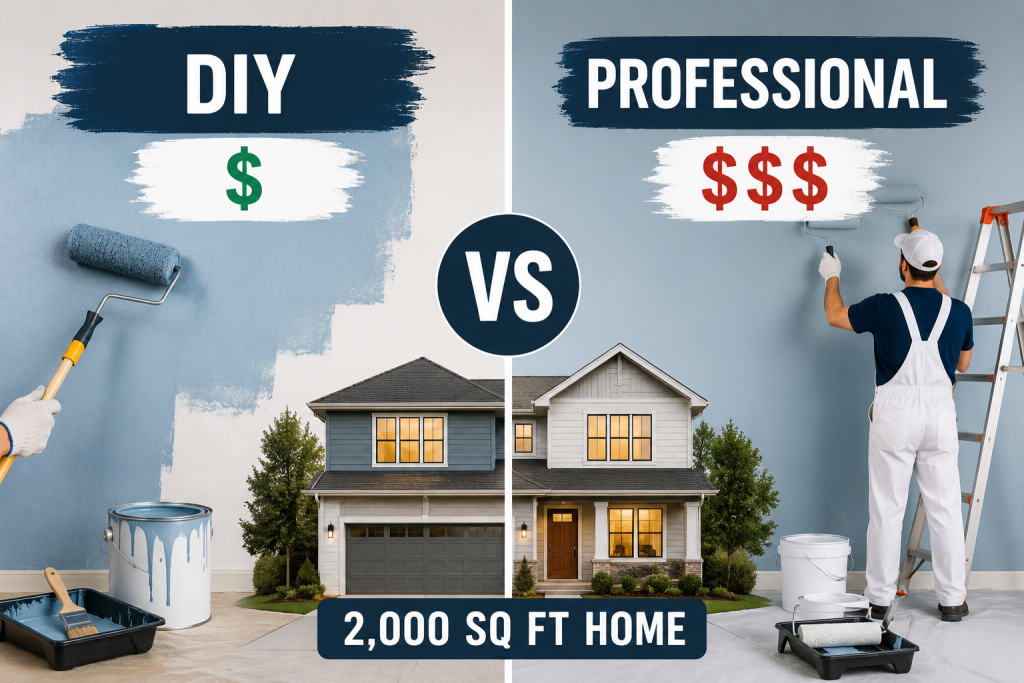
The trade-off is time and complexity. A full interior repaint requires extensive preparation, multiple coats, careful cutting in, and consistent rolling across large surfaces. Without experience, this can extend the project over several weekends and increase the risk of mistakes that raise overall interior repaint costing. Professional painters, on the other hand, include labor, expertise, and efficiency in their interior painting estimates. They complete projects faster, handle surface issues correctly, and ensure consistent results across all rooms. While upfront costs are higher, the finish quality and time savings often justify the investment. Ultimately, the decision depends on whether the homeowner prioritizes budget control or professional-grade results and efficiency for a full-home project.
Common Cost Mistakes
When planning the cost to paint 2000 sq ft house interior, many homeowners underestimate how small decisions can significantly impact the final budget. These mistakes often lead to higher interior-repaint costs, delays, or unexpected changes during the project.
- One of the most common mistakes is underestimating preparation needs. Skipping wall repairs, cleaning, or priming may seem like a cost-saving step, but it often increases labor cost for painting later because painters must fix issues before applying paint. Poor prep also leads to uneven finishes that may require additional coats.
- Another frequent issue is inaccurate material estimation. Buying too little paint or selecting the wrong finish can lead to multiple store trips or inconsistent coverage, which affects the overall home painting budget. This is especially true in larger homes where paint cost by square footage is easy to miscalculate.
- Choosing low-quality paint to reduce upfront expenses is another mistake. While cheaper products may lower short-term costs, they often require more coats and shorter repaint cycles, increasing long-term average painting prices.
- Poor scheduling and lack of room planning can also raise the whole house painting price.
- Painting rooms in a disorganized sequence slows down workflow and increases labor inefficiency.
Avoiding these mistakes helps ensure more accurate interior painting evaluates and a smoother, more predictable painting project overall.
Final Thoughts
Breaking down the cost to paint 2000 sq ft house interior shows that there is no single fixed price, only a combination of variables that shape the outcome. From labor and materials to prep work and layout complexity, every detail contributes to the total whole house painting price. The most important takeaway is that preparation and planning drive accuracy. When homeowners understand how interior painting evaluates are built, it becomes easier to control expectations and avoid surprises during the project. Factors like surface condition, ceiling height, and design complexity all directly influence the final interior repaint costing. Material choices also play a long-term role. Premium paints from Sherwin-Williams and Benjamin Moore may increase upfront costs, but they often improve coverage, durability, and reduce future repaint frequency, helping balance overall average painting prices over time. For most homeowners, the biggest decision comes down to balancing DIY interior painting with professional services. While DIY reduces immediate labor costs for painting, professional work delivers speed, consistency, and reduced risk of costly mistakes. Ultimately, a well-planned approach to budgeting, preparation, and execution ensures a smoother project, better finish quality, and a more predictable home painting experience overall.
Frequently Asked Questions
What is the average cost to paint 2000 sq ft house interior?
The cost to paint 2000 sq ft house interior typically varies based on location, condition, and paint quality. Most estimates include both materials and labor costs for painting, which is the largest portion of the total budget.
How is whole house painting price calculated?
The whole house painting price is usually calculated using square footage, wall condition, ceiling height, and number of coats required. Contractors also include prep work and finishing details in their pricing.
What affects interior repaint costing the most?
The biggest factors in interior repaint costing are surface preparation needs, paint quality, layout complexity, and regional labor rates. Homes requiring repairs or multiple colors will cost more.
How much does labor price for painting a full home?
Labor price for painting depends on project size and complexity. It includes prep work, painting, and cleanup, and often makes up the majority of interior painting evaluates.
Can DIY interior painting reduce overall cost?
Yes, DIY interior painting can significantly reduce labor expenses, but homeowners still pay for materials and tools. However, mistakes can increase the total average painting prices if additional work is needed.