


Common Living Room Design Mistakes Homeowners Make
A well-designed living room should be comfortable, functional, and visually appealing. However, even homeowners with decorating intentions can make choices that negatively affect the appearance and usability of the space. Many common living room design errors involve furniture placement, lighting, room layout, and décor decisions that unintentionally make a room feel crowded, unbalanced, or less inviting.
Because the living room is often one of the most frequently used spaces in a home, design errors can impact both everyday comfort and overall home appeal. Small issues such as poor traffic flow, oversized furniture, or inadequate lighting can make a significant difference in how the room functions. This guide explores the most common living room design mistakes, explains why they occur, and provides practical solutions to help homeowners create a more attractive and functional living space.
Why Living Room Design Mistakes Matter?
Many homeowners focus on furniture, paint colors, and décor without fully considering how those elements work together. As a result, seemingly minor living room design errors can have a major impact on comfort, functionality, and overall appearance. A room that looks attractive in photos may still feel awkward or difficult to use if key design principles are overlooked.
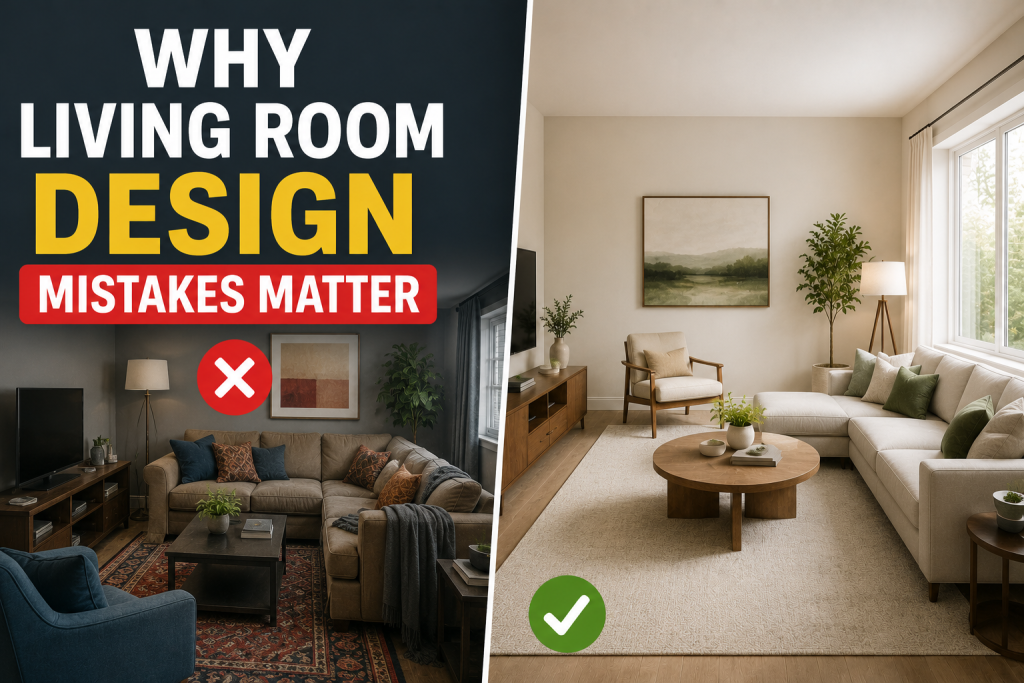
Poor furniture placement can restrict movement throughout the room, while inadequate lighting may make the space feel dark and uninviting. Similarly, incorrect furniture sizing can disrupt visual balance and make a room feel either overcrowded or empty. These issues not only affect everyday living but can also influence how guests and potential buyers perceive the home. Avoiding common living room design mistakes helps create a space that feels more welcoming, practical, and visually cohesive while supporting better long-term enjoyment of the home.
Most Common Living Room Design Mistakes
Many homeowners unknowingly make design choices that reduce comfort, functionality, and visual appeal. Understanding the most common living room design mistakes can help prevent costly decorating errors and improve performance.
Ignoring a Focal Point
Every successful living room should have a clear focal point, such as a fireplace, television, large window, or statement piece of artwork. Without one, the room may feel disconnected and lack visual direction.
Choosing Oversized Furniture
One of the most common oversized furniture problems occurs when large sofas, sectionals, or tables overwhelm the room and restrict movement. Furniture should always be scaled appropriately for the available space.
Poor Furniture Placement
Improper furniture positioning can disrupt traffic flow and make conversation difficult. Many homeowners place furniture against every wall, which often creates an unbalanced layout.
Insufficient Lighting
Relying on a single ceiling fixture can leave parts of the room dark and uninviting. Layered lighting generally provides a more comfortable and functional environment.
Too Much Clutter
Excessive décor, furniture, and accessories can make a living room feel crowded and visually overwhelming. Strategic editing often improves both appearance and functionality.
Furniture Placement Errors That Hurt Functionality
Among the most common living room design mistakes, poor furniture positioning often has the greatest impact on how a room functions. Even high-quality furniture can make a space feel uncomfortable if it is arranged without considering traffic flow, conversation areas, and everyday use. Many furniture placement mistakes occur when seating is pushed too far apart, making conversation difficult and reducing the sense of connection within the room.
Another common issue is blocking natural pathways with coffee tables, chairs, or oversized furniture, which can make the space feel awkward. Placing all furniture against the walls is another frequently overlooked mistake. While homeowners often do this to create more open floor space, it can actually make a room feel disconnected and less inviting. Thoughtful furniture placement should support both functionality and comfort while helping define clear zones for relaxing, entertaining, and everyday living.
Poor Living Room Layouts Homeowners Should Avoid
Certain layouts can make a living room feel cramped, uncomfortable, or difficult to use regardless of the room’s size. Some of the most problematic bad living room layouts are the result of poor planning, oversized furniture, or a failure to establish a clear focal point. One common layout mistake is arranging furniture in a way that blocks natural traffic flow. When people must walk around large furniture pieces or navigate narrow pathways, the room becomes less functional.
Another issue is creating excessive distance between seating areas, which can make conversations feel awkward and disconnected. Rooms that focus solely on a television while ignoring other activities may also feel unbalanced. The most effective layouts support multiple functions, including entertaining, relaxing, and family gatherings. Avoiding these common layout issues can help homeowners create a space that feels more open, practical, and welcoming while reducing overall living room design mistakes.
Bad Lighting Design and Its Impact
Lighting is one of the most overlooked aspects of interior design, yet it plays a critical role in how a living room looks and functions. Many living room design mistakes stem from inadequate or poorly planned lighting that fails to support the room’s intended purpose. A common example of poor lighting design is relying exclusively on a single overhead fixture. While ceiling lights provide general illumination, they often create shadows and leave certain areas feeling dark or uninviting.
Living rooms typically benefit from multiple light sources, including table lamps, floor lamps, wall sconces, and natural light. Lighting also affects mood, comfort, and visual balance. Insufficient lighting can make colors appear dull and reduce the room’s overall appeal. By layering different types of lighting and ensuring adequate illumination throughout the space, homeowners can create a more welcoming, functional, and visually attractive living room.
Decorating Errors to Avoid for Better Results
Decorating a living room involves balancing style, comfort, and functionality. While personal preferences are important, avoiding common design errors can help create a more cohesive and inviting space.
Living Room Design Mistakes Related to Décor
Many homeowners purchase decorative items without considering how they work together. Mismatched styles, excessive accessories, and inconsistent color schemes can create visual clutter and reduce the room’s overall appeal.
Using Too Many Decorative Accessories
Artwork, throw pillows, and decorative accents should complement the room rather than overwhelm it. Too many accessories can make the space feel crowded and distract from key design features.
Ignoring Scale and Proportion
Furniture, rugs, and décor should be appropriately sized for the room. Poor proportions often contribute to visual imbalance and make the space feel less comfortable.
Following Trends Without a Plan
Design trends can inspire, but relying solely on short-term styles may lead to a room that feels outdated quickly. A balanced approach typically delivers more lasting results. By avoiding these decorating mistakes to avoid, homeowners can create a living room that feels more organized, functional, and visually appealing.
How Professional Designers Avoid Common Room Problems?
Professional designers rarely rely on furniture or décor alone to create a successful living room. Instead, they focus on planning, functionality, and visual balance before making design decisions. This approach helps minimize many of the living room design mistakes that homeowners commonly encounter. A designer will typically evaluate room dimensions, traffic flow, focal points, natural lighting, and furniture scale before selecting a layout.
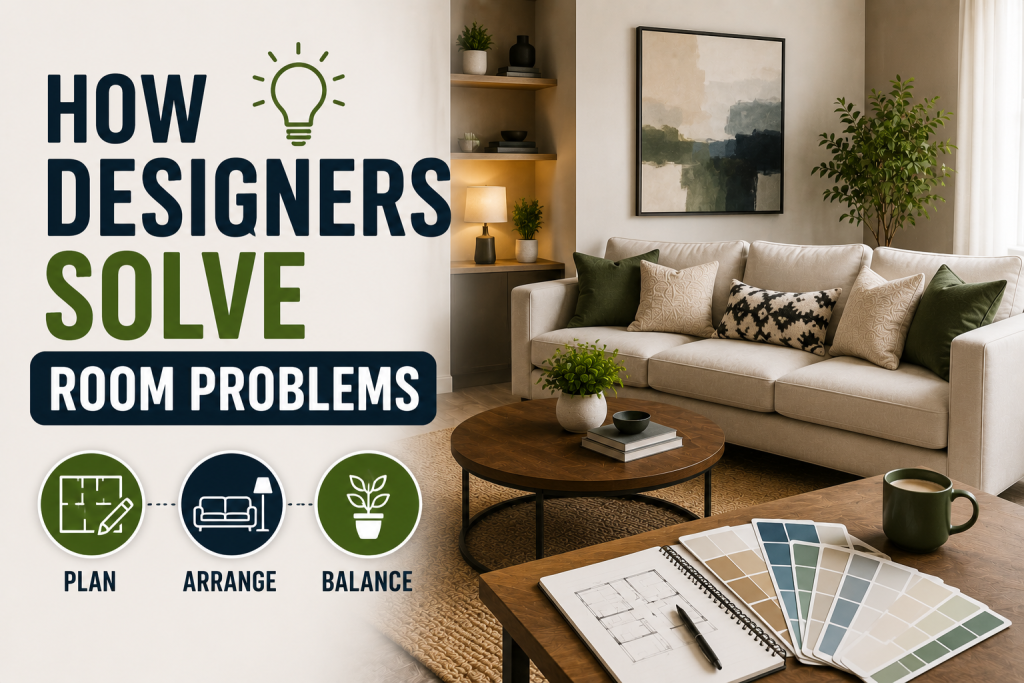
They also consider how the room will be used on a daily basis, ensuring that seating arrangements support both comfort and functionality. Careful attention is given to lighting layers, color coordination, and storage solutions to prevent clutter and improve usability. By prioritizing planning and purpose, professional designers create living rooms that feel cohesive, comfortable, and visually appealing while avoiding many of the issues that negatively impact everyday living.
How to Fix Awkward Room Setups?
Not every living room has a perfect shape or layout. However, many awkward room arrangements can be improved with thoughtful planning and strategic furniture placement. Addressing these challenges can significantly reduce common living room design mistakes and improve overall functionality. One effective solution is to establish a clear focal point, such as a fireplace, television, or large window. Arranging furniture around this feature helps create visual structure and purpose.
In rooms with unusual dimensions, dividing the space into smaller functional zones can also improve usability. Furniture scale is another important consideration. Replacing oversized pieces with appropriately sized alternatives often improves traffic flow and creates a more balanced appearance. Area rugs, lighting, and accent furniture can also help define specific areas while making the room feel more cohesive. With the right adjustments, even challenging layouts can become comfortable, practical, and visually appealing living spaces.
Conclusion
Avoiding common living room design mistakes can dramatically improve the comfort, appearance, and functionality of your home. Issues such as poor furniture placement, inadequate lighting, clutter, and ineffective layouts often prevent a living room from reaching its full potential. Fortunately, many of these problems can be corrected with thoughtful planning and simple design adjustments. By focusing on proper scale, traffic flow, lighting layers, and purposeful furniture arrangements, homeowners can create a space that feels both inviting and practical. Whether you’re updating an existing room or designing a new one, understanding these common mistakes can help you make more informed decorating decisions and achieve better long-term results.
Frequently Asked Questions
What are the most common living room design mistakes?
Common living room design mistakes include poor furniture placement, inadequate lighting, oversized furniture, excessive clutter, and layouts that restrict traffic flow.
How can furniture placement errors affect a living room?
Furniture placement errors can make a room feel crowded, reduce functionality, block walkways, and create uncomfortable seating arrangements.
What are examples of poor living room layouts?
Some poor living room layouts include furniture arrangements that block natural pathways, place seating too far apart, or fail to establish a clear focal point.
Why is bad lighting design a problem?
Bad lighting design can make a living room feel dark, uninviting, and less functional. Layered lighting often creates a more comfortable and visually appealing environment.
How can homeowners avoid interior design problems?
To avoid common interior design errors, homeowners should focus on proper furniture scale, balanced layouts, adequate lighting, and décor choices that support both functionality and visual harmony.