


Carpet vs Vinyl Basements Flooring (What Actually Works Best)
Choosing between carpet vs vinyl basement flooring is one of the most important decisions homeowners face when finishing or remodeling a basement. Unlike above-ground rooms, basements are exposed to unique challenges such as moisture, humidity, and temperature fluctuations, which directly affect flooring performance and lifespan. Because of these conditions, not all flooring materials perform equally well below grade. Carpet offers softness and warmth, making it attractive for comfort-focused spaces, while vinyl provides stronger resistance to moisture and long-term durability. This makes the basement flooring comparison less about style alone and more about how each material performs in real basement environments.
Homeowners often weigh comfort against practicality when deciding on basement remodel flooring, especially in family rooms, entertainment spaces, or rental units. Understanding how each option handles moisture, maintenance, and daily use is essential before making an investment. This guide breaks down carpet and vinyl flooring in detail so you can confidently choose the best option for your basement space.
Pros and Cons Of Carpet in Basements
Carpet remains a popular choice for homeowners considering basement carpet ideas, mainly because it delivers warmth, softness, and a comfortable feel underfoot. In finished basements used as family rooms, bedrooms, or play areas, carpet can make the space feel more inviting and similar to the main levels of the home. One of the biggest advantages of carpet is comfort. It helps insulate the basement, making it feel warmer in colder US climates, and it also reduces noise, which is useful for entertainment spaces or multi-level households. Carpet is also widely available in different textures, colors, and padding options, allowing for flexible design choices.
However, carpet has notable drawbacks in basement environments. Moisture is the biggest concern. Even minor humidity or slab moisture can lead to mold, odors, or deterioration over time. This is especially important in areas without strong waterproofing or ventilation systems. While carpet can work in well-sealed and dry basements, it generally requires more caution and maintenance compared to moisture-resistant alternatives.
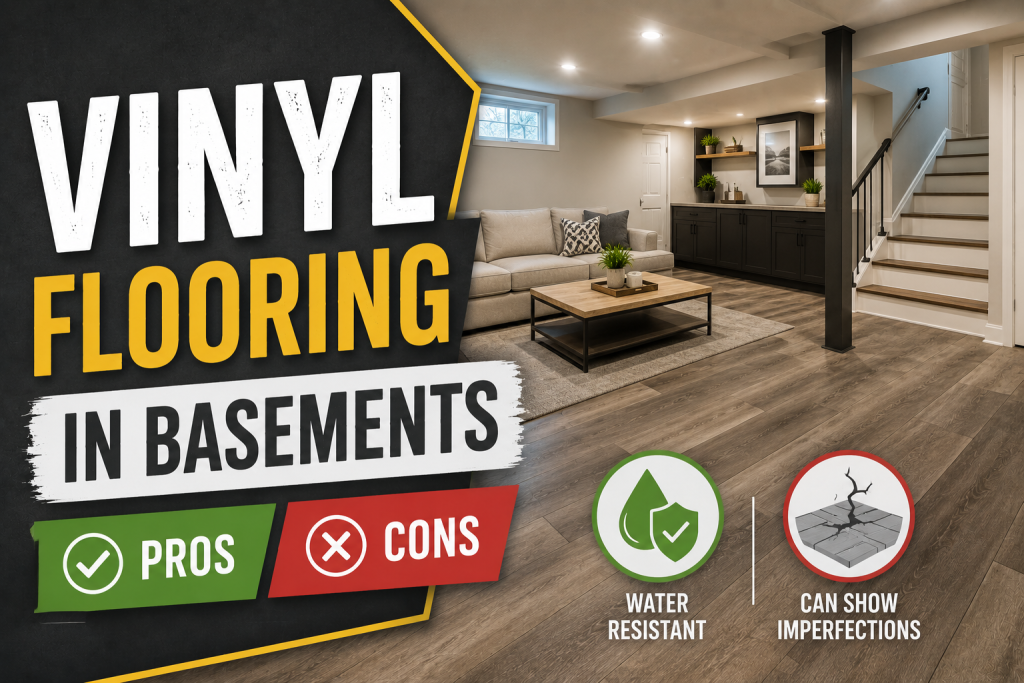
Pros and Cons Of Vinyl Flooring in Basements
When evaluating carpet vs vinyl basement options, vinyl flooring is often considered the more practical choice for moisture-prone environments. Modern waterproof vinyl flooring is specifically engineered to handle humidity, spills, and occasional water exposure, making it highly suitable for below-grade spaces. One of the biggest advantages of vinyl is its resistance to moisture damage. Unlike carpet, vinyl does not absorb water, which significantly reduces the risk of mold, mildew, and odors. This makes it a reliable option for basements in a wide range of US climates, from humid Southern states to colder northern regions with seasonal moisture issues.
Vinyl flooring is also easy to maintain. It requires simple cleaning, holds up well under daily use, and offers strong durability for high-traffic basement areas. Many homeowners also choose luxury vinyl plank basement products because they realistically mimic wood while still providing waterproof protection. The main downside is comfort. Vinyl can feel harder and cooler than carpet, especially in unfinished or poorly insulated basements. However, area rugs or underlayment systems can help improve warmth and comfort.
Moisture Performance Comparison
When comparing carpet vs vinyl basement flooring, moisture performance is the most critical factor for US homeowners. Basements naturally sit below ground level, which means they are more exposed to humidity, groundwater vapor, and seasonal moisture changes that can affect flooring durability over time. Carpet absorbs moisture easily, which makes it vulnerable in basement environments. Even small amounts of trapped humidity can lead to odors, mold growth, and deterioration of carpet padding. Once moisture becomes an issue, replacement is often the only solution, which increases long-term maintenance costs.
In contrast, waterproof vinyl flooring performs significantly better in moisture-prone conditions. Vinyl does not absorb water, which helps prevent warping, swelling, and microbial growth. This makes it one of the most reliable moisture-resistant basement floors available today. For homeowners in humid regions or areas with fluctuating seasonal conditions, vinyl offers a clear advantage in moisture control. Carpet can still work in very dry, well-sealed basements, but it requires more caution, insulation, and ongoing humidity management to remain viable long-term.
Comfort and Warmth Comparison
In the carpet vs vinyl basement decision, comfort is often the most noticeable difference for homeowners once the space is finished. Basements are naturally cooler than upper levels of a home, so flooring choice can significantly impact how warm and livable the space feels year-round. Carpet is widely considered the more comfortable option. It provides a soft, cushioned surface underfoot and adds natural insulation, which helps retain heat in colder US climates. This makes it especially appealing for basement carpet ideas used in family rooms, bedrooms, or play areas where people spend extended time sitting or walking barefoot.
Vinyl flooring, on the other hand, tends to feel harder and cooler. Even high-quality waterproof vinyl flooring does not offer the same natural insulation as carpet. However, it can be paired with underlayment or area rugs to improve warmth and comfort without sacrificing moisture resistance. For homeowners prioritizing a cozy, residential feel, carpet has the advantage. For those prioritizing practicality and moisture control, vinyl remains the more functional choice despite being less inherently warm.
Durability and Maintenance Differences
When evaluating carpet vs vinyl basement flooring, durability and maintenance are key factors that influence long-term satisfaction. Basements often serve multiple purposes, storage, entertainment, laundry, or living space—so flooring must withstand varying levels of use and environmental stress. Carpet is generally less durable in basement environments. While it performs well in dry, controlled conditions, it is more susceptible to staining, matting, and wear over time. It also requires regular deep cleaning to prevent dust buildup and potential mold growth in humid conditions. This makes carpet higher maintenance, especially in basements with inconsistent moisture control.
In contrast, waterproof vinyl flooring is designed for durability and low maintenance. It resists scratches, dents, and moisture-related damage, making it ideal for high-traffic basement areas. Routine cleaning typically involves simple sweeping and mopping, with minimal upkeep required over time. For homeowners looking for long-lasting basement remodel flooring, vinyl generally offers a more practical solution. Carpet can still be suitable in low-traffic, well-sealed spaces, but it requires more consistent maintenance to maintain appearance and hygiene.
Luxury Vinyl Plank Basement Performance
In modern basement design, luxury vinyl plank basement flooring has become one of the most popular upgrades in the carpet vs vinyl basement comparison. Luxury vinyl plank (LVP) is engineered to replicate the look of hardwood while offering superior resistance to moisture, making it especially well-suited for below-grade environments. One of the main advantages of LVP is its rigid core construction, which helps it remain stable even when exposed to humidity or minor slab moisture. This makes it a strong option for homeowners seeking waterproof vinyl flooring that can handle real basement conditions without warping or swelling over time.
LVP also performs well in a variety of basement uses, from family rooms to home offices and rental spaces. It offers a warmer aesthetic than traditional vinyl sheets and is often preferred in finished basements where appearance matters as much as performance. Manufacturers like Shaw Floors and Mohawk Industries have expanded LVP product lines specifically for moisture-prone environments, improving durability and design options for homeowners. While it is slightly more expensive than basic vinyl, luxury vinyl plank delivers a strong balance of style, comfort, and moisture protection.
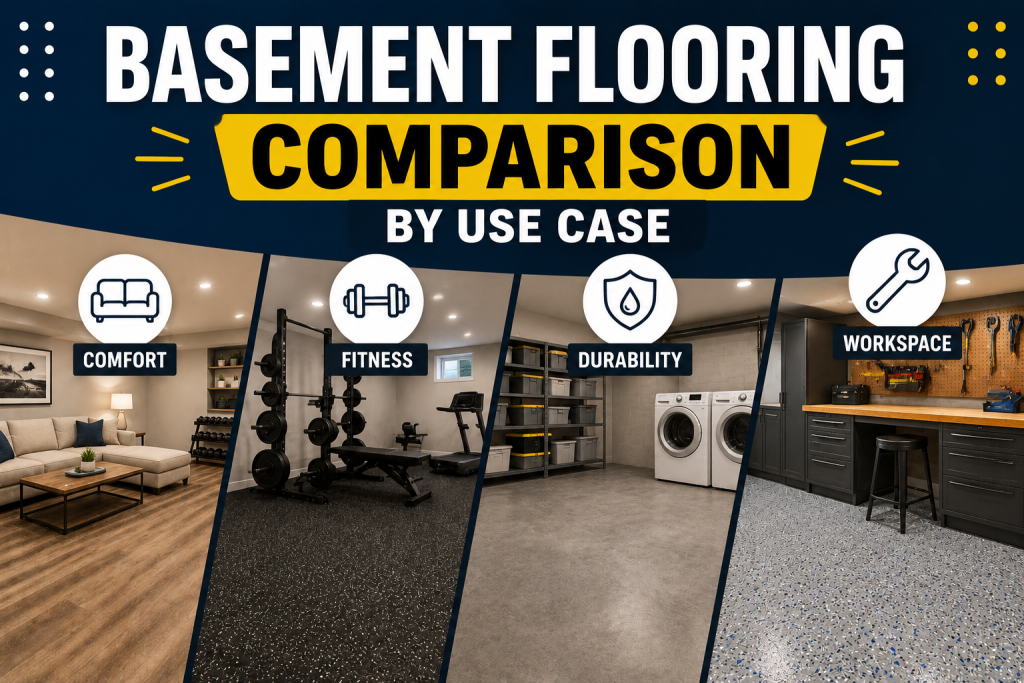
Basement Flooring Comparison by Use Case
The best way to evaluate carpet vs vinyl basement flooring is to look at real-world use cases rather than just material properties. Different basement functions place different demands on flooring, and the right choice often depends on how the space will actually be used. For family rooms and entertainment areas, carpet can create a warmer, more comfortable environment, especially in colder US climates. However, waterproof vinyl flooring is often preferred when durability and moisture resistance are higher priorities, particularly in homes with active households or higher humidity levels.
In home offices or hobby spaces, vinyl is typically the better choice due to its easy maintenance and resistance to wear from office chairs or equipment. For finished guest areas, either option can work, but vinyl provides more long-term protection against unexpected moisture issues. In high-traffic or multi-use basements, vinyl again has the advantage thanks to its resilience and low upkeep. Carpet may still be used in targeted zones, but it often requires more careful moisture management. Overall, basement flooring comparison outcomes vary based on lifestyle needs, but vinyl tends to outperform in versatility across most basement applications.
Cost Comparison – Carpet vs Vinyl Basement
Cost is a major deciding factor in the carpet vs vinyl basement debate, especially for homeowners working within a set renovation budget. Both flooring types offer relatively affordable entry points compared to hardwood or tile, but their long-term costs can differ significantly. Carpet generally has a lower upfront installation cost. Basic carpet and padding can be more budget-friendly, making it attractive for large basement areas or quick renovations. However, it may require earlier replacement in moisture-prone environments, which can increase lifetime costs over time.
Waterproof vinyl flooring, including luxury vinyl plank basement products, usually has a higher initial price than standard carpet. However, it often delivers better long-term value due to its durability and resistance to moisture damage. Reduced maintenance and longer lifespan can offset the upfront investment. Labor costs for both options are relatively similar, though subfloor preparation for vinyl can sometimes add to installation expenses if the concrete slab requires leveling. Overall, carpet may win on short-term affordability, while vinyl often provides stronger long-term cost efficiency in basement environments.
Final Verdict
Choosing between carpet vs vinyl basement flooring ultimately comes down to balancing comfort, moisture risk, and long-term durability. There is no one-size-fits-all answer, but there is a clear direction based on typical US basement conditions. Vinyl flooring is the stronger overall performer for most basements. Waterproof vinyl flooring and especially luxury vinyl plank basement options provide excellent resistance to moisture, easy maintenance, and long-term durability. This makes vinyl the preferred choice for basements used as family rooms, home offices, rental spaces, or high-traffic areas.
Carpet, however, still has a place in basement design. It offers superior warmth, softness, and acoustic comfort, making it appealing for cozy entertainment rooms or low-traffic spaces where moisture risk is well-controlled. Many homeowners still choose basement carpet ideas for dedicated comfort zones or layered designs with rugs over vinyl. From a practical standpoint, vinyl is generally the safer investment in most US homes, especially where humidity or moisture is a concern. Carpet works best when conditions are dry, and comfort is the top priority.
FAQs About Carpet vs Vinyl Basement
Which is better for basements: carpet or vinyl?
In most cases, waterproof vinyl flooring is better for basements because it handles moisture more effectively than carpet and requires less maintenance.
Does carpet work well in basements?
Carpet can work in dry, well-sealed basements, but it is more prone to moisture damage, mold, and odors compared to vinyl.
What is the most moisture-resistant basement flooring?
Among moisture-resistant basement floors, vinyl, especially luxury vinyl plank basement options, is one of the most reliable choices.
Is vinyl flooring cold in basements?
Vinyl can feel cooler than carpet, but area rugs and underlayment can improve comfort and warmth.
What are good basement carpet ideas?
Good basement carpet ideas include using low-pile carpet in dry areas or carpet tiles for easier replacement and maintenance.