


Best Plants for Hot Climates for Landscaping
Landscaping in hot climates requires more than selecting plants that look attractive at the garden center. High temperatures, prolonged sun exposure, dry conditions, and seasonal heat waves can quickly affect plant performance and increase maintenance demands. The most successful landscapes are designed around plants that naturally tolerate warmer conditions while maintaining appearance throughout the year. Choosing the right combination of plant types can reduce watering needs, simplify maintenance, and support stronger long-term growth.
Understanding how to select the best plants for hot climates helps homeowners create outdoor spaces that remain attractive without constant upkeep. Whether you live in Texas, Florida, Arizona, or another warm region, thoughtful plant selection can improve curb appeal while supporting healthier and more resilient landscapes.
Why Best Plants for Hot Climates Matter in Hot Regions
Hot climate landscaping requires a different approach than planting for moderate conditions. Long periods of direct sunlight, high temperatures, and changing rainfall patterns can place stress on landscapes that are not designed for those conditions. Selecting plants that naturally adapt to warmer environments often reduces maintenance while improving long-term appearance and performance.
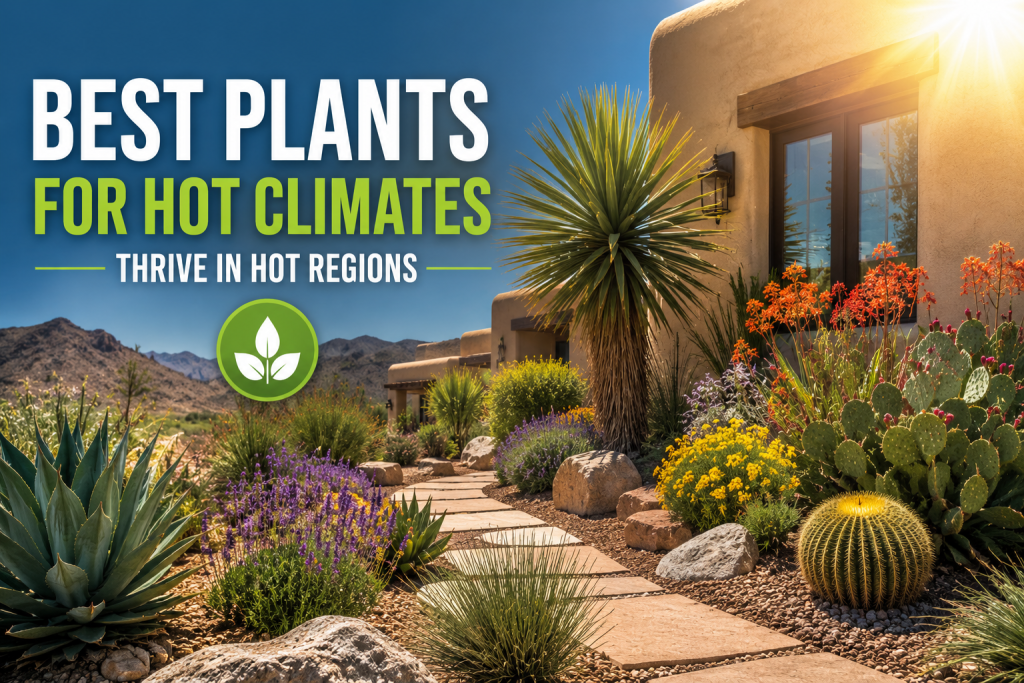
Homeowners who choose climate-appropriate varieties typically spend less time replacing damaged plants and managing irrigation demands. One of the biggest benefits of choosing the best plants for hot climates is creating landscapes that remain healthier and more consistent throughout the year. Instead of relying only on appearance, homeowners should evaluate heat tolerance, growth habits, water requirements, and long-term durability when planning outdoor spaces.
Native Plants That Thrive in Heat
Native plants are often one of the strongest choices for warm-region landscaping because they naturally adapt to local weather patterns and environmental conditions. Their established tolerance can reduce maintenance demands while supporting healthier long-term growth. Many homeowners in southern and western states prioritize regional species because they typically require less intervention once established. Native selections may also perform better during periods of seasonal heat and inconsistent rainfall. When researching the best plants for hot climates, consider native grasses, flowering perennials, and regionally adapted shrubs that align with local growing conditions. Homeowners seeking reliable outdoor performance often find that native planting strategies improve durability while supporting more efficient landscape management over time.
Flowering Plants for Sunny Landscapes
Flowering plants can bring color and visual interest to hot-climate landscapes without requiring excessive maintenance when the right varieties are selected. Plants that tolerate direct sunlight and warmer temperatures generally perform more consistently throughout extended growing seasons. Homeowners in warmer regions often explore reliable landscaping plants for Texas because these varieties are commonly selected for strong heat performance and seasonal durability.
Homeowners should prioritize varieties that maintain healthy foliage, recover well from heat exposure, and continue blooming during warmer months. Choosing adaptable flowering options also helps reduce replacement cycles and seasonal upkeep. This approach is especially useful in regions where Florida landscaping plants are selected to handle both heat exposure and long growing seasons more effectively. Many of the best plants for hot climates include flowering selections that provide strong visual impact while remaining resilient in sunny conditions. Grouping plants with similar growing requirements can further improve performance and create a more balanced and manageable landscape design.
Shrubs That Handle High Temperatures
Shrubs provide structure, privacy, and year-round visual balance, making them an important part of landscaping in warm regions. Selecting heat-adapted varieties helps reduce maintenance and improves long-term performance under intense sun exposure. Homeowners in arid regions often incorporate desert landscaping plants to create landscapes that remain resilient while requiring less ongoing maintenance. Homeowners should look for shrubs that maintain healthy foliage, tolerate prolonged summer conditions, and recover well after periods of environmental stress. Evergreen and regionally adapted selections often perform especially well in hotter parts of the United States.
In extremely dry regions, incorporating reliable desert landscaping plants can further improve durability while reducing long-term maintenance requirements. For homeowners selecting the best plants for hot climates, shrub choices should support both durability and overall landscape design. In areas with intense summer conditions, incorporating reliable sun-loving shrubs can help create stronger structure while maintaining attractive outdoor spaces with less ongoing maintenance.
Ground Covers for Heat Resistance
Ground covers can be an effective solution for reducing exposed soil and limiting maintenance in hot-climate landscapes. These low-growing plant options help create visual consistency while reducing the need for extensive lawn areas. Many heat-adapted ground covers also support moisture retention and improve long-term landscape durability. Because they spread efficiently, they can reduce weed growth and simplify seasonal maintenance. When choosing the best plants for hot climates, ground covers can provide an effective balance between appearance and practicality. Homeowners in warmer regions often use ground cover planting to improve landscape performance while creating a cleaner and easier-to-manage outdoor environment.
Best Plants for Hot Climates That Require Less Water
Water efficiency has become an increasingly important factor when planning landscapes in hotter regions. Choosing heat-tolerant landscaping plants with lower irrigation demands can reduce ongoing maintenance while supporting healthier long-term growth. Many homeowners prioritize species that remain visually appealing while tolerating periods of heat and reduced rainfall. Selecting reliable drought-resistant plants and incorporating efficient low-water plants can further improve landscape performance, as these varieties often establish stronger root systems and adapt more effectively to changing outdoor conditions.
For homeowners researching the best plants for hot climates, selecting appropriate plant varieties can improve performance while lowering seasonal watering demands. In warmer regions such as Texas and Arizona, incorporating reliable low-water plants into the landscape can support long-term sustainability and reduce routine upkeep.
How to Design a Heat-Resistant Landscape
Creating a landscape that performs well in high temperatures requires more than selecting the right plants. Layout planning, spacing, irrigation strategy, and material choices all influence long-term performance and maintenance needs. Grouping plants with similar environmental requirements can improve watering efficiency and reduce stress during hotter periods.
Incorporating mulch, shaded transition areas, and efficient irrigation systems can also help landscapes remain healthier throughout the year. When building around the best plants for hot climates, homeowners should focus on balancing appearance with durability rather than maximizing plant quantity. Thoughtful planning often creates outdoor spaces that remain attractive, functional, and easier to maintain across changing seasonal conditions.
Mistakes to Avoid When Landscaping in Hot Climates
Landscaping in warm regions can become more difficult when design decisions prioritize appearance without considering long-term climate performance. Small planning mistakes often lead to higher maintenance demands and reduced plant longevity. One common mistake is selecting plants based only on appearance rather than heat tolerance and water requirements.

Overplanting, excessive lawn space, and poor irrigation planning can also increase upkeep and reduce overall landscape performance. Homeowners choosing the best plants for hot climates should avoid mixing plant types with very different care requirements, since inconsistent watering and maintenance schedules can create unnecessary stress. A practical approach focused on climate compatibility usually delivers stronger long-term results and healthier outdoor spaces.
Conclusion
Successful landscaping in warm regions starts with choosing plants that match local climate conditions rather than relying only on appearance. Heat resistance, water efficiency, and long-term durability all play important roles in creating outdoor spaces that remain attractive over time. Thoughtful plant selection can reduce maintenance demands, improve landscape performance, and support stronger long-term growth. Combining practical layout choices with climate-appropriate planting often creates better results than adding more features or increasing irrigation. By selecting the best plants for hot climates, homeowners can create landscapes that balance curb appeal, resilience, and lower ongoing maintenance. A well-planned outdoor space can remain functional and visually appealing even during extended periods of heat and seasonal weather changes.
Frequently Asked Questions
What are the best plants for hot climates that are easiest to grow?
The best plants for hot climates are typically varieties that naturally tolerate heat and extended sun exposure. Homeowners often see better long-term results by selecting climate-adapted plants that match local growing conditions and require less ongoing maintenance.
Do heat-tolerant plants require less maintenance?
Many heat-adapted plants require less ongoing attention once established because they are better suited to local environmental conditions and often need less intervention throughout the year.
How often should landscapes in hot climates be watered?
Watering frequency depends on plant type, soil conditions, and local weather patterns. Grouping plants with similar water needs can improve efficiency and reduce unnecessary irrigation.
Are native plants better for hot climates?
Native plants are often strong candidates because they are naturally adapted to local temperatures and environmental conditions, which can improve long-term performance and reduce maintenance.
Can landscaping survive extreme summer temperatures?
Yes. Careful plant selection, efficient irrigation planning, mulch use, and thoughtful spacing can help landscapes remain healthy and visually appealing during extended heat periods.