


Modern Roof Design Ideas: Stylish Roof Designs to Inspire Your Next Home
Modern roofing has become one of the most influential elements in residential architecture. Beyond protecting a home from the elements, a roof now plays a major role in curb appeal, energy efficiency, and long-term property value. Whether you’re building a custom home or planning a roof replacement, exploring the right modern roof design ideas can help create a cleaner, more sophisticated exterior. Today’s homeowners are moving away from overly complex rooflines and embracing simpler forms that complement contemporary architecture. From low-slope profiles to innovative metal systems, modern roof design ideas focus on functionality, aesthetics, and performance. Many of these designs also support solar integration, improved ventilation, and better energy savings.
Across the United States, roofing preferences often vary by climate. Homeowners in Florida may prioritize hurricane resistance, while those in Colorado may focus on snow-shedding capabilities. Regardless of location, choosing the right roof design requires balancing appearance, durability, maintenance requirements, and local building codes. In this guide, we’ll explore the most popular roof styles, materials, and design considerations that can help homeowners create a modern, high-performing exterior that stands the test of time.
Why Modern Roof Design Matters for Today’s Homes
A roof is no longer just a structural necessity. In modern residential construction, it serves as a defining architectural feature that influences a home’s appearance, efficiency, and market value. Well-executed modern home roofing can instantly elevate curb appeal while creating a cohesive exterior design that appeals to today’s buyers. Many homeowners are choosing cleaner rooflines because they complement large windows, open floor plans, and minimalist architectural trends. In competitive real estate markets such as Phoenix, Dallas, and Denver, homes inspired by modern roof design ideas often stand out due to their streamlined appearance and updated architectural features.
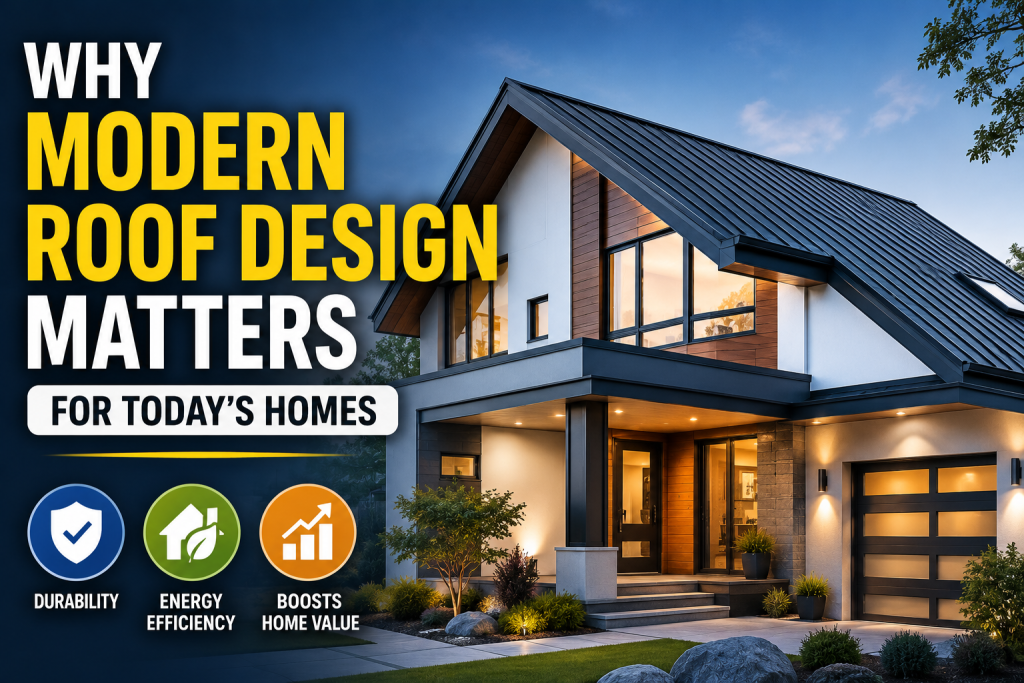
Modern roof systems can also provide practical advantages. Depending on the material and design, they may improve attic ventilation, accommodate solar panels, and reduce heat absorption during hot summers. Organizations such as the ENERGY STAR program encourage energy-efficient building practices that can help homeowners lower long-term utility costs. Beyond aesthetics, roof design affects maintenance requirements, weather resistance, and overall performance. A carefully planned roof can help protect against wind, heavy rain, snow accumulation, and temperature fluctuations while supporting the home’s architectural style. This combination of form and function is why modern roof design ideas continue to gain popularity among homeowners across the United States.
Top Modern Roof Design Ideas for Contemporary Homes
Homeowners looking for a fresh architectural appearance often start by researching modern roof design ideas that blend aesthetics with long-term performance. While traditional gable roofs remain common, modern homes increasingly feature simplified rooflines, geometric forms, and materials that create a distinctive visual impact. One reason these designs have gained popularity is their versatility. They can complement everything from urban custom builds to upscale suburban homes. Many architects also favor contemporary roof styles because they create strong visual connections between indoor and outdoor living spaces while supporting larger windows and open-concept layouts.
The best roof design ultimately depends on climate, budget, maintenance expectations, and the overall character of the home. For example, homeowners in Arizona often prioritize heat-reflective materials, while those in northern states may require designs that efficiently manage snow loads. Understanding the strengths of each roof type can help homeowners select a design that balances beauty, durability, and functionality.
Flat Roof Designs for Clean Architectural Lines
Flat roofs are among the most recognizable modern roof design ideas used in contemporary residential architecture. Their clean horizontal profile creates a minimalist appearance that pairs well with modern materials such as glass, concrete, fiber cement siding, and metal accents. Although referred to as flat roofs, these systems typically include a slight slope to allow proper drainage. Modern flat roof assemblies often use durable membranes and advanced waterproofing technologies that improve longevity and weather resistance.
In warmer regions such as Texas, Nevada, and Southern California, flat roofs are frequently selected for their sleek appearance and compatibility with rooftop living spaces. Another advantage is their ability to accommodate solar panel systems, rooftop gardens, and outdoor entertainment areas. Homeowners seeking a sophisticated architectural statement often view flat roofs as one of the most effective ways to achieve a modern exterior while maintaining functional flexibility.
Shed Roof Systems and Modern Roof Design Ideas
Among today’s most practical modern roof design ideas, shed roofs continue to attract homeowners and architects who value simplicity and efficiency. Also known as skillion roofs, these systems feature a single sloping plane that creates a bold, contemporary appearance while supporting effective water drainage. One of the biggest advantages of a shed roof is its ability to enhance interior spaces. The higher wall created by the roof slope often allows for larger windows, increased natural light, and vaulted ceilings. This design approach aligns perfectly with sleek roof designs that emphasize openness and clean architectural lines.
Shed roofs are particularly popular in modern custom homes throughout the Pacific Northwest, Colorado, and other regions where homeowners want a balance between visual appeal and functionality. Their simple structure can also reduce construction complexity compared to more intricate roof systems. When paired with standing seam metal roofing or premium composite materials, a shed roof can deliver a striking modern look while maintaining long-term durability and weather resistance.
Butterfly Roof Concepts for Sustainable Homes
Butterfly roofs are among the most distinctive modern roof design ideas available to homeowners seeking a bold architectural statement. Unlike traditional roof forms, a butterfly roof features two roof planes that slope inward toward a central valley, creating a dramatic V-shaped profile that immediately attracts attention.
This unique design is often associated with minimalist roofing ideas because it combines visual simplicity with functional benefits. The inward slope can help collect rainwater for harvesting systems, making butterfly roofs appealing to environmentally conscious homeowners. The elevated outer edges also create opportunities for larger windows that maximize daylight and strengthen the connection between indoor and outdoor spaces.
Butterfly roofs are commonly found on custom-built homes in regions with modern architectural influences, including California, Arizona, and parts of the Pacific Northwest. While they typically require careful engineering and drainage planning, their striking appearance and sustainability potential make them a popular option for homeowners looking to move beyond conventional roof styles and embrace innovative design.
Best Materials for Modern Roof Design Ideas
Selecting the right roofing material is just as important as choosing the roof shape itself. Even the most attractive modern roof design ideas can fall short if the materials do not provide the durability, energy performance, and visual appeal homeowners expect. Modern roofing materials are designed to complement clean architectural lines while offering long-term protection against weather and environmental wear. When evaluating roofing options, homeowners should consider factors such as climate, maintenance requirements, lifespan, and overall budget.
Metal roofing, architectural shingles, and advanced composite products have become increasingly popular because they combine performance with modern aesthetics. Many of these materials are also available in colors and finishes that enhance residential roof architecture without overwhelming the home’s exterior design. The ideal roofing material should work in harmony with the home’s structure while supporting energy efficiency, weather resistance, and curb appeal. Understanding the strengths of each option can help homeowners make a more informed investment.
Standing Seam Metal Roofing
Standing seam metal roofing has become one of the most sought-after materials for modern residential construction. Its raised vertical seams create a clean, streamlined appearance that perfectly complements contemporary architecture and supports high-performance building practices. One reason homeowners choose standing seam systems is their compatibility with modern exterior roofing trends. The crisp lines and minimalist appearance work exceptionally well with flat roofs, shed roofs, and other modern roof configurations. In addition to aesthetics, metal roofing offers impressive durability, with many systems lasting 40 to 70 years when properly maintained.
This roofing option is especially popular in states such as Texas, Colorado, and Florida because of its resistance to harsh weather conditions. Many standing seam products also feature reflective coatings that help reduce heat absorption during hot summers. For homeowners seeking a combination of style, longevity, and energy efficiency, standing seam metal roofing remains one of the strongest choices available.
Architectural Asphalt Shingles
Architectural asphalt shingles remain one of the most popular roofing materials in the United States because they offer an excellent balance of affordability, durability, and visual appeal. While often associated with traditional homes, modern manufacturing techniques have made these shingles a viable option for homeowners exploring luxury roof designs without the premium cost of metal, slate, or tile roofing.
Today’s architectural shingles are available in a wide range of textures, profiles, and color blends that can complement modern exterior styles. Premium products from manufacturers such as GAF and Owens Corning are designed to mimic the appearance of more expensive roofing materials while delivering strong weather protection and long service life.
Another advantage is widespread availability and relatively straightforward installation. This can help reduce labor costs compared to specialized roofing systems. For homeowners seeking a modern appearance while maintaining budget flexibility, architectural asphalt shingles provide a practical solution that blends performance, aesthetics, and value.
Composite and Premium Roofing Materials
Composite roofing materials have gained significant attention among homeowners who want the appearance of premium roofing without the weight and maintenance requirements associated with natural slate or clay tile. These products are engineered to provide durability, weather resistance, and design flexibility while supporting a wide range of architectural styles. Many composite roofing systems are manufactured using advanced polymers and recycled materials, making them a practical option for homeowners focused on sustainability. They are available in numerous profiles that can complement various modern roof design ideas, from low-slope contemporary homes to sophisticated custom residences.
Their ability to replicate high-end materials while reducing structural demands makes them increasingly attractive in both new construction and remodeling projects. Premium composite products also offer strong resistance to impact, moisture, and UV exposure. In regions prone to severe weather, such as Texas, Oklahoma, and Florida, these performance benefits can provide additional peace of mind. For homeowners seeking a refined appearance with long-term durability, composite roofing materials present an appealing alternative to traditional roofing options.
How Climate Affects Modern Roof Design Ideas in the United States
Climate plays a major role in determining which modern roof design ideas perform best in different parts of the country. While aesthetics are important, homeowners should also consider how a roof design responds to local weather conditions, temperature fluctuations, and seasonal challenges. In hot regions such as Arizona, Nevada, and Southern California, reflective roofing materials can help reduce heat absorption and improve energy efficiency. Many modern roof design ideas incorporate reflective materials and ventilation strategies to help homeowners manage cooling costs. Homes in these areas often benefit from roof systems that support ventilation and solar panel integration. Meanwhile, homeowners in northern states such as Minnesota and Colorado typically prioritize roof designs that efficiently shed snow and withstand freeze-thaw cycles.
Coastal areas present another set of considerations. In hurricane-prone regions such as Florida and the Gulf Coast, wind resistance becomes a critical factor during roof selection. Organizations such as the FEMA provide guidance on improving home resilience in severe weather zones. When evaluating modern roof design ideas, homeowners should consider how local climate conditions affect long-term performance. By aligning roof design choices with regional weather patterns, they can improve durability, reduce maintenance concerns, and maximize the long-term value of their roofing investment.
Modern Roof Design Ideas That Improve Energy Efficiency
Energy efficiency has become a major consideration for homeowners planning a new build or roof replacement. Many of today’s modern roof design ideas are designed to support lower energy consumption while improving indoor comfort throughout the year. One of the most effective strategies is selecting roofing materials that reflect solar heat rather than absorbing it. Cool roofing technologies, reflective metal panels, and light-colored roofing systems can help reduce attic temperatures during hot summer months. This can decrease the workload placed on HVAC systems and potentially lower monthly utility bills.
Roof design also influences ventilation performance. Proper airflow helps regulate attic temperatures and reduces moisture buildup that can contribute to long-term structural issues. Homeowners pursuing energy-efficient upgrades often look for products recognized by the ENERGY STAR program, which identifies materials that meet established efficiency standards. In addition, many modern roof layouts are well suited for solar panel installations. By combining efficient roof design with renewable energy systems, homeowners can improve sustainability while enhancing the overall performance and value of their property.
Choosing the Right Modern Roof Design for Your Home Style
Selecting the right roof design involves more than following current architectural trends. Homeowners exploring modern roof design ideas should consider their home’s structure, local climate, long-term maintenance expectations, and resale goals before making a final decision. The best roofing solution is one that complements the home’s overall appearance while delivering reliable performance for decades. For contemporary custom homes, flat and shed roofs often create the clean lines associated with modern architecture. Many of the most popular modern roof design ideas incorporate these roof styles because they balance aesthetics with functionality. Larger homes may benefit from more complex roof configurations that provide visual appeal while maintaining effective drainage.
Regional conditions remain equally important. A roof that performs exceptionally well in Arizona may not be ideal for a property located in Minnesota or New England. Snow loads, humidity levels, wind exposure, and seasonal weather patterns can all influence the effectiveness of a roofing system. Working with an experienced roofing contractor and reviewing local building requirements can help homeowners choose a design that supports both aesthetics and long-term durability.
Cost Considerations for Modern Roof Designs
Roofing costs can vary significantly depending on the design, material selection, home size, and installation complexity. While many modern roof design ideas deliver strong curb appeal and performance benefits, homeowners should understand the financial implications before starting a project. Simple roof configurations typically require less labor and fewer materials, making them more affordable than highly complex designs with multiple transitions and custom architectural features. Material choice also has a major impact on overall project costs. Architectural shingles generally represent the most budget-friendly option, while standing seam metal roofing and premium composite products require a larger upfront investment.
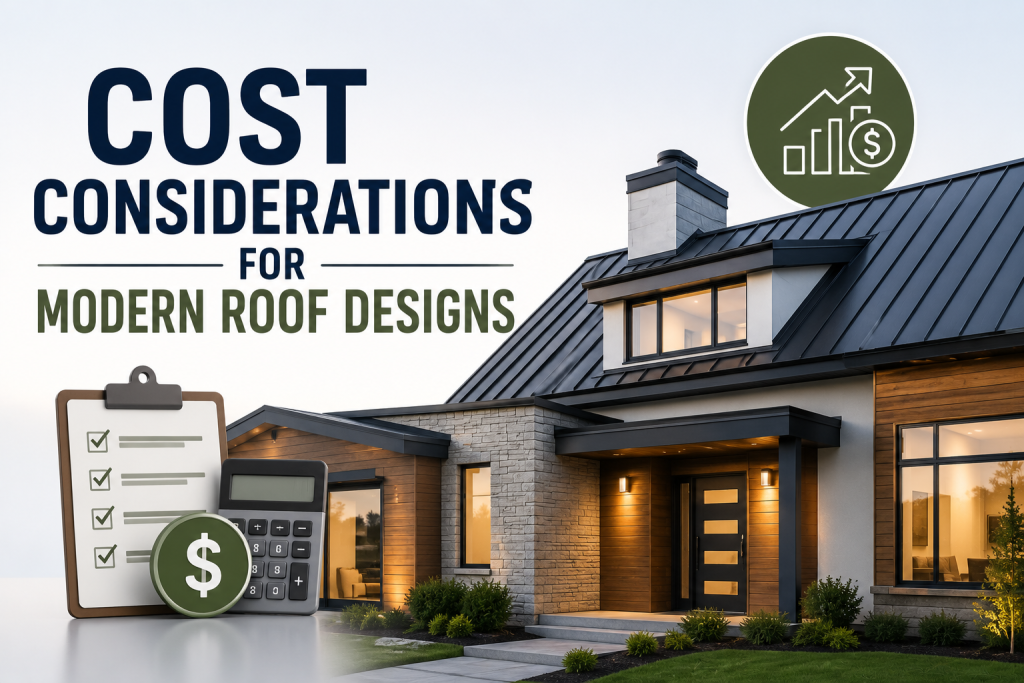
Homeowners should also account for long-term ownership expenses rather than focusing solely on installation costs. A more durable roofing system may reduce future repair expenses, improve energy efficiency, and increase property value over time. In many cases, investing in higher-quality materials can provide better returns throughout the roof’s lifespan. When comparing modern roof design ideas, it is important to evaluate both upfront costs and long-term value. Obtaining multiple contractor estimates and comparing warranty coverage can help homeowners make a more informed decision while balancing budget constraints with long-term performance goals.
Pros and Cons of Popular Modern Roof Styles
Every roof style offers unique advantages and potential drawbacks. Understanding these tradeoffs can help homeowners choose a roofing system that aligns with their budget, climate conditions, and architectural preferences.
| Roof Style | Advantages | Potential Drawbacks |
| Flat Roof | Clean appearance, supports solar panels, maximizes usable rooftop space | Requires careful drainage planning and regular maintenance |
| Shed Roof | Excellent water runoff, modern aesthetic, increased natural light opportunities | May not suit every architectural style |
| Butterfly Roof | Distinctive appearance, supports rainwater collection, enhances daylighting | More complex engineering and drainage requirements |
| Standing Seam Metal Roof | Long lifespan, energy efficiency, strong weather resistance | Higher upfront installation cost |
| Architectural Shingle Roof | Cost-effective, widely available, versatile appearance | Shorter lifespan than many premium roofing systems |
| Composite Roof | Durable, lightweight, premium appearance options | Higher material costs compared to basic shingles |
The ideal roof style depends on several factors, including local weather patterns, maintenance expectations, and overall design goals. Homeowners focused on energy efficiency may prefer metal roofing, while those seeking affordability often gravitate toward architectural shingles. For custom homes with a strong architectural focus, flat and butterfly roofs can create a distinctive modern appearance that stands out in the neighborhood. Comparing both the benefits and limitations of each option helps ensure a roofing investment that delivers lasting value and performance.
Conclusion
The best modern roof design ideas combine architectural appeal, durability, and long-term performance. Whether you prefer the clean simplicity of a flat roof, the functionality of a shed roof, or the bold appearance of a butterfly roof, selecting the right design requires careful consideration of your home’s style, climate, and budget. Material selection is equally important. Options such as standing seam metal roofing, architectural shingles, and premium composite products can significantly influence energy efficiency, maintenance requirements, and overall lifespan.
Homeowners should also evaluate factors such as local weather conditions, HOA requirements, and future resale value when planning a roofing project. Ultimately, investing in the right roof design can do more than protect your home. It can improve curb appeal, enhance energy performance, and create a distinctive exterior that remains attractive for years to come. By understanding the strengths of different roof styles and materials, homeowners can confidently choose a roofing solution that supports both their aesthetic goals and long-term property needs.
Frequently Asked Questions
What are the most popular modern roof styles?
Some of the most popular modern roof styles include flat roofs, shed roofs, butterfly roofs, and low-slope roof systems. These designs are known for their clean lines, minimalist appearance, and compatibility with contemporary residential architecture.
Are modern roof designs more expensive than traditional roofs?
Not always. Costs depend on factors such as roof complexity, material selection, labor requirements, and local market conditions. Some modern roof styles can be cost-effective, while premium materials and custom architectural features may increase project expenses.
Which roofing material works best for modern homes?
Standing seam metal roofing is often considered one of the best choices for modern homes because of its durability, energy efficiency, and sleek appearance. Architectural shingles and premium composite roofing products are also popular options depending on budget and design preferences.
Do modern roofs improve home value?
A well-designed roof can enhance curb appeal and contribute to overall property value. Buyers often appreciate updated roofing systems that offer modern aesthetics, energy efficiency, and reduced maintenance requirements.
Are modern roof design ideas with flat roofs a good option for residential homes?
Yes, modern flat roofs are one of the most popular modern roof design ideas for residential homes. When properly designed and installed, they offer excellent performance, clean architectural lines, and compatibility with solar panels.
Can modern roofs support solar panels?
Yes. Many modern roof configurations are highly compatible with solar energy systems. Flat roofs, shed roofs, and standing seam metal roofs are commonly selected because they can simplify solar panel installation and positioning.
How long does a modern roof typically last?
Roof lifespan depends largely on the material used. Architectural shingles often last 20 to 30 years, while standing seam metal roofs may last 40 to 70 years or more with proper maintenance. Premium composite roofing products can also provide decades of reliable performance.