


Heat-Resistant Roofing Materials: Best Options for Hot U.S. Climates
In Texas, Arizona, Florida, and Nevada, roof surfaces can exceed 150°F on summer afternoons, driving up cooling bills and wearing roofs out faster. The best roofing materials for hot climates (reflective metal, clay tile, cool-rated shingles) reflect more sunlight and release heat faster than standard roofs. This guide compares heat-resistant roofing materials by cost, lifespan, and energy performance, so you can pick the right roof for your climate.
What Makes a Roofing Material Heat-Resistant?
Heat-resistant roofing materials are roofing products engineered to minimize heat absorption and reduce the amount of solar energy transferred into a home’s attic and living spaces. These materials achieve this through a combination of high solar reflectance and thermal emittance, two performance characteristics that help roofs stay cooler during periods of intense sun exposure. Traditional dark-colored roofing systems can absorb a significant amount of radiant heat, causing attic temperatures to rise and increasing the workload on HVAC equipment. In contrast, modern heat-resistant roofing materials are designed to reflect a larger portion of sunlight away from the roof surface while releasing absorbed heat more effectively.
Many of today’s roofing solutions incorporate advanced coatings, reflective pigments, or specialized manufacturing processes to improve thermal performance. These technologies have become increasingly popular in regions that experience long periods of extreme heat, where cooling costs often represent a substantial portion of annual utility expenses. For homeowners evaluating replacement options, understanding how roofing materials interact with sunlight is an important first step toward improving energy efficiency and indoor comfort.
Best Roofing Materials for Hot Climates
Not all roofing products perform equally in high-temperature environments. The best option depends on factors such as climate, budget, maintenance expectations, architectural style, and long-term energy goals. Homeowners in hot regions often benefit from materials that combine durability with strong thermal performance. Many modern roofing systems are designed to reduce heat absorption while withstanding prolonged UV exposure. Some materials naturally stay cooler due to their composition, while others rely on advanced coatings and surface technologies to improve performance.
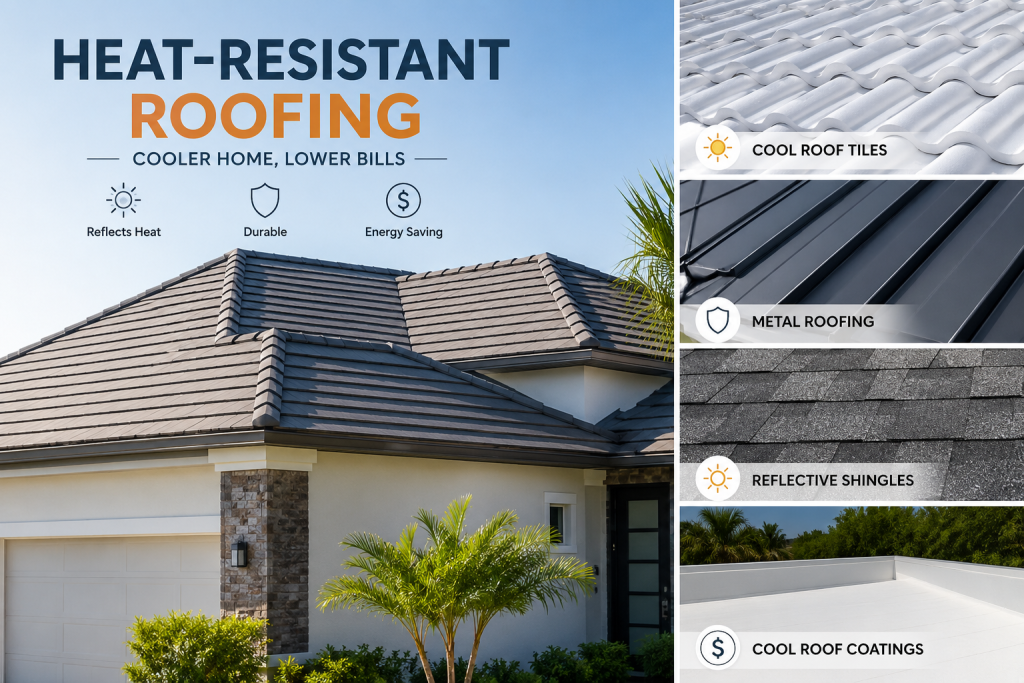
In states like Texas, Arizona, and Florida, selecting the right roof can significantly influence annual cooling costs and indoor comfort. The following heat-resistant roofing materials consistently rank among the most effective solutions for managing rooftop heat. Each option offers unique advantages, making it important to evaluate both upfront costs and long-term benefits before making a final decision.
Slate Roofing
Slate roofing is widely regarded as one of the most durable and premium roofing materials available to homeowners. Formed from natural stone, slate offers exceptional resistance to heat, ultraviolet exposure, and weather-related deterioration. Its dense composition helps limit temperature fluctuations and contributes to long-term roofing performance. In regions that experience intense summer temperatures, slate can provide reliable protection while maintaining its appearance for decades. Many properly maintained slate roofs remain functional for 75 to 100 years or longer, making them one of the longest-lasting roofing investments available.
Beyond durability, slate delivers strong curb appeal and can enhance a home’s resale value. It is commonly found on upscale homes where longevity and aesthetics are major priorities. However, the material’s weight often requires a structurally reinforced roof system, and installation costs are generally higher than most other roofing options. For homeowners seeking premium heat-resistant roofing materials with outstanding lifespan and thermal performance, slate remains a top-tier choice.
Synthetic Roofing Materials
Synthetic roofing products have gained popularity as manufacturers continue to develop lightweight alternatives that mimic the appearance of slate, wood shake, and tile. These materials are typically engineered from advanced polymers, recycled composites, or other high-performance materials designed to withstand challenging environmental conditions. Many synthetic roofing systems offer excellent resistance to UV rays, moisture, and prolonged heat exposure. As a result, they are increasingly considered among the most practical heat-resistant roofing materials for homeowners seeking durability and energy performance.
Their lighter weight can simplify installation while reducing structural demands compared to heavier roofing materials. Some products also incorporate reflective technologies that improve thermal performance in warm climates. Homeowners often choose synthetic roofing because it combines visual appeal with easier maintenance and lower installation costs than natural materials. Modern manufacturing techniques have also improved durability, allowing many products to achieve long service lives under demanding weather conditions. As technology continues to advance, synthetic roofing is becoming an increasingly attractive option for homeowners who want a balance of performance, appearance, and affordability.
Side-by-Side: Lifespan, Cost & Energy Performance
Choosing between roofing materials can be challenging because each option offers different strengths. Some products prioritize energy performance, while others focus on durability, aesthetics, or long-term value. Comparing key characteristics side by side can help homeowners identify the best fit for their climate, budget, and maintenance expectations.
| Roofing Material | Typical Lifespan | Energy Performance | Relative Cost | Best U.S. Regions |
| Metal Roofing | 40–70 Years | Excellent | High | Texas, Arizona, Florida |
| Clay Tile | 50–100 Years | Excellent | High | Southwest, California |
| Concrete Tile | 40–75 Years | Very Good | Moderate to High | Hot and Dry Regions |
| Reflective Asphalt Shingles | 20–30 Years | Good | Moderate | Nationwide |
| Slate Roofing | 75–100+ Years | Very Good | Premium | Multiple Climate Zones |
| Synthetic Roofing | 30–50 Years | Good to Very Good | Moderate | Nationwide |
While upfront cost is important, homeowners should also evaluate expected lifespan, maintenance requirements, energy savings potential, and regional weather conditions before making a final decision.
How Cool Roofs Cut Your Energy Bills
As energy costs continue to rise across many parts of the United States, homeowners are increasingly looking for roofing solutions that help reduce cooling expenses. One of the most effective approaches is the use of cool roofing systems, which are specifically designed to minimize heat absorption and lower roof surface temperatures. These systems often incorporate advanced coatings, lighter-colored surfaces, or reflective roofing materials that redirect a significant portion of solar radiation away from the home. By reducing the amount of heat entering the attic, cool roofs can lessen the workload on air conditioning equipment during peak summer months.
Organizations such as ENERGY STAR and the U.S. Department of Energy have highlighted the benefits of reflective roofing technologies for improving residential energy performance. In hot climates, a cooler roof can contribute to lower indoor temperatures, improved comfort, and reduced utility consumption. While energy savings vary based on climate, roof design, insulation levels, and household usage patterns, cool roofing technologies can provide meaningful long-term benefits when combined with proper attic ventilation and insulation.
Choosing Roofing for Hot Climates
Selecting the right roof involves more than simply choosing a material with strong heat resistance. Homeowners must also consider regional weather patterns, humidity levels, storm exposure, maintenance requirements, and long-term operating costs. The ideal solution for a dry desert environment may not be the best fit for a humid coastal region. When evaluating roofing for hot climates, it is important to prioritize heat-resistant roofing materials that offer high solar reflectance, strong UV resistance, and proven durability under prolonged sun exposure.
Proper attic ventilation and insulation should also be part of the overall roofing strategy, as these components work together to improve indoor comfort and reduce cooling demands. Climate-specific planning becomes especially important in southern states where extreme heat can persist for much of the year. Homeowners who carefully match roofing materials to local environmental conditions are often better positioned to achieve lower utility costs, improved comfort, and longer roof service life.
Roofing for Texas Homes
Texas presents unique challenges for residential roofing systems. In addition to intense summer heat, many areas experience severe thunderstorms, hail events, high winds, and prolonged UV exposure. As a result, homeowners often need roofing materials that balance thermal performance with durability. When evaluating roofing for Texas homes, metal roofing, reflective asphalt shingles, and concrete tile systems are among the most commonly recommended options. These materials can help reduce heat buildup while offering strong resistance to weather-related damage.
Homeowners should also consider local building requirements, insurance considerations, and neighborhood aesthetic standards. In many Texas communities, roofing choices can influence curb appeal and resale value, making long-term performance just as important as upfront installation costs. A roofing system that effectively manages heat while standing up to severe weather can provide lasting value and help protect one of a homeowner’s largest investments.
5 Factors to Weigh Before You Decide
While thermal performance is important, homeowners should evaluate several additional factors before choosing heat-resistant roofing materials. The most effective roofing system is one that aligns with a home’s climate, budget, structural requirements, and long-term ownership goals. Cost is often one of the first considerations. Premium materials such as slate and metal roofing typically require a higher upfront investment, while solar reflective shingles provide a more budget-friendly alternative for homeowners seeking improved energy performance. However, installation price should be weighed against expected lifespan, maintenance expenses, and potential energy savings.
Homeowners should also review local building codes, HOA guidelines, and insurance requirements. Certain regions may have recommendations related to wind resistance, impact resistance, or fire performance. Climate conditions are equally important, as materials that excel in dry desert areas may perform differently in humid coastal environments. By balancing performance, durability, appearance, and overall value, homeowners can make a more informed roofing decision that supports both comfort and long-term property protection.
Are They Worth the Investment?
For many homeowners, the answer is yes. Modern energy-saving roofing solutions can help reduce cooling demands, improve indoor comfort, and contribute to lower utility costs over time. While the exact savings vary by climate and home design, improved thermal performance often delivers measurable benefits in regions with long, hot summers. The financial value of a roofing upgrade should be evaluated from a long-term perspective. A roofing system that costs more initially may provide lower maintenance expenses, greater durability, and reduced energy consumption throughout its service life.
These benefits can offset part of the upfront investment while improving overall homeowner satisfaction. In addition to energy savings, high-performance heat-resistant roofing materials may enhance curb appeal and support stronger resale value. Buyers increasingly recognize the advantages of durable, energy-efficient home features, particularly in markets where cooling costs are a major concern. When combined with quality insulation and attic ventilation, a well-designed roofing system can become an important part of a home’s overall energy-efficiency strategy.
Conclusion
Choosing the right heat-resistant roofing materials can make a meaningful difference in a home’s comfort, energy efficiency, and long-term operating costs. In regions where intense sunlight and high temperatures are common, roofing performance plays a critical role in controlling attic heat buildup and reducing strain on cooling systems. Options such as metal roofing, clay tiles, reflective asphalt shingles, slate, and synthetic materials each offer distinct advantages. The best choice depends on climate conditions, budget, maintenance expectations, and overall homeownership goals. Homeowners should also evaluate factors such as durability, storm resistance, curb appeal, and potential resale value before making a final decision. By investing in quality roofing materials and combining them with proper ventilation and insulation, homeowners can create a more comfortable and energy-efficient living environment while protecting one of their most valuable assets for years to come.
Frequently Asked Questions
What are the best heat-resistant roofing materials for hot climates?
The best heat-resistant roofing materials typically include metal roofing, clay tiles, concrete tiles, reflective asphalt shingles, slate roofing, and certain synthetic roofing products. Each material offers different levels of solar reflectance, durability, and cost, making it important to select an option that matches local climate conditions and budget requirements.
Do heat-resistant roofing materials lower energy bills?
Yes. Heat-resistant roofing materials can help reduce the amount of heat transferred into a home’s attic and living spaces. This may decrease air conditioning usage during hot weather and contribute to lower cooling costs, particularly in southern states where summer temperatures remain high for extended periods.
Is metal roofing a good choice for hot weather?
Metal roofing is widely considered one of the most effective roofing options for warm climates. Reflective coatings and high solar reflectance help limit heat absorption, while the material’s durability makes it suitable for regions that experience extreme temperatures and severe weather.
How long do heat-resistant roofing materials last?
Lifespan varies by material. Reflective asphalt shingles often last 20 to 30 years, while metal roofing may last 40 to 70 years. Clay tile, concrete tile, and slate roofing systems can provide service lives that extend well beyond 50 years when properly maintained
Are heat-resistant roofing materials worth the higher upfront cost?
Many homeowners find that heat-resistant roofing materials provide strong long-term value through improved energy performance, reduced maintenance needs, and increased durability. The return on investment depends on factors such as climate, utility costs, and how long the homeowner plans to remain in the property.