


The Complete Roof Replacement Timeline for Homeowners
Replacing a roof is one of the most significant home improvement projects a homeowner can undertake. While many people focus on material costs and contractor selection, understanding the roof replacement time period is equally important. Knowing what happens before, during, and after installation helps homeowners plan around disruptions, protect their property, and set realistic expectations. For most homes in the United States, a complete roof replacement can take anywhere from one day to several weeks when planning, permitting, material delivery, and installation are all considered. The actual timeline depends on factors such as roof size, weather conditions, roofing materials, structural repairs, and contractor availability.
Whether you own a home in hurricane-prone Florida, a snow-heavy region of the Midwest, or a hot climate like Arizona or Texas, the duration of your project can vary considerably. Understanding the complete roof replacement timeline allows homeowners to avoid surprises, coordinate with contractors, and ensure the project stays on schedule from start to finish. In this guide, we’ll break down every stage of the process, explain what can cause delays, and show how long each phase typically takes for a residential roofing project.
Understanding the Average Roof Replacement Timeline
The average roof replacement time period for a typical American home ranges from a few days to several weeks, depending on the scope of work. While the installation itself is often completed within one to three days, homeowners should also account for inspections, estimates, permit approvals, material delivery, and final inspections. A standard asphalt shingle roof on a 2,000-square-foot home may be completed relatively quickly, while larger homes or premium materials such as slate and tile can extend the overall schedule.
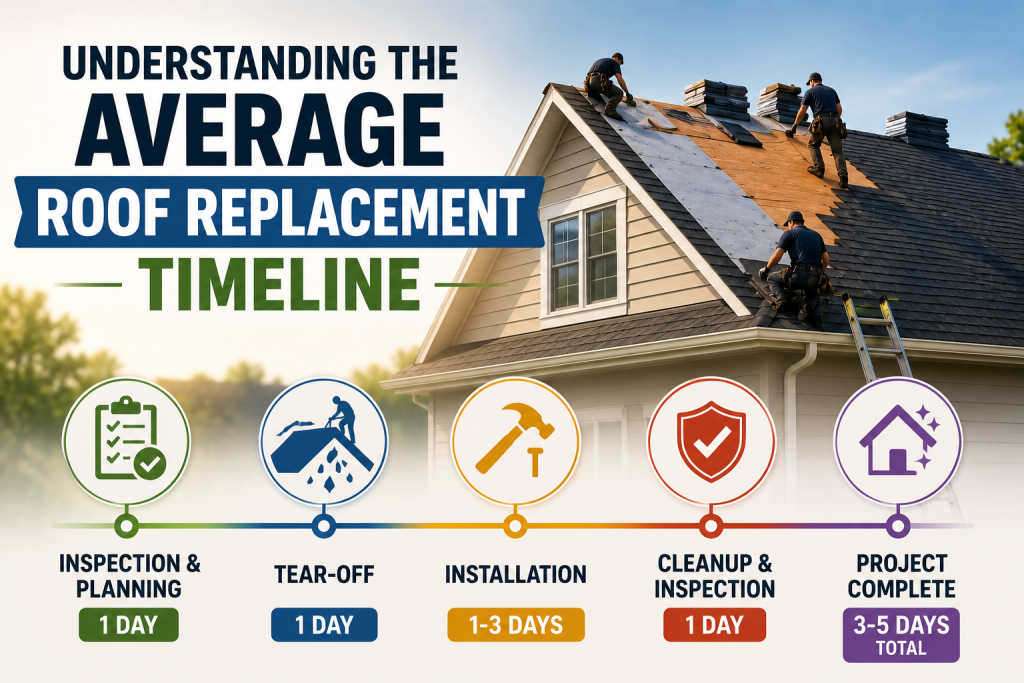
Local building requirements, HOA approvals, and seasonal demand also play a role in determining how long a project takes. Many homeowners ask, how long does roof replacement take from start to finish. The answer depends on both pre-construction planning and on-site work. Understanding each stage of the roof replacement timeline helps homeowners prepare for potential delays and maintain realistic expectations throughout the project.
What Factors Affect a Roof Replacement Timeline?
Several factors can influence the length of a roofing project, even when experienced contractors are involved. While some homes can be completed in a day or two, others require additional planning and labor. Understanding these variables helps homeowners anticipate delays and better manage expectations throughout the roof replacement time period.
Roof Size and Complexity
Larger roofs naturally require more labor, materials, and cleanup time. Homes with multiple slopes, dormers, skylights, chimneys, or steep pitches often take longer to complete than simple roof designs. Complex layouts also increase safety requirements and installation precision, which can extend the roof replacement timeline by several days.
Roofing Material Selection
The type of roofing material has a direct impact on installation speed. Asphalt shingles are generally the fastest option, while metal, tile, and slate systems require specialized techniques and additional labor. Certain premium materials may also have longer lead times before installation can begin.
Weather Conditions and Seasonal Delays
Weather is one of the most common causes of project interruptions. Rain, snow, high winds, and extreme temperatures can create unsafe working conditions and affect material performance. In regions such as Florida, Texas, and the Gulf Coast, storm seasons often influence contractor availability and project scheduling. During peak roofing months, a busy roofing project schedule may also lead to longer wait times before work begins.
Roof Replacement Timeline: Step-by-Step Breakdown
A successful roofing project follows a series of structured stages. Understanding these steps allows homeowners to see how each phase contributes to the overall roof replacement time period and where delays are most likely to occur.
Initial Inspection and Estimate
Every project begins with a professional roof inspection. Contractors evaluate the condition of shingles, flashing, ventilation, underlayment, and roof decking before preparing a detailed estimate. This assessment helps determine the scope of work and identify potential structural concerns before installation begins.
Permit Approval and Material Ordering
Many municipalities require permits before roofing work can start. Approval timelines vary by location and can add several days to the project. Once permits are secured, contractors order roofing materials, underlayment, flashing, and accessories needed for the upcoming roof installation process.
Scheduling Your Roofing Contractor
Contractor availability can significantly impact project timing. During peak seasons, homeowners may wait several weeks before crews are available. Early roof contractor scheduling helps secure preferred installation dates and reduces the risk of seasonal delays.
Tear-Off and Deck Inspection
The existing roofing material is removed to expose the roof deck. Contractors inspect the decking for moisture damage, rot, or structural issues that could affect the new roof system. Any necessary repairs are completed before installation proceeds.
Installation of Underlayment and Roofing Materials
Once the deck is approved, crews install protective barriers, flashing systems, and the selected roofing material. This stage represents the most visible portion of the project and typically accounts for the majority of on-site labor.
Final Cleanup and Inspection
The final phase includes debris removal, magnetic nail sweeps, quality-control inspections, and verification that all work meets local code requirements. These concluding roof replacement phases ensure the roof is ready to protect the home for years to come.
How Long Does Roof Replacement Take for Different Roofing Materials?
The type of roofing material chosen for your home plays a major role in determining the overall roof replacement timeline. Some systems can be installed quickly, while others require specialized labor, additional preparation, and more detailed installation techniques.
Asphalt Shingles
Asphalt shingles remain the most popular roofing material in the United States because they are affordable and relatively quick to install. For many homes, installation can be completed within one to three days once materials arrive on-site.
Metal Roofing
Metal roofing systems often require precise measurements, custom fabrication, and specialized installation methods. Although highly durable, they generally take longer to install than asphalt shingles.
Tile Roofing
Concrete and clay tile roofs are heavier and more labor-intensive. Additional structural evaluations may be necessary, which can extend the residential roof replacement timeline compared to standard roofing systems.
Slate Roofing
Slate is among the most durable roofing materials available, but it also requires highly skilled installers. Due to its weight and installation complexity, slate projects typically have the longest completion times and may add several days or weeks to the overall roof replacement time period.
Residential Roof Replacement Timeline by Home Size
Home size is one of the most important factors influencing the overall roof replacement timeline. Larger roofs require more materials, additional labor hours, and longer cleanup periods, which can increase project duration even when weather conditions are favorable.
Small Homes (Up to 1,500 Square Feet)
Smaller homes typically have less roof surface area and fewer architectural complexities. In many cases, contractors can complete the removal and installation process within a single day, provided no structural issues are discovered during the project.
Medium Homes (1,500–2,500 Square Feet)
Most American homes fall into this category. A medium-sized roof generally requires one to three days of on-site work, depending on the roofing material and project complexity. These projects often follow standard reroofing steps, making scheduling and execution more predictable.
Large Homes (2,500+ Square Feet)
Large homes with multiple roof sections, valleys, dormers, or steep slopes often require additional crew members and extended installation periods. If decking repairs or ventilation upgrades are needed, the roof replacement time period may increase by several additional days before the project reaches completion.
Common Delays That Extend a Roof Replacement Timeline
Even the most carefully planned roofing project can encounter unexpected setbacks. Understanding the most common causes of delays helps homeowners prepare for scheduling adjustments and maintain realistic expectations throughout the process.
Weather Interruptions
Rain, snow, high winds, and severe storms are among the most frequent reasons roofing projects are delayed. Roofing crews must work in safe conditions, and many materials require dry surfaces for proper installation. In states such as Florida, Louisiana, and Texas, seasonal storms can significantly impact project schedules.
Structural Repairs
Once the old roof is removed, contractors may discover damaged decking, water intrusion, mold, or structural deterioration. These hidden issues must be repaired before the new roofing system can be installed, often extending the project beyond the original estimate.
Material Backorders
Special-order roofing products, premium shingles, metal panels, and custom components may not always be immediately available. Supply chain disruptions can delay delivery and postpone installation dates.
Contractor Availability
Highly rated roofing companies often have busy schedules, especially after major storms or during peak remodeling seasons. Homeowners who wait until the last minute may experience longer lead times before work begins, which can add weeks to the overall roof replacement time period.
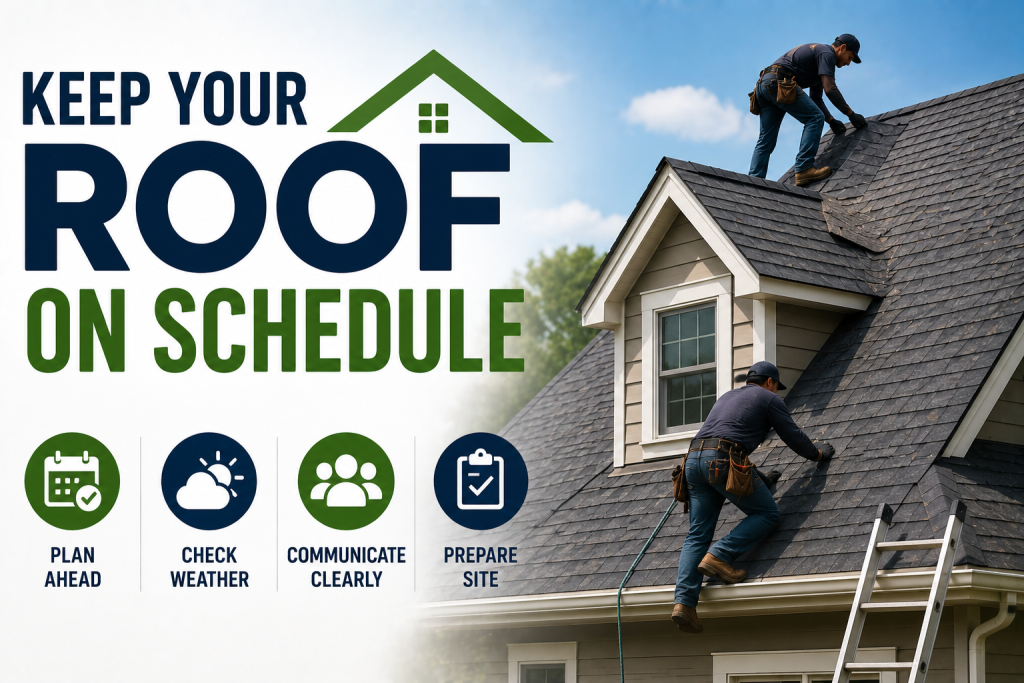
Tips to Keep Your Roof Installation on Schedule
While some delays are unavoidable, homeowners can take several proactive steps to keep a roofing project moving efficiently. Proper planning before construction begins often has the greatest impact on keeping the project on schedule.
Book a Contractor Early
Demand for roofing services tends to increase during spring, summer, and after major storm events. Scheduling consultations early gives homeowners access to more installation dates and helps avoid extended waiting periods.
Secure Permits and HOA Approvals in Advance
Many municipalities require permits before roofing work can begin. Homes located within HOA communities may also need architectural approval. Completing these requirements ahead of time helps prevent administrative delays that can slow down the project.
Choose Materials Before Scheduling
Selecting roofing materials early allows contractors to verify product availability and order supplies before the project start date. This reduces the risk of installation delays caused by shipping issues or inventory shortages.
Prepare the Property
Removing vehicles from driveways, clearing outdoor furniture, protecting landscaping, and providing easy access to the work area can help crews operate more efficiently. Small preparation steps often contribute to a smoother project and a shorter roof replacement time period from start to finish.
Roof Replacement Timeline at a Glance
Understanding how long each stage takes can help homeowners plan around work schedules, family routines, and weather-related concerns. While every project is unique, the table below provides a realistic overview of a typical roof replacement timeline for a residential property.
| Project Phase | Typical Duration |
| Initial Roof Inspection | 1–2 hours |
| Estimate Review and Approval | 1–7 days |
| Permit Processing | 1–14 days |
| Material Ordering and Delivery | 2–14 days |
| Contractor Scheduling | 1–6 weeks |
| Roof Tear-Off | 1 day |
| Deck Inspection and Repairs | 1–3 days |
| Underlayment Installation | Less than 1 day |
| Roofing Material Installation | 1–5 days |
| Cleanup and Final Inspection | 1 day |
For many homeowners, the installation phase represents only a small portion of the overall project. Planning, permitting, material procurement, and contractor availability often account for the majority of the timeline. By understanding each phase in advance, homeowners can make informed decisions and better prepare for a successful roof replacement.
Conclusion
A roof replacement is a major investment that requires careful planning, realistic expectations, and coordination with experienced professionals. While the installation itself may only take a few days, the complete roof replacement timeline often includes inspections, permits, material ordering, contractor scheduling, installation, and final quality checks. Several factors can influence project duration, including roof size, material selection, weather conditions, and the need for structural repairs. Homeowners who plan ahead, secure approvals early, and work with reputable contractors are more likely to experience a smooth and efficient process.
By understanding each stage of the roof replacement time period, homeowners can better prepare for upcoming work, minimize disruptions, and make informed decisions throughout the project. Whether you’re replacing an aging asphalt shingle roof or investing in a premium metal or slate system, knowing what to expect helps ensure a successful outcome and long-term protection for your home.
Frequently Asked Questions
How long does a typical roof replacement take?
For most homes, the installation portion of a roofing project takes between one and three days. However, the complete roof replacement timeline may extend several weeks when inspections, permits, material delivery, scheduling, and final inspections are included.
Can a roof replacement be completed in one day?
Yes. Smaller homes with simple roof designs and asphalt shingles can sometimes be completed in a single day. Weather conditions, crew size, and roof complexity ultimately determine whether a one-day installation is realistic.
What part of the project takes the longest?
In many cases, pre-construction planning takes longer than the installation itself. Permit approvals, contractor availability, and material procurement often add the most time to the overall roof replacement timeline.
Does bad weather delay roof replacement projects?
Absolutely. Rain, snow, strong winds, and severe storms can pause work for safety reasons and affect material performance. Weather-related interruptions are among the most common causes of project delays.
Should I stay home during roof replacement?
Most homeowners can remain in their homes during the project. However, roofing work can be noisy, and vibrations may be noticeable throughout the day. Families with young children, remote workers, or pets may prefer to make alternative arrangements during active installation hours.