


EPDM vs TPO Roofing: Which Flat Roof System Is Better?
Flat roofing systems have become increasingly popular across the United States, especially for commercial buildings, modern homes, multifamily properties, and low-slope additions. When homeowners and property managers compare EPDM vs TPO roofing, they are usually looking for the best balance of durability, energy efficiency, installation cost, and long-term maintenance. Both materials dominate today’s commercial roofing systems, but they perform differently depending on climate, building design, and budget priorities.
In states like Florida, Texas, and Arizona, reflective roofing membranes are often chosen to reduce cooling costs during extreme summer heat. In colder regions such as Minnesota, Illinois, and Pennsylvania, durability against freeze-thaw cycles and snow loads becomes more important. Choosing between these two roofing systems also affects insurance considerations, resale value, and future repair expenses. This guide compares EPDM vs TPO roofing in detail so US homeowners and property owners can confidently choose the right flat roof solution for their building.
What Is EPDM Roofing?
EPDM vs TPO roofing comparisons often begin with understanding how EPDM works as a roofing membrane. EPDM stands for ethylene propylene diene monomer, a synthetic rubber material widely used on low-slope and flat roofs throughout the United States. Known for its flexibility and weather resistance, EPDM is one of the oldest and most trusted flat roof materials in the roofing industry. Most EPDM membranes are black, although white versions are also available. The dark surface absorbs heat, which can benefit buildings in colder northern climates like Michigan, Ohio, and New York.
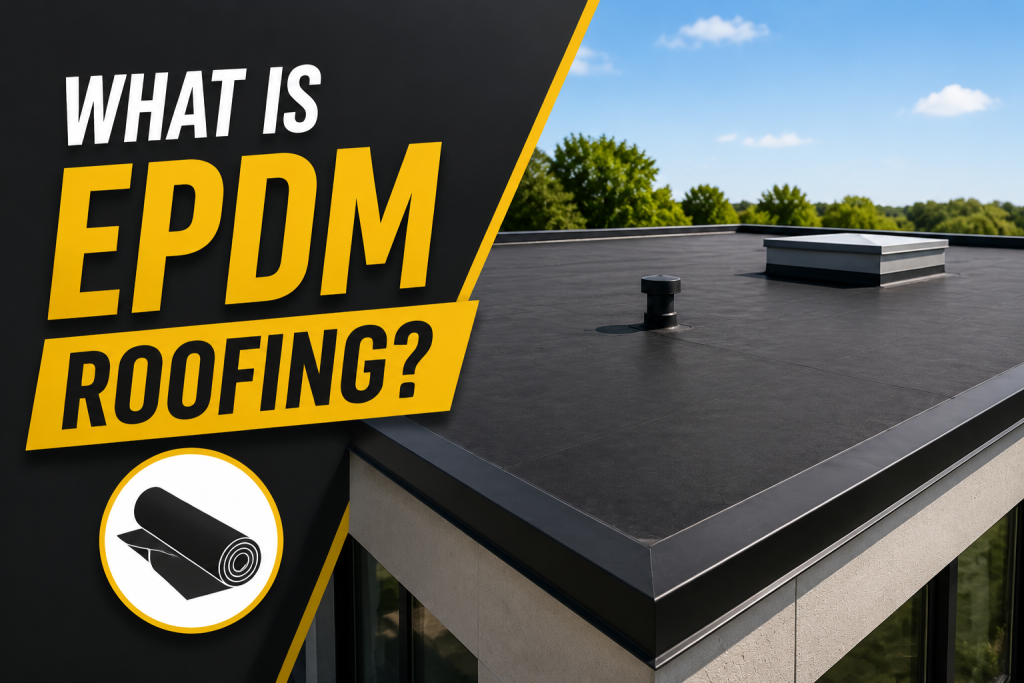
EPDM roofs are commonly installed on warehouses, office buildings, garages, and residential additions because the material handles temperature swings extremely well. Another reason contractors recommend EPDM is its proven durability. The average EPDM roofing lifespan ranges from 20 to 30 years when properly installed and maintained. Leading manufacturers such as Firestone Building Products and Carlisle SynTec continue to produce EPDM systems that meet modern US roofing standards and energy code requirements.
What Is TPO Roofing?
When evaluating EPDM vs TPO roofing, many property owners focus on modern energy performance and installation efficiency. TPO, or thermoplastic polyolefin, is a single-ply roofing membrane designed for flat and low-slope roofs. It has become one of the fastest-growing roofing systems in the United States because of its reflective surface and strong seam performance. Unlike traditional black rubber membranes, TPO roofing is commonly manufactured in white, gray, or tan colors. These reflective surfaces help reduce rooftop heat absorption, making TPO especially popular in warm states such as Texas, Florida, Nevada, and California.
Many commercial property owners choose TPO because its reflective properties can support lower summer cooling costs and improved indoor comfort. One of the biggest TPO roofing benefits is energy efficiency. Many TPO systems qualify for ENERGY STAR standards due to their solar reflectivity. TPO membranes also resist mold growth, dirt buildup, punctures, and UV damage, making them a practical choice for restaurants, retail centers, apartment complexes, and modern residential construction projects across the US.
EPDM vs TPO Roofing: Key Differences
Understanding the real differences between EPDM vs TPO roofing helps homeowners and commercial property owners choose the right roofing system for their climate and long-term budget goals. While both are single-ply membranes designed for flat roofs, their performance characteristics vary significantly. EPDM is a durable rubber roofing material known for flexibility and long-term weather resistance. It performs exceptionally well in colder northern climates where roofs regularly experience snow accumulation, ice, and freeze-thaw cycles. TPO, on the other hand, is designed with reflective technology that performs better in hotter southern climates with intense sun exposure.
Another major distinction is seam installation. EPDM seams are typically adhered with tape or adhesive, while TPO seams are heat-welded together for enhanced waterproofing performance. In many modern commercial projects, contractors prefer TPO because of its cleaner appearance and energy-saving capabilities. For property owners researching a complete flat roof membrane comparison, climate conditions, roof accessibility, insulation quality, and expected maintenance costs should all influence the final decision.
Which Roofing System Lasts Longer?
Durability is one of the most important factors homeowners consider when comparing EPDM vs TPO roofing. While both systems are designed for long-term flat roof performance, EPDM generally has a slightly longer track record in the US roofing industry. EPDM roofing membranes have been used for decades and are known for surviving harsh weather conditions, temperature fluctuations, hail exposure, and heavy snow loads. In colder regions like Colorado, Wisconsin, and Massachusetts, EPDM often performs exceptionally well because the rubber membrane remains flexible even during freezing winter temperatures.
With proper installation and maintenance, many EPDM roofs can last up to 30 years. TPO roofing systems typically last between 15 and 25 years depending on membrane thickness, installation quality, and regional climate conditions. Newer TPO manufacturing technologies have improved durability significantly, but long-term performance can vary between manufacturers. For many building owners, the decision between EPDM vs TPO roofing comes down to whether they prioritize maximum lifespan or improved energy efficiency. In colder climates, EPDM often delivers stronger long-term reliability, while TPO performs better in regions with prolonged heat and UV exposure.
Energy Efficiency and Climate Performance
Energy savings play a major role when property owners compare EPDM vs TPO roofing, especially in regions with extreme seasonal temperatures. Roofing materials directly affect indoor comfort, HVAC performance, and monthly utility bills, making climate compatibility an important part of the decision-making process. TPO roofing is widely recognized as an energy-efficient flat roofing solution because of its reflective surface. White TPO membranes reflect sunlight instead of absorbing heat, helping reduce rooftop temperatures during hot summers. This makes TPO particularly effective in Southern states like Florida, Texas, Arizona, and Georgia, where cooling costs remain high for much of the year.
EPDM roofing performs differently because its traditional black membrane absorbs heat. In colder northern climates such as Minnesota, Michigan, and Pennsylvania, this heat absorption can actually help reduce winter heating demands. EPDM also maintains flexibility during freezing temperatures, which lowers the risk of cracking in snow-heavy regions. When choosing between EPDM vs TPO roofing, climate conditions should always guide the final selection. Hot, sunny regions usually benefit more from TPO, while colder climates often favor EPDM for long-term weather resistance.
Installation and Maintenance Requirements
Installation quality has a major impact on the long-term performance of EPDM vs TPO roofing systems. Even the best roofing membrane can fail early if seams, insulation, flashing, or drainage systems are installed incorrectly. That is why experienced commercial roofing contractors and manufacturer-certified installers are critical for both roofing types. EPDM membranes are generally easier and faster to install because the material is lightweight and highly flexible. Large membrane sheets can cover wide roof sections with fewer seams, reducing potential leak points. Repairs are also relatively straightforward, which helps lower long-term maintenance costs for many property owners.
TPO roofing installation requires heat-welded seams using specialized equipment. When properly installed, these welded seams create strong waterproof bonds that perform well during heavy rain and high heat exposure. However, TPO installation can be more sensitive to workmanship quality and weather conditions during installation. For property owners researching EPDM vs TPO roofing, regular inspections remain essential regardless of membrane type. Annual maintenance helps identify punctures, drainage issues, seam separation, and flashing damage before costly leaks develop.
Cost Comparison: EPDM vs TPO Roofing
Cost is often the deciding factor when comparing commercial roofing systems. While both materials are considered affordable options for low-slope roofs, pricing can vary based on membrane thickness, insulation upgrades, labor costs, roof accessibility, and regional contractor rates. EPDM roofing is usually slightly less expensive upfront because the material has been widely available for decades and installation is relatively simple. Property owners with large commercial buildings often choose EPDM to reduce initial roofing expenses while still achieving reliable long-term protection.
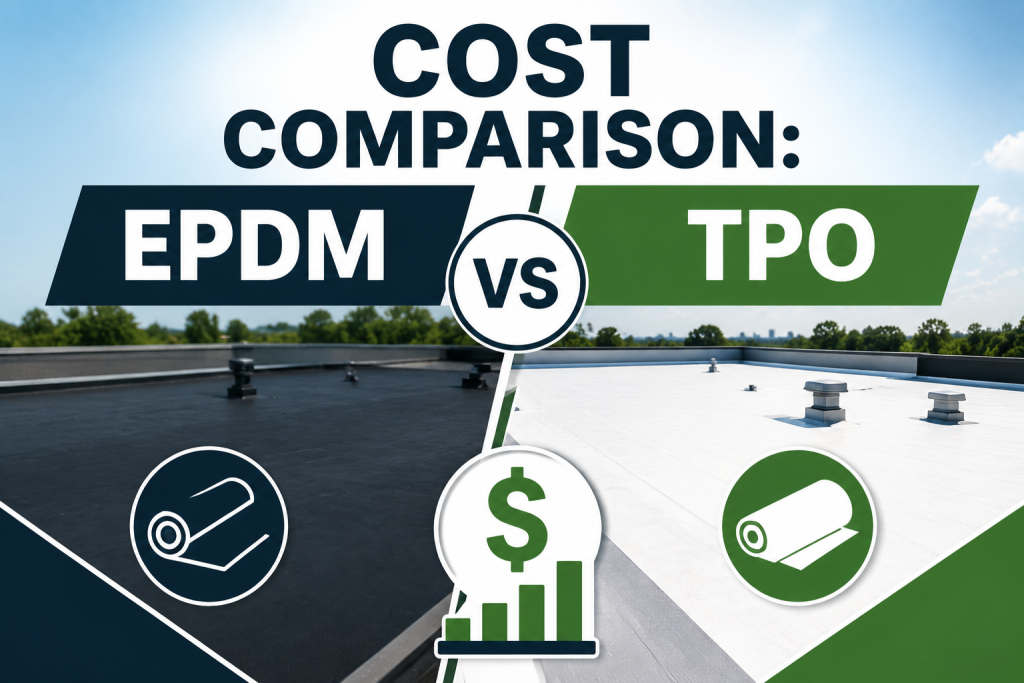
TPO roofing can cost more initially due to heat-welded seam installation and reflective membrane technology. However, many property owners recover part of that investment through lower cooling expenses over time, especially in warm climates with intense sun exposure. For anyone evaluating EPDM vs TPO roofing, total ownership cost matters more than installation price alone. Long-term maintenance, energy savings, warranty coverage, repair frequency, and expected lifespan all contribute to the overall value of a flat roofing system. Comparing contractor warranties and manufacturer certifications can also help avoid expensive roofing problems later.
Which Roofing System Is Better for Your Climate?
Choosing the right commercial roofing system often comes down to regional climate performance rather than material popularity. In the United States, roofing systems must handle a wide range of environmental stresses, including extreme heat, heavy snowfall, hurricanes, and rapid freeze-thaw cycles. In hot southern climates such as Florida, Texas, and Arizona, TPO roofing is often the preferred option because its reflective surface helps reduce heat absorption and supports lower air conditioning costs. Buildings in these regions benefit from improved energy performance during long, hot summers where rooftop temperatures can become extreme.
In contrast, EPDM roofing performs exceptionally well in colder northern states like Minnesota, Illinois, and New York. Its rubber composition remains flexible in freezing temperatures, which helps prevent cracking and splitting during winter storms and snow accumulation. This makes EPDM a reliable choice for regions with long, harsh winters. For mixed climates, the choice often depends on whether the building prioritizes cooling efficiency or cold-weather durability. Contractors frequently evaluate insulation levels, roof slope, and building usage before recommending a final roofing system.
Final Verdict
When comparing EPDM vs TPO roofing, there is no universal winner, only the right choice for the right building. Both systems are widely used across the United States in commercial roofing systems, and both can deliver long-lasting performance when properly installed and maintained. EPDM is often the better option for property owners who prioritize proven durability, lower upfront cost, and strong performance in cold and variable climates. Its long track record in the roofing industry makes it a trusted choice for warehouses, schools, and residential flat roof extensions.
TPO, on the other hand, is ideal for energy-conscious property owners seeking improved solar reflectivity and reduced cooling costs. Its popularity continues to grow in modern construction projects, especially in warmer regions where heat management is a major concern. Ultimately, the decision between EPDM vs TPO roofing should be based on climate, budget, building usage, and long-term energy goals. Consulting with a certified roofing contractor and reviewing manufacturer warranties from brands like GAF, Carlisle SynTec, and Johns Manville can help ensure the best long-term investment.
FAQ
Which is cheaper, EPDM or TPO?
EPDM is typically more affordable upfront due to simpler installation and lower material costs. However, TPO may deliver long-term savings in warmer climates because of improved energy efficiency.
Which roofing lasts longer?
EPDM often has a slightly longer proven track record, with many systems lasting 20–30 years. TPO generally lasts 15–25 years depending on membrane thickness and installation quality.
Is EPDM or TPO better for hot climates?
TPO is usually preferred in hot regions because its reflective surface helps reduce cooling loads. It performs well in states with intense sun exposure.
Is EPDM or TPO better for cold climates?
EPDM is generally better suited for cold climates because it remains flexible in freezing temperatures and resists cracking during snow and ice conditions.
Which is easier to repair?
EPDM is often easier to patch using adhesive-based repair methods, while TPO repairs typically require heat welding and specialized equipment.
What are the main risks with these roofing systems?
Both systems depend heavily on installation quality. Poor seam work, inadequate insulation, or improper drainage design can lead to leaks regardless of material choice.