


Complete Roof Replacement Guide For US Homes
A roof is one of the most important components of any home, protecting your family, belongings, and structural investment from the elements. However, even the highest-quality roofing systems eventually reach the end of their service life. Whether you’re dealing with storm damage, aging shingles, persistent leaks, or declining curb appeal, understanding the replacement process can help you make informed decisions and avoid costly mistakes. This roof replacement guide is designed specifically for U.S. homeowners who want to navigate a roofing project with confidence.
From identifying the signs of roof failure to selecting the right materials and hiring a qualified contractor, every step plays a role in the long-term performance of your home. A properly installed roof can improve energy efficiency, increase resale value, strengthen weather resistance, and provide peace of mind for decades. Before investing thousands of dollars in a new roofing system, it’s important to understand what to expect and how to prepare for a successful replacement project.
Roof Replacement Guide: When Is It Time to Replace Your Roof?
Knowing when to replace a roof can save homeowners from expensive repairs and unexpected structural damage. While many roofing systems are designed to last for decades, factors such as climate, maintenance habits, installation quality, and material type all influence longevity. In regions like Florida, roofs often face hurricane-force winds and high humidity, while homes in states such as Minnesota or Michigan must withstand snow loads and freeze-thaw cycles. This roof replacement guide recommends evaluating both the roof’s age and its overall condition rather than relying on a single warning sign. Early identification of roofing problems can help homeowners budget appropriately, avoid emergency replacements, and protect their property’s value before minor issues develop into major concerns.
Common Warning Signs Homeowners Should Not Ignore
Several warning signs indicate that a roof may be approaching the end of its useful life. Missing or curling shingles, granule loss, recurring leaks, water stains on ceilings, mold growth, and sagging roof sections should never be ignored. Homeowners may also notice rising utility bills if the roofing system is no longer providing proper insulation and ventilation. After severe weather events, a professional inspection can identify hidden damage that may not be visible from the ground. Addressing these issues early can prevent moisture intrusion and structural deterioration.
How Roof Age Affects Replacement Decisions
Most asphalt shingle roofs last between 20 and 30 years, while premium materials such as metal, slate, and clay tile often provide significantly longer service lives. Even if a roof appears functional, aging materials become more vulnerable to weather-related damage over time. As highlighted in this roof replacement guide, homes located in high-heat areas such as Texas and Arizona may experience accelerated deterioration due to prolonged UV exposure. When a roof approaches its expected lifespan, replacement is often more cost-effective than ongoing repairs. Evaluating age alongside visible wear helps homeowners make practical and financially sound decisions.
Roof Replacement Guide: Understanding the Complete Replacement Process
A successful roofing project begins with understanding the steps involved before work starts. This roof replacement guide encourages homeowners to view roof replacement as a complete system upgrade rather than simply installing new shingles. The process includes inspection, material selection, permitting requirements, site preparation, removal of existing roofing, deck evaluation, and final installation. Working with an experienced contractor helps ensure compliance with local building codes and manufacturer specifications. Proper planning also minimizes disruptions and reduces the risk of unexpected expenses. By understanding each phase of the project, homeowners can communicate more effectively with contractors and make informed decisions throughout the replacement timeline.
Inspection and Project Planning
The first step in the reroofing process is a comprehensive roof inspection. Contractors evaluate the condition of shingles, flashing, ventilation systems, underlayment, and roof decking. They also identify moisture damage, structural concerns, and code-related issues that may affect the project scope. During this stage, homeowners select roofing materials, review warranties, discuss timelines, and obtain detailed estimates. A thorough planning phase helps prevent delays and ensures realistic expectations regarding costs and project duration.
Tear-Off, Deck Inspection, and Installation
Once preparation is complete, crews remove existing roofing materials to expose the roof deck underneath. Contractors inspect the decking for rot, water damage, or structural weaknesses before installing new underlayment and weather barriers. The remaining roof installation steps include flashing placement, shingle or panel installation, ventilation upgrades, and final quality inspections. Proper installation techniques are critical because even premium roofing materials can fail prematurely if installed incorrectly. A final walkthrough allows homeowners to verify workmanship and ensure all project requirements have been completed.
Choosing the Best Roofing Material for Your Home
Selecting the right roofing material is one of the most important decisions homeowners make during a replacement project. While budget is often a major factor, durability, maintenance requirements, climate suitability, and long-term value should also influence the choice. This roof replacement guide recommends evaluating roofing products based on local weather conditions and expected lifespan rather than upfront cost alone. Homeowners in hurricane-prone coastal regions may prioritize impact resistance, while those in colder northern states often focus on snow performance and durability. Understanding the strengths and limitations of each roofing option can help maximize return on investment and improve long-term protection.
Asphalt Shingles vs Metal Roofing
A thorough roofing materials comparison often begins with asphalt shingles and metal roofing because they are among the most popular residential options in the United States. Asphalt shingles offer affordability, wide design selection, and relatively simple installation. Metal roofing provides superior longevity, energy efficiency, and resistance to extreme weather conditions. In states such as Texas and Arizona, reflective metal roofing can help reduce cooling costs during hot summer months. While metal roofs typically require a higher upfront investment, their extended lifespan may offset long-term maintenance and replacement expenses.
Premium Roofing Options for Long-Term Performance
Homeowners seeking maximum durability may consider premium materials such as slate, clay tile, concrete tile, or advanced synthetic roofing products. Slate roofs can last well over 75 years when properly maintained, while clay and concrete tiles perform exceptionally well in warm climates. Synthetic roofing systems have also gained popularity because they mimic natural materials while offering lighter weight and improved impact resistance. Manufacturers such as CertainTeed, Owens Corning, and GAF provide a variety of premium roofing solutions designed to meet different architectural styles and regional performance requirements. Choosing the right material ultimately depends on budget, climate, and long-term homeownership goals.
Roof Replacement Costs Across Different US Regions
Roof replacement costs vary significantly across the United States due to labor rates, material availability, roof complexity, local regulations, and climate-related requirements. This roof replacement guide emphasizes that homeowners should evaluate total project value rather than focusing solely on the lowest estimate. A roofing project for a 2,000-square-foot home may cost substantially more in one region than another because of permitting fees, contractor demand, or specialized material requirements. Understanding the factors that influence pricing helps homeowners create realistic budgets and avoid unexpected expenses during the project.
Factors That Influence Roofing Costs
Several variables contribute to the overall cost of replacing a roof. As explained in this roof replacement guide, material selection is often the largest factor, with asphalt shingles generally costing less than metal, slate, or tile roofing systems. Roof pitch, accessibility, tear-off requirements, ventilation upgrades, and decking repairs can also increase project costs. Homes with multiple rooflines, dormers, chimneys, and skylights typically require additional labor and materials. Warranty coverage and contractor experience may further affect pricing, but investing in quality workmanship often reduces long-term maintenance expenses.
Climate and Regional Considerations
Regional weather conditions frequently influence both material selection and installation costs. As noted in this roof replacement guide, homeowners in Florida often invest in impact-resistant roofing systems designed to withstand hurricanes and severe storms. Texas homeowners may prioritize heat-resistant materials that improve energy efficiency, while Colorado residents often need roofing systems capable of handling hail and rapid weather changes. In northern states such as Illinois and New York, roofs must withstand heavy snow loads and repeated freeze-thaw cycles. These regional demands can affect material choices, installation methods, and overall project budgets, making location an important consideration when planning a replacement.
Roof Replacement Checklist Before Hiring a Contractor
Choosing the right contractor can have a greater impact on project success than the roofing material itself. This roof replacement guide recommends completing a detailed roof replacement checklist before signing any agreement. Homeowners should compare multiple estimates, verify licensing requirements, review warranty coverage, and confirm that all project details are documented in writing. Taking the time to evaluate contractors carefully can reduce the risk of disputes, hidden costs, and poor workmanship. A well-qualified roofing professional should be transparent about pricing, timelines, materials, and installation procedures from the beginning.
Questions to Ask Before Signing a Contract
Before selecting a contractor, homeowners should ask about experience, local project references, manufacturer certifications, and warranty terms. Requesting proof of previous work can provide valuable insight into installation quality and customer satisfaction. One of the most valuable roofing contractor tips is to avoid making a decision based solely on price. The lowest bid may exclude important materials, ventilation upgrades, or necessary repairs that could increase costs later in the project.
Licensing, Insurance, and Warranty Verification
Every roofing contractor should carry appropriate state licensing, general liability insurance, and workers’ compensation coverage where required. As recommended in this roof replacement guide, homeowners should request documentation and verify that coverage remains active throughout the project. Warranty protection is equally important because it can affect long-term repair costs. Ideally, homeowners should receive both a manufacturer’s product warranty and a workmanship warranty from the contractor. These protections help safeguard the investment and provide additional peace of mind after installation is complete.
How to Choose the Right Roofing Contractor
Hiring the right roofing contractor is essential for protecting your investment and ensuring long-term roof performance. This roof replacement guide recommends focusing on qualifications, reputation, communication, and proven experience rather than marketing claims alone. A reputable contractor should be willing to explain materials, installation methods, warranty coverage, and project timelines in detail. Homeowners should also evaluate how responsive and transparent a contractor is during the estimate process. Strong communication often reflects the level of professionalism that can be expected throughout the project.
Evaluating Estimates and References
When reviewing estimates, homeowners should compare more than just the final price. As advised in this roof replacement guide, a detailed proposal should clearly outline material specifications, labor costs, warranty information, cleanup procedures, and project schedules. References from recent customers can provide insight into workmanship quality and reliability. Contractors who maintain certifications from major manufacturers and follow industry standards established by organizations such as the National Association of Home Builders often demonstrate a stronger commitment to professional practices and continuing education.
Avoiding Common Roofing Scams
Roofing scams frequently occur after major storms when out-of-town contractors target homeowners with aggressive sales tactics. As highlighted in this roof replacement guide, warning signs include demands for large upfront payments, vague contracts, and pressure to make immediate decisions. Homeowners should verify business addresses, check online reviews, and confirm licensing before signing any agreement. Safety should also remain a priority throughout the project. Contractors who follow guidelines established by the Occupational Safety and Health Administration are more likely to maintain professional jobsite practices and reduce risks for workers and property owners alike.
Residential Roofing Guide for Different Climate Zones
Climate plays a major role in determining how well a roofing system performs over time. A residential roofing guide should account for regional weather patterns because materials that perform exceptionally well in one area may not be the best choice elsewhere. This roof replacement guide recommends selecting roofing systems based on local environmental conditions, expected maintenance requirements, and long-term durability goals. Factors such as humidity, wind exposure, hail, snow accumulation, and temperature fluctuations all influence roofing performance. Understanding these regional differences helps homeowners make smarter investments and maximize the lifespan of their new roof.
Roofing Solutions for Hot Southern States
Homeowners in states such as Florida and Texas often prioritize roofing materials that can withstand intense sunlight, high humidity, and severe storms. Metal roofing, reflective shingles, and impact-resistant products are commonly selected for their durability and energy-saving benefits. Proper attic ventilation is equally important because it helps reduce heat buildup and lowers cooling costs during extended periods of hot weather.
Roofing Systems for Snow and Ice Regions
In colder states such as Minnesota, Michigan, and New York, roofing systems must withstand heavy snow loads, ice dams, and repeated freeze-thaw cycles. Durable asphalt shingles, standing-seam metal roofs, and high-performance underlayments are often recommended for these environments. Adequate insulation and ventilation help prevent moisture issues while reducing the risk of ice-related roof damage. Homeowners in northern climates should prioritize materials designed to maintain structural integrity under challenging winter conditions.
Homeowner Roofing Guide: Mistakes to Avoid During Replacement
Replacing a roof is a major investment, and avoiding common mistakes can significantly improve project outcomes. A comprehensive homeowner roofing guide should help property owners focus on long-term value rather than short-term savings. This roof replacement guide encourages homeowners to carefully evaluate materials, contractor qualifications, ventilation requirements, and warranty coverage before making final decisions. Rushing through the planning process often leads to preventable problems that increase maintenance costs and reduce roof lifespan. Taking a strategic approach helps ensure the new roofing system delivers reliable protection and lasting performance.
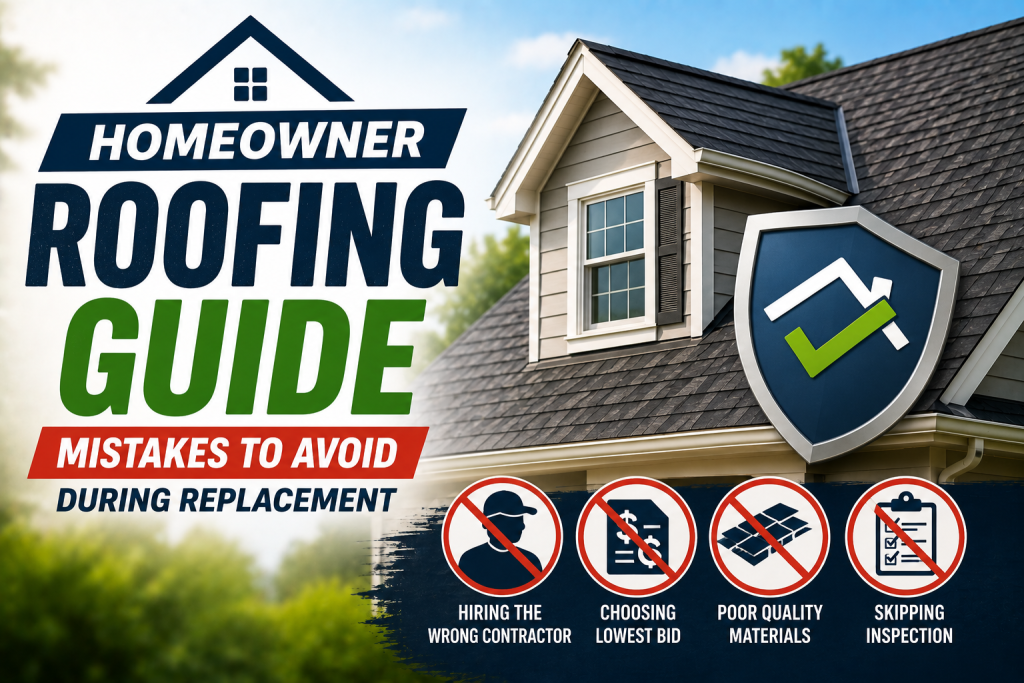
Prioritizing Price Over Quality
One of the most common mistakes homeowners make is choosing the lowest bid without fully understanding what is included. Lower-priced estimates may exclude important components such as upgraded underlayment, flashing improvements, or ventilation enhancements. While staying within budget is important, selecting quality materials and experienced installers often provides better long-term value. Investing in durable roofing products and professional workmanship can reduce repair expenses and improve overall system longevity.
Ignoring Ventilation and Underlayment Requirements
Proper ventilation and underlayment play critical roles in roof performance, yet they are frequently overlooked during replacement projects. Inadequate attic ventilation can trap heat and moisture, accelerating material deterioration and increasing energy costs. Similarly, low-quality underlayment may leave the roof vulnerable to water intrusion during severe weather. Homeowners should ensure these components are included in project specifications and installed according to manufacturer recommendations. A well-designed roofing system functions as an integrated structure, with every layer contributing to protection, efficiency, and durability.
Conclusion
Replacing a roof is one of the most significant home improvement projects a homeowner can undertake, but proper planning can make the process far more manageable. From identifying early warning signs and selecting the right materials to evaluating contractors and understanding regional climate considerations, every decision affects the long-term performance of your roofing system. This roof replacement guide highlights the importance of viewing a roof as a complete protective system rather than simply a layer of shingles.
Whether you live in the hurricane-prone regions of Florida, the hot climates of Texas and Arizona, or the snow-heavy areas of the Midwest and Northeast, choosing materials suited to local conditions can improve durability and energy efficiency. By investing in quality products, verifying contractor credentials, and following best practices throughout the project, homeowners can protect their property, improve curb appeal, and increase long-term home value. A well-executed roof replacement is an investment that delivers protection and peace of mind for decades to come.
Frequently Asked Questions
In a Roof Replacement Guide, How Long Does Roof Replacement Take?
Most residential roof replacements are completed within one to three days, depending on roof size, weather conditions, material type, and project complexity. As explained throughout this roof replacement guide, larger homes or roofs requiring structural repairs may take longer.
Can You Stay Home During Roof Replacement?
In most cases, homeowners can remain in their homes while a roof is being replaced. However, the process can be noisy due to material removal, hammering, and equipment use throughout the day. Families with young children, pets, or individuals who work from home may prefer to make temporary arrangements during peak construction hours for added comfort.
Does Home Insurance Cover Roof Replacement?
Insurance coverage depends on the cause of the damage and the terms of the policy. Roof replacement is often covered when damage results from qualifying events such as hail, windstorms, or fallen trees. However, insurance providers typically do not cover roof replacement caused solely by age, neglect, or lack of maintenance. Homeowners should review their policy and consult their insurance provider for specific coverage details.
Which Roofing Material Lasts the Longest?
Among commonly used residential roofing materials, slate generally offers the longest lifespan, often exceeding 75 years when properly maintained. Metal roofing can last 40 to 70 years, while clay and concrete tile roofs frequently perform for several decades. Asphalt shingles remain the most popular option because they provide a balance of affordability, durability, and appearance, typically lasting 20 to 30 years depending on climate and maintenance practices.