


Best Roofing for Snow: Top Materials for Winter Protection
Heavy snowfall can put tremendous stress on a home’s roofing system. In regions such as Minnesota, Maine, Colorado, and Vermont, homeowners must consider more than just curb appeal when selecting a roof. Snow accumulation, ice dams, freeze-thaw cycles, and moisture infiltration can all shorten a roof’s lifespan if the wrong material is installed. Choosing the best roofing for snow starts with understanding how different roofing materials perform under winter conditions. Some options are better at shedding snow, while others provide superior durability against repeated freezing and thawing. The right choice can reduce maintenance costs, improve energy efficiency, and help protect your home from costly structural damage.
Among today’s most popular options, metal roofing for snow consistently ranks among the top performers because of its ability to shed accumulated snow and resist moisture-related issues. However, asphalt shingles, slate, and synthetic roofing products can also be excellent choices depending on your budget, climate, and long-term goals. In this guide, we’ll compare the top roofing materials for snowy climates, explain what features matter most, and help you determine the best solution for your home.
What Makes the Best Roofing for Snow?
Not all roofing systems are designed to handle severe winter weather. The best roofing for snow should be able to support heavy snow loads, resist moisture intrusion, and withstand years of freeze-thaw cycles without significant deterioration. Homeowners in northern states often prioritize durability, safety, and long-term maintenance costs when evaluating roofing materials. One of the most important considerations is how efficiently a roof sheds accumulated snow. Roofs that allow snow to slide off naturally are less likely to experience excessive weight buildup, reducing stress on the roof deck and supporting structure. Proper attic insulation and ventilation also play a major role in preventing winter-related roofing problems.
Another critical factor is material durability. High-quality snow-resistant roofing can help minimize cracking, warping, and water penetration caused by harsh seasonal conditions. Homeowners should also consider local building codes, snow load requirements, and insurance recommendations before making a final decision. The most effective roofing systems combine strong structural performance with moisture protection, helping homes remain secure throughout the winter season.
Snow Load and Structural Performance
A roof’s ability to handle snow load is one of the most important factors when evaluating the best roofing for snow. In areas that regularly receive heavy snowfall, accumulated snow can add thousands of pounds of weight to a home’s structure. Roofing materials must not only withstand this pressure but also maintain their integrity over decades of winter exposure.
Materials such as metal and slate are often favored because they combine strength with longevity. Roof design also matters. A properly engineered roof system that meets local snow load requirements can significantly reduce the risk of sagging, structural stress, or premature failure. Homeowners should work with contractors who understand regional weather conditions and local code requirements.
Ice Dam Resistance and Water Protection
Ice dams develop when heat escapes through the attic and melts snow on the roof surface. As the water reaches colder roof edges, it refreezes and creates a barrier that prevents proper drainage. Over time, trapped water can seep beneath roofing materials and damage decking, insulation, and interior finishes. The best roofing for snow should be paired with proper attic ventilation, sufficient insulation, and high-quality underlayment systems. Roofing assemblies designed with ice dam prevention roofing strategies can help reduce moisture-related damage and improve long-term roof performance. Many contractors also recommend installing ice-and-water shields along eaves and vulnerable roof valleys for additional protection.
Best Roofing for Snow: Top Materials Compared
When comparing roofing options for snowy regions, homeowners should focus on durability, maintenance requirements, lifespan, and overall winter performance. While several materials can perform well, the best roofing for snow is typically one that effectively sheds snow, resists moisture, and maintains structural integrity through years of harsh weather.
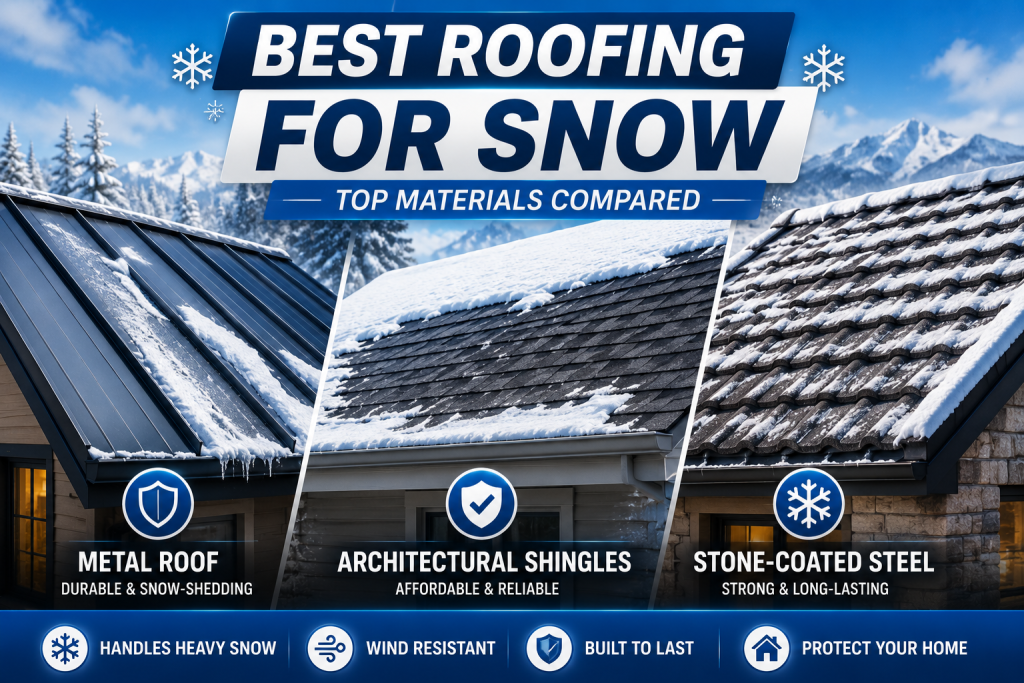
Metal Roofing
Metal roofs are widely considered one of the strongest choices for snowy environments. Their smooth surface encourages snow to slide off naturally, reducing excessive roof loads and lowering the risk of ice buildup. Standing seam systems are particularly popular in northern states because they offer excellent durability and low maintenance requirements.
Asphalt Shingles
Modern architectural shingles remain a practical option for many homeowners due to their affordability and widespread availability. Premium products from manufacturers such as GAF, Owens Corning, and CertainTeed can provide reliable winter protection when properly installed.
Slate Roofing
Natural slate delivers exceptional longevity and weather resistance. Although it carries a higher upfront cost, many homeowners appreciate its ability to withstand decades of severe winter conditions with minimal deterioration.
Synthetic Roofing Materials
Advanced composite and polymer products have become increasingly popular because they replicate the appearance of slate or wood while offering lighter weight and improved impact resistance. Many of these products qualify as highly weather-resistant roofing materials, making them attractive for homeowners seeking long-term performance in snowy climates.
Why Metal Roofing for Snow Is Often the Top Choice
Among all available roofing materials, metal roofing consistently ranks as a leading option for homeowners dealing with long winters and heavy snowfall. While several materials can perform well, many roofing professionals consider metal systems the best roofing for snow because of their superior snow-shedding ability and long-term durability. Unlike rougher roofing surfaces that allow snow to accumulate, metal panels encourage snow to slide off before excessive weight builds up. This reduces strain on the roof structure and helps minimize the risk of moisture-related issues. Metal roofs are also highly resistant to cracking, warping, and deterioration caused by repeated freeze-thaw cycles.
Another advantage is longevity. Many premium metal roofing systems can last 40 to 70 years when properly maintained, often outlasting traditional asphalt shingles. Homeowners looking for durable winter roofing frequently choose standing seam metal roofs because they combine strength, energy efficiency, and relatively low maintenance requirements. Although installation costs are typically higher, the long lifespan and reduced repair needs can make metal roofing a worthwhile investment for homes located in severe winter climates.
Roofing for Cold Climates: Key Features to Look For
Selecting the right roof involves more than choosing a material. Homeowners in northern regions should evaluate roof design, insulation, ventilation, and moisture protection systems to ensure long-term performance. The best roofing for snow works most effectively when combined with a properly designed roofing assembly that can handle extreme winter conditions.
Proper Roof Pitch and Steep-Slope Roofing
Roof pitch plays a significant role in snow management. Homes with steep-slope roofing generally experience less snow accumulation because gravity helps move snow off the surface more efficiently. This can reduce structural stress and lower the likelihood of ice dam formation. While roof pitch alone cannot eliminate winter roofing problems, it can significantly improve overall performance in areas with frequent snowfall.
Ventilation and Insulation Requirements
Proper attic ventilation and insulation are essential for maintaining consistent roof temperatures during winter. Poor airflow allows heat to escape into the attic, which can contribute to snow melt and refreezing along roof edges. Many experts recommend balancing intake and exhaust ventilation while ensuring attic insulation meets local energy-efficiency standards. These measures help support effective roofing for cold climates and can reduce the risk of costly moisture damage over time.
Snow and Ice Dam Prevention Strategies
Even the best roofing for snow can experience problems if the roof system is not properly maintained. Snow accumulation and ice dams are often caused by a combination of inadequate insulation, poor ventilation, and insufficient water protection. Addressing these issues proactively can extend roof life and reduce the risk of expensive repairs. One of the most effective preventive measures is installing an ice-and-water shield beneath the roofing material. This protective membrane helps prevent water from penetrating the roof deck if melting snow becomes trapped behind ice formations. Many building professionals recommend extending this protection along eaves, valleys, and other vulnerable areas.
Attic insulation is equally important. A well-insulated attic helps maintain a consistent roof temperature, reducing the uneven melting that often leads to ice dam formation. Combined with proper ventilation, insulation can improve energy efficiency while protecting the roof structure from moisture damage. Regular roof inspections are also valuable. Homeowners should remove excessive snow when necessary, clear gutters before winter arrives, and address minor roofing issues before they develop into major structural concerns.
Durable Winter Roofing Materials Compared
Homeowners evaluating the best roofing for snow should compare more than just upfront costs. Lifespan, maintenance requirements, snow-shedding performance, and long-term value all influence which roofing material delivers the best return on investment. The ideal choice often depends on local weather conditions, budget, and how long you plan to stay in the home.
| Roofing Material | Snow Performance | Typical Lifespan | Maintenance Needs | Cost Range | Best U.S. Regions |
| Metal Roofing | Excellent | 40–70 Years | Low | $$$–$$$$ | Minnesota, Colorado, Maine |
| Asphalt Shingles | Good | 20–30 Years | Moderate | $–$$ | Midwest, Northeast |
| Slate Roofing | Excellent | 75–100+ Years | Low | $$$$ | Northeast, Mountain Regions |
| Synthetic Roofing | Very Good | 30–50 Years | Low | $$–$$$ | Cold and Mixed Climates |
For many homeowners, metal roofing provides the strongest balance of performance and longevity. However, premium asphalt shingles remain a cost-effective option, while slate continues to be a preferred choice for those prioritizing maximum durability. Synthetic materials have also gained popularity because they offer strong winter performance without the weight associated with natural slate.
Best Roofing Material by U.S. Snow Region
Climate conditions vary significantly across the United States, which means the best roofing for snow may differ depending on where a home is located. Snowfall totals, temperature fluctuations, wind exposure, and local building requirements all influence roofing performance.
Upper Midwest States
States such as Minnesota, Wisconsin, and Michigan frequently experience heavy snowfall and prolonged freezing temperatures. In these regions, standing seam metal roofs are often preferred because they shed snow efficiently and withstand repeated freeze-thaw cycles. High-quality architectural shingles can also perform well when paired with proper ventilation and insulation.
Northeast States
Homeowners in Maine, Vermont, New Hampshire, and upstate New York face a combination of snow, ice, and coastal moisture. Slate roofing remains a popular premium option due to its exceptional longevity, while metal roofing continues to be a practical choice for reducing snow accumulation and winter maintenance concerns.
Mountain Regions
Areas such as Colorado, Wyoming, and parts of Montana often experience significant snow loads and extreme weather conditions. Roofing systems in these locations should be designed to meet local structural requirements. Metal and synthetic roofing products are commonly selected because they provide strong durability while handling substantial seasonal snowfall.
Cost Considerations When Choosing the Best Roofing for Snow
Cost is an important factor when selecting the best roofing for snow, but homeowners should evaluate both short-term and long-term expenses. While budget-friendly materials may have a lower installation cost, they often require more maintenance and earlier replacement compared to premium roofing systems. Asphalt shingles typically offer the lowest upfront investment, making them attractive for homeowners seeking an affordable roof replacement. Metal roofing generally costs more initially, but its extended lifespan and reduced maintenance requirements can help offset the higher purchase price over time. Slate roofing represents the largest investment, though its exceptional durability may provide value for homeowners planning to remain in their property for decades.
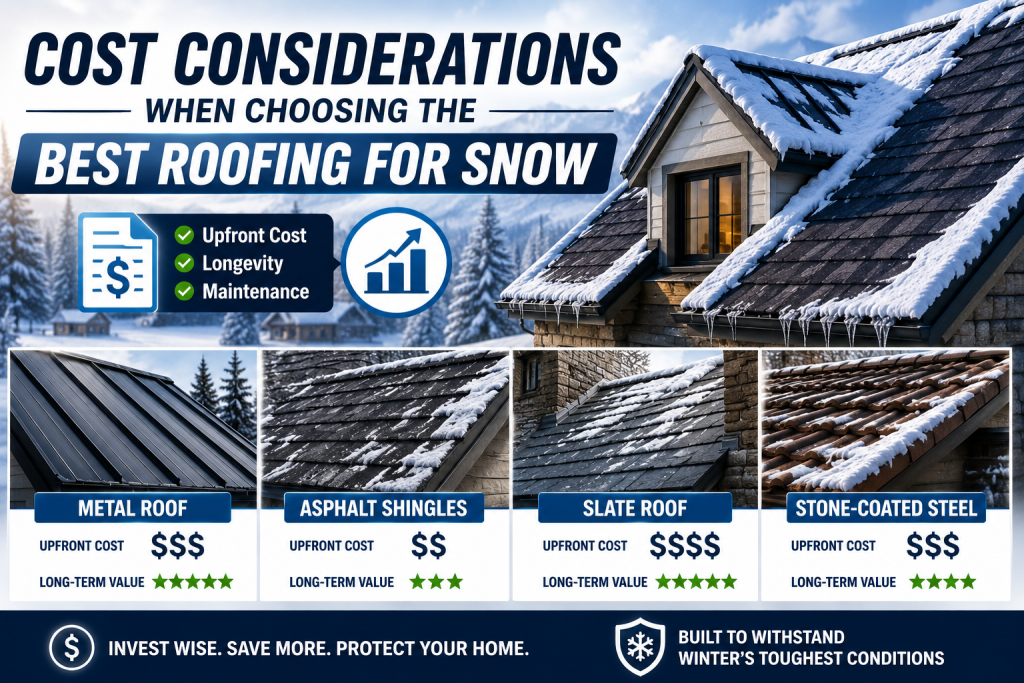
Insurance considerations can also affect overall costs. In some regions, insurers may offer incentives for roofing systems that provide improved resistance to severe weather. Additionally, energy-efficient roofing products can help reduce heating expenses during winter, contributing to long-term savings. When comparing roofing options, homeowners should focus on total lifetime value rather than installation costs alone. A roof that lasts decades longer may ultimately deliver the greatest return on investment.
Conclusion
Choosing the best roofing for snow requires balancing durability, performance, maintenance requirements, and long-term value. Homes located in regions with heavy snowfall need roofing systems capable of handling snow loads, resisting moisture intrusion, and performing reliably through repeated freeze-thaw cycles. For most homeowners, metal roofing offers the strongest combination of longevity, snow-shedding performance, and overall value. However, asphalt shingles, slate, and modern synthetic materials can also be excellent options depending on budget and regional weather conditions. Before making a final decision, homeowners should evaluate local climate demands, review building code requirements, and consult an experienced roofing contractor. Investing in the right roofing material today can help protect your home, improve energy efficiency, and reduce maintenance costs for decades to come.
Frequently Asked Questions
What is the best roofing material for heavy snow?
Metal roofing is often considered the top choice because it allows snow to slide off more easily than most other materials. Slate and high-quality synthetic roofing products also perform exceptionally well in regions with frequent snowfall.
Is metal roofing the best roofing for snow compared to asphalt shingles?
In many cases, yes. When homeowners are choosing the best roofing for snow, metal roofing is often the preferred option because it typically lasts longer, requires less maintenance, and sheds snow more efficiently than asphalt shingles. However, premium architectural shingles can still provide reliable performance in snowy climates when installed correctly and paired with proper attic ventilation and insulation.
What roof pitch is best for snowy areas?
Roofs with a steeper pitch generally handle snow more effectively because snow is less likely to accumulate for extended periods. The ideal pitch depends on local climate conditions, building codes, and architectural design.
How can homeowners prevent ice dams?
Proper attic insulation, balanced ventilation, and the installation of ice-and-water protection membranes are among the most effective ways to reduce the risk of ice dam formation.
How long does a roof last in a snowy climate?
Lifespan varies by material. Asphalt shingles often last 20 to 30 years, metal roofs can last 40 to 70 years, and slate roofing may remain functional for more than a century when properly maintained.