


Best Tile Roof Pros and Cons For US Homeowners
Choosing the right roofing material is one of the most important decisions a homeowner can make. A roof affects everything from curb appeal and energy efficiency to long-term maintenance costs and property value. Among the many roofing options available in the United States, tile roofing remains a popular choice for homeowners seeking durability, distinctive aesthetics, and long service life. Understanding the tile roof pros and cons is essential before investing in a new roof.
While tile roofs are known for their ability to withstand harsh weather conditions and last for decades, they also come with higher upfront costs and structural considerations. The right choice often depends on your home’s location, budget, climate, and long-term ownership goals. In this guide, we’ll break down the most important tile roof pros and cons, compare different tile materials, and help you determine whether a tile roof is the best option for your home.
Tile Roof Pros and Cons: Quick Overview
Before diving into the details, it’s helpful to look at the major tile roof pros and cons from a homeowner’s perspective. Tile roofs are widely recognized for their exceptional longevity, weather resistance, and premium appearance. In regions such as Florida, Arizona, California, and Texas, tile roofing is commonly used because it performs well under intense sun, heavy rain, and high winds. On the positive side, homeowners benefit from a long tile roof lifespan, strong resistance to fire, and lower cooling costs in warm climates.
Tile roofs can also enhance curb appeal and potentially increase resale value. However, these advantages come with trade-offs. Installation costs are generally higher than asphalt shingles, and the added weight may require structural reinforcement. Evaluating the tile roof pros and cons early in the decision-making process can help homeowners choose a roofing system that aligns with both their budget and long-term goals.
Understanding Tile Roofing Systems
A tile roof is made up of individual roofing tiles installed over a waterproof underlayment and roof decking system. These roofs are commonly found on Mediterranean, Spanish, and Southwestern-style homes throughout the United States. While the visual appeal often attracts homeowners, the performance of a tile roof depends on both the material and installation quality. The two most common options are clay and concrete tiles. Many homeowners appreciate the clay tile roofing benefits, including color retention, natural appearance, and impressive longevity.
Meanwhile, concrete tile roofing offers a more budget-friendly alternative while still providing excellent durability and weather resistance. Unlike asphalt shingles, tile roofs are designed as long-term investments. Because they are significantly heavier, homeowners should verify that their roof structure can support the load before installation. Proper underlayment, ventilation, and flashing are also critical to maximizing roof performance and longevity.
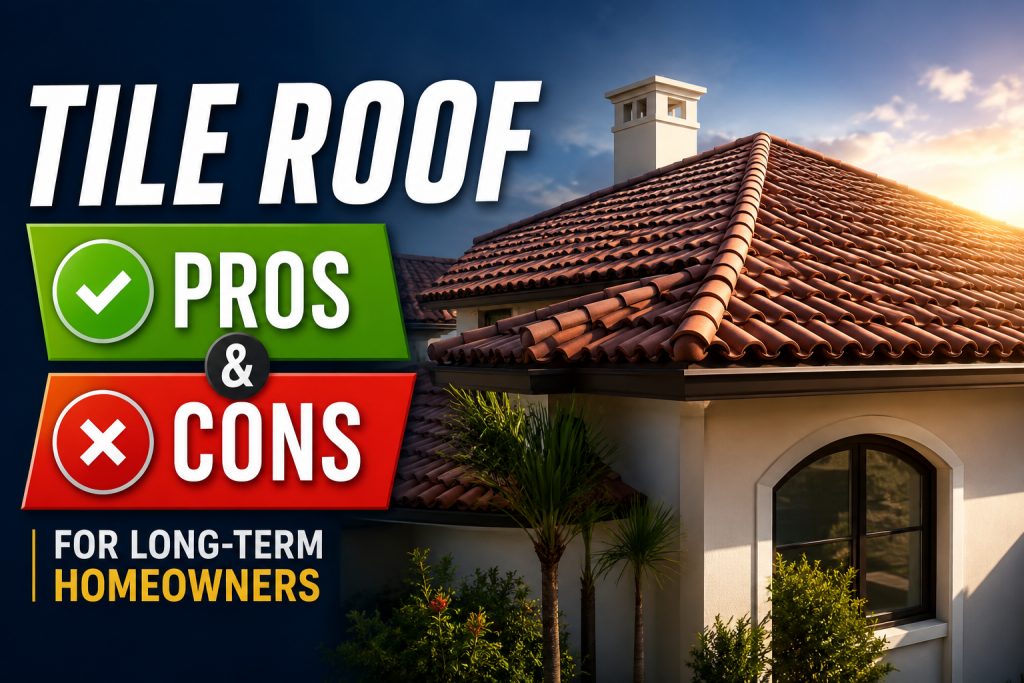
Tile Roof Pros and Cons for Long-Term Homeowners
For homeowners planning to stay in their property for decades, evaluating the long-term value of a roof is just as important as considering the initial installation cost. One reason tile roofing remains popular across many parts of the United States is its ability to deliver lasting performance with relatively few major replacements. When reviewing the tile roof pros and cons, durability is often one of the strongest arguments in favor of this roofing material.
Exceptional Durability and Longevity
One of the biggest advantages of tile roofing is its remarkable lifespan. High-quality tile roofs can last 50 years or more, and some properly maintained systems remain functional for well over a century. This level of durability significantly exceeds the expected service life of traditional asphalt shingles. Tile roofs are also highly resistant to rot, insect damage, and harsh weather conditions.
In areas prone to intense sunlight, heavy rain, or coastal exposure, they often maintain their performance better than many competing materials. For homeowners seeking durable roofing systems, the long service life of tile roofing can offset the higher upfront investment and reduce the likelihood of multiple roof replacements over time.
Strong Energy Performance
Another major advantage of tile roofing is its ability to improve a home’s thermal performance. The curved design of many roof tiles creates small air pockets between the roofing material and the roof deck. This natural airflow helps reduce heat transfer into the home, especially during hot summer months. As a result, tile roofs are often considered a form of energy-efficient roofing, particularly in warm-weather states such as Arizona, Nevada, Texas, and Florida. By reducing heat absorption, homeowners may experience lower cooling demands and improved indoor comfort.
This benefit can contribute to long-term utility savings while reducing strain on HVAC systems. When comparing roofing materials, energy performance should be evaluated alongside durability, maintenance requirements, and local climate conditions. For homeowners living in regions with prolonged periods of high temperatures, the energy-saving potential of tile roofing can be a meaningful advantage that extends beyond aesthetics alone.
Excellent Weather Resistance
Weather resistance is another reason homeowners researching tile roof pros and cons often consider tile roofing a worthwhile investment. Depending on the product and installation method, tile roofing can withstand strong winds, intense sunlight, heavy rainfall, and even hail better than some conventional roofing materials. In hurricane-prone states such as Florida, properly installed tile roofs can provide impressive wind resistance. Many modern tile systems are tested to meet strict building code requirements and can perform well during severe weather events.
Tile roofing is also naturally resistant to fire, making it an attractive option for homeowners in wildfire-prone regions of California and the Southwest. When weighing the tile roof pros and cons, weather performance is often one of the most compelling benefits. Homeowners who frequently experience extreme climate conditions may find that the added protection and durability justify the higher installation costs associated with tile roofing.
Increased Curb Appeal and Resale Value
A roof plays a major role in a home’s exterior appearance, and tile roofing is often viewed as a premium upgrade. Its distinctive texture, architectural character, and wide range of styles can enhance curb appeal and help a property stand out in competitive real estate markets. When evaluating tile roof pros and cons, many homeowners find that the visual appeal alone is a significant advantage. Tile roofs are particularly popular on Mediterranean, Spanish, Mission, and upscale contemporary homes. In states such as California, Arizona, Florida, and Texas, they are frequently associated with higher-end residential construction. Buyers often recognize tile roofing as a long-lasting feature, which can positively influence perceived property value.
For homeowners planning to sell in the future, a well-maintained tile roof may serve as a valuable selling point. Beyond aesthetics, prospective buyers appreciate the durability and longevity associated with tile roofing. This combination of visual appeal and long-term performance can contribute to stronger buyer confidence and potentially improve resale prospects when compared with aging or lower-cost roofing materials. Among the various tile roof pros and cons, the potential to enhance curb appeal and support resale value remains one of the most attractive benefits for long-term homeowners.
Tile Roof Pros and Cons Every Homeowner Should Consider
While tile roofing offers many long-term advantages, homeowners should also understand the potential drawbacks before making an investment. The decision goes beyond appearance and durability. Budget limitations, structural requirements, and future repair considerations can all influence whether tile roofing is the right fit for a particular home. Evaluating the tile roof pros and cons from both a financial and practical perspective helps create realistic expectations and reduces the likelihood of costly surprises after installation.
Higher Installation Costs
The most significant disadvantage of tile roofing is the upfront cost. When comparing tile roof pros and cons, the higher initial investment is often the biggest concern for homeowners. Materials, labor, and structural preparation often make tile roofs considerably more expensive than asphalt shingle systems. The installation process is also more specialized, requiring experienced roofing contractors familiar with tile products and proper installation techniques. Although the initial investment can be substantial, many homeowners view the added cost as a long-term trade-off for durability and longevity. Still, for budget-conscious homeowners or those planning to move within a few years, the higher installation expense may be difficult to justify compared with less expensive roofing alternatives.
Structural Weight Concerns
Another important consideration is the weight of a tile roof. Compared with asphalt shingles and many metal roofing products, tile materials are significantly heavier. As a result, not every home is automatically suitable for tile roof installation without additional structural evaluation. Older homes may require engineering assessments to determine whether the roof framing can safely support the added load. In some cases, homeowners must invest in structural reinforcement before installation can begin. These modifications can increase project costs and extend the overall timeline.
When evaluating the tile roof pros and cons, structural requirements should never be overlooked. A roof that exceeds the home’s load-bearing capacity can create safety concerns and lead to long-term issues. Consulting a qualified roofing contractor or structural engineer before selecting tile roofing helps ensure the system is both safe and compliant with local building codes.
Repair Challenges
Although tile roofs are highly durable, individual tiles can occasionally crack due to impact, foot traffic, falling branches, or severe weather events. When damage occurs, repairs are often more complex than replacing a few asphalt shingles. One challenge is that matching replacement tiles can become difficult as roofs age, especially if the original product has been discontinued. In addition, walking on tile roofs requires caution because improper foot placement may cause surrounding tiles to crack. This can make inspections and repairs more labor-intensive.
Homeowners should also understand that roof longevity depends on more than just the tiles themselves. The underlayment beneath the tiles may eventually require replacement even when the visible roofing material remains in good condition. Factoring these considerations into long-term ownership costs helps create a more accurate picture of the overall value of a tile roofing system.
Limited Contractor Availability
Unlike asphalt shingles, tile roofing requires specialized installation knowledge and experience. Not every roofing contractor is trained to work with tile systems, which can limit the number of qualified professionals available in some markets. This is especially true in regions where tile roofing is less common. Because proper installation is critical to long-term performance, homeowners should carefully vet contractors before starting a project. Choosing an inexperienced installer can lead to issues such as broken tiles, poor flashing details, water intrusion, or premature roof failure. These problems can be costly to correct after the roof has been completed.
When reviewing the tile roof pros and cons, contractor availability is often overlooked but can significantly affect project outcomes. Homeowners may need to spend additional time researching contractors, comparing bids, and verifying credentials to ensure the roof is installed according to manufacturer specifications and local building code requirements.
Clay vs Concrete Tile Roofing Comparison
Homeowners considering tile roofing often narrow their choices to clay or concrete products. While both materials provide durability and visual appeal, they differ in cost, appearance, and long-term performance. Understanding these differences can help homeowners select the option that best aligns with their budget, climate, and design preferences.
| Feature | Clay Tile Roofing | Concrete Tile Roofing |
| Typical Cost | Higher | Lower |
| Appearance | Natural, premium look | Versatile styles and colors |
| Weight | Heavy | Very heavy |
| Color Retention | Excellent | Good |
| Lifespan | Often 75+ years | Commonly 50+ years |
| Maintenance Needs | Low | Low to moderate |
| Weather Resistance | Excellent | Excellent |
Clay tiles are often favored for their timeless appearance and exceptional longevity, while concrete tiles appeal to homeowners seeking a similar aesthetic at a lower price point. Both options can provide decades of reliable performance when installed correctly and maintained according to manufacturer recommendations.
Roofing Material Comparison: Tile vs Asphalt vs Metal
Choosing the right roofing system often involves comparing multiple materials rather than evaluating tile roofing in isolation. A thorough roofing material comparison can help homeowners understand how tile roofs stack up against other popular options used throughout the United States.
| Feature | Tile Roofing | Asphalt Shingles | Metal Roofing |
| Upfront Cost | High | Low | Moderate to High |
| Lifespan | 50+ Years | 15–30 Years | 40–70 Years |
| Weather Resistance | Excellent | Good | Excellent |
| Fire Resistance | Excellent | Moderate | Excellent |
| Energy Efficiency | High | Moderate | High |
| Maintenance Needs | Low | Moderate | Low |
| Curb Appeal | Premium | Standard | Modern |
Asphalt shingles remain the most affordable choice for many homeowners, while metal roofing offers a balance of durability and lightweight construction. Tile roofing typically commands a higher initial investment but stands out for its longevity, premium appearance, and strong performance in demanding climates.
Roofing Maintenance Requirements for Tile Roofs
Although tile roofs are known for their durability, routine roofing maintenance is still essential to maximize performance and longevity. Regular inspections can help identify cracked tiles, damaged flashing, clogged valleys, or underlayment issues before they develop into more costly repairs. Homeowners should consider scheduling a professional roof inspection at least once a year and after major storms. Promptly replacing damaged tiles can help prevent moisture intrusion and protect the underlying roof structure. Gutters and drainage pathways should also be kept clear to ensure proper water management.
It’s important to remember that the tiles themselves may outlast other roof components. Underlayment, flashing, and ventilation systems should be evaluated periodically to ensure they continue functioning properly. With proactive care and timely repairs, a tile roof can deliver reliable protection and maintain its appearance for many decades.
Are Tile Roofs Worth the Investment?
Whether a tile roof is worth the investment depends largely on a homeowner’s goals, budget, and location. For homeowners planning to stay in their homes long term, tile roofing can provide substantial value through exceptional durability, weather resistance, and reduced replacement frequency. These benefits are especially attractive in regions with intense sun exposure, coastal conditions, or severe weather risks.
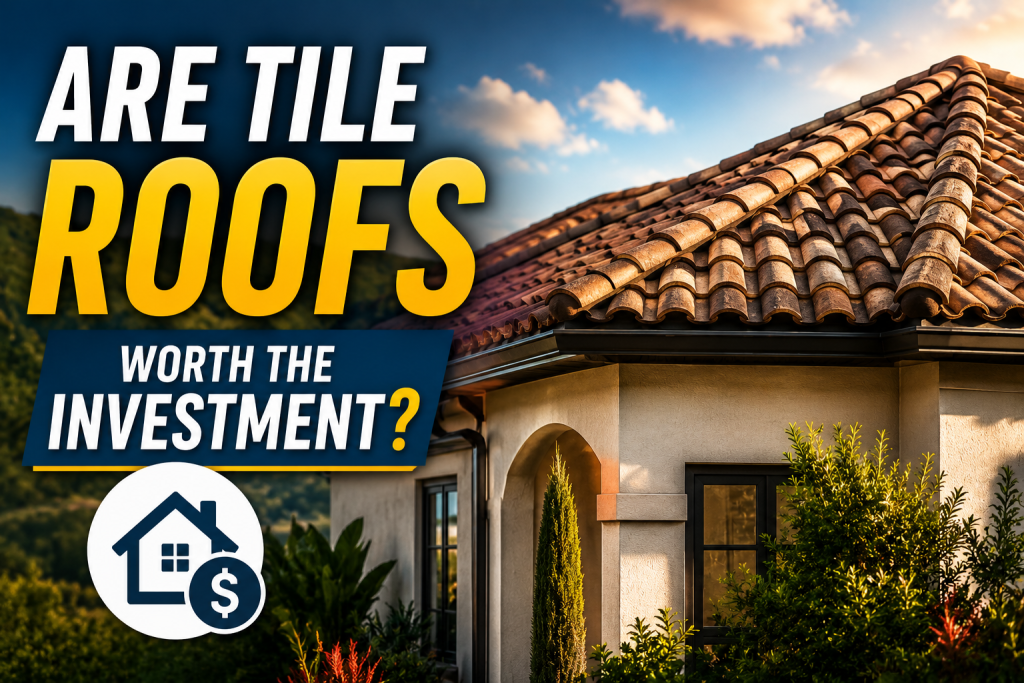
Tile roofs are often best suited for homeowners who prioritize longevity, premium curb appeal, and long-term property value over the lowest upfront cost. While installation expenses are higher than many alternative roofing materials, the extended service life can help offset those costs over time. However, tile roofing may not be the ideal choice for every situation. Budget limitations, structural concerns, and local contractor availability should all be considered before making a final decision. A professional roof assessment can help determine whether tile roofing is the right fit for your home and long-term ownership plans.
Conclusion
Understanding the tile roof pros and cons can help homeowners make a more informed roofing decision. Tile roofs offer exceptional durability, strong weather resistance, energy-saving potential, and long-lasting curb appeal. However, they also come with higher upfront costs, added structural requirements, and specialized installation needs. For many homeowners, the long service life and premium appearance make tile roofing a worthwhile investment. Before choosing a new roof, consider your budget, local climate, and long-term plans to determine whether tile roofing is the right solution for your home.
Frequently Asked Questions
How long does a tile roof last?
A properly installed tile roof can last 50 years or longer, depending on the material, climate conditions, and maintenance practices. Premium clay tile systems may remain functional for several decades beyond that timeframe when supported by quality underlayment and regular inspections.
Are tile roofs more expensive than asphalt shingles?
When evaluating tile roof pros and cons, cost is often one of the biggest considerations. Yes, tile roofs generally cost more to purchase and install than asphalt shingles. Material costs, specialized labor requirements, and potential structural upgrades all contribute to the higher upfront investment.
Do tile roofs improve energy efficiency?
Tile roofs can help reduce heat transfer into a home because of their design and natural ventilation characteristics. This benefit is particularly noticeable in warmer climates where reducing cooling demand can improve indoor comfort and lower energy consumption.
Can every house support a tile roof?
No. Because tile roofing is heavier than many alternative roofing materials, some homes may require structural evaluation before installation. A qualified contractor or structural engineer can determine whether the existing framing system can safely support the additional weight.