


Best Flat Roof Replacement Cost For US Homeowners
How much does flat roof replacement cost? In 2026, US homeowners pay $3,300–$11,500 on average (per Angi data), roughly $4–$12 per square foot installed, depending on material. TPO and EPDM sit at the budget end; PVC costs more but lasts longer. This guide breaks down flat roof replacement costs by material, roof size, and region, plus how to tell when repair is enough and when replacement saves money.
Flat Roof Replacement Cost by Roof Size
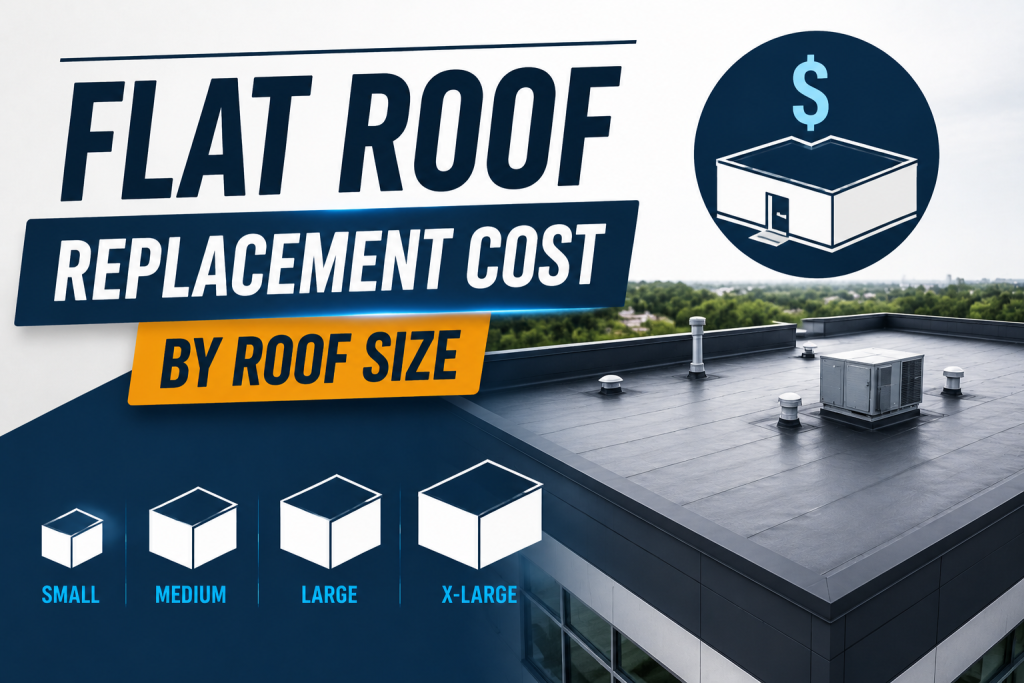
One of the biggest drivers of flat roof replacement cost is total roof area. Larger roofs generally reduce cost per square foot slightly because labor and equipment become more efficient, but total project costs still rise significantly as size increases. For residential properties, replacement pricing often increases when the roof includes multiple penetrations, drainage modifications, or insulation upgrades. Commercial buildings can see additional costs from access limitations and staging requirements. Understanding how size affects flat roof replacement cost helps homeowners compare contractor estimates more accurately and build a more realistic renovation budget before moving forward with installation.
Cost per Square Foot
Most homeowners can expect replacement estimates to be calculated on a square-foot basis. Flat roof systems are typically priced as a complete installed system rather than material alone.
Typical ranges:
- 1,000 square feet → approximately $5,000–$12,000
- 1,500 square feet → approximately $7,500–$18,000
- 2,000 square feet → approximately $10,000–$24,000
- 3,000+ square feet → varies based on membrane type and site conditions
These ranges may increase when insulation replacement, structural repairs, or premium membranes are included.
Example Replacement Budgets
A homeowner replacing a 1,600-square-foot roof in Texas may receive a different estimate than a similar property in Illinois because labor availability, weather exposure, and local permit costs vary. For older homes, contractors may also recommend replacing flashing, improving drainage, and correcting ponding areas during the project to reduce future maintenance costs and extend roof life.
What Drives Your Flat Roof Quote the Most?
A homeowner replacing a 1,600-square-foot roof in Texas may receive a different estimate than a similar property in Illinois because labor availability, weather exposure, and local permit costs vary. These regional differences can have a noticeable impact on overall flat roof replacement cost, especially when labor demand and material availability fluctuate. For older homes, contractors may also recommend replacing flashing, improving drainage, and correcting ponding areas during the project to reduce future maintenance costs and extend roof life. Addressing these issues during installation can improve long-term value and help control future flat roof replacement cost over time.
Material Selection
Roofing material has one of the largest effects on long-term value and upfront investment. Different membrane systems offer different lifespans, maintenance expectations, and energy performance. For example, flat roofing cost can increase when homeowners choose thicker membranes, upgraded insulation packages, or reflective systems designed to improve summer energy efficiency in warmer U.S. climates. Material decisions should balance installation cost with expected service life and future maintenance requirements.
Labor and Tear-Off Complexity
Removing existing roofing layers can significantly increase project pricing. Older buildings may require additional disposal fees, deck repairs, or moisture remediation before installation begins. Roof accessibility also matters. Multi-story properties, limited equipment access, and occupied buildings often increase labor requirements.
Accessibility and Drainage Conditions
Flat roofs require effective water management. If contractors identify ponding water, blocked drains, or poor slope conditions, additional corrective work may be recommended during replacement. Addressing these issues during installation usually costs less than reopening the roof system later for repairs and can help prevent unnecessary increases in overall flat roof replacement cost.
Flat Roof Cost by Material: TPO, EPDM, PVC, Modified Bitumen
Material choice has a direct effect on lifespan, maintenance expectations, energy performance, and total project investment. While labor quality remains critical, selecting the right membrane system can improve long-term value and reduce future replacement cycles.
- EPDM (rubber): $4–$8/sq ft, 15–20 year lifespan, strong in cold climates
- TPO: $5–$9/sq ft, 15–25 years, reflective surface — best for hot climates
- PVC: $6–$12/sq ft, longest-lasting membrane, handles chemicals and grease well
- Modified bitumen: $4–$7/sq ft, 10–20 years, budget-friendly multi-layer option
TPO Roofing
Thermoplastic Polyolefin (TPO) remains one of the most common choices for residential and commercial low-slope applications in the United States. It is known for heat-reflective performance and relatively efficient installation, which can make it an attractive option for property owners evaluating overall flat roof replacement cost. A typical TPO roof replacement may appeal to homeowners in warmer states such as Texas, Arizona, and Florida because reflective surfaces can help reduce cooling demand. Pricing usually depends on membrane thickness, insulation upgrades, roof preparation, and flashing complexity.
EPDM Roofing
EPDM (ethylene propylene diene monomer) is a synthetic rubber membrane widely used for durability and weather resistance. When evaluating EPDM roof cost, homeowners should consider expected lifespan, seam quality, and long-term maintenance requirements instead of focusing only on upfront installation pricing. EPDM often performs well in regions that experience temperature swings and freeze-thaw conditions.
Modified Bitumen and PVC Systems
Modified bitumen and PVC systems are also common flat-roof options depending on project goals. For projects focused on durability and weather protection, overall membrane roofing installation cost may rise due to thicker assemblies, specialized welding methods, or upgraded insulation layers.
Residential vs Commercial: Why Prices Differ
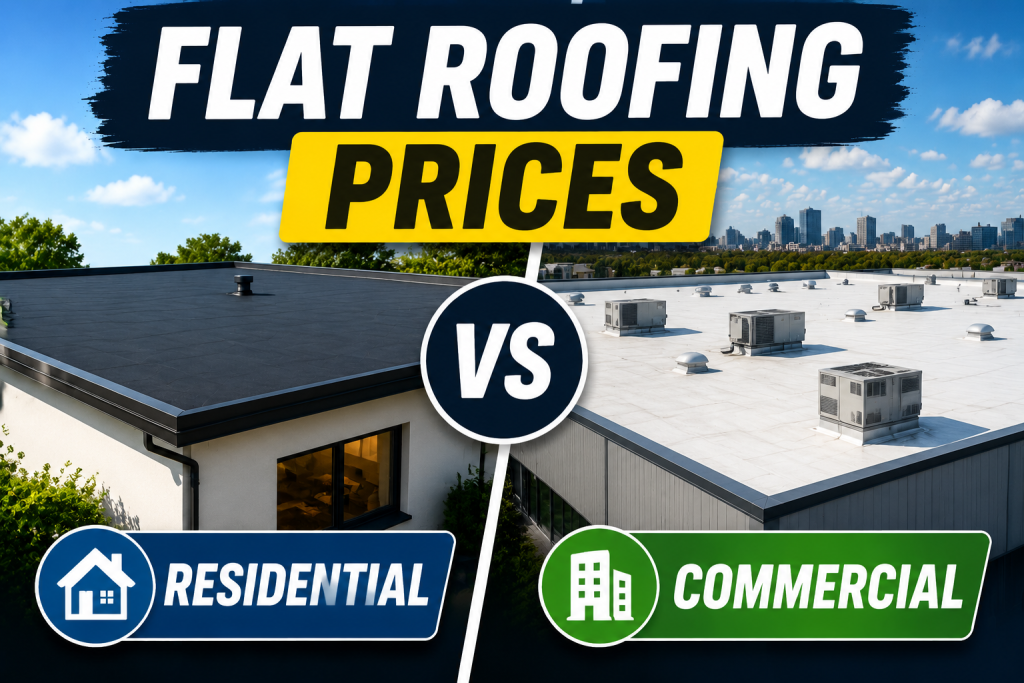
Although both systems may use similar materials, residential and commercial projects are usually priced differently because of scale, installation logistics, building requirements, and long-term maintenance expectations. These differences can significantly influence overall flat roof replacement cost depending on project complexity. Homeowners comparing estimates should understand that project type influences labor hours, equipment needs, and warranty structures.
Residential Low-Slope Systems
Residential flat roofs are commonly found on modern homes, additions, garages, and multifamily properties. These projects often involve smaller roof footprints but may require more detailed waterproofing around vents, skylights, and transitions. Replacement pricing can also increase when homeowners choose upgraded insulation packages to improve indoor comfort and reduce utility costs.
Commercial Installation Considerations
Commercial projects tend to involve larger surface areas and more complex planning requirements. Warehouses, office buildings, retail properties, and mixed-use structures often require coordinated scheduling and stricter installation procedures. When reviewing commercial flat roofing prices, property owners should evaluate more than installed cost. Roof access, drainage improvements, insulation requirements, warranty coverage, and future maintenance obligations can significantly influence total ownership costs over time.
Flat Roof Repair vs Replacement: Which Pays Off?
One of the most common questions homeowners ask is whether repairing an aging roof makes more financial sense than replacing it. The answer usually depends on roof age, leak frequency, moisture damage, and how much of the system has already deteriorated. In some situations, repairs extend roof life economically. In others, repeated patching becomes more expensive over time.
When Repair Makes Financial Sense
Repairs may be the better option when damage is isolated and the roof still has substantial service life remaining. Evaluating flat roof repair pricing becomes especially important if leaks are limited to flashing areas, seams, drainage components, or small membrane sections. Targeted repairs can delay replacement and lower short-term ownership costs. Homeowners should still request an inspection to confirm underlying insulation and decking remain in good condition.
When Replacement Saves More Money
Replacement often becomes the better investment when leaks continue returning, repairs occur annually, or moisture has spread beneath the roofing system. Installing a complete new assembly can improve energy performance, reduce maintenance calls, strengthen weather resistance, and provide stronger warranty protection compared with repeated corrective work.
Regional Price Differences Across the US
Regional climate has a major influence on roofing performance, installation requirements, and long-term ownership costs. Material durability, labor demand, weather exposure, and local building expectations can all affect project budgets. Understanding local conditions helps homeowners choose systems that perform better over time instead of selecting only by initial price.
Southern Climate Considerations
Homes in states such as Florida, Texas, and parts of the Southeast often face intense sun exposure, humidity, heavy rainfall, and severe storms. When planning a low-slope roof replacement, homeowners frequently prioritize reflective membranes, improved drainage design, and stronger weather resistance. These upgrades may increase initial costs but can help reduce cooling expenses and extend service life in hotter regions.
Northern Snow and Freeze Concerns
Northern states such as Illinois, Michigan, and areas across the Northeast experience snow accumulation, freeze-thaw cycles, and seasonal moisture stress. Roof systems in these climates often require greater attention to insulation performance, drainage efficiency, and waterproof detailing. Selecting materials suited to cold-weather expansion and contraction can reduce maintenance demands and improve long-term reliability.
6 Ways to Lower Your Replacement Cost
Roof replacement is a significant investment, but homeowners can often improve value without sacrificing installation quality. The goal should not be choosing the cheapest estimate, it should be maximizing performance, lifespan, and long-term ownership savings. Strategic planning before signing a contract can create meaningful cost advantages.
Timing and Contractor Bidding
Requesting multiple estimates helps homeowners compare project scope rather than focusing only on price. Ask contractors whether proposals include tear-off, disposal, insulation upgrades, flashing replacement, permit fees, and warranty coverage. Scheduling projects before peak seasonal demand may also improve pricing and contractor availability. Homeowners should avoid selecting bids that appear unusually low without understanding exclusions.
Warranty and Energy Incentives
Higher-quality installations sometimes qualify for stronger manufacturer warranties and lower future maintenance costs. Energy-efficient roofing assemblies may also reduce utility expenses over time, especially in warmer regions with heavy cooling demand. Reviewing available efficiency programs and installation documentation before construction begins can improve long-term value and help homeowners make more informed replacement decisions.
Conclusion
Understanding flat roof replacement cost helps homeowners plan their budget and compare roofing options more effectively. While roof size plays a major role in the final price, material selection, labor, tear-off requirements, insulation, drainage improvements, and regional conditions can significantly affect the total investment. Rather than choosing a contractor based solely on the lowest estimate, homeowners should consider installation quality, material lifespan, warranty coverage, and future maintenance costs. TPO, EPDM, PVC, and modified bitumen systems each offer different advantages depending on climate, property type, and performance requirements.
Getting multiple detailed estimates and addressing drainage, insulation, or structural issues during replacement can also prevent expensive repairs later. Ultimately, evaluating flat roof replacement cost alongside long-term durability and energy performance can help property owners choose a roofing system that delivers better protection, reliability, and overall value.
Frequently Asked Questions
How much is flat roof replacement cost for a 1,500-square-foot roof?
Flat roof replacement cost for a 1,500-square-foot project varies depending on material type, insulation, labor rates, and tear-off requirements. Smaller residential projects may cost less overall, while additional drainage work, flashing updates, or deck repairs can increase the total investment.
What is the difference between 3-tab and architectural shingles?
Pricing changes by market and installation scope. TPO is often selected for reflective performance and energy efficiency, while EPDM is commonly chosen for durability and cold-weather flexibility.
Can insurance cover roof replacement?
Insurance may contribute when damage results from a covered event such as storms or wind. Coverage for age-related wear and deferred maintenance is often more limited, so homeowners should review policy details carefully.
How long should a flat roof last?
Lifespan depends on installation quality, climate exposure, maintenance practices, and roofing material. Routine inspections and early repairs can extend service life significantly.