

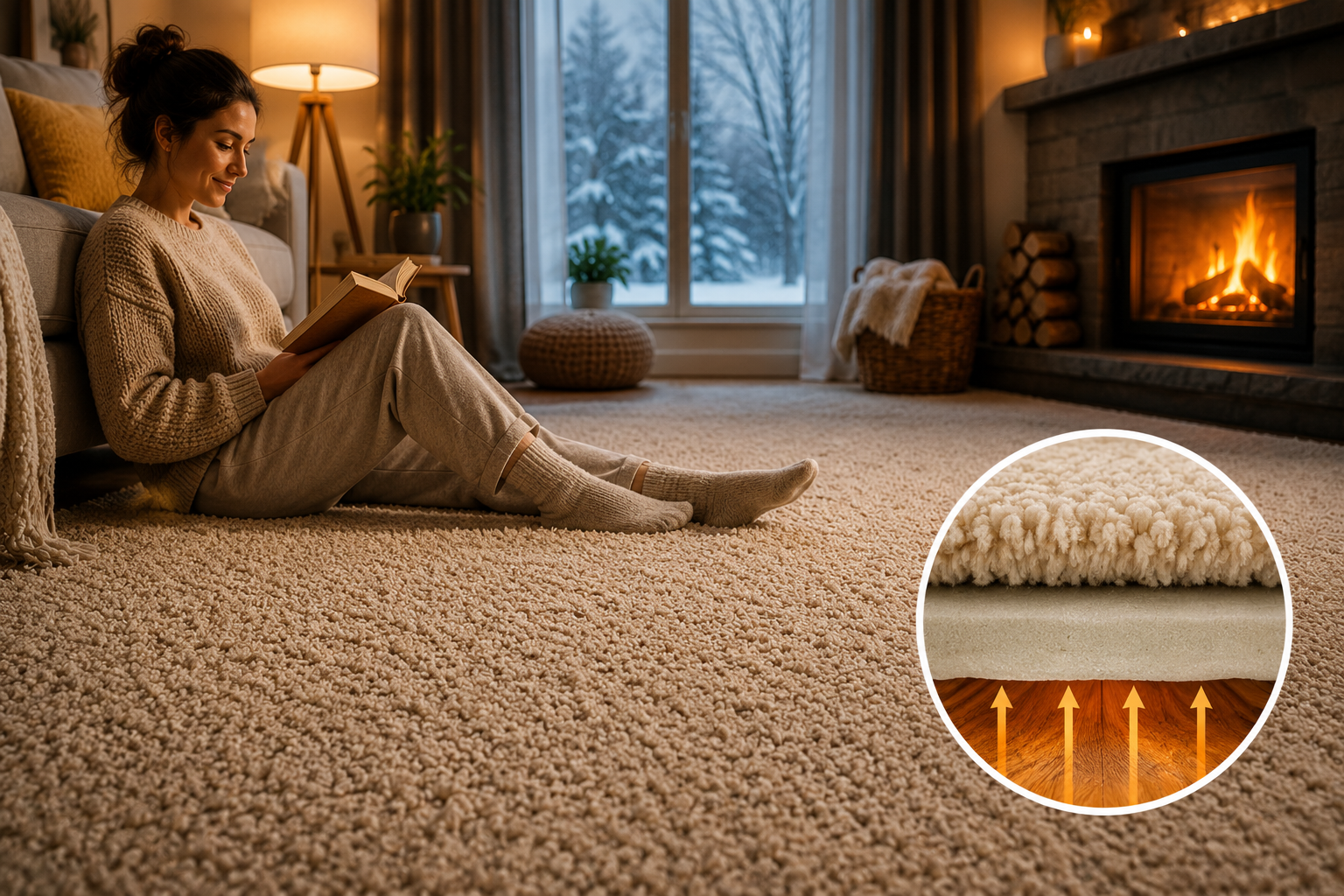
Benefits of Carpet Flooring Benefits for Comfort and Insulation
When homeowners evaluate flooring options, hardwood, luxury vinyl plank, and tile often dominate the conversation. However, carpet continues to be one of the most practical choices for families seeking year-round comfort, improved insulation, and a warmer indoor environment. The many carpet flooring benefits extend far beyond appearance, making it a valuable flooring solution for bedrooms, living rooms, home offices, and finished basements.
Unlike hard surfaces, carpet provides a soft, cushioned feel underfoot while helping reduce heat loss and absorb unwanted noise. These advantages are especially important in colder regions such as Minnesota, Colorado, Illinois, and other parts of the Midwest and Northeast, where maintaining indoor comfort can have a direct impact on energy bills. Modern carpet products from manufacturers such as Shaw Floors, Mohawk Flooring, and Stainmaster also offer improved durability, stain resistance, and long-term performance. From enhanced carpet comfort to improved energy-efficient flooring performance, carpet remains a popular option for homeowners looking to create a warmer, quieter, and more inviting living space.
Why Carpet Remains a Popular Flooring Choice in American Homes?
Despite the growing popularity of hardwood and luxury vinyl flooring, carpet remains a preferred option in millions of American homes. One of the primary reasons is its unmatched level of comfort. As a soft flooring for homes, carpet creates a cushioned surface that feels comfortable underfoot and reduces strain on joints during daily activities. This makes it especially appealing for families with young children, older adults, and homeowners who spend significant time in living areas and bedrooms.

Carpet is also one of the most versatile warm flooring options available. In colder climates such as Chicago, Denver, and Minneapolis, it helps create a more comfortable indoor environment by reducing the cold feeling often associated with hard flooring materials. Additionally, carpet offers a welcoming appearance that contributes to a more inviting atmosphere. Whether installed in a primary bedroom, family room, or home office, carpet provides a balance of comfort, functionality, and style that continues to attract homeowners across the United States.
Carpet Flooring Benefits for Indoor Comfort
Among the most important carpet flooring benefits is the exceptional level of comfort it provides throughout the home. Unlike tile, hardwood, or concrete surfaces, carpet offers a soft and supportive layer that makes walking, standing, and sitting on the floor more enjoyable. This added cushioning can help reduce fatigue, particularly in households where family members spend long hours in living rooms, bedrooms, or play areas.
Carpet also contributes to a warmer indoor experience during colder months. Combined with quality padding, carpet acts as insulated flooring by slowing heat transfer through the floor surface. Homeowners in colder regions of the Midwest and Northeast often appreciate the difference carpet makes when temperatures drop below freezing. The added warmth creates a more comfortable environment without relying solely on heating systems. These factors make carpet an excellent choice for anyone seeking greater carpet comfort and a more cozy home flooring solution that supports everyday living and relaxation.
How Carpet Improves Home Insulation
One of the lesser-known carpet flooring benefits is its ability to improve a home’s thermal performance. Carpet fibers combined with a quality carpet pad create a layer of insulated flooring that helps slow the movement of heat between the floor and the room. This additional insulation can make indoor spaces feel warmer during winter and more comfortable throughout the year.
For homeowners in colder regions such as the Midwest, Northeast, and Rocky Mountain states, carpet can contribute to better heat retention compared to many hard-surface flooring materials. By reducing heat loss through the floor, carpet may help heating systems operate more efficiently, which can support lower utility costs over time. This is one reason carpet is often considered an energy-efficient flooring option for bedrooms, family rooms, and finished basements.
When paired with proper insulation, energy-efficient windows, and other home upgrades, carpet can play a valuable role in creating a more comfortable and energy-conscious living environment while enhancing overall indoor comfort, which is one of the key carpet flooring benefits.
Carpet as an Effective Soundproof Flooring Solution
Noise control is another reason many homeowners choose carpet over hard-surface flooring. Carpet naturally absorbs sound waves, helping reduce echoes, footstep noise, and the transmission of sound between rooms. As a result, it is widely recognized as one of the most practical soundproof flooring solutions for residential spaces.
This benefit is especially valuable in multi-story homes, townhouses, and apartments where noise can easily travel between floors, highlighting an important aspect of carpet flooring benefits. Carpet and quality padding work together to minimize the impact of footsteps, moving furniture, and everyday household activity. Bedrooms, hallways, family rooms, and upstairs living areas often experience noticeable improvements in acoustic comfort after carpet installation.
For households with children, pets, or remote workers, reduced noise levels can make a significant difference in daily comfort, which is another important aspect of carpet flooring benefits. In addition to delivering warmth and softness, carpet helps create a quieter living environment, making it an attractive option for homeowners seeking both functionality and peace of mind.
Carpet Creates a Cozy and Inviting Home Environment
Beyond its practical advantages, carpet plays a major role in creating a warm and welcoming atmosphere, which is a key part of carpet flooring benefits. Many homeowners choose carpet because it adds texture, softness, and visual warmth that hard flooring materials often cannot replicate. As a result, carpet is frequently associated with comfort-focused spaces such as bedrooms, family rooms, and reading areas.
The feeling of cozy home flooring extends beyond appearance. Soft surfaces can make a room feel more relaxing and comfortable, encouraging family members to spend more time together. Carpet also helps soften the overall look of interior spaces, making large rooms feel more inviting and reducing the stark appearance that some hard flooring options can create.
For homeowners focused on comfort and everyday livability, carpet remains one of the best warm flooring options available. Whether paired with modern furniture or traditional décor, carpet contributes to a welcoming environment that supports relaxation, comfort, and a greater sense of home throughout the year.
Modern Carpet Technology Has Improved Performance
Today’s carpet products are significantly more advanced than the carpets installed in homes decades ago. Modern manufacturers such as Shaw Floors, Mohawk Flooring, Stainmaster, and Anderson Tuftex have developed innovative carpet fibers designed to improve durability, stain resistance, and long-term appearance. These advancements allow homeowners to enjoy the comfort of carpet without many of the maintenance concerns associated with older products.
Many modern carpets feature built-in stain protection, moisture resistance, and enhanced fiber technology that helps them withstand daily wear in busy households. This makes carpet a practical option for families with children and pets. In addition, improvements supported by organizations such as the Carpet and Rug Institute have helped address concerns about indoor air quality through low-emission materials and improved manufacturing standards.
As a result, homeowners no longer have to choose between comfort and performance. Modern carpet combines the benefits of soft flooring for homes with improved durability, making it a strong contender for a wide range of residential applications.
Best Areas of the Home for Carpet Installation
While carpet can be installed throughout a home, certain rooms benefit more from its comfort and insulation properties, which is a core part of carpet flooring benefits. Bedrooms are among the most popular locations because carpet provides a warm, soft surface underfoot, especially during colder mornings. Many homeowners also choose carpet for family rooms and living spaces where comfort is a top priority.
Finished basements can benefit from carpet as well. Since basement floors often feel cooler than upper levels, carpet adds an extra layer of warmth and comfort while helping create a more inviting space, further highlighting key carpet flooring benefits. Home offices are another excellent location, as carpet helps reduce noise and creates a quieter environment for remote work and virtual meetings.
For homeowners in colder regions such as the Midwest and Northeast, carpet can be particularly beneficial in rooms where warmth and energy efficiency are important. By strategically installing carpet in comfort-focused areas, homeowners can maximize both the practical and aesthetic carpet flooring benefits of this versatile flooring option.
Carpet vs Hard Flooring for Comfort and Insulation
Choosing between carpet and hard-surface flooring often comes down to lifestyle, comfort preferences, and climate conditions. While hardwood, tile, and luxury vinyl offer durability and a sleek appearance, carpet continues to outperform many alternatives when it comes to comfort, insulation, and noise reduction, which are key carpet flooring benefits.
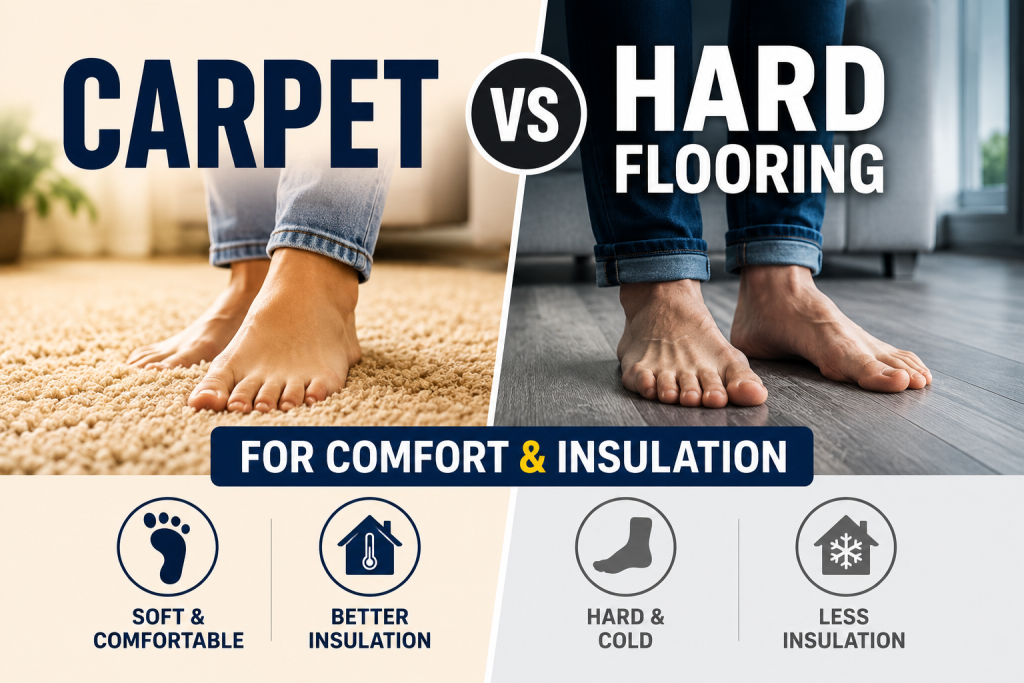
For homeowners in colder regions, carpet provides a noticeably warmer walking surface and better thermal insulation. It also delivers superior sound absorption, making it ideal for bedrooms, family rooms, and multi-story homes. Hard flooring materials may require area rugs or additional insulation measures to achieve similar comfort levels, which further highlights the carpet flooring benefits in everyday residential use.
| Feature | Carpet | Hardwood | Luxury Vinyl Plank |
| Underfoot Comfort | Excellent | Moderate | Moderate |
| Thermal Insulation | Excellent | Fair | Fair |
| Noise Reduction | Excellent | Poor | Moderate |
| Warmth During Winter | Excellent | Fair | Fair |
| Maintenance | Moderate | Moderate | Easy |
| Durability | Good | Excellent | Excellent |
| Initial Cost | Moderate | Higher | Moderate |
For homeowners prioritizing carpet comfort, insulated flooring, and soundproof flooring, carpet remains one of the strongest flooring choices available. However, the best option ultimately depends on household needs, maintenance expectations, and long-term goals.
Potential Drawbacks Homeowners Should Consider
Although there are many carpet flooring benefits, homeowners should also understand the potential limitations before making a flooring decision. Like any flooring material, carpet performs best when it aligns with the home’s lifestyle, climate, and maintenance expectations. One consideration is routine maintenance. Carpet requires regular vacuuming and occasional deep cleaning to maintain its appearance and extend its lifespan. Homes with pets, young children, or high foot traffic may need more frequent cleaning than homes with hard-surface flooring.
Moisture is another factor to consider when evaluating carpet flooring benefits. Carpet is generally not recommended for areas prone to excessive humidity, standing water, or spills, such as bathrooms and certain laundry rooms. In regions with high humidity, including parts of Florida and the Gulf Coast, homeowners should select moisture-resistant products and ensure proper ventilation.
Additionally, carpet may show wear more quickly in busy entryways and high-traffic hallways. Choosing high-quality carpet fibers and professional installation can help minimize these concerns. By understanding both the advantages and limitations, homeowners can make a more informed flooring investment that supports long-term comfort and performance, while still maximizing the overall carpet flooring benefits where carpet is most suitable.
Conclusion
The right flooring choice depends on your household’s priorities, budget, and local climate. For homeowners who value comfort, warmth, and noise reduction, carpet remains one of the most practical flooring options available. Its ability to provide a soft walking surface, improve insulation, and create a quieter indoor environment makes it especially appealing for bedrooms, family rooms, home offices, and finished basements. Many of the leading carpet flooring benefits become even more valuable in colder regions where maintaining indoor comfort can be challenging during winter months. Carpet can help support energy efficiency, reduce noise transmission, and contribute to a more inviting living space. Modern products from trusted manufacturers also offer improved stain resistance, durability, and long-term performance compared to previous generations of carpet. For homeowners seeking cozy home flooring, enhanced comfort, and better insulation, carpet continues to be a smart investment. By selecting the right product and installing it in the appropriate areas of the home, you can enjoy lasting comfort and functionality for years to come.
Frequently Asked Questions
What are the biggest carpet flooring benefits?
The most significant carpet flooring benefits include improved comfort, better insulation, noise reduction, enhanced safety, and a warmer indoor environment. Carpet also creates a softer walking surface and helps make living spaces feel more inviting.
Does carpet help insulate a house?
Yes. Carpet and carpet padding act as insulated flooring by reducing heat transfer through the floor. This additional insulation can help rooms retain warmth during colder months and improve overall indoor comfort.
Is carpet more energy efficient than hardwood flooring?
Carpet generally provides better thermal insulation than hardwood flooring. While it does not replace wall or attic insulation, carpet can contribute to a more energy-efficient flooring system by helping reduce heat loss and improving room comfort.
Does carpet reduce noise between floors?
Yes. Carpet is one of the most effective soundproof flooring options for residential use. It absorbs sound waves, reduces echoes, and helps minimize footstep noise, making it particularly useful in multi-story homes and apartments.
Which rooms are best suited for carpet flooring?
Carpet performs best in bedrooms, family rooms, living rooms, home offices, and finished basements. These areas benefit most from carpet’s comfort, insulation, and noise-reducing properties.
How long does carpet typically last?
Most residential carpets last between 10 and 15 years, depending on the quality of the material, installation, maintenance routine, and level of foot traffic. Premium carpet products can often exceed this lifespan when properly maintained.