


Asphalt vs Metal Roofing: Which Roof Is Better for Your Home?
Choosing the right roofing material is one of the most important decisions a homeowner can make. Your roof affects everything from curb appeal and energy bills to maintenance costs and long-term property value. Among today’s most popular options, asphalt vs metal roofing remains one of the most searched and debated comparisons. Both materials offer distinct advantages. Asphalt shingles have dominated the U.S. residential roofing market for decades because of their affordability, wide availability, and straightforward installation. Metal roofing, on the other hand, has gained popularity among homeowners seeking exceptional durability, weather resistance, and long-term performance.
The best choice depends on several factors, including your budget, local climate, expected length of homeownership, and maintenance preferences. A roof that performs well in the snowy conditions of Michigan may not be the ideal solution for a hurricane-prone area of Florida or the intense heat of Arizona. In this guide, we’ll compare costs, lifespan, energy efficiency, maintenance requirements, and resale value to help you determine which roofing material makes the most sense for your home and long-term goals.
Asphalt vs Metal Roofing: Quick Comparison Table
For homeowners evaluating roof replacement options, understanding the major differences between these materials can simplify the decision-making process. While both products protect your home effectively when installed correctly, they vary significantly in cost, longevity, maintenance needs, and performance under extreme weather conditions.
| Factor | Asphalt Shingles | Metal Roofing |
| Upfront Cost | Lower | Higher |
| Expected Lifespan | 15–30 years | 40–70+ years |
| Maintenance | Moderate | Low |
| Wind Resistance | Good | Excellent |
| Fire Resistance | Moderate | Excellent |
| Energy Efficiency | Standard | Higher reflective performance |
| Installation Complexity | Simpler | More specialized |
| Resale Appeal | Good | Often higher |
| Storm Durability | Moderate | Excellent |
| Sustainability | Limited recyclability | Highly recyclable |
One of the biggest considerations in any roofing material comparison is balancing upfront investment against long-term value. Asphalt shingles remain attractive because of their affordability and widespread contractor availability. Metal roofing often requires a larger initial investment, but many homeowners view the added durability and extended service life as worthwhile advantages. The right option ultimately depends on your climate, budget, and how long you plan to stay in your home.
Asphalt vs Metal Roofing Cost Comparison
For many homeowners, cost is the deciding factor when choosing between roofing materials. While both options can provide reliable protection, their financial impact differs significantly over the life of the roof.

Initial Installation Costs
When comparing roofing installation costs, asphalt shingles typically offer the lowest barrier to entry. Most U.S. homeowners can install an asphalt shingle roof for substantially less than a metal roofing system. The materials are widely available, and installation is generally less labor-intensive, which helps keep project costs manageable. Metal roofing systems, particularly standing seam panels, require specialized materials and skilled installation crews. As a result, upfront expenses are often considerably higher than asphalt alternatives.
Long-Term Ownership Costs
Although asphalt shingles cost less initially, homeowners should also consider replacement frequency and maintenance expenses. Most asphalt roofs will require replacement sooner than metal systems, especially in regions exposed to severe weather, intense sunlight, or frequent temperature fluctuations. Metal roofing often delivers greater long-term value because it can last decades longer while requiring fewer repairs. Homeowners planning to stay in their property for many years may find that the higher upfront investment helps offset future replacement and maintenance expenses. When evaluating total ownership costs rather than purchase price alone, the gap between the two materials becomes much smaller than it initially appears.
Asphalt vs Metal Roofing Durability and Lifespan
Durability is often where the differences between roofing materials become most noticeable. Homeowners investing in a new roof want confidence that their choice can withstand years of exposure to sun, rain, wind, snow, and seasonal temperature changes.
Roof Lifespan Comparison for Long-Term Value
A proper roof lifespan comparison reveals one of the strongest advantages of metal roofing. Standard asphalt shingles typically last between 15 and 30 years, depending on product quality, installation standards, and local weather conditions. Metal roofing systems commonly last 40 to 70 years or longer with proper maintenance. Premium materials such as aluminum, steel, and copper can continue performing well long after many asphalt roofs have reached the end of their service life. For homeowners focused on long-term ownership, longevity often becomes a major factor when evaluating overall value.
Performance During Severe Weather
Weather resistance varies significantly between the two materials. Asphalt shingles can perform well under normal conditions, but strong winds, hail, and prolonged moisture exposure may lead to damage over time. Metal roofs are widely recognized for their ability to withstand extreme weather events. In hurricane-prone areas such as Florida and along the Gulf Coast, many homeowners choose metal roofing because of its superior wind resistance. Similarly, homes in snow-heavy regions like Colorado and parts of the Midwest benefit from metal roofs that shed snow more efficiently and resist moisture-related deterioration. These durability advantages help explain why metal roofing continues to gain popularity across diverse climate zones throughout the United States.
Metal Roof vs Shingles for Energy Efficiency
Energy performance has become an increasingly important consideration for homeowners looking to reduce utility bills and improve year-round comfort. Roofing materials can play a meaningful role in how much heat enters a home, particularly in warmer climates.
Cooling Benefits in Hot Climates
The metal roof vs shingles debate often highlights energy performance as a key differentiator. Many metal roofing products are manufactured with reflective coatings that help reduce solar heat absorption. Instead of trapping heat, these surfaces reflect a portion of the sun’s rays away from the home. This benefit can be especially valuable in states such as Texas, Arizona, Nevada, and Florida, where prolonged summer temperatures place greater demand on air-conditioning systems. Reduced heat transfer may help lower cooling costs while improving indoor comfort.
Energy Savings for Homeowners
Homeowners interested in energy-efficient roofing frequently consider metal systems because of their reflective properties and compatibility with modern insulation strategies. Some products also qualify for energy-related incentives depending on local programs and efficiency standards. Asphalt shingles continue to improve, and certain premium products offer enhanced reflective capabilities. However, traditional shingles generally absorb more heat than metal roofing, particularly during periods of intense sunlight. For homeowners prioritizing energy savings in warmer regions, metal roofing often provides a measurable performance advantage over conventional asphalt systems.
Roofing Material Comparison for Maintenance Requirements
Maintenance requirements can significantly affect the true cost of owning a roof. While both asphalt and metal roofing systems require periodic inspections, the amount of upkeep needed over time varies considerably.
Asphalt Shingles Pros and Cons
Understanding the asphalt shingles pros and cons is essential before making a roofing investment. One of the biggest advantages of asphalt shingles is their affordability and ease of repair. Individual damaged shingles can often be replaced without major disruption to the rest of the roof. However, asphalt materials may become more vulnerable to cracking, curling, granule loss, and weather-related wear as they age. Regular inspections and occasional repairs are often necessary to maintain peak performance and prevent moisture intrusion.
Metal Roofing Maintenance Expectations
Metal roofing generally requires less ongoing maintenance than asphalt systems. In the asphalt vs metal roofing comparison, lower maintenance requirements are one of the key reasons many homeowners choose metal roofing. Because metal panels are highly resistant to moisture, insects, rot, and many common roofing issues, homeowners often face fewer repair concerns throughout the roof’s lifespan.
Routine maintenance typically involves checking fasteners, flashing, sealants, and drainage systems to ensure everything remains in good condition. In most cases, preventive inspections are enough to keep a properly installed metal roof performing effectively for decades. For homeowners seeking lower maintenance obligations, metal roofing often provides a clear long-term advantage. When evaluating asphalt vs metal roofing, those looking to minimize future repairs and upkeep costs may find metal roofing to be the more attractive option.
Best Residential Roofing Materials by Climate Region
Climate plays a major role in determining how well a roof performs over time. What works well in a dry desert environment may not deliver the same results in coastal, hurricane-prone, or snow-heavy regions. Choosing the right roofing system often starts with understanding your local weather conditions.
Southern and Coastal States
When evaluating residential roofing materials in southern states, heat resistance, humidity tolerance, and storm performance are critical considerations. Homeowners in Florida, Texas, Louisiana, and the Carolinas frequently face extreme sunlight, heavy rainfall, and hurricane-related winds. Metal roofing is often favored in these regions because of its reflective properties and exceptional wind resistance. Many modern metal systems are engineered to withstand severe weather events while helping reduce cooling demands during long summer seasons.
Northern and Snow-Prone States
In colder climates such as Michigan, Minnesota, Wisconsin, and parts of New York, roofing materials must handle snow accumulation, ice formation, and repeated freeze-thaw cycles. In the asphalt vs metal roofing comparison, winter performance is often a major consideration for homeowners in these regions. Metal roofs can shed snow more efficiently, helping reduce moisture-related issues and minimizing snow loads.
Asphalt shingles also perform well in many northern markets when properly installed and ventilated, making them a practical option for homeowners seeking a lower upfront investment. The ideal roofing choice often depends on balancing climate performance with budget, maintenance expectations, and long-term ownership goals. When evaluating asphalt vs metal roofing, homeowners should consider local weather conditions alongside long-term cost and durability requirements.
Which Roofing Material Adds More Home Value?
A new roof is more than a maintenance expense, it can also influence resale value, buyer perception, and overall marketability. Homebuyers often view the roof as one of the most important components of a property because replacing it can be a significant future expense. In the asphalt vs metal roofing comparison, both materials offer unique advantages that can positively impact a home’s value. Metal roofing frequently attracts buyers looking for durability, longevity, and lower maintenance requirements. A roof with decades of expected service life remaining may become a selling point, particularly in regions that experience hurricanes, hailstorms, or extreme temperatures. Some buyers also appreciate the modern appearance and potential energy savings associated with metal roofing.
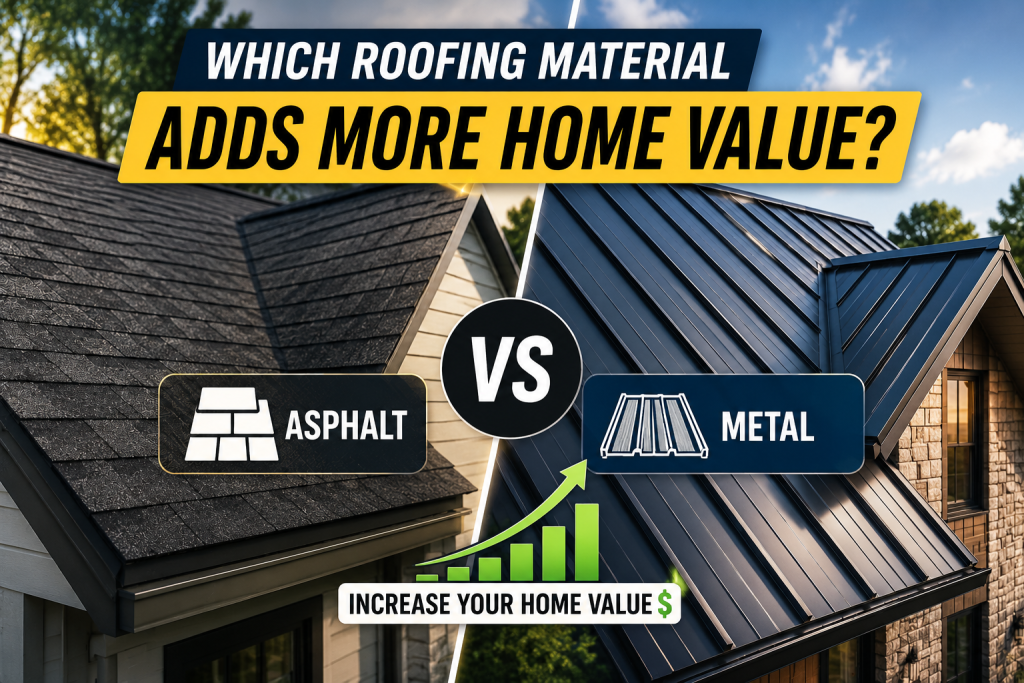
Asphalt shingles continue to offer strong resale appeal because they remain the most common roofing material in the United States. Buyers are familiar with their appearance, repair process, and replacement costs, making them an accepted and trusted option in most neighborhoods. Insurance considerations may also affect value. In certain areas, insurers may offer favorable rates for roofing systems with enhanced fire resistance or wind performance. While specific savings vary by provider and location, roofing durability can contribute to lower risk profiles. Ultimately, both roofing materials can add value when professionally installed. The greater return often depends on local market expectations, climate conditions, and the quality of the roofing system itself. When evaluating asphalt vs metal roofing, homeowners should consider not only installation costs but also the potential impact on resale value and buyer appeal.
Who Should Choose Asphalt Roofing?
Asphalt roofing remains the most widely used residential roofing solution in the United States, and for good reason. It provides a practical balance of affordability, appearance, and performance that meets the needs of many homeowners. In the asphalt vs metal roofing comparison, asphalt shingles continue to appeal to homeowners looking for a cost-effective roofing option. Budget-conscious homeowners often find asphalt shingles to be the most accessible option. The lower upfront investment makes roof replacement more manageable, particularly for families working within a defined renovation budget. Because asphalt shingles are available through virtually every major roofing contractor, homeowners also benefit from competitive pricing and broad installation availability.
Asphalt roofing may be an excellent choice for homeowners who plan to sell within the next decade. Since asphalt shingles are widely accepted in most housing markets, they can provide strong curb appeal without requiring the larger investment associated with premium roofing systems. Many suburban neighborhoods and HOA-regulated communities also feature asphalt roofing as the dominant style. Matching existing architectural aesthetics can help maintain neighborhood consistency while supporting resale value.
Homeowners who prioritize affordability, familiar aesthetics, and dependable protection often find that asphalt shingles deliver the best overall balance between cost and performance. When properly installed and maintained, they can provide decades of reliable service in a wide range of climates across the country. For homeowners evaluating asphalt vs metal roofing, asphalt shingles often represent the better choice when upfront cost and accessibility are top priorities.
Who Should Choose Metal Roofing?
Metal roofing is often the preferred option for homeowners focused on long-term performance and durability. While the initial investment is higher, many homeowners view the added cost as a strategic upgrade that can provide decades of protection with minimal maintenance. In the asphalt vs metal roofing comparison, metal roofing frequently stands out for its exceptional lifespan and low maintenance requirements. Homeowners planning to remain in their property for 20 years or longer are frequently strong candidates for metal roofing. Because many metal systems can last several decades beyond traditional roofing materials, the long-term value proposition becomes increasingly attractive over time.
Metal roofing is also well suited for homes located in areas exposed to severe weather. Regions prone to hurricanes, high winds, hailstorms, heavy snowfall, or extreme heat often benefit from the material’s superior durability and weather resistance. States such as Florida, Texas, Colorado, and Arizona have seen growing adoption of metal roofing for these reasons. Energy-conscious homeowners may also appreciate the reflective properties available on many modern metal roofing products. By reducing heat absorption, these systems can help improve comfort during hot summer months.
For homeowners seeking maximum longevity, reduced maintenance requirements, and enhanced weather performance, metal roofing is often one of the strongest long-term investments available for a residential property. When evaluating asphalt vs metal roofing, homeowners who prioritize durability and long-term value often find metal roofing to be the better fit.
Final Verdict
After evaluating cost, durability, maintenance, energy performance, and long-term value, there is no universal winner in the asphalt vs metal roofing debate. The best choice depends on your budget, climate, and homeownership goals. Asphalt shingles remain an excellent option for homeowners seeking a lower upfront investment and a roofing system that delivers reliable protection at an affordable price. They are widely available, easy to install, and well suited for many residential properties across the United States.
Metal roofing, however, stands out for its exceptional lifespan, weather resistance, and low maintenance requirements. Homeowners who plan to stay in their homes for decades often find that the higher initial cost is justified by reduced replacement expenses and long-term durability. If your priority is affordability and immediate value, asphalt shingles may be the better choice. If your focus is long-term performance, energy savings, and protection against severe weather, metal roofing is often the stronger investment. Ultimately, the right roof is the one that aligns with your home’s climate conditions, your financial goals, and your expectations for future maintenance and ownership costs.
Frequently Asked Questions
Is a metal roof worth the extra cost?
For many homeowners, yes. Although metal roofing requires a larger upfront investment, it often delivers greater long-term value through extended lifespan, reduced maintenance needs, and improved resistance to severe weather conditions.
In the asphalt vs metal roofing comparison, how much longer does a metal roof last?
Most asphalt shingle roofs last between 15 and 30 years, while many metal roofing systems can remain in service for 40 to 70 years or more. Actual lifespan depends on material quality, installation standards, local climate conditions, and ongoing maintenance.
Do metal roofs increase home value?
A metal roof can enhance resale appeal, particularly in regions where durability, energy efficiency, and weather resistance are important buying considerations. The exact impact on home value varies by local market conditions and buyer preferences.
In the asphalt vs metal roofing debate, which roofing material is better for Florida homes?
Many Florida homeowners prefer metal roofing because of its excellent wind resistance and ability to withstand harsh weather conditions. In the asphalt vs metal roofing comparison, metal roofs often have an advantage in hurricane-prone regions due to their superior durability and wind performance. However, high-quality asphalt shingles can also perform well when installed according to local building codes and manufacturer requirements.
Are metal roofs louder during rain?
Modern metal roofing systems are typically installed over solid roof decking and insulation layers, which help reduce noise transmission. In most residential applications, the difference in sound levels between metal roofing and asphalt shingles is much smaller than many homeowners expect.