


Average Roof Replacement Cost
For most homeowners, replacing a roof is one of the largest exterior improvement projects they will ever undertake. Understanding the roof replacement cost before starting the project can help you budget effectively, compare contractor quotes, and choose materials that deliver long-term value. In 2026, the average roof replacement cost for a typical U.S. home generally ranges from $6,000 to $25,000 or more, depending on roof size, material selection, labor rates, and geographic location. Homes in regions with higher labor expenses, stricter building codes, or severe weather conditions often face higher roofing costs than properties in less demanding markets.
Several factors influence what homeowners ultimately pay, including roof complexity, accessibility, removal of existing materials, and local permit requirements. The type of roofing material also plays a major role, with asphalt shingles remaining the most affordable option while premium materials such as slate and clay tile can significantly increase overall project costs. Whether you’re planning ahead for an aging roof or dealing with unexpected storm damage, understanding current roofing costs can help you make a more informed investment in your home’s protection, energy efficiency, and resale value.
Roof Replacement Cost in 2026: National Averages
The national average roof replacement cost continues to rise due to increased material prices, labor shortages, and higher transportation expenses across the construction industry. While many homeowners spend between $8,000 and $15,000 for a complete roof replacement, total costs can vary significantly depending on the home’s size and roofing system. A straightforward asphalt shingle roof on a single-story home typically falls near the lower end of the price range, while larger homes with multiple roof planes, steep slopes, skylights, chimneys, and premium materials can push costs well beyond the national average.
Homeowners should also account for permits, disposal fees, and potential structural repairs that may be discovered during the replacement process. When evaluating a new roof cost, it is important to look beyond the initial installation expense and consider long-term durability, maintenance requirements, warranty coverage, and potential energy savings.
Average Roof Replacement Cost by Home Size
Home size remains one of the most significant factors affecting the overall roof replacement cost. Larger homes require more roofing materials, additional labor hours, and increased waste removal, all of which contribute to higher project expenses.
| Home Size (Square Feet) | Typical Cost Range |
| 1,000 sq. ft. | $5,000–$9,000 |
| 1,500 sq. ft. | $7,000–$12,000 |
| 2,000 sq. ft. | $8,500–$16,000 |
| 2,500 sq. ft. | $10,000–$20,000 |
| 3,000+ sq. ft. | $12,000–$30,000+ |
Actual pricing may vary depending on local labor markets and roofing material selection.
Average Roof Replacement Cost by Roof Complexity
Even homes with similar square footage can have dramatically different roofing expenses. Roof complexity directly impacts the amount of labor, safety equipment, and installation time required to complete the project.
Features that commonly increase the roof replacement cost include:
- Steep roof pitches
- Multiple dormers
- Skylights
- Valleys and intersections
- Chimneys and vent penetrations
- Complex architectural designs
Contractors often charge more for intricate roof layouts because they require additional cutting, flashing work, and safety precautions. Homeowners with complex roofing systems should expect longer installation timelines and higher overall project budgets.
Roof Replacement Cost Per Square Foot Explained
Many homeowners compare roofing projects using a cost-per-square-foot model because it provides a more accurate way to estimate expenses across different home sizes. While total project costs vary, contractors often calculate pricing based on the amount of roofing surface that must be removed and replaced. The average roof replacement cost generally falls between $4 and $12 per square foot for standard residential projects, although premium materials and complex roof designs can increase costs substantially.
Understanding roof replacement per square foot pricing helps homeowners compare contractor proposals and identify whether a quote is within the expected market range. However, square footage alone does not tell the entire story. Roof accessibility, local building requirements, underlayment upgrades, and ventilation improvements can all influence final pricing.
Understanding Roof Replacement Per Square Foot Pricing
Contractors typically measure roofing areas using “squares,” with one roofing square equal to 100 square feet. A roof with 2,000 square feet of surface area would require approximately 20 roofing squares before accounting for waste and material overages.
Pricing usually includes:
- Roofing materials
- Underlayment installation
- Flashing replacement
- Tear-off and disposal
- Equipment and safety setup
- Contractor overhead
Because every roof is different, homeowners should use square-foot calculations as a budgeting tool rather than a guaranteed project price.
How Roof Pitch Impacts Roof Replacement Cost?
Roof pitch is one of the most overlooked factors affecting the overall roof replacement cost. Steeper roofs require additional safety equipment, specialized installation techniques, and more labor hours. For example, a low-slope roof on a ranch-style home is generally easier and faster to replace than a steep roof with multiple elevations. Contractors may also need roof jacks, harness systems, and additional crew members when working on high-pitch structures. As roof slopes become more challenging, labor demands increase, which can significantly affect the final project budget. This is why two homes with similar square footage can receive very different roofing estimates.
Factors That Affect Roof Replacement Cost
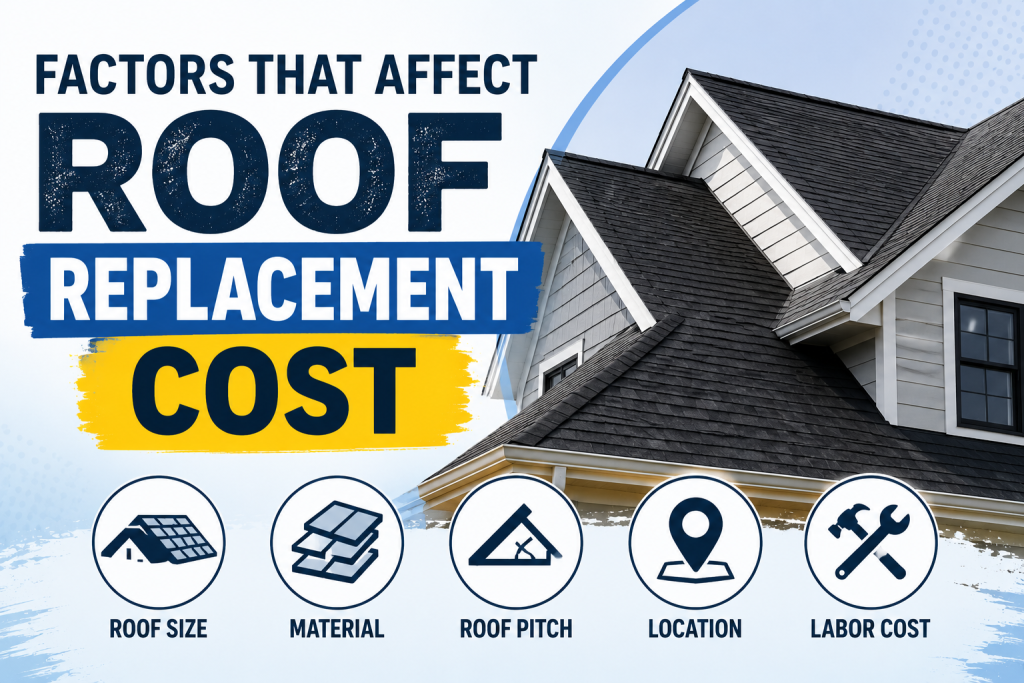
No two roofing projects are exactly alike. Even homes located in the same neighborhood can receive very different estimates based on material selection, labor requirements, roof accessibility, and structural conditions. Understanding these variables helps homeowners evaluate contractor proposals and better anticipate their total investment. The overall roof replacement cost is typically influenced by factors such as roof size, pitch, existing roof layers, local permit fees, and regional market conditions. Homes located in areas prone to hurricanes, heavy snowfall, or extreme temperature fluctuations may also require upgraded materials that increase project costs. While homeowners often focus on material prices, labor expenses and installation complexity can have an equally significant impact on the final budget.
Roofing Labor Cost and Contractor Rates
Labor is one of the largest components of any roofing project. Depending on the region, the roofing labor cost may account for 40% to 60% of the total project expense.
Several factors affect labor rates, including:
- Local demand for roofing contractors
- Roof pitch and accessibility
- Safety requirements
- Project duration
- Seasonal scheduling
Major metropolitan areas such as Dallas, Denver, Miami, and Chicago often experience higher labor costs due to increased operating expenses and strong demand for skilled trades.
Material Selection and Long-Term Value
The type of roofing material chosen can dramatically affect the long-term value of a replacement project. While asphalt shingles remain the most popular option for U.S. homeowners, premium materials often provide longer lifespans and improved weather resistance.
Common material considerations include:
- Expected lifespan
- Storm resistance
- Energy efficiency
- Maintenance requirements
- Warranty coverage
Homeowners should evaluate both upfront expenses and long-term ownership costs when comparing roofing materials. In many cases, paying more initially can result in lower maintenance expenses and better protection over the life of the roof, helping maximize the return on investment.
Roof Replacement Cost by Roofing Material
Roofing material selection is often the biggest factor influencing the overall roof replacement cost. Each material offers a different balance of durability, appearance, maintenance requirements, and weather resistance. Homeowners should choose a roofing system that aligns with both their budget and local climate conditions. For most households, asphalt roof replacement remains the preferred option because it combines affordability, widespread availability, and reliable performance. However, premium materials may provide longer service lives and better protection in challenging environments. The table below highlights typical cost ranges for common roofing materials used throughout the United States.
| Roofing Material | Typical Cost Range | Average Lifespan |
| Asphalt Shingles | $5,000–$15,000 | 20–30 Years |
| Metal Roofing | $10,000–$30,000 | 40–70 Years |
| Wood Shake | $12,000–$25,000 | 25–40 Years |
| Clay Tile | $15,000–$40,000 | 50–100 Years |
| Concrete Tile | $12,000–$35,000 | 40–75 Years |
| Slate Roofing | $20,000–$60,000+ | 75–150 Years |
Material performance can vary significantly by region. For example, metal roofing is popular in Texas and Arizona due to its heat-reflective properties, while impact-resistant shingles are often recommended in hail-prone states such as Colorado. When evaluating total project expenses, homeowners should compare more than just installation costs. Lifespan, maintenance demands, and energy efficiency all contribute to the long-term residential roofing cost associated with each roofing system. Selecting the right material can improve curb appeal, enhance resale value, and reduce future maintenance expenses.
Roof Replacement Cost by Region in the United States
Location plays a major role in determining the final roof replacement cost. Labor rates, material availability, permit requirements, weather conditions, and local building codes can create substantial pricing differences from one region to another. Homeowners who compare national averages without considering local market conditions may underestimate their actual project expenses. In addition to economic factors, regional climate challenges often influence the type of roofing system recommended for long-term performance. Areas exposed to hurricanes, hailstorms, heavy snowfall, or extreme heat frequently require specialized materials that can increase installation costs but improve durability and protection.
Southern and Coastal States
States such as Florida, Texas, Louisiana, and South Carolina often face intense heat, humidity, tropical storms, and hurricane activity. Because of these environmental conditions, roofing systems may require enhanced wind ratings, impact-resistant shingles, and upgraded fastening methods. Homeowners in coastal regions should expect higher project costs when selecting materials designed to withstand severe weather events. While these upgrades may increase upfront expenses, they often provide better long-term value through improved durability and insurance benefits.
Northern and Snow-Prone Regions
In northern states such as Minnesota, Wisconsin, New York, and parts of Colorado, roofs must withstand snow accumulation, ice dams, freeze-thaw cycles, and prolonged winter weather. These climate conditions frequently require stronger underlayment systems, improved attic ventilation, and materials capable of handling heavy seasonal stress. As a result, the average roof replacement cost in snow-prone areas may be higher than in regions with milder weather patterns. Homeowners should always consider local climate demands when selecting roofing materials. A roofing system that performs well in Arizona may not deliver the same level of protection in the Northeast, making regional suitability an important part of any replacement decision.
Signs It’s Time for a Roof Replacement
Recognizing the warning signs of roof failure can help homeowners avoid costly interior damage and emergency repairs. While regular maintenance can extend a roof’s lifespan, every roofing system eventually reaches a point where replacement becomes the most practical solution.
Common indicators that a roof may need replacement include:
- Curling, cracked, or missing shingles
- Persistent roof leaks
- Water stains on ceilings or walls
- Excessive granule loss in gutters
- Sagging roof sections
- Moss or algae growth
- Visible storm or hail damage
Age is another important factor. Most asphalt shingle roofs last between 20 and 30 years, depending on installation quality and local climate conditions. If your roof is approaching the end of its expected lifespan and repairs are becoming more frequent, investing in a replacement may be more cost-effective than continuing to patch recurring issues. Addressing roofing problems early can help protect your home’s structure, insulation, and overall property value.
How to Get an Accurate Reroofing Cost Estimate?
Obtaining a detailed reroofing cost estimate is one of the most important steps before committing to a roof replacement project. Accurate estimates allow homeowners to compare contractors, identify potential hidden charges, and establish a realistic budget based on the scope of work.
Questions to Ask Roofing Contractors
When meeting with roofing professionals, homeowners should ask:
- Is the estimate based on a physical roof inspection?
- What materials are included in the proposal?
- Are permits and disposal fees covered?
- What warranty protections are offered?
- Will damaged decking repairs be billed separately?
Clear answers to these questions can help prevent unexpected expenses during the project.
Comparing Multiple Quotes
Experts generally recommend obtaining at least three written estimates before selecting a contractor. Comparing bids side by side provides a better understanding of local market rates and overall roof replacement pricing. Rather than choosing the lowest bid automatically, homeowners should evaluate contractor experience, licensing, insurance coverage, warranty terms, and material quality. A detailed proposal often provides greater long-term value than a quote that appears cheaper but excludes important services or protections. By carefully reviewing multiple estimates, homeowners can make a more informed decision and reduce the risk of costly surprises during installation.
Ways Homeowners Can Reduce Roof Replacement Costs
Although replacing a roof is a major investment, homeowners can take several steps to reduce the overall roof replacement cost without sacrificing quality or long-term performance. One of the most effective strategies is obtaining multiple contractor bids. Comparing estimates helps identify fair market pricing and may reveal differences in warranty coverage, materials, and included services. Scheduling a project during slower seasons can also lead to better availability and more competitive pricing from roofing companies. Homeowners should also review their insurance policies after severe weather events. In some cases, storm-related damage may qualify for partial or full coverage, significantly reducing out-of-pocket expenses. Additional ways to control costs include:
- Addressing minor roofing issues before they worsen
- Choosing durable materials suited to local climate conditions
- Maintaining proper attic ventilation
- Investing in regular roof inspections
While cost savings are important, selecting qualified contractors and proven roofing materials should remain the top priority. A properly installed roof can provide decades of protection and help avoid expensive repairs in the future.
Conclusion
Understanding roof replacement cost helps homeowners create a realistic budget and make better decisions about materials, contractors, and project timing. While most U.S. homeowners can expect a significant upfront investment, the final price depends on roof size, material type, labor rates, roof complexity, geographic location, and any structural repairs required during installation. Choosing the cheapest option is not always the most cost-effective strategy. Homeowners should consider material lifespan, weather resistance, energy efficiency, warranty coverage, and future maintenance when comparing roofing systems.
Asphalt shingles offer an affordable solution, while metal, tile, and slate can provide greater longevity at a higher initial cost. To manage roof replacement cost, homeowners should obtain multiple detailed estimates, work with qualified contractors, and select materials suited to their local climate. A properly planned and professionally installed roof can provide decades of protection while improving energy efficiency, curb appeal, and overall property value.
Frequently Asked Questions
What is the average roof replacement cost in the U.S.?
The average roof replacement cost in the United States typically ranges from $8,000 to $15,000 for most homes. However, total expenses can vary based on roof size, material selection, labor rates, geographic location, and the complexity of the roofing system.
How much does a roof replacement cost for a 2,000-square-foot home?
A 2,000-square-foot home generally costs between $8,500 and $16,000 for a complete roof replacement. Factors such as roof pitch, material type, local labor costs, and structural repairs can increase or decrease the final project price.
Does homeowners insurance cover roof replacement?
Insurance may cover roof replacement when damage results from covered events such as hailstorms, windstorms, falling trees, or other sudden incidents. Normal wear and tear, aging, and lack of maintenance are typically not covered by standard homeowners insurance policies.
What roofing material lasts the longest?
Slate roofing is widely considered the longest-lasting roofing material, often exceeding 75 to 100 years when properly installed and maintained. Clay tile and metal roofing systems also offer exceptional durability and long service lives.
How much of a roofing project is labor?
Labor commonly represents 40% to 60% of total roofing expenses. The exact percentage depends on roof complexity, accessibility, local labor markets, safety requirements, and the type of material being installed.