


Best Basement Flooring Options for Moisture-Prone Areas
Selecting the right basement flooring options is one of the most important decisions homeowners make when finishing or renovating a basement. Unlike above-grade rooms, basements are naturally more vulnerable to moisture, humidity, and temperature fluctuations, making flooring performance a critical consideration. The ideal basement floor should do more than look attractive. It must withstand potential moisture exposure, resist mold growth, and provide long-term durability under daily use. Choosing the wrong material can lead to costly repairs, flooring failure, and ongoing maintenance issues.
Today, homeowners have access to a wide range of solutions, including waterproof basement flooring, luxury vinyl plank, tile, and sealed concrete systems. Each option offers different advantages depending on the basement’s condition, intended use, and local climate. This guide explores the best flooring materials for moisture-prone basements, helping homeowners compare performance, maintenance requirements, and long-term value before making an investment.
Why Moisture Matters in Basement Flooring
Moisture is the single biggest factor influencing the success of any basement flooring options decision. Because basements are located below ground level, they are naturally exposed to higher humidity levels, groundwater pressure, and seasonal moisture fluctuations that can damage traditional flooring materials over time. Even when a basement appears dry, moisture can move through concrete slabs and foundation walls. Without proper planning, this hidden moisture may cause flooring to warp, buckle, stain, or develop mold underneath the surface. This is why selecting moisture-resistant flooring is essential for long-term performance.
Different regions across the United States face varying moisture challenges. Homes in humid areas such as Florida, Louisiana, and parts of the Southeast often experience higher basement humidity levels, while northern climates must contend with freeze-thaw cycles and seasonal groundwater changes. Understanding the moisture conditions in your basement helps narrow down the most suitable flooring materials. The best flooring choices are those designed to tolerate moisture exposure while maintaining appearance, durability, and comfort for years to come.

Waterproof Basement Flooring Options
For homeowners dealing with damp conditions, waterproof basement flooring is often the safest and most practical choice. Unlike traditional flooring materials that can absorb moisture and deteriorate over time, waterproof products are specifically engineered to withstand humidity, spills, and occasional moisture exposure. Luxury vinyl flooring has become one of the most popular waterproof solutions because it combines durability, realistic design, and moisture protection. Many products from manufacturers such as COREtec and Shaw Floors feature waterproof cores designed for below-grade installations.
Porcelain tile is another excellent option. Because it absorbs very little water, tile performs well in basements where moisture levels may fluctuate throughout the year. Sealed concrete floors also provide a highly moisture-resistant solution while maintaining a modern industrial appearance. When evaluating basement flooring options, homeowners should prioritize products specifically rated for below-grade applications. Waterproof flooring helps reduce maintenance concerns and provides greater protection against the moisture-related issues commonly found in basement environments.
Vinyl Plank Basement Floors – Pros and Cons
Among all basement flooring options, vinyl plank basement floors are consistently one of the most recommended choices for moisture-prone areas. Luxury vinyl plank (LVP) combines water resistance, durability, and realistic wood-look aesthetics, making it a popular solution for finished basement living spaces. One of the biggest advantages of vinyl plank flooring is its waterproof construction. Many modern LVP products feature rigid cores that resist swelling and warping even when exposed to moisture. This makes them particularly attractive for basements where humidity and occasional dampness are concerns. Vinyl plank is also softer and warmer underfoot than tile, improving comfort in family rooms, home offices, and entertainment spaces.
However, there are some limitations. Subfloor preparation remains important because uneven concrete surfaces can affect installation quality. Lower-quality vinyl products may also be more susceptible to dents or wear over time compared to premium options. For many homeowners, the balance of moisture resistance, affordability, and appearance makes vinyl plank one of the strongest all-around flooring solutions for finished basements.
Basement Tile Flooring Benefits
Basement tile flooring remains one of the most durable and moisture-resistant choices available for homeowners finishing below-grade spaces. Because porcelain and ceramic tile absorb very little water, they perform exceptionally well in basements where humidity levels and seasonal moisture changes are common concerns. One of the biggest advantages of tile is longevity. Properly installed tile can last for decades with minimal maintenance, making it an attractive option for homeowners focused on long-term value. Tile is also highly resistant to scratches, stains, and heavy foot traffic, making it suitable for recreation rooms, home gyms, and basement entry areas.
Another benefit is design flexibility. Modern tile products can mimic natural stone, hardwood, or contemporary concrete finishes, giving homeowners a wide range of aesthetic choices. In warmer regions such as Texas, Arizona, and Florida, tile’s naturally cool surface can also improve indoor comfort. The primary drawback is comfort. Tile can feel cold underfoot in northern climates, so many homeowners pair it with area rugs or radiant floor heating systems. Despite this consideration, tile remains one of the most reliable basement flooring options for moisture-prone environments.
Concrete Basement Flooring Solutions
For homeowners seeking durability and moisture resistance, concrete basement flooring offers one of the most practical solutions available. Since concrete is already the structural foundation of most basements, finishing the existing slab can eliminate the need for additional flooring materials while providing excellent long-term performance. Modern concrete floors are far more attractive than the unfinished gray surfaces commonly associated with older basements. Techniques such as staining, polishing, epoxy coatings, and decorative overlays can transform concrete into a stylish flooring option suitable for contemporary living spaces. These finishes also help improve moisture resistance and make routine cleaning easier.
One of the biggest advantages of concrete is its durability. It can withstand heavy furniture, high foot traffic, and moisture exposure better than many traditional flooring materials. This makes it particularly useful for home gyms, workshops, and utility-focused basement spaces. However, concrete can feel hard and cold underfoot, especially in northern states with colder climates. Adding area rugs or installing radiant floor heating can help improve comfort while maintaining the floor’s moisture-resistant benefits.
Basement Floor Ideas for Finished Living Spaces
Choosing the right basement floor ideas depends largely on how the finished space will be used. A basement designed as a family room, home theater, guest suite, or home office has different flooring requirements than a utility room or workshop. The goal is to balance comfort, durability, and moisture resistance while creating a space that feels like a natural extension of the home. For family rooms and entertainment areas, vinyl plank basement floors are often the preferred choice because they offer a warm appearance and comfortable feel underfoot. Home offices and guest bedrooms also benefit from luxury vinyl products that mimic hardwood without the moisture concerns associated with real wood.
For modern designs, polished concrete basement flooring creates a clean, contemporary look that pairs well with industrial or minimalist interiors. Meanwhile, basement tile flooring works especially well in areas where extra moisture protection is desired, such as basement bathrooms or laundry spaces. Matching flooring to the room’s function helps maximize both comfort and long-term performance in finished basement living areas.
Durable Basement Floors for Long-Term Performance
When comparing basement flooring options, durability should be one of the top priorities for homeowners planning a long-term renovation. Basements often experience heavier wear than expected due to storage use, family activities, home gyms, and changing moisture conditions throughout the year. Choosing durable basement floors helps reduce maintenance costs and extend the lifespan of the renovation. Luxury vinyl plank remains one of the strongest performers because it resists moisture, scratches, and everyday wear while maintaining its appearance over time. High-quality products from manufacturers such as Mohawk Industries and COREtec are specifically designed for demanding residential environments.
Porcelain tile is another highly durable option. It resists water, stains, and heavy foot traffic, making it ideal for busy basement spaces. Sealed concrete floors also offer exceptional longevity with minimal maintenance requirements. The most durable flooring choice ultimately depends on the basement’s purpose, moisture conditions, and homeowner preferences. Selecting a floor designed for below-grade environments ensures reliable performance and protects the investment for years to come.
How to Choose the Best Basement Flooring Option
Selecting the best basement flooring options requires balancing moisture resistance, comfort, durability, and budget. Since basements in US homes vary widely in condition, there is no single “perfect” flooring material—only the best fit for a specific space and use case. The first step is evaluating moisture levels. If the basement has a history of dampness or humidity issues, waterproof basement flooring such as luxury vinyl plank or tile becomes the safest choice. In drier, well-sealed basements, homeowners may have more flexibility with design-focused materials.
Next, consider how the space will be used. Entertainment rooms and living spaces often benefit from warmer, softer flooring like vinyl plank, while utility areas or workshops may prioritize concrete basement flooring for maximum durability. Bathrooms or laundry zones typically require basement tile flooring due to its water resistance. Budget also plays a key role. Some materials offer lower upfront costs but may require more maintenance over time, while premium options provide long-term durability with less upkeep. By evaluating moisture, function, and budget together, homeowners can confidently select the most suitable flooring for their basement project.
Final Verdict
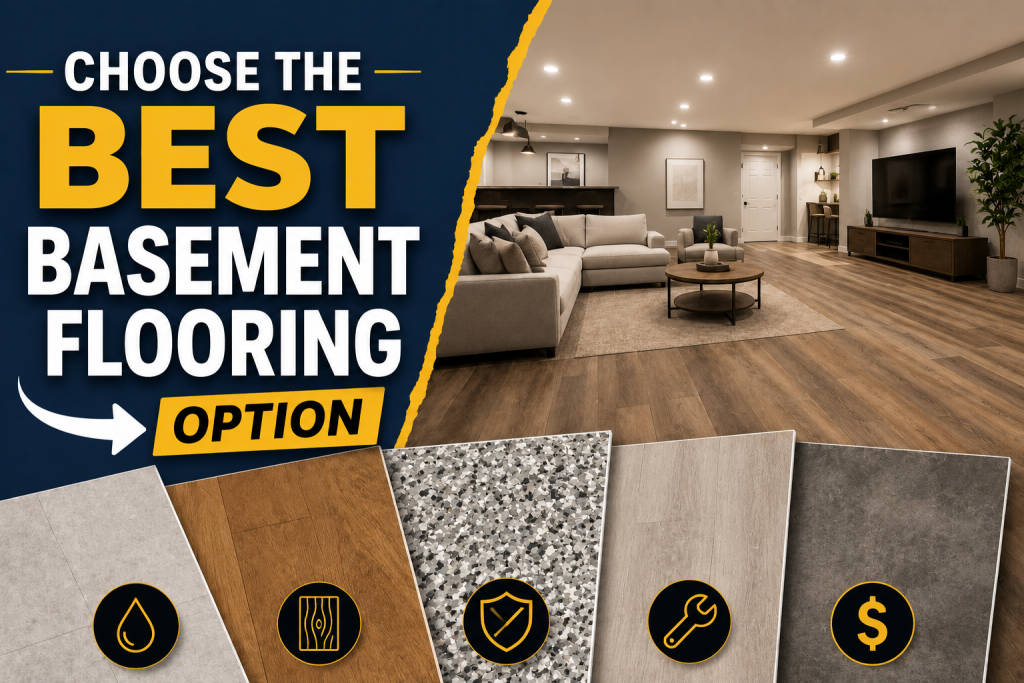
Choosing the best option among basement flooring options ultimately depends on balancing moisture resistance, durability, comfort, and long-term value. For most US homeowners dealing with moisture-prone conditions, the safest approach is to prioritize materials specifically designed for below-grade environments. Luxury vinyl plank stands out as one of the most versatile solutions. It delivers strong water resistance, realistic design appeal, and comfort, making it ideal for finished living spaces. It also performs well in basements where occasional humidity or minor moisture exposure may occur. For maximum durability, basement tile flooring remains a top performer. Its resistance to water and heavy use makes it especially suitable for bathrooms, laundry areas, and high-traffic basement zones. Meanwhile, concrete basement flooring offers unmatched longevity and minimal maintenance, particularly in modern or utility-focused designs. Ultimately, the best flooring choice depends on how the basement will be used and how well moisture risks are managed. A properly sealed and planned basement can support multiple flooring types successfully, but moisture control should always come first.
FAQs
What are the best basement flooring options for moisture-prone areas?
The best basement flooring options for moisture-prone areas include luxury vinyl plank, porcelain tile, and sealed concrete because they resist water damage and perform well below grade.
Is vinyl plank good for basement floors?
Yes, vinyl plank basement floors are one of the most popular choices because they are waterproof, comfortable, and suitable for finished basement living spaces.
What is the most waterproof basement flooring?
Waterproof basement flooring options like luxury vinyl and porcelain tile are the most reliable for preventing moisture damage in below-grade spaces.
Can you install tile flooring in a basement?
Yes, basement tile flooring works very well in moisture-prone environments, especially in bathrooms, laundry rooms, and high-traffic areas.
Is concrete a good basement flooring option?
Yes, concrete basement flooring is extremely durable and moisture-resistant, making it ideal for modern, industrial, or utility-focused basement designs.