


Common Basement Moisture Problems After Remodeling (Causes & Fixes)
Understanding basement moisture problems is essential for homeowners who have recently completed or are planning a basement remodel. While finishing a basement adds valuable living space, it can also unintentionally trap or expose existing moisture issues that were previously hidden in unfinished conditions. Unlike above-grade rooms, basements sit below ground level, which makes them naturally vulnerable to basement humidity issues, groundwater pressure, and temperature fluctuations. When walls are sealed, insulated, and finished, these conditions can become more noticeable because airflow is reduced and moisture has fewer ways to escape.
Many homeowners first notice issues after remodeling is complete, such as musty odors, damp walls, or early signs of mold in basement areas. These problems often stem from inadequate waterproofing, poor drainage systems, or overlooked structural weaknesses during renovation. This guide breaks down the most common post-remodel moisture issues, their causes, and practical solutions so homeowners can protect their investment and maintain a healthy living environment.
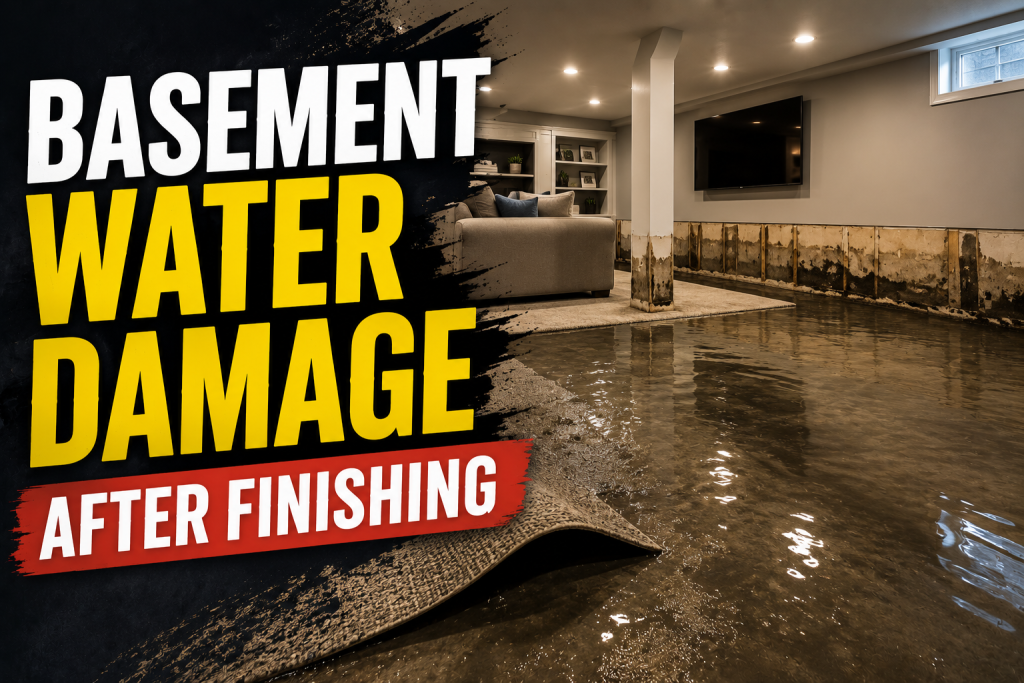
Basement Water Damage After Finishing
One of the most serious basement moisture problems after remodeling is hidden or recurring basement water damage. Once a basement is finished, water intrusion is no longer immediately visible because it is often trapped behind drywall, flooring, or insulation. This allows damage to spread quietly before it becomes noticeable. Common causes include poor exterior drainage, foundation cracks, and hydrostatic pressure pushing groundwater through basement walls or floors. In many US homes, older drainage systems or improperly graded landscapes can make the issue worse, especially during heavy rain or snowmelt.
After remodeling, water damage often shows up indirectly through warped flooring, bubbling paint, or soft drywall. In severe cases, it can weaken structural materials and lead to long-term deterioration if not addressed quickly. Tools and guidance from organizations like the FEMA emphasize the importance of early detection and proper water management systems to prevent costly repairs. Preventing basement water damage requires a combination of exterior grading correction, interior sealing, and reliable drainage systems before finishing any basement space.
Mold in Basement and Air Quality Risks
One of the most concerning basement moisture problems after remodeling is the development of mold in basement areas. Once a basement is finished, mold can grow undetected behind walls, under flooring, or inside insulation, making it more difficult to identify and remove early. Mold typically forms when moisture combines with poor ventilation and organic building materials such as wood framing, drywall, or carpet backing. After a remodel, sealed surfaces can trap humidity, creating ideal conditions for growth even if no visible leaks are present.
The health impact is also significant. According to guidance from the EPA, prolonged mold exposure can contribute to respiratory issues, allergies, and overall indoor air quality problems. This makes prevention especially important in finished living spaces like basements. Common warning signs include musty odors, dark spots on walls, or increased allergy symptoms when spending time in the basement. These issues often indicate deeper basement humidity issues that need immediate attention. Proper ventilation, dehumidification, and moisture barriers are key strategies for finished basement mold prevention, helping maintain both structural integrity and healthy indoor air quality.
Basement Moisture Problems and Indoor Climate Control
Basement humidity issues are one of the most common basement moisture problems homeowners notice after remodeling, especially once the space has been fully sealed and finished. Unlike unfinished basements, remodeled spaces often trap moisture inside walls and flooring systems, making humidity harder to regulate naturally. Humidity in basements typically comes from three main sources: groundwater seepage through foundation walls, condensation caused by temperature differences, and everyday household activities such as laundry or showers if the basement includes a bathroom. In many US regions with seasonal weather swings, these issues can become more noticeable during summer months when warm air meets cooler basement surfaces.
When humidity levels remain high, it can lead to discomfort, musty odors, and increased risk of basement water damage or mold growth. Over time, it can also damage flooring materials and weaken finished surfaces. Effective indoor climate control is essential. Dehumidifiers, proper HVAC balancing, and air circulation systems are key tools for maintaining stable conditions. Many homeowners also upgrade insulation and sealing systems to reduce moisture entry points and improve overall comfort in the finished space.
Basement Condensation Causes and Fixes
Basement condensation is another frequent basement moisture problem that appears after remodeling, often confusing homeowners because it can occur even without visible leaks. Instead of water coming through walls or floors, condensation forms when warm, humid air meets cooler basement surfaces like concrete walls, pipes, or windows. This temperature difference causes moisture in the air to turn into water droplets, which can collect on surfaces and gradually lead to damp spots, peeling paint, or early signs of mold in basement areas. It is especially common in US homes during summer months when outdoor humidity is high and basements remain naturally cooler.
Common problem areas include uninsulated pipes, basement windows, and exterior foundation walls. If left untreated, ongoing condensation can contribute to basement humidity issues and long-term material deterioration. Fixing condensation requires reducing temperature differences and controlling humidity. This can be achieved through pipe insulation, improved ventilation, air sealing, and the use of dehumidifiers. In some cases, upgrading insulation on basement walls can significantly reduce surface temperature imbalance and prevent recurring moisture buildup.
Waterproofing Basement Walls After Remodeling
Proper waterproofing basement walls is one of the most critical defenses against ongoing basement moisture problems, especially after a remodel has already been completed. Once walls are finished with drywall or paneling, any hidden moisture intrusion can become expensive and difficult to repair. Waterproofing failures typically occur when exterior drainage is insufficient or when foundation walls were never properly sealed before finishing work began. In US homes, this is especially common in older properties where original waterproofing systems may have deteriorated over time.
Effective waterproofing usually starts on the exterior with proper grading, gutters, and drainage systems that direct water away from the foundation. Interior solutions, such as sealants, vapor barriers, and drainage channels, are often used as secondary protection. Home improvement retailers like Home Depot and Lowe’s commonly offer waterproofing systems designed for finished basement environments, including coatings and moisture barriers that help reduce seepage risks. When done correctly, waterproofing basement walls not only prevents basement water damage but also supports long-term protection against mold, humidity buildup, and structural deterioration.
Sump Pump Problems and Drainage Failures
Sump pump problems are a major contributor to ongoing basement moisture problems, especially in homes that rely on active drainage systems to manage groundwater. After a basement remodel, these issues become more noticeable because finished materials can hide early warning signs of failure. A sump pump is designed to collect and remove excess water that accumulates around a home’s foundation. When it fails, due to power outages, mechanical issues, clogged discharge lines, or poor maintenance, water can quickly back up into the basement, leading to basement water damage and ruined finishes.
Drainage failures are often linked to overwhelmed systems during heavy rainfall or snowmelt conditions common across many US regions. If the sump pit is undersized or the pump is aging, it may not keep up with water volume, increasing the risk of flooding. Warning signs include unusual noises, frequent cycling, or standing water near the sump area. According to emergency preparedness guidance from FEMA, regular maintenance and backup power systems are essential to reduce flood risk in below-grade living spaces. Properly functioning drainage systems are critical for protecting finished basements from long-term structural and moisture damage.
Finished Basement Mold Prevention Strategies
Preventing finished basement mold is one of the most important steps in managing long-term basement moisture problems, especially after a remodel where walls, flooring, and insulation can trap hidden humidity. Once mold begins forming behind finished surfaces, it often spreads unnoticed until significant damage has already occurred. The foundation of finished basement mold prevention is moisture control. This includes maintaining indoor humidity levels below recommended thresholds, improving air circulation, and addressing any sources of basement water damage before they escalate. Even small leaks or condensation issues can create ideal conditions for mold growth over time.
Proper ventilation is essential. Mechanical ventilation systems, dehumidifiers, and HVAC balancing help regulate airflow and reduce stagnant moisture pockets. In many US homes, especially in humid regions, dehumidification becomes a year-round necessity rather than a seasonal solution. Material selection also plays a major role. Mold-resistant drywall, treated framing materials, and moisture-tolerant flooring options reduce the risk of biological growth in vulnerable areas. The EPA emphasizes controlling moisture as the most effective method of mold prevention, making early intervention and consistent monitoring critical after any basement remodel.
How to Diagnose Basement Moisture Problems
Accurately diagnosing basement moisture problems after remodeling is essential before attempting repairs, because the source of the issue is often hidden behind finished walls or flooring. A correct diagnosis helps distinguish between surface-level issues like basement condensation and more serious structural problems such as basement water damage. The first step is visual inspection. Homeowners should look for signs like bubbling paint, warped flooring, damp baseboards, or musty odors. These indicators often point to basement humidity issues or hidden leaks within walls or slab joints.
Next is humidity measurement. Using a hygrometer can help determine if indoor moisture levels are consistently high. If readings remain elevated, the issue is likely related to ventilation, drainage, or inadequate dehumidification rather than isolated leaks. It is also important to inspect external conditions. Poor grading around the home, clogged gutters, or failing drainage systems can direct water toward the foundation, increasing pressure on basement walls. Professional assessment may be required when symptoms persist. Contractors often test for moisture intrusion behind finished surfaces and evaluate whether waterproofing basement walls or drainage upgrades are needed to fully resolve the problem.

Final Solutions
Solving basement moisture problems after remodeling requires a long-term, layered strategy rather than a single quick fix. Because basements sit below grade, effective prevention depends on controlling water entry, managing humidity, and protecting finished materials simultaneously. The first priority is eliminating external water sources. This includes correcting yard grading, extending downspouts away from the foundation, and ensuring gutters are clear and functional. These steps reduce pressure on foundation walls and help prevent recurring basement water damage. Next is internal moisture management. Installing or upgrading dehumidification systems helps stabilize indoor humidity levels and reduces the risk of basement humidity issues and basement condensation.
Proper HVAC balancing and air circulation also play a key role in maintaining a stable environment. For structural protection, sealing foundation walls and upgrading waterproofing basement walls systems can significantly reduce seepage. In homes with drainage concerns, maintaining or upgrading sump pump systems is essential for preventing flooding during heavy rainfall. The most effective approach combines all three layers, exterior drainage control, interior moisture management, and structural waterproofing, to ensure long-term finished basement mold prevention and protect the investment made in remodeling.
FAQs – Basement Moisture Problems
What are the most common basement moisture problems after remodeling?
The most common basement moisture problems include condensation, hidden leaks, high humidity levels, mold growth, and foundation seepage that appears after finishing work is completed.
Why does mold appear after finishing a basement?
Mold in basement areas often appears after remodeling because finishing materials trap moisture, reducing airflow and allowing hidden humidity to build up behind walls and flooring.
How do you fix basement humidity issues?
Basement humidity issues can be controlled using dehumidifiers, improved ventilation, HVAC balancing, and sealing foundation entry points to reduce moisture infiltration.
What causes basement condensation?
Basement condensation is caused when warm, humid air meets cooler basement surfaces like walls, pipes, or windows, turning moisture in the air into water droplets.
How important is waterproofing basement walls?
Waterproofing basement walls is essential because it prevents water intrusion, reduces mold risk, and protects finished materials from long-term damage.