


Bathroom Paint vs Regular Interior Paint: Complete Guide
Bathrooms create one of the most challenging environments for interior paint. Unlike bedrooms and living rooms, bathrooms are exposed to frequent humidity, steam, temperature fluctuations, and moisture, which can shorten the lifespan of standard coatings if the wrong products are used. This is why the discussion of bathroom paint vs regular paint is important for homeowners planning a repaint project. Every shower, bath, and sink use introduces moisture into the air, which can settle on walls and ceilings. Over time, this exposure may lead to staining, peeling, mildew growth, or paint deterioration.
Modern waterproof bathroom paint is specifically designed to handle these conditions more effectively than standard interior products. Many formulations also include features that support easier cleaning and improved durability. Proper ventilation remains important, but paint selection plays a major role in long-term performance. Choosing products designed for humid spaces helps reduce maintenance requirements and keeps bathroom surfaces looking cleaner and fresher for longer periods.
Bathroom Paint vs Regular Paint: Key Differences
The biggest difference in bathroom paint vs regular paint comes down to how each product handles moisture, humidity, and frequent cleaning. While both types may appear similar when first applied, their long-term performance can vary significantly in bathroom environments. Standard interior paint is typically formulated for lower-moisture areas such as bedrooms, living rooms, and dining spaces. In contrast, bathroom paint often contains additives that improve moisture resistance, durability, and surface protection.
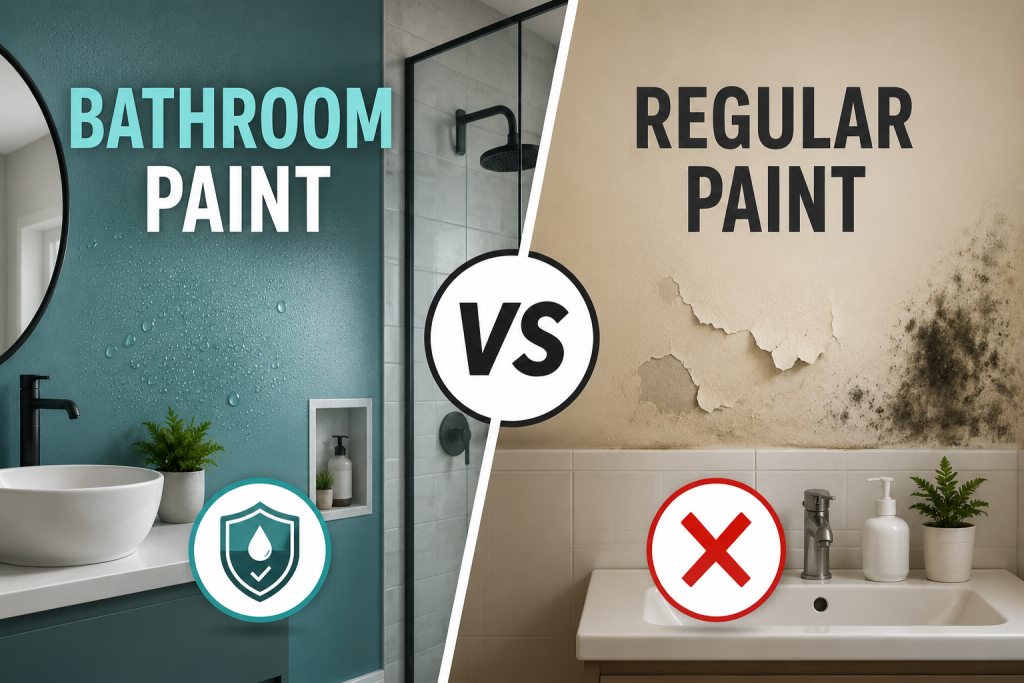
Many specialty bathroom paints are designed to resist water penetration and withstand repeated exposure to steam. They are also more likely to include antimicrobial features that help support mildew-resistant paint performance. Another key difference involves cleanability. Bathroom products are often formulated as cleanable bathroom paint, allowing homeowners to remove soap residue, splashes, and stains more easily. When making an interior paint comparison, the choice often depends on the room’s humidity level, ventilation quality, and long-term maintenance expectations.
What is waterproof bathroom paint?
Waterproof bathroom paint is specifically formulated to perform better in humid environments where walls and ceilings are regularly exposed to steam and condensation. These specialized coatings help protect surfaces from moisture-related damage that can occur over time. Unlike standard interior paint, many bathroom-specific products create a more durable barrier that reduces moisture absorption. This added protection helps minimize peeling, blistering, and premature paint failure in high-humidity areas.
Many modern formulations also qualify as humidity-tolerant paint, making them particularly useful in bathrooms that experience daily showers or limited ventilation. While no paint can eliminate moisture problems, specialty products can significantly improve long-term performance. These coatings are often paired with satin or semi-gloss finishes because higher-sheen surfaces generally provide better moisture resistance and easier cleaning. For homeowners comparing bathroom paint vs regular paint, moisture resistance is one of the most important advantages because it directly affects durability, maintenance needs, and overall bathroom appearance over time.
How Does Mold-Resistant Paint Help Bathrooms?
Bathrooms naturally create warm, damp environments that can encourage mildew growth, especially in areas with poor ventilation. This is where mold-resistant paint becomes an important upgrade compared to standard interior coatings. Unlike regular paint, mildew-resistant formulas are designed with additives that help inhibit the growth of mold and mildew on painted surfaces. While they do not eliminate the root cause of moisture, they significantly reduce the likelihood of visible staining and surface buildup over time.
This makes them especially valuable in shower areas, ceilings, and corners where humidity tends to collect. In a proper interior paint contrast, mildew-resistant options consistently outperform standard paints in long-term bathroom conditions. When paired with proper airflow and a quality exhaust fan, waterproof bathroom paint can help maintain a cleaner, fresher appearance for longer periods. For homeowners evaluating bathroom paint vs regular paint, mildew resistance is one of the key reasons many professionals recommend specialty bathroom coatings in high-humidity spaces.
Bathroom Wall Coverings and Their Benefits
Beyond traditional paint, some homeowners consider specialized bathroom wall coverings designed to provide enhanced protection in high-moisture environments. These coatings are typically formulated to create a more durable surface barrier than standard interior paint systems. One of the main advantages of bathroom wall coatings is improved resistance to water exposure. In areas around showers, tubs, and sinks, walls are more likely to encounter direct splashes and prolonged humidity. These coatings help reduce absorption and minimize long-term surface damage.
Many modern systems also support better performance against peeling and bubbling, which can occur when moisture penetrates standard paint layers. When compared in an interior paint contrast, wall coatings often offer stronger long-term durability in extreme conditions. These products are commonly used in commercial spaces, rental properties, and high-traffic bathrooms where maintenance frequency needs to be reduced. For homeowners evaluating bathroom paint vs regular paint, wall coatings represent a more advanced option that prioritizes durability, protection, and long-term performance in demanding bathroom environments.
Cleanable bathroom paint for Easy Maintenance
Keeping bathroom walls clean is a major concern for homeowners, especially in spaces that experience daily moisture, soap splashes, and frequent use. This is where cleanable bathroom paint becomes especially valuable compared to standard interior finishes. Washable formulations are designed to withstand repeated cleaning without damaging the surface or dulling the finish. This makes it easier to remove stains, water marks, and residue commonly found around sinks, tubs, and high-touch areas.
In a practical interior paint contrast, washable options perform better in bathrooms because they maintain their appearance even after frequent wiping. Standard interior paints may wear down faster under the same conditions, leading to discoloration or uneven surfaces over time. Most washable bathroom paints are paired with satin or semi-gloss finishes, which naturally support better cleaning performance and moisture resistance. When evaluating bathroom paint vs regular paint, washability is one of the key advantages that helps homeowners reduce maintenance effort while keeping bathrooms looking fresh and well-maintained for longer periods.
Interior paint contrast: Is Specialty Paint Worth It?
When homeowners look at a full interior paint contrast, the key question is whether specialty bathroom products are actually worth the added cost compared to standard interior paint. The answer usually depends on how the room is used and how much moisture it is exposed to. In high-humidity spaces, standard paint may appear fine at first but can begin to show wear more quickly. Issues like peeling, staining, or mildew buildup are more common when walls are not protected by waterproof bathroom paint or mold-resistant paint formulations.
Specialty paints are designed to perform better under these conditions. They typically offer improved durability, better adhesion in damp environments, and easier cleaning, which contributes to lower maintenance over time. While regular interior paint can still be used in well-ventilated or low-use bathrooms, many homeowners find that investing in bathroom-specific products reduces long-term repair and repaint frequency. Ultimately, the value of specialty paint comes down to balancing upfront cost with long-term performance and maintenance needs.
Benefits for Homeowners
Choosing the right product in the bathroom paint vs regular paint decision offers several long-term advantages that go beyond appearance. Bathroom-specific coatings are designed to handle real-world conditions that standard interior paint is not built for.
- One of the primary bathroom paint benefits is improved durability in high-moisture environments. Bathrooms experience daily humidity changes, and specialty paints help reduce issues like peeling, bubbling, and surface wear.
- Another major benefit is easier maintenance. Many cleanable bathroom paint formulas allow homeowners to clean walls more frequently without damaging the finish. This is especially useful around sinks, tubs, and high-touch areas.
- Mildew resistance is also a key advantage. Products designed as mold-resistant paint help slow the growth of mold on painted surfaces, especially in bathrooms with limited ventilation.
Over time, these benefits can reduce repaint frequency, lower maintenance costs, and help keep bathrooms looking cleaner and more updated with less effort.
Bathroom Paint vs Regular Paint: Choosing by Bathroom Type
The best choice in bathroom paint vs regular paint often depends on the specific type of bathroom and how frequently it is used. Different spaces have different moisture levels, ventilation conditions, and maintenance needs, which directly affect paint performance.
Master Bathrooms
Master bathrooms typically experience daily showers, higher humidity, and more frequent use. In these spaces, waterproof bathroom paint and mold-resistant paint are strongly recommended to handle constant steam exposure and reduce long-term wall damage.
Guest Bathrooms
Guest bathrooms usually see lighter use and less humidity buildup. In many cases, a standard interior paint can work, but using cleanable bathroom paint still helps maintain a cleaner appearance between uses.
Powder Rooms
Powder rooms have the lowest moisture exposure since they typically do not include showers. Because of this, homeowners can safely use more decorative finishes or standard interior paint while still prioritizing easy-to-clean surfaces.
Rental Properties
Rental bathrooms require extra durability due to frequent use and less controlled maintenance. In these cases, bathroom wall coverings or high-quality washable paints are often preferred for long-term performance and reduced upkeep costs.
High-Humidity or Poor-Ventilation Bathrooms
Bathrooms with limited airflow or no windows benefit the most from specialty products. Choosing the right moisture- and humidity-resistant paint helps prevent peeling, mildew growth, and premature repainting.
When Standard Interior Paint May Still Work
While specialty products are often recommended, there are situations where standard paint can still perform adequately in bathrooms. In a balanced bathroom paint vs regular paint decision, the key factor is usually moisture exposure and ventilation quality. Bathrooms with strong airflow, such as those with large windows or high-quality exhaust fans, may not experience the same level of humidity buildup. In these cases, standard interior paint can still provide acceptable performance, especially on walls that are not directly exposed to water.
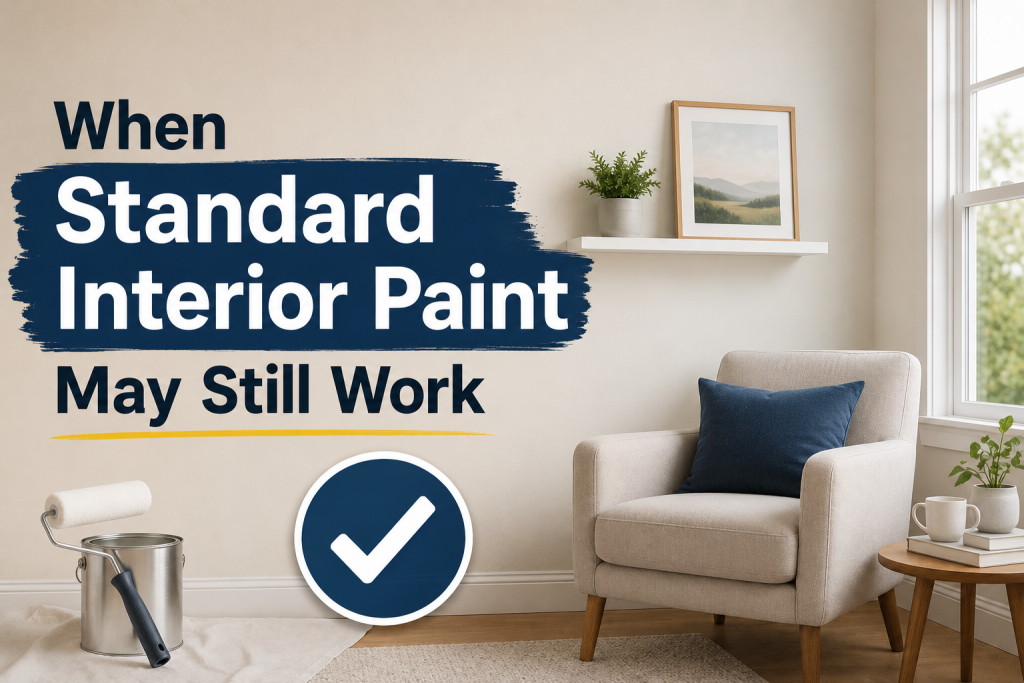
Guest bathrooms or powder rooms are another example where standard paint may be sufficient. These spaces typically see less frequent use, meaning less exposure to steam and moisture. However, even in lower-risk environments, homeowners should still consider at least a semi-gloss finish for improved cleanability. While standard paint may reduce upfront costs, it generally lacks the long-term advantages of moisture-resistant bathroom paint and humidity-tolerant paint. Ultimately, the decision depends on balancing budget, ventilation, and how heavily the bathroom is used on a daily basis.
Final Thoughts
The choice between bathroom paint vs regular paint ultimately comes down to moisture exposure, usage level, and long-term maintenance expectations. While standard interior paint can work in low-humidity or well-ventilated spaces, bathrooms consistently demand more durable solutions. Specialty products such as waterproof bathroom paint and mold-resistant paint are designed to handle steam, humidity, and frequent cleaning, making them a stronger long-term investment for most full bathrooms. Features like washability and durability also matter. cleanable bathroom paint helps homeowners maintain cleaner surfaces with less effort, while higher-quality formulations reduce the risk of peeling or surface damage over time. In most cases, choosing bathroom-specific coatings leads to fewer repairs, better appearance retention, and longer-lasting results. For homeowners focused on performance and maintenance savings, investing in the right bathroom paint product often delivers more value than relying on standard interior paint alone.
Frequently Asked Questions
What is the difference between bathroom paint vs regular paint?
The main difference in bathroom paint vs regular paint is moisture resistance. Bathroom paint is formulated to handle humidity, steam, and frequent cleaning, while standard interior paint is designed for low-moisture areas like bedrooms and living rooms.
Is waterproof bathroom paint worth it?
Yes, waterproof bathroom paint is often worth it in full bathrooms because it helps protect walls from peeling, bubbling, and long-term moisture damage caused by daily showers and steam exposure.
Does mold-resistant paint prevent mold?
Mold-resistant paint helps slow the growth of mold and mildew on painted surfaces, but it does not eliminate moisture problems. Proper ventilation is still essential for long-term bathroom protection.
What are the main painted bathroom benefits?
Key painted bathroom benefits include improved durability, easier cleaning, better moisture resistance, and reduced maintenance compared to standard interior paint.
Can I use regular paint in a bathroom?
Yes, but it is best suited for low-moisture areas like powder rooms or well-ventilated bathrooms. In high-humidity spaces, specialty bathroom paint generally performs better long-term.