

Ultimate Bathroom Remodeling Guide for American Homes
Bathroom remodeling is one of the smartest home improvement investments for American homeowners. Whether you’re updating an outdated guest bath or creating a luxurious primary suite, a well-planned renovation can improve comfort, boost energy efficiency, and increase your home’s resale value. This bathroom remodeling guide walks you through every stage of the process, from budgeting and layout planning to selecting durable materials and modern fixtures. Today’s homeowners are looking beyond aesthetics. Features like water-saving fixtures, better ventilation, and accessible layouts have become just as important as stylish finishes.
Incorporating bathroom renovation ideas that suit your lifestyle while considering your local climate and building requirements can help you avoid costly mistakes. Whether you live in humid Florida, snowy Colorado, or sunny Arizona, careful planning ensures your remodel delivers lasting performance. Throughout this guide, you’ll discover practical bathroom upgrade tips, the latest modern bathroom design trends, and expert advice tailored to American homes. By the end, you’ll have a clear bathroom planning guide to help you create a functional, beautiful bathroom that fits your budget and adds long-term value to your property.
Bathroom Remodeling Guide: Planning Your Project
Every successful bathroom remodeling guide begins with careful planning. Before choosing tile colors or fixtures, identify your goals for the space. Are you creating a spa-like retreat, improving accessibility, or increasing your home’s resale value? Defining your priorities helps you make informed decisions throughout the renovation. Next, establish a realistic budget that includes materials, labor, permits, and a contingency fund of 10–20% for unexpected expenses. Homeowners in states like California and New York often face higher labor costs than those in Texas or the Midwest, making regional pricing an important consideration.
If your project involves plumbing or electrical modifications, hire licensed professionals who understand the International Residential Code (IRC) and local building regulations. A detailed bathroom planning guide also includes measuring the space accurately, selecting quality materials, and creating a project timeline to minimize disruptions while ensuring a smooth American bathroom remodel.
Choosing the Best Bathroom Layout
The right layout is the foundation of a functional and attractive bathroom. Whether you’re planning a luxury primary suite or a compact guest bath, your design should maximize available space while improving daily convenience. Popular master bathroom ideas include double vanities, walk-in showers, freestanding tubs, and dedicated storage areas that reduce clutter. For homeowners with limited square footage, a small bathroom renovation can benefit from wall-mounted vanities, recessed shelving, sliding shower doors, and large-format tiles that create the illusion of a larger room.
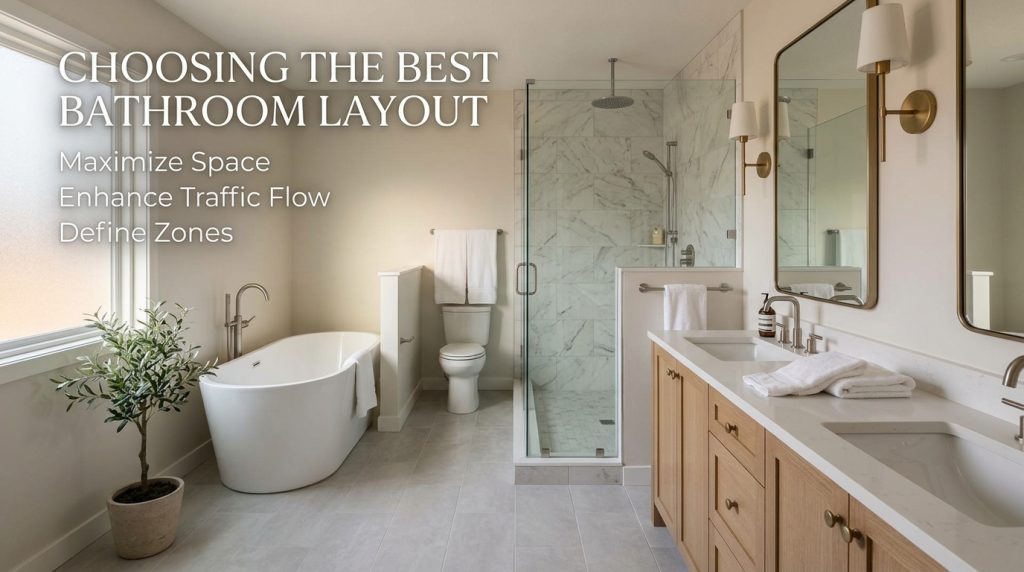
Consider how traffic flows through the space and keep plumbing fixtures aligned whenever possible to reduce installation costs. Families may prioritize extra storage and dual sinks, while aging homeowners often benefit from curbless showers and wider doorways for improved accessibility. A well-planned bathroom remodeling guide emphasizes that modern bathroom design should balance aesthetics with functionality, ensuring your remodel remains practical, comfortable, and valuable for years to come.
Bathroom Remodeling Guide: Modern Bathroom Design Trends for American Homes
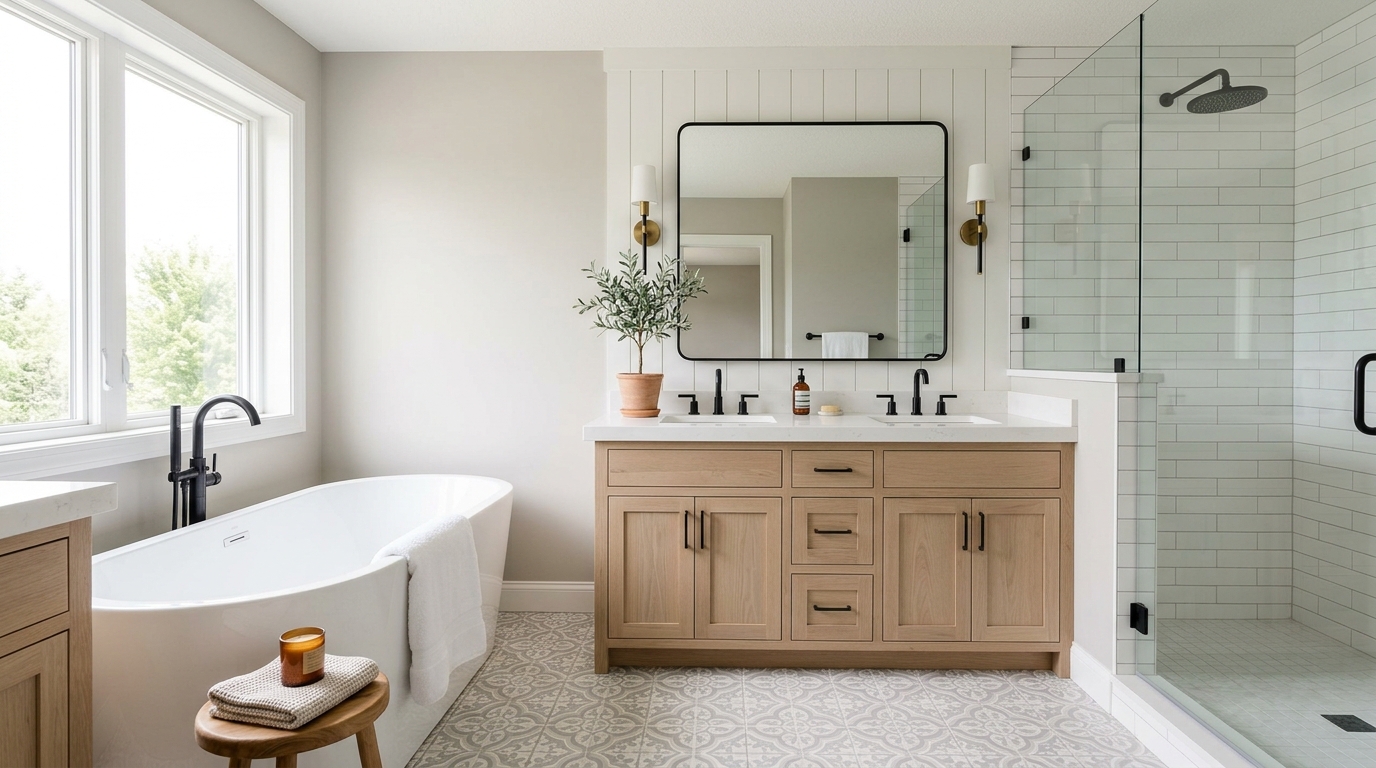
As highlighted in this bathroom remodeling guide, today’s modern bathroom design combines timeless style with practical features that enhance everyday living. Walk-in showers with frameless glass enclosures continue to replace traditional tubs, creating an open and spacious feel. Floating vanities, matte black or brushed nickel fixtures, and large-format porcelain tiles offer a clean, contemporary look that complements many American homes. Natural materials such as quartz countertops and wood-inspired cabinetry add warmth while remaining durable and easy to maintain.
Technology is also transforming bathroom spaces. Smart mirrors with built-in LED lighting, touchless faucets, programmable heated floors, and Wi-Fi-enabled exhaust fans improve convenience and energy efficiency. Homeowners in colder states like Minnesota and Colorado often appreciate radiant floor heating, while those in humid regions such as Florida benefit from high-performance ventilation systems that help prevent moisture and mold. Incorporating these bathroom renovation ideas creates a stylish, functional space that delivers long-term comfort, lower maintenance, and increased home value.
Selecting Durable Materials
Choosing high-quality materials is one of the most important decisions in any bathroom remodeling guide. Bathrooms experience constant moisture, temperature changes, and daily wear, so every surface should be built to last. Porcelain and ceramic tile remain popular flooring choices because they resist water, scratches, and stains. For countertops, quartz offers excellent durability with minimal maintenance, while natural stone like granite provides a premium appearance but requires periodic sealing.
When selecting cabinetry, opt for plywood or solid wood construction with moisture-resistant finishes instead of particleboard, which can swell when exposed to humidity. Waterproof backer boards behind showers and tubs provide long-term protection against leaks and mold, while mildew-resistant paint helps preserve wall finishes. Investing in trusted brands such as Kohler, Delta Faucet, Moen, and American Standard ensures reliable performance and easier maintenance. Durable materials may cost more upfront, but they reduce future repairs and increase the value of your American bathroom remodel.
Improve Energy Efficiency
As recommended in this bathroom remodeling guide, an energy-efficient bathroom can reduce utility bills while making your home more comfortable and environmentally responsible. Start by installing ENERGY STAR® certified ventilation fans that remove excess humidity, helping prevent mold growth and protecting paint, cabinetry, and drywall. Pair these with LED lighting, which uses significantly less electricity and lasts much longer than traditional bulbs. Layered lighting around mirrors, showers, and vanities also improves visibility without increasing energy consumption.
Water conservation is equally important during an American bathroom remodel. Low-flow toilets, showerheads, and faucets approved by the EPA WaterSense program can reduce water usage without sacrificing performance. Proper insulation around exterior walls and plumbing pipes helps maintain indoor comfort while preventing frozen pipes in colder regions like the Midwest and Northeast. Incorporating these bathroom upgrade tips into your remodel creates a more sustainable bathroom that lowers operating costs, improves efficiency, and adds lasting value to your home.
Bathroom Upgrade Tips That Increase Home Value
Following a bathroom remodeling guide helps you focus on upgrades that deliver the best return on investment while improving everyday functionality. Replacing outdated fixtures, installing a quartz vanity top, upgrading to a frameless glass shower, and adding modern LED lighting are improvements that can make a bathroom feel more luxurious without requiring a complete overhaul. Neutral color palettes, quality finishes, and ample storage also attract a wider range of buyers and help your home stand out in competitive real estate markets.
Accessibility upgrades are another smart long-term investment. Features such as curbless showers, comfort-height toilets, wider doorways, and reinforced walls for future grab bars allow homeowners to age in place while appealing to multigenerational families. These bathroom upgrade tips not only enhance comfort but also increase marketability. By combining timeless master bathroom ideas with durable materials and energy-efficient fixtures, you can maximize your renovation budget and improve the long-term value of your American home.
Common Bathroom Remodeling Mistakes to Avoid
Even the best bathroom remodeling guide is only effective if you avoid the mistakes that lead to costly repairs and disappointing results. One of the most common errors is overlooking proper ventilation. Without a high-quality exhaust fan, excess moisture can cause mold, mildew, peeling paint, and damaged cabinetry. Skipping waterproofing behind showers and tubs is another expensive mistake that may result in hidden leaks and structural damage over time.
Many homeowners also underestimate the importance of lighting and storage. A single ceiling fixture rarely provides enough illumination for grooming tasks, while limited storage can quickly make the bathroom feel cluttered. Choosing low-quality materials simply to reduce upfront costs often leads to premature wear and higher maintenance expenses. Finally, avoid changing the layout without careful planning, as relocating plumbing and electrical systems can significantly increase project costs. Following a detailed bathroom planning guide helps prevent these issues and ensures a smoother, more successful renovation.
Bathroom Remodeling Timeline
Understanding the remodeling timeline helps you set realistic expectations and keep your project on schedule. Most bathroom renovations take between two and six weeks, depending on the project’s size, complexity, and material availability. The planning phase includes finalizing your design, selecting materials, obtaining permits when required, and hiring qualified contractors. Once demolition begins, plumbing and electrical systems are updated before new drywall, waterproofing, flooring, and tile installation take place.

After the structural work is complete, contractors install vanities, countertops, toilets, showers, lighting, mirrors, and accessories. The final stage includes painting, sealing grout, testing plumbing fixtures, and completing a detailed inspection to ensure everything meets local building codes. Ordering materials early and maintaining clear communication with your contractor can help prevent delays. Following this bathroom remodeling guide keeps your project organized, minimizes disruptions to your daily routine, and ensures your newly remodeled bathroom is completed safely, efficiently, and to a high standard.
Conclusion
A successful bathroom remodeling guide is about more than choosing attractive finishes; it’s about creating a space that improves comfort, efficiency, and long-term value. From careful planning and smart layout decisions to selecting durable materials and energy-efficient fixtures, every choice plays a role in the success of your renovation. Whether you’re exploring modern bathroom design, planning a small bathroom renovation, or transforming a primary suite with inspiring master bathroom ideas, focusing on quality and functionality will deliver the best results.
Before starting your project, establish a realistic budget, research local building requirements, and work with experienced professionals when needed. Investing in timeless designs, trusted products, and thoughtful bathroom upgrade tips can reduce future maintenance while increasing your home’s appeal. With the right strategy, your American bathroom remodel will provide years of comfort, improved daily living, and a strong return on investment.
Frequently Asked Questions
How Much Does a Bathroom Remodel Cost According to This Bathroom Remodeling Guide?
According to this bathroom remodeling guide, the cost of an American bathroom remodel varies based on the bathroom’s size, material selection, labor rates, and the project’s complexity. A basic remodel typically costs between $8,000 and $15,000, while a mid-range renovation ranges from $15,000 to $30,000. Luxury bathroom projects featuring custom cabinetry, premium tile, high-end fixtures, and spa-like amenities can exceed $50,000.
What adds the most value to a bathroom remodel?
Upgrades that offer the best return include walk-in showers, quartz countertops, new vanities, water-efficient fixtures, LED lighting, and durable porcelain tile. These bathroom renovation ideas improve functionality while appealing to future buyers
Should I remodel my bathroom before selling my home?
Yes. An updated bathroom can improve buyer interest and increase your home’s resale value. Focus on neutral finishes, modern fixtures, fresh paint, and energy-efficient upgrades that appeal to a broad range of homeowners.
Do I need a permit for a bathroom remodel?
Cosmetic updates such as painting or replacing fixtures typically don’t require permits. However, projects involving plumbing, electrical work, or structural modifications usually require permits and inspections under local building codes.
How can I make a small bathroom look bigger?
A small bathroom renovation benefits from light-colored finishes, frameless glass shower doors, wall-mounted vanities, recessed storage, and large mirrors. These design choices create the illusion of more space while maintaining functionality and improving everyday comfort.