


Benefits of Proper Lighting in Home Design
The benefits of proper lighting extend far beyond simply making a room brighter. Lighting influences how a home looks, feels, and functions daily. From improving comfort and productivity to enhancing interior design and energy efficiency, a well-planned lighting strategy can impact the overall living experience.
Many homeowners focus on furniture, paint colors, and décor while overlooking the role lighting plays in creating functional and inviting spaces. Understanding the benefits of proper lighting can help homeowners make smarter design decisions that improve both aesthetics and usability. Whether you’re remodeling a room or designing a new home, the right lighting choices can increase comfort, highlight architectural features, and contribute to a more enjoyable living environment.
Why Lighting Matters in Home Design?
Lighting is one of the most influential elements in residential design because it affects both functionality and appearance. A well-lit home feels more welcoming, comfortable, and practical, while poor lighting can make even beautifully decorated spaces feel uninviting. The placement, intensity, and type of lighting used throughout a home all contribute to how rooms are experienced daily.

Beyond visibility, lighting helps define spaces, emphasize architectural features, and create visual balance. It can make small rooms appear larger, highlight focal points, and improve the overall flow of a home’s interior. Proper lighting also supports everyday activities such as cooking, reading, working, and entertaining guests. Among the many benefits of proper lighting, one of the most important is its ability to enhance both form and function simultaneously. By combining different lighting layers and fixture types, homeowners can create spaces that are attractive, efficient, and comfortable for everyday living.
Benefits of Proper Lighting Beyond Visibility
Many homeowners think of lighting primarily as a way to illuminate a room, but the home lighting benefits extend far beyond basic visibility. The right lighting can influence how spaces are perceived, improve comfort levels, and contribute to a more enjoyable living environment. It plays a major role in shaping the overall atmosphere of a home.
Proper lighting can highlight architectural details, showcase artwork, and draw attention to key design elements. It can also create a sense of warmth and openness, making rooms feel larger and more inviting. In addition, well-planned lighting improves safety by reducing shadows in hallways, staircases, and other high-traffic areas. One of the often-overlooked benefits of proper lighting is its ability to increase a home’s versatility. By using multiple light sources and adjustable fixtures, homeowners can easily adapt a room for different activities, from relaxing with family to hosting guests or working from home.
Functional Lighting Style Improves Everyday Living
A successful functional lighting style focuses on supporting the way people use their homes every day. Rather than relying on a single overhead fixture, functional lighting combines multiple sources of illumination to improve comfort, convenience, and usability. This approach ensures that each room provides the right level of light for its intended purpose.
For example, kitchens benefit from task lighting that improves visibility during meal preparation, while home offices require focused illumination to reduce eye strain and support productivity. Living rooms often perform best with layered lighting that combines ambient, task, and accent fixtures to accommodate different activities throughout the day. One of the key benefits of proper lighting is to make everyday tasks easier and more enjoyable. When lighting is planned with functionality in mind, homeowners can create spaces that are safer, more efficient, and better suited to their daily routines.
Lighting and Ambiance: Creating Comfortable Spaces
The connection between lighting and mood is one of the most important considerations in home design. Different lighting conditions can influence how people feel, affecting relaxation, focus, energy levels, and overall comfort. Thoughtful lighting choices help create spaces that support both emotional well-being and everyday activities.
How Light Affects Emotions
Warm lighting often creates a cozy and welcoming atmosphere, making it ideal for living rooms, bedrooms, and family spaces. Cooler lighting tends to promote alertness and concentration, which is why it is commonly used in kitchens, home offices, and work areas.
Creating the Right Atmosphere
Layering ambient, task, and accent lighting allows homeowners to adjust the room on occasion. Dimmer switches, smart lighting controls, and adjustable fixtures provide even greater flexibility.
Benefits of Proper Lighting for Everyday Comfort
Among the many benefits of proper lighting, improving comfort and mood is one of the most valuable. A well-lit home can feel more inviting, relaxing, and enjoyable while helping occupants adapt spaces to different needs throughout the day.
Indoor Lighting Importance for Style and Function
Interior lighting importance in a home extends beyond illumination because it directly influences both aesthetics and functionality. Even the most beautifully designed room can feel incomplete if the lighting does not support the space effectively. Proper lighting enhances colors, textures, furniture, and architectural details while ensuring that rooms remain comfortable and practical for everyday use.
Lighting also helps establish visual hierarchy within a room by drawing attention to focal points such as artwork, fireplaces, built-in shelving, or statement furniture pieces. At the same time, it supports essential daily activities by providing adequate brightness where it is needed most. This balance between form and function is a key component of successful interior design. One of the major benefits of proper lighting is its ability to improve both the appearance and usability of a space simultaneously. When carefully planned, lighting becomes an integral part of the home’s overall design strategy rather than simply a functional necessity.
Energy-Efficient Home Decor Starts with Better Lighting
A successful energy-efficient home design often begins with smart lighting choices. Modern lighting technologies allow homeowners to reduce electricity consumption without sacrificing brightness, comfort, or style. As utility costs continue to rise, efficient lighting has become an important part of creating a more sustainable and cost-effective home. LED lighting is one of the most impactful upgrades homeowners can make. Compared to traditional incandescent bulbs, LEDs consume significantly less energy and typically last much longer.
Smart lighting systems can further improve efficiency by allowing homeowners to automate schedules, control brightness levels, and reduce unnecessary energy use throughout the day. Among the many benefits of proper lighting, lower energy costs are particularly appealing. By combining efficient fixtures, LED technology, and thoughtful lighting design, homeowners can create spaces that are both environmentally responsible and economical to operate over the long term.
Lighting for Efficiency in Home Offices and Workspaces
Proper lighting for productivity is essential in home offices, study areas, and other workspaces where focus and concentration are required. Poor lighting can contribute to eye strain, headaches, fatigue, and reduced efficiency, making it more difficult to complete tasks comfortably. A well-designed lighting plan helps create an environment that supports performance and overall well-being. Task lighting is particularly important in workspaces because it provides focused illumination exactly where it is needed.
Desk lamps, adjustable fixtures, and strategically positioned overhead lighting can improve visibility while reducing glare on computer screens and work surfaces. Natural daylight can also enhance productivity when incorporated effectively into the room’s design. One of the often-overlooked benefits of proper lighting is its impact on concentration and workplace comfort. By selecting appropriate brightness levels and minimizing visual distractions, homeowners can create productive environments that support both professional and personal activities.
Home Ambiance Tips That Transform Living Spaces
Creating a welcoming atmosphere is one of the most valuable home ambiance ideas homeowners can implement. Lighting has the power to completely transform how a room feels, influencing comfort, warmth, and overall enjoyment. The right combination of fixtures and light levels can make living spaces feel more inviting while enhancing the home’s character.
Use Layered Lighting for Flexibility
Combining ambient, task, and accent lighting allows homeowners to adjust a room’s mood based on different activities and occasions. This layered approach provides greater control over brightness and functionality.
Benefits of Proper Lighting for a Warm Atmosphere
One of the key benefits of proper lighting is its ability to create a cozy and relaxing environment. Warm-toned bulbs, dimmer switches, and strategically placed lamps can help make living rooms, bedrooms, and family spaces feel more comfortable and welcoming.
Highlight Design Features
Accent lighting can be used to showcase artwork, architectural details, and decorative elements, adding depth and visual interest to the room while enhancing its overall ambiance.
Common Lighting Mistakes Homeowners Should Avoid
Even high-quality fixtures can fail to deliver the desired results if common lighting mistakes are overlooked. Avoiding these issues can help homeowners maximize comfort, functionality, and energy efficiency:
- Relying on a single overhead fixture to light an entire room.
- Ignoring the importance of layered lighting for flexibility and balance.
- Choosing bulbs with the wrong color temperature for the room’s purpose.
- Installing fixtures that are too large or too small for the space.
- Failing to include adequate task lighting in kitchens, offices, and reading areas.
- Overlooking accent lighting that highlights architectural details and décor.
- Using excessive brightness that creates glare and visual discomfort.
- Neglecting dimmer switches that provide better control throughout the day.
- Blocking natural light with heavy window treatments or poor furniture placement.
- Prioritizing style over functionality when selecting lighting fixtures.
Avoiding these mistakes can significantly improve the effectiveness of a home’s lighting plan and overall living experience.
How to Maximize the Benefits of Proper Lighting in a Room?
Maximizing the benefits of proper lighting requires more than simply installing attractive fixtures. Homeowners should begin by evaluating how each room is used and identifying areas where additional illumination may improve comfort or functionality. A thoughtful lighting plan ensures that every space receives the right balance of ambient, task, and accent lighting. Start by layering multiple light sources rather than relying on a single fixture.
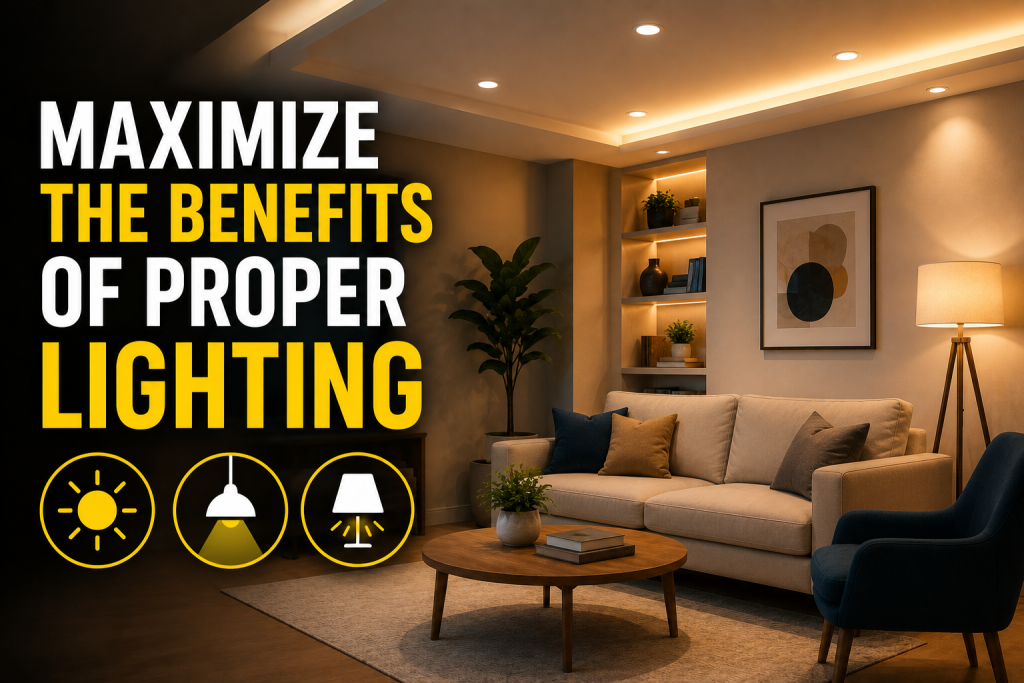
Use task lighting in work areas, accent lighting to highlight design features, and ambient lighting to provide overall brightness. Incorporating dimmer switches and smart controls can also improve flexibility, allowing rooms to adapt to different activities and times of day. Natural daylight should not be overlooked. Maximizing sunlight through window placement and reflective surfaces can enhance indoor spaces while reducing energy consumption. By combining these strategies, homeowners can create more attractive, efficient, and comfortable living environments.
Conclusion
The benefits of proper lighting extend far beyond basic illumination. A well-designed lighting plan can improve comfort, support productivity, enhance interior design, reduce energy consumption, and create a more inviting atmosphere throughout the home. By combining ambient, task, and accent lighting while incorporating energy-efficient solutions, homeowners can maximize both functionality and visual appeal. Whether you’re updating a single room or planning a larger renovation, thoughtful lighting choices can significantly impact how your home looks and feels. Investing in the right lighting strategy is one of the most effective ways to enhance everyday living and long-term home value.
Frequently Asked Questions
What are the benefits of proper lighting in home design?
Proper lighting improves visibility, enhances comfort, highlights design features, and supports everyday activities. It also helps create a more functional and inviting living environment.
How does lighting affect mood in a home?
Lighting can influence emotions, energy levels, and relaxation. Warm lighting typically creates a cozy atmosphere, while cooler lighting can promote focus and alertness.
What is the role of functional lighting in a house?
A well-planned functional lighting design ensures that each room has the appropriate level of illumination for activities such as cooking, reading, working, and entertaining.
Can proper lighting increase home value?
Yes. Quality lighting can improve a home’s appearance, functionality, and overall appeal, which positively influences buyer perception and resale value.
How can homeowners improve their lighting without a major renovation?
Homeowners can upgrade to LED bulbs, add task lighting, install dimmer switches, use smart lighting controls, and incorporate layered lighting to improve both comfort and efficiency.