


Best Roof for Snow in Different US Climate Regions
For homeowners in northern states like Minnesota, Maine, Michigan, and Colorado, winter weather can place tremendous stress on a roofing system. Heavy snow accumulation, repeated freeze-thaw cycles, and ice dams can shorten roof life and increase the risk of leaks if the wrong material is installed. Choosing the best roof for snow is about more than appearance. The ideal roof should handle snow loads efficiently, resist moisture intrusion, and maintain its structural integrity during long winters. Factors such as roof pitch, material durability, attic ventilation, and insulation all play important roles in cold-weather performance.
Many homeowners assume any roof can withstand winter conditions, but some materials perform significantly better than others. From metal roofing systems that shed snow quickly to premium slate products designed for decades of service, selecting the right option can reduce maintenance costs and improve long-term protection. In this guide, we’ll compare the top roofing materials for snowy climates, explain how roof design impacts winter performance, and help you determine which solution is best for your home, budget, and regional climate.
What Makes the Best Roof for Snow Conditions?
Not all roofing systems are designed to perform well under heavy winter weather. The best roof for snow should be able to support seasonal snow loads, minimize moisture-related damage, and prevent common cold-weather problems such as ice dams. Homeowners in snow-prone regions should evaluate roofing materials based on durability, water resistance, maintenance requirements, and expected lifespan.
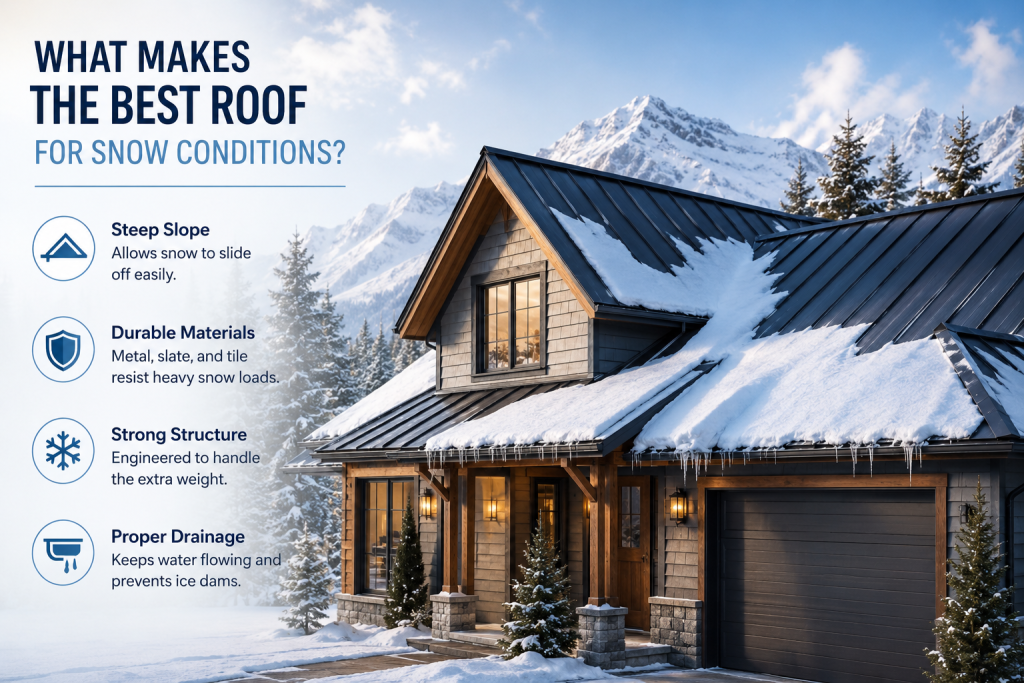
A roof’s performance during winter is influenced by more than just the material itself. Proper attic insulation, ventilation, and roof design all contribute to how effectively a roof handles snow accumulation. Homes located in areas with frequent storms often benefit from roofing systems engineered for long-term winter reliability rather than simply lower upfront costs. Investing in quality materials and professional installation can help reduce repair expenses, improve energy efficiency, and extend the life of the roofing system. Understanding the key factors below can make it easier to identify the right roofing solution for your climate and home.
Snow Load and Structural Performance
One of the most important factors when evaluating the best roof for snow is its ability to handle snow load. Snow may appear lightweight at first, but wet, compacted snow can add thousands of pounds of weight to a roof. Homes in regions such as Minnesota, upstate New York, and Colorado often experience conditions that place significant stress on roofing structures during winter.
Roofing materials with high strength and durability tend to perform better under these conditions. Proper roof framing is equally important, as even premium materials can fail if the underlying structure is not designed for local snow loads. Homeowners should also consider durable snow roofing solutions that maintain their performance over decades of seasonal weather exposure. A well-designed roofing system helps protect the home while reducing the likelihood of costly structural repairs.
Why Ice Dam Prevention Matters
Ice dams form when heat escaping from the attic causes snow on the roof to melt. As the water flows downward and reaches colder roof edges, it refreezes and creates a barrier that prevents proper drainage. Over time, trapped water can seep beneath roofing materials and damage decking, insulation, ceilings, and walls. Effective ice dam prevention roofing strategies begin with proper attic insulation and ventilation. These systems help maintain a consistent roof temperature and reduce uneven snow melting. Roofing materials that resist moisture intrusion also provide an additional layer of protection during severe winter conditions. Homeowners often focus on snow accumulation alone, but ice dams can be equally damaging. Preventing them not only protects the roofing system but also helps avoid expensive interior water damage and mold-related issues that may develop over time.
Snow Load and Structural Performance
One of the most important factors when evaluating the best roof for snow is its ability to handle snow load. Snow may appear lightweight at first, but wet, compacted snow can add thousands of pounds of weight to a roof. Homes in regions such as Minnesota, upstate New York, and Colorado often experience conditions that place significant stress on roofing structures during winter.
Roofing materials with high strength and durability tend to perform better under these conditions. Proper roof framing is equally important, as even premium materials can fail if the underlying structure is not designed for local snow loads. Homeowners should also consider durable snow roofing solutions that maintain their performance over decades of seasonal weather exposure. A well-designed roofing system helps protect the home while reducing the likelihood of costly structural repairs.
Why Ice Dam Prevention Matters
Ice dams form when heat escaping from the attic causes snow on the roof to melt. As the water flows downward and reaches colder roof edges, it refreezes and creates a barrier that prevents proper drainage. Over time, trapped water can seep beneath roofing materials and damage decking, insulation, ceilings, and walls. Effective ice dam prevention roofing strategies begin with proper attic insulation and ventilation. These systems help maintain a consistent roof temperature and reduce uneven snow melting. Roofing materials that resist moisture intrusion also provide an additional layer of protection during severe winter conditions. Homeowners often focus on snow accumulation alone, but ice dams can be equally damaging. Preventing them not only protects the roofing system but also helps avoid expensive interior water damage and mold-related issues that may develop over time.
Best Roof for Snow in Different U.S. Climate Regions
The best roof for snow often depends on regional weather patterns, snowfall intensity, and seasonal temperature fluctuations. A roofing system that performs well in Colorado may not always be the ideal choice for homeowners in Maine or Michigan. Understanding local climate conditions can help homeowners make a more informed investment.
Northern Midwest States
States such as Minnesota, Wisconsin, and Michigan experience long winters, frequent snowstorms, and repeated freeze-thaw cycles. Homeowners in these areas often benefit from metal roofing or premium architectural shingles designed for severe weather. Strong attic insulation and proper ventilation are equally important for maintaining reliable winter roof protection and reducing the risk of moisture-related damage.
Rocky Mountain Regions
Mountain communities in Colorado, Wyoming, and Montana often receive heavy snowfall combined with intense sunlight at higher elevations. Metal roofing systems are especially popular because they shed snow efficiently and resist damage from temperature swings. Snow retention systems may also be necessary to control large amounts of sliding snow.
Northeast Snow Belt Areas
Homes in Maine, Vermont, New Hampshire, and parts of upstate New York frequently face significant snow accumulation throughout winter. Durable materials such as metal and slate roofing are commonly recommended due to their ability to withstand prolonged exposure to snow and ice while maintaining long-term performance.
Roof Pitch and Design Considerations for Snowy Climates
Roof design plays a major role in winter performance. Even high-quality materials may struggle if the roof is not designed to manage snow effectively. Homeowners evaluating the best roof for snow should consider both roofing material and roof geometry when planning a replacement or new construction project.
Benefits of Steep Roof Slopes
A properly designed steep-slope roofing system helps snow slide off more naturally, reducing the amount of weight that remains on the roof for extended periods. Steeper roofs also improve drainage during winter thaws, helping minimize standing water and moisture-related issues. While slope alone cannot eliminate every winter roofing concern, it can significantly reduce snow accumulation compared with lower-pitched roof designs. Many homes in northern states incorporate steeper roof profiles specifically for this reason.
Snow Guards and Retention Systems
Snow guards and retention systems are designed to control how snow leaves the roof. Instead of allowing large sheets of snow to slide off suddenly, these components help distribute snow melt more gradually and safely. This added protection is particularly valuable for homes with metal roofing systems, walkways near roof edges, driveways, decks, and entryways. Properly installed snow retention products can improve safety while helping homeowners manage winter weather more effectively throughout the season.
How to Prevent Ice Dams and Winter Roof Damage
Even the best roof for snow can experience problems if the home lacks proper insulation and ventilation. Ice dams, moisture intrusion, and premature roof deterioration are often caused by heat loss from the attic rather than the roofing material itself. Preventive maintenance and proper building design are essential for long-term winter performance.
Proper Attic Insulation
Adequate attic insulation helps keep warm air inside the living space and reduces heat transfer to the roof deck. When attic temperatures remain consistent, snow is less likely to melt unevenly and refreeze along the roof edge. Many homeowners invest in snow-resistant roofing materials, but insulation remains one of the most important defenses against winter-related roof damage.
Ventilation Best Practices
A well-ventilated attic allows cold air to circulate beneath the roof deck, helping maintain a more uniform roof temperature. Ridge vents, soffit vents, and balanced airflow systems work together to reduce condensation and moisture buildup. Annual roof inspections, gutter cleaning, and prompt repair of damaged flashing can further protect the home during winter. When combined with proper insulation and ventilation, these measures help extend roof life and improve overall performance in snowy climates.
Cost Comparison of Snow-Resistant Roofing Materials
When choosing the best roof for snow, cost should be evaluated alongside lifespan, maintenance requirements, and long-term performance. A lower-priced roofing material may seem attractive initially, but frequent repairs or earlier replacement can increase overall ownership costs over time.
| Roofing Material | Average Installed Cost* | Typical Lifespan | Snow Performance | Maintenance Level |
| Asphalt Shingles | $4–$8 per square foot | 20–30 years | Good | Moderate |
| Metal Roofing | $8–$18 per square foot | 40–70 years | Excellent | Low |
| Synthetic Roofing | $9–$15 per square foot | 30–50 years | Very Good | Low |
| Natural Slate | $15–$30+ per square foot | 75–100+ years | Excellent | Low |
*Costs vary by region, roof complexity, labor rates, and material quality.
For many homeowners, metal roofing provides the strongest balance between upfront investment and long-term value. Asphalt shingles remain a budget-friendly option, while slate offers unmatched durability for those planning to stay in their homes for decades. Comparing lifetime costs rather than installation price alone often leads to a more informed roofing decision.
Choosing the Best Roof for Snow Based on Your Home
Choosing the best roof for snow ultimately depends on your home’s location, budget, long-term goals, and local weather conditions. While metal roofing is often the preferred option for severe winter climates, it may not be the right fit for every homeowner. Evaluating both performance and practical considerations can help you make the most cost-effective decision. If budget is the primary concern, high-quality architectural asphalt shingles can provide dependable protection at a lower upfront cost. They are often considered a practical option for roofing for cold weather, especially when paired with proper insulation and ventilation.
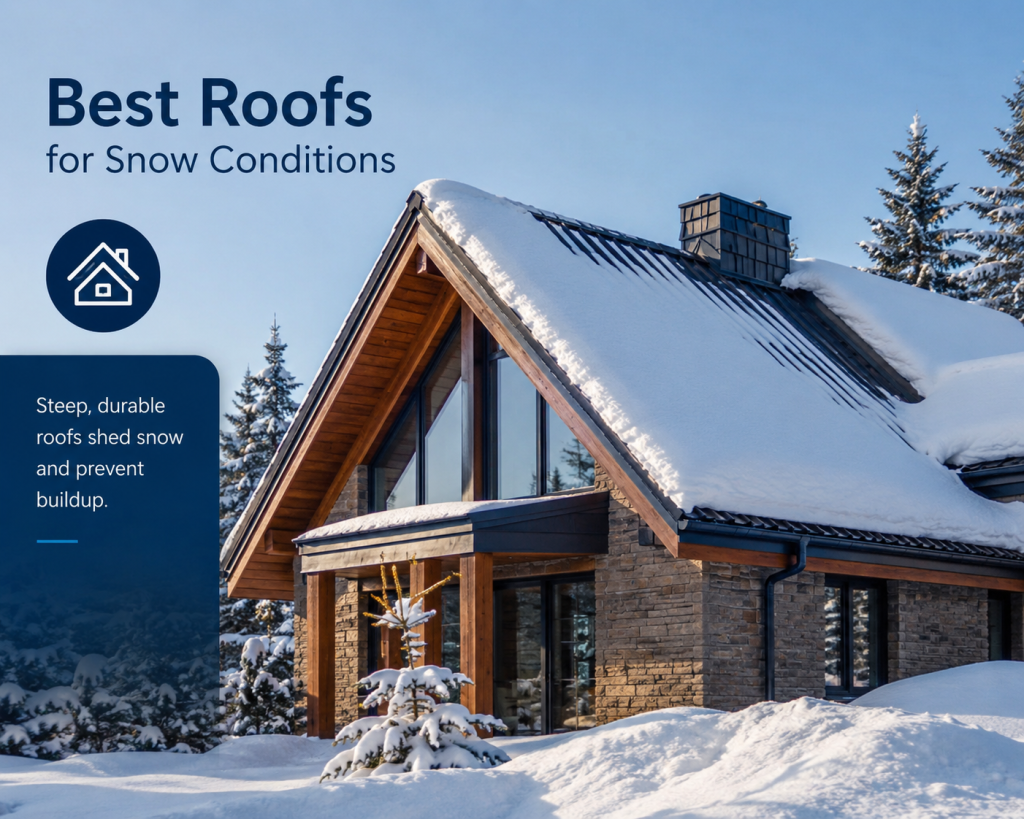
Homeowners planning to remain in their property for decades may find greater value in metal or slate roofing due to their extended lifespan and reduced maintenance requirements. It’s also important to review HOA guidelines, insurance requirements, and neighborhood aesthetics before making a final decision. In many northern markets, durable roofing materials can improve curb appeal and support resale value. By balancing climate demands with financial priorities, homeowners can select a roofing system that delivers reliable performance throughout years of winter weather.
Conclusion
Choosing the best roof for snow comes down to selecting a material that can handle heavy snow loads, shed snow efficiently, and withstand freezing temperatures year after year. Metal roofing is often the top choice because of its excellent snow-shedding ability, while asphalt shingles, slate, and synthetic roofing materials can also perform well when properly installed and maintained. Beyond the roofing material, factors like roof pitch, insulation, ventilation, and regular maintenance play a major role in preventing ice dams and protecting your home during winter. By investing in a roof that’s designed for your local climate and installed by a qualified contractor, you can improve your home’s durability, energy efficiency, and long-term value while keeping your family safe through even the harshest snow seasons.
Frequently Asked Questions
What roof sheds snow the fastest?
Metal roofing is generally considered the most effective option for shedding snow. Its smooth surface allows accumulated snow to slide off more easily than asphalt shingles or other textured materials. Homes in areas with heavy snowfall often use standing-seam metal roofing to reduce snow buildup and minimize structural stress.
Is a Metal Roof the Best Roof for Snow?
For many homeowners, metal roofing is considered the best roof for snow because it sheds snow efficiently, offers excellent durability, and resists damage from freeze-thaw cycles. Compared to asphalt shingles, metal roofs typically provide better long-term performance in regions with heavy snowfall. However, asphalt shingles remain a practical choice for homeowners seeking a lower upfront investment while still achieving reliable winter protection.
What roof pitch is best for snowy climates?
Steeper roof pitches typically perform better in snowy regions because they encourage snow to slide off naturally. While the ideal pitch varies by climate and local building codes, many snow-prone areas favor roof designs that reduce prolonged snow accumulation.
Can snow damage an asphalt shingle roof?
Yes. Excessive snow loads, ice dams, and repeated freeze-thaw cycles can damage asphalt shingles over time. Proper attic insulation, ventilation, and routine roof inspections can help reduce the risk of winter-related damage.
How Often Should the Best Roof for Snow Be Inspected?
Even the best roof for snow should be inspected regularly to ensure it continues performing effectively during harsh winter conditions. Most roofing professionals recommend a thorough inspection at least once per year, preferably before winter begins. Additional inspections may be beneficial after severe snowstorms, ice events, or high-wind weather to identify potential issues before they become costly repairs.