


Best Roofing Material for Hot Climates Of US
Choosing the right roof can make a significant difference in home comfort, energy costs, and long-term property value, especially in regions where summer temperatures regularly exceed 100°F. Homeowners in states like Arizona, Texas, Nevada, and Florida often face intense sunlight, prolonged heat exposure, and rising cooling expenses. Because the roof absorbs more direct sunlight than any other exterior surface, selecting the best roofing material for hot climates can help reduce indoor temperatures and lessen the strain on HVAC systems.
Modern roofing products are designed to reflect solar radiation, improve insulation, and withstand years of ultraviolet exposure. From metal panels and tile roofs to advanced reflective systems, each option offers unique advantages depending on your climate, budget, and maintenance expectations. Understanding how different roofing materials perform in hot environments is the first step toward making a smart investment that improves comfort while lowering energy bills throughout the year.
How to Choose the Best Roofing Material for Hot Climates
Selecting the best roofing material for hot climates involves more than comparing installation costs. Homeowners should evaluate how well a roof reflects sunlight, resists heat transfer, and performs under years of intense UV exposure. Climate conditions, roof slope, local building codes, and long-term maintenance requirements also play an important role. In hot regions such as Phoenix, Dallas, and Las Vegas, roofing materials that minimize heat absorption can significantly improve indoor comfort and reduce cooling expenses.

Factors That Affect Roof Performance in Extreme Heat
Several factors determine how effectively a roof handles high temperatures. Material composition, color, ventilation, insulation, and durability all influence overall performance. When evaluating the best roofing material for hot climates, homeowners should pay close attention to how these factors work together to improve energy efficiency and long-term durability. Lighter-colored roofs generally reflect more sunlight than darker surfaces, helping keep attic temperatures lower.
Why Solar Reflectance and Thermal Emittance Matter
When evaluating roofing systems, solar reflectance and thermal emittance are two of the most important performance metrics. Solar reflectance measures a roof’s ability to reflect sunlight, while thermal emittance refers to how efficiently it releases absorbed heat. High-performing reflective roofing systems excel in both areas, helping reduce roof surface temperatures during peak summer conditions. Organizations such as ENERGY STAR often recognize roofing products that meet strict efficiency standards, making them attractive options for homeowners seeking lower utility bills and improved energy performance.
Best Roofing Material for Hot Climates: Top Options Compared
Finding the best roofing material for hot climates requires balancing energy efficiency, durability, maintenance requirements, and upfront cost. While no single roofing system is perfect for every home, certain materials consistently perform better in areas exposed to extreme heat and intense sunlight. Homeowners should consider not only how a roof performs today but also its long-term impact on cooling costs, resale value, and maintenance expenses.
| Roofing Material | Lifespan | Energy Efficiency | Maintenance Level | Best For |
| Metal Roofing | 40–70 Years | High | Low | Hot and sunny regions |
| Clay Tile | 50–100 Years | High | Low to Moderate | Southwestern states |
| Concrete Tile | 40–75 Years | Moderate to High | Moderate | Warm climates |
| Cool Roof Systems | 20–50 Years | Very High | Low | Energy-conscious homeowners |
| Slate Roofing | 75–100+ Years | Moderate | Low | Premium homes |
Among these options, homeowners often prioritize materials that can reflect solar radiation while maintaining structural durability. Features such as heat resistance, low maintenance requirements, and compatibility with local weather conditions can make a significant difference in overall performance. The following sections explore each roofing material in greater detail to help determine which solution is best suited for your home and climate.
Metal Roofing for Hot Weather
Metal roofing has become one of the most popular choices for homeowners living in hot regions because of its ability to reflect a large portion of the sun’s energy. Unlike traditional roofing materials that absorb and retain heat, many modern metal systems are engineered with specialized coatings that improve solar reflectance and help maintain lower roof surface temperatures. This makes metal roofing for hot weather an attractive option for homeowners seeking greater comfort and lower cooling costs.
Another advantage of metal roofing is its exceptional lifespan. Many premium systems can last 40 to 70 years with minimal maintenance, making them a strong long-term investment. Metal roofs also perform well in areas prone to intense sunlight, seasonal storms, and temperature fluctuations. In states such as Texas, Arizona, and Nevada, homeowners often choose metal roofing because it combines durability, energy savings, and modern curb appeal while supporting long-term property value.
Clay Tile Roofing
For centuries, clay tiles have been used in some of the world’s hottest regions because of their natural ability to withstand extreme temperatures. Today, clay tile roofing remains a preferred choice throughout the American Southwest, particularly in areas where prolonged sun exposure is a year-round concern. The curved design of many clay tile systems creates natural air gaps beneath the tiles, helping reduce heat transfer into the home.
In addition to excellent thermal performance, clay tiles offer impressive longevity. A properly installed clay tile roof can often last 50 years or more, with some systems exceeding a century of service. Their distinctive appearance also enhances curb appeal, making them especially popular in Spanish, Mediterranean, and Southwestern-style homes. While installation costs are generally higher than asphalt shingles, many homeowners appreciate the combination of durability, energy performance, and timeless architectural appeal that clay tiles provide.
Concrete Tile Roofing
Concrete tile roofing offers many of the same benefits as clay tiles while often providing a more affordable price point. These roofs are known for their strength, durability, and ability to withstand prolonged exposure to intense sunlight. Because concrete tiles have significant thermal mass, they can help slow heat transfer into the home, contributing to more stable indoor temperatures during hot summer months. This performance makes concrete tiles a strong candidate for homeowners searching for the best roofing material for hot climates.
Many manufacturers produce concrete tiles in a variety of colors, profiles, and finishes, allowing homeowners to match different architectural styles while maintaining strong performance. Concrete roofs also perform well in regions that experience high temperatures, seasonal storms, and occasional high winds. Although they are heavier than some roofing materials and may require additional structural support, their long lifespan and dependable performance make them a practical choice for homeowners seeking a durable roofing solution in warm and sunny climates.
Cool Roofing Materials
Many homeowners looking to maximize energy savings choose cool roofing materials designed specifically to reflect more sunlight and absorb less heat. These roofing systems can include specially coated metal panels, reflective shingles, single-ply membranes, and advanced roof coatings that improve solar performance. By lowering roof surface temperatures, cool roof technologies help reduce the amount of heat entering the home during the hottest parts of the day, making them a strong contender for the best roofing material for hot climates.
Cool roofing systems are especially beneficial in regions where air-conditioning costs remain high throughout the summer. In many cases, homeowners notice improved indoor comfort and reduced strain on HVAC equipment after installation. Some products may also qualify for local energy-efficiency incentives depending on the location and applicable building standards. For homeowners focused on reducing long-term operating costs, cool roofing solutions offer a practical way to improve thermal performance without sacrificing appearance or durability.
Slate Roofing
Slate is widely regarded as one of the most durable roofing materials available. Quarried from natural stone, slate roofs can last well over 75 years and, in some cases, exceed a century when properly maintained. Its dense composition helps resist weathering, ultraviolet exposure, and temperature fluctuations, making it a premium option for homeowners who prioritize longevity and architectural appeal.
Beyond durability, slate offers excellent performance in hot climates because it does not readily deteriorate under intense sunlight. Its natural properties allow it to function as a highly heat-resistant roofing solution while maintaining a distinctive appearance that enhances curb appeal and resale value. However, slate is one of the most expensive roofing materials on the market and requires professional installation due to its weight. For homeowners willing to invest in a long-lasting roofing system, slate remains one of the most prestigious and durable choices available.
Which Is the Best Roofing Material for Hot Climates for Different U.S. Regions?
The best roofing material for hot climates often depends on regional weather patterns, humidity levels, storm exposure, and local building requirements. A roofing system that performs exceptionally well in the Arizona desert may not be the ideal choice for humid coastal areas. Homeowners should evaluate both climate-specific challenges and long-term maintenance expectations before selecting a roofing material.
Roofing for Arizona Homes and Desert Climates
When evaluating roofing for Arizona homes, heat resistance and solar reflectance are usually the top priorities. Cities such as Phoenix and Tucson experience intense sunshine for much of the year, making metal roofs, clay tiles, and cool roof systems particularly effective. These materials help reduce heat gain and support lower cooling costs during extended periods of extreme temperatures.
Roofing Choices for Texas and Southern States
In states such as Texas, homeowners often balance heat resistance with storm durability. Metal roofing and concrete tiles are commonly selected because they perform well under high temperatures while offering strong resistance to severe weather events. Proper attic ventilation also plays a critical role in improving overall roof performance.
Coastal Hot Climate Considerations
Coastal regions present additional challenges, including humidity, salt exposure, and seasonal storms. Corrosion-resistant metal roofing, tile roofing systems, and specialized roofing products designed for coastal environments often provide the best long-term performance. Homeowners should also verify compliance with local wind-resistance and building code requirements before installation.
Energy-Efficient Roofing Benefits for Homeowners
Investing in energy-efficient roofing can provide advantages that extend far beyond lower utility bills. In hot climates, a well-designed roofing system helps reduce heat transfer into the home, allowing air-conditioning equipment to operate more efficiently during peak summer months. This can lead to improved indoor comfort, reduced HVAC wear and tear, and lower annual cooling expenses.
Energy-efficient roofing systems may also contribute to stronger resale value, particularly in markets where buyers prioritize long-term operating costs and sustainable home upgrades. Features such as high solar reflectance, improved insulation performance, and durable roofing materials can make a property more attractive to prospective buyers. In addition, reducing excessive attic heat may help extend the lifespan of roofing components by minimizing thermal stress. For homeowners planning a long-term investment, selecting a high-performing roof can deliver financial and comfort-related benefits for decades.
Common Roofing Mistakes in Hot Climates
Even the most durable roofing material can underperform if homeowners overlook important design and installation considerations. One of the most common mistakes is choosing roofing products based solely on upfront cost rather than long-term performance. When searching for the best roofing material for hot climates, homeowners should focus on durability, energy efficiency, and long-term value rather than the lowest purchase price. Lower-cost materials may save money initially but often result in higher cooling expenses, increased maintenance requirements, and shorter replacement cycles.
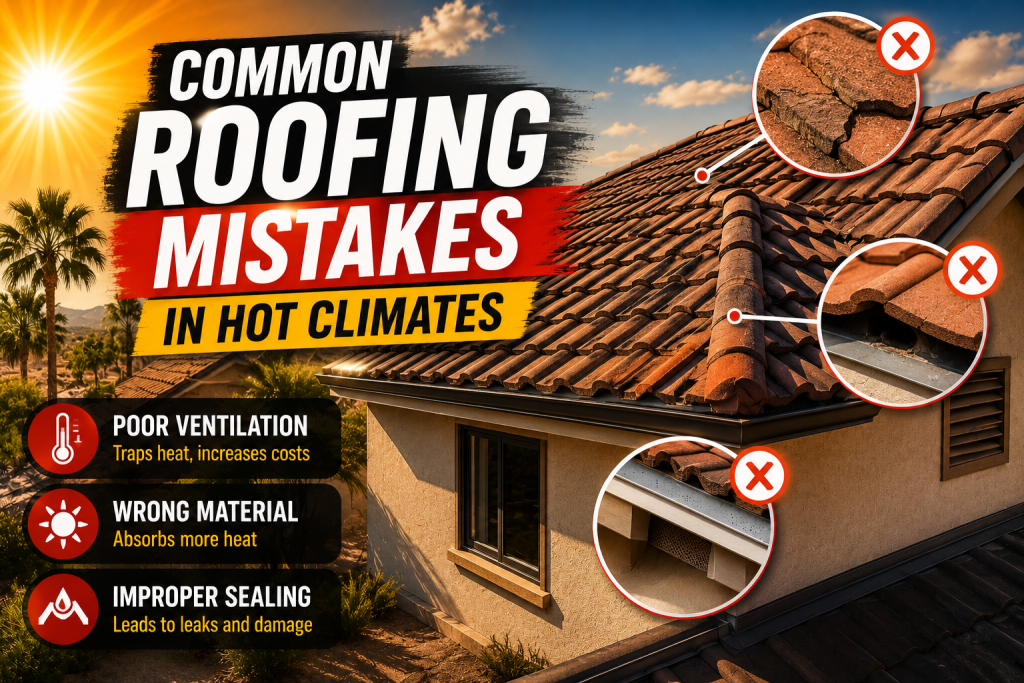
Another frequent mistake is selecting dark-colored roofing without considering its impact on heat absorption. Dark surfaces generally retain more solar heat, which can increase attic temperatures and place additional strain on cooling systems. Poor attic ventilation is also a major issue, as trapped heat can accelerate roof aging and reduce overall energy efficiency. Even the best roofing material for hot climates can fail to deliver its full benefits if ventilation, insulation, and installation quality are ignored. Homeowners should additionally verify that roofing materials are appropriate for local climate conditions, building codes, and weather-related risks. Taking a long-term approach to roofing decisions can help avoid costly repairs and maximize the lifespan of the entire roofing system.
Conclusion
Choosing the best roofing material for hot climates ultimately depends on your budget, local weather conditions, maintenance preferences, and long-term goals. Homeowners seeking maximum durability and energy savings often favor metal roofing, while clay and concrete tiles remain popular choices in hot, sunny regions due to their proven thermal performance. For those prioritizing premium longevity and architectural appeal, slate roofing offers exceptional durability and lasting value. Beyond the roofing material itself, factors such as roof color, attic ventilation, installation quality, and compliance with local building codes can significantly influence overall performance.
A well-designed roofing system can help reduce cooling costs, improve indoor comfort, and protect your home from years of intense heat exposure. Before making a final decision, consider your regional climate, expected maintenance requirements, and long-term return on investment. By selecting the right roofing system for your location, you can enjoy greater comfort, improved energy efficiency, and stronger property value for decades to come.
Frequently Asked Questions
Is metal roofing too hot in summer?
No. Modern metal roofs are designed to reflect a significant portion of solar radiation rather than absorb it. When paired with proper insulation and ventilation, metal roofing can help maintain lower attic temperatures and improve overall energy efficiency.
Are clay tiles the best roofing material for hot climates compared to asphalt shingles?
Clay tiles are often considered one of the best roofing material for hot climates options because they provide superior durability, longer lifespan, and better thermal performance than traditional asphalt shingles. Their natural insulating properties help reduce heat transfer into the home, making them particularly effective in hot regions such as Arizona, Texas, and Nevada.
What roof color stays coolest?
Light-colored roofing materials usually stay cooler because they reflect more sunlight than darker surfaces. White, light gray, beige, and other reflective finishes are commonly recommended for homes located in hot and sunny regions.
How long does the best roofing material for hot climates last?
The lifespan of the best roofing material for hot climates depends on the type of roofing system you choose. Metal roofs typically last 40 to 70 years, while clay and concrete tile roofs can often exceed 50 years with proper maintenance. Premium slate roofing may last more than 100 years, making it one of the longest-lasting roofing options available.