

Common Carpet Problems and Cleaning Tips: A Complete Homeowner’s Guide
Carpets add warmth, comfort, and style to American homes, but they also face daily wear from foot traffic, spills, pets, and environmental factors. Following proper carpet cleaning tips can help prevent many common issues before they become serious problems. Over time, even high-quality carpets can develop stains, unpleasant odors, flattened fibers, and other issues that affect both appearance and indoor air quality. In regions with high humidity, such as Florida and the Gulf Coast, moisture-related problems can be especially common, while homes in snowy northern states often deal with dirt, salt, and debris tracked indoors during winter. Understanding and applying effective carpet cleaning tips can help homeowners preserve carpet appearance, improve indoor air quality, and extend the lifespan of their flooring.
Following the right carpet cleaning tips can help homeowners protect their investment, extend carpet lifespan, and maintain a cleaner living environment. Whether you’re dealing with stubborn stains, pet accidents, or general wear and tear, understanding the causes of common carpet problems is the first step toward effective prevention and treatment. In this guide, we’ll cover the most frequent carpet issues homeowners encounter, practical cleaning solutions, maintenance strategies, and expert recommendations to keep your flooring looking its best year-round.
Common Carpet Cleaning Tips and Problems Homeowners Face
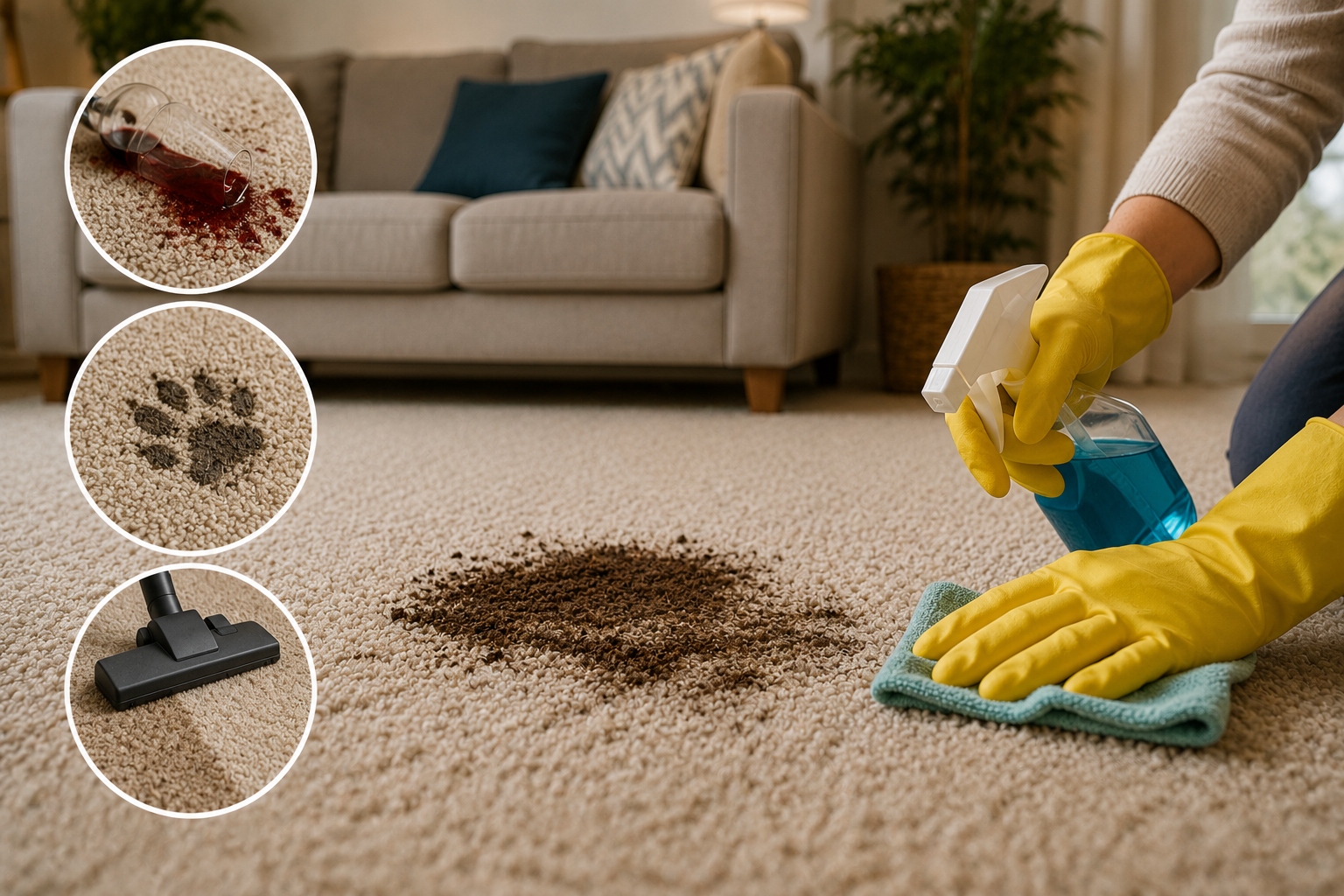
Carpets endure constant use, making them vulnerable to a variety of issues that can affect both their appearance and performance. One of the most common problems is staining from everyday spills such as coffee, wine, grease, mud, and food. If not treated quickly, these stains can penetrate deep into carpet fibers and become difficult to remove. Another frequent concern is carpet odor problems, often caused by pet accidents, excess moisture, smoke, or trapped bacteria. Persistent odors can negatively impact indoor air quality and make living spaces less comfortable. High-traffic areas such as hallways, family rooms, and entryways are also prone to fiber matting and wear, causing carpets to look older than they actually are.
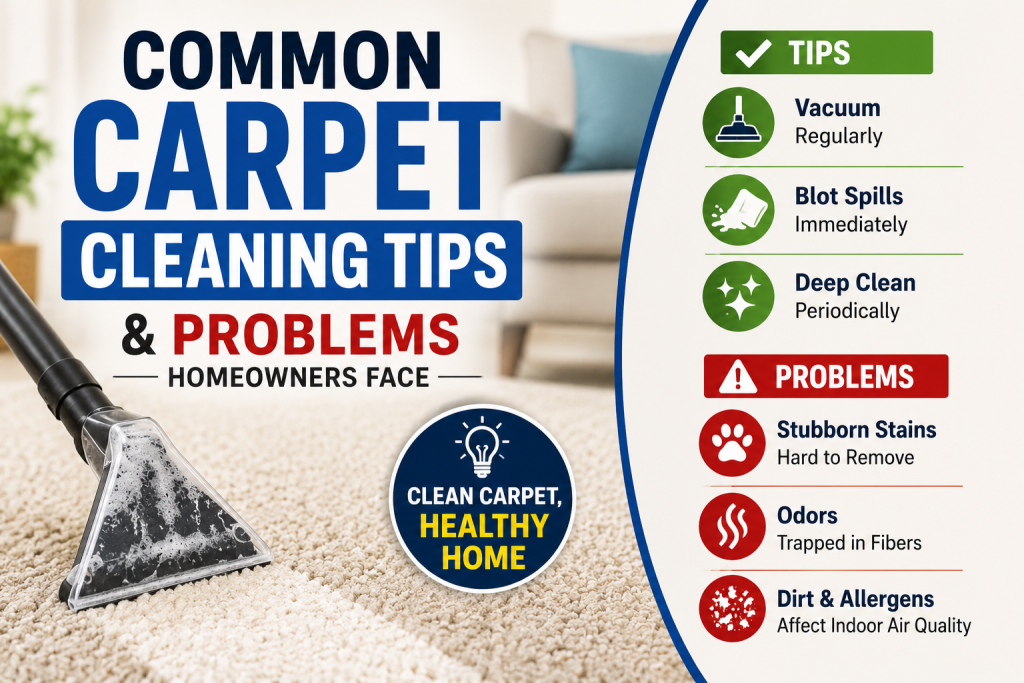
Pet owners often face additional challenges, including fur buildup, scratches, and recurring stains. Following practical carpet cleaning tips can help manage these problems and prevent long-term damage to carpet fibers. In some cases, moisture intrusion from leaks or flooding can lead to mold growth beneath the carpet, creating both structural and health concerns. Identifying these issues early allows homeowners to apply effective cleaning and maintenance solutions before more costly repairs become necessary.
Carpet Stain Removal Techniques That Actually Work
Successful carpet stain removal starts with identifying the source of the stain. Organic stains from food, beverages, and pet accidents require different treatments than oil-based substances, ink, or grease. Acting quickly is essential because fresh stains are significantly easier to remove than those that have had time to settle into the carpet fibers.
For most household spills, begin by blotting the affected area with a clean white cloth. Avoid scrubbing, as this can push the stain deeper into the carpet and damage the fibers. These basic carpet cleaning tips can help prevent stains from becoming permanent. A mixture of warm water and mild dish soap is often effective for everyday stains, while a solution of white vinegar and water can help break down tougher residues. Baking soda can also be used to absorb moisture and neutralize lingering discoloration.
When stains persist despite repeated cleaning attempts, professional carpet cleaning may be necessary. Commercial-grade equipment can reach deep into the carpet pile and remove contaminants that household cleaning methods often leave behind. Following proven carpet cleaning tips, along with prompt treatment and the right cleaning approach, can prevent permanent damage and help maintain the carpet’s original appearance for years.
How to Solve Carpet Odor Problems?
Persistent carpet odor problems can make an otherwise clean home feel unpleasant. In many cases, odors develop when moisture, pet accidents, food spills, or bacteria become trapped within the carpet fibers and padding. Homes located in humid regions such as Florida, Louisiana, and other coastal areas may be especially vulnerable to odor issues because excess moisture can encourage mold and mildew growth beneath the carpet surface.
The first step in eliminating odors is identifying their source. For mild smells, sprinkle baking soda evenly across the carpet, allow it to sit for several hours, and then vacuum thoroughly. These simple carpet cleaning tips can often eliminate common household odors without the need for harsh chemicals. Deep cleaning with a steam cleaner can help remove bacteria, dirt, and organic residue that contribute to lingering odors. Improving ventilation by opening windows, using ceiling fans, or running a dehumidifier can also reduce moisture-related smells.
For recurring pet odors, enzyme-based cleaners are often the most effective solution because they break down odor-causing organic compounds rather than simply masking them. If odors continue to return after cleaning, the problem may have reached the carpet padding, requiring professional treatment or partial carpet replacement. Following effective carpet cleaning tips and maintaining a regular cleaning routine remains the best defense against long-term odor buildup.
Dirty Carpet Solutions for Busy Households
Keeping carpets clean can be challenging in busy households with children, pets, and constant foot traffic. Dirt, dust, allergens, and debris accumulate quickly, especially in entryways, hallways, and family rooms. Fortunately, implementing practical dirty carpet solutions can significantly reduce buildup and extend the life of your flooring. A consistent vacuuming routine is one of the most effective ways to maintain carpet cleanliness and is among the most important carpet cleaning tips for homeowners. High-traffic areas should be vacuumed at least two to three times per week, while lower-use spaces may only require weekly attention. Using doormats at entrances and encouraging family members to remove their shoes indoors can also minimize the amount of dirt tracked onto carpets.
In addition to regular vacuuming, homeowners should schedule periodic deep cleaning to remove embedded particles that household vacuums cannot reach. Spot-cleaning spills immediately prevents stains from setting and reduces long-term maintenance challenges. For families with pets or children, keeping a carpet-safe stain remover readily available can help address accidents before they become permanent issues. Following these carpet cleaning tips and adopting small preventive habits often makes the biggest difference in maintaining clean, attractive carpets throughout the year.
Pet Stain Carpet Cleaning Guide
For many homeowners, pet accidents are among the most difficult carpet issues to manage. Effective pet stain carpet cleaning requires quick action to prevent stains and odors from penetrating deep into the carpet fibers and underlying padding. The longer a pet accident remains untreated, the more challenging it becomes to remove completely. Start by blotting the affected area with paper towels or a clean cloth to absorb as much moisture as possible. Avoid rubbing the stain, as this can spread contamination and damage carpet fibers. One of the most important carpet cleaning tips is to act quickly before the stain has time to set. After blotting, apply an enzyme-based cleaner specifically designed for pet stains. These products break down proteins and bacteria that cause persistent odors, making them far more effective than standard household cleaners.
For older stains, multiple treatments may be necessary to eliminate both discoloration and odor. Homeowners should also inspect the carpet padding if smells continue to return after cleaning. In severe cases, replacing a small section of padding may be the only permanent solution. Following proven carpet cleaning tips, along with regular grooming, prompt accident cleanup, and routine deep cleaning, can help pet owners protect their carpets while maintaining a healthier indoor environment for both family members and pets.
Carpet Repair Tips Before You Replace It
Many homeowners assume damaged carpet must be replaced immediately, but several common issues can often be fixed with the right approach. These practical carpet repair tips can help extend the life of your flooring and delay the expense of a full replacement. Carpet wrinkles and ripples are among the most common repair concerns, especially in older installations. While repairs may sometimes be necessary, following proper carpet cleaning tips and routine maintenance can help reduce premature wear that contributes to these issues. Professional carpet stretching can restore a smooth appearance and eliminate potential tripping hazards. Small burns from candles, fireplaces, or dropped objects may also be repaired by carefully replacing the damaged fibers with matching carpet from a hidden area such as a closet.
Loose seams, frayed edges, and minor tears should be addressed promptly before the damage spreads. Carpet adhesive, seam tape, or professional patching can often restore affected sections without replacing the entire room. However, if the carpet shows widespread wear, severe water damage, mold growth, or extensive staining, replacement may be the more cost-effective option. Combining timely repairs with effective carpet cleaning tips helps homeowners maximize carpet lifespan and maintain its appearance for years to come.
Residential Carpet Care and Preventive Maintenance
Consistent residential carpet care is the key to preserving your carpet’s appearance, comfort, and lifespan. While occasional deep cleaning is important, daily and weekly maintenance habits often have the greatest impact on preventing long-term damage. A proactive approach can help homeowners avoid costly repairs and premature carpet replacement.
Vacuuming regularly removes dirt, dust, pet dander, and allergens before they become embedded in the carpet fibers. One of the most effective carpet cleaning tips is to vacuum consistently, especially in high-traffic areas. Most manufacturers recommend vacuuming these spaces several times per week and less frequently used rooms at least once weekly. Using entry mats at exterior doors can further reduce the amount of debris tracked into the home.
Furniture placement also plays a role in carpet longevity. Rotating furniture periodically helps prevent permanent indentations and uneven wear patterns. Homeowners should also schedule professional carpet cleaning every 12 to 18 months, or more frequently for households with pets, children, or allergy concerns. Following these carpet cleaning tips, along with prompt stain removal and moisture control, can significantly extend carpet life while helping maintain a cleaner and healthier indoor environment.
Seasonal Carpet Maintenance Guide for US Homeowners
A well-planned carpet maintenance guide should account for seasonal changes that affect carpet cleanliness and durability throughout the year. Different weather conditions bring unique challenges, making seasonal maintenance an important part of long-term carpet care. During spring, homeowners often focus on deep cleaning to remove dirt, allergens, and debris accumulated over the winter months. Seasonal carpet cleaning tips can help address the unique challenges that carpets face throughout the year. Summer can introduce higher humidity levels, particularly in Southern and coastal states, increasing the risk of moisture-related odors and mold growth. Using air conditioning and dehumidifiers can help protect carpets during hot, humid weather.
Fall is an ideal time to prepare for increased indoor activity by vacuuming more frequently and addressing any existing stains before the holiday season. Winter presents its own challenges, especially in northern states where snow, salt, and moisture are regularly tracked indoors. Placing durable mats at entrances and removing wet shoes promptly can help prevent carpet damage. By following practical carpet cleaning tips and adjusting maintenance routines throughout the year, homeowners can keep carpets cleaner, healthier, and more attractive regardless of climate or season.
Professional Carpet Cleaning vs DIY Methods
Many homeowners wonder whether professional carpet cleaning is worth the additional cost compared to handling the job themselves. Understanding proven carpet cleaning tips can help homeowners decide which approach best fits their needs. Both approaches offer advantages, but the right choice depends on the condition of the carpet, household needs, and cleaning goals. DIY carpet cleaning is typically more affordable and convenient for routine maintenance. Rental machines and consumer-grade carpet cleaners can help remove surface dirt, minor stains, and light odors. However, these machines often lack the power needed to extract deeply embedded dirt, allergens, and moisture from the carpet padding. Improper use can also leave excess water behind, increasing the risk of mold or mildew growth.
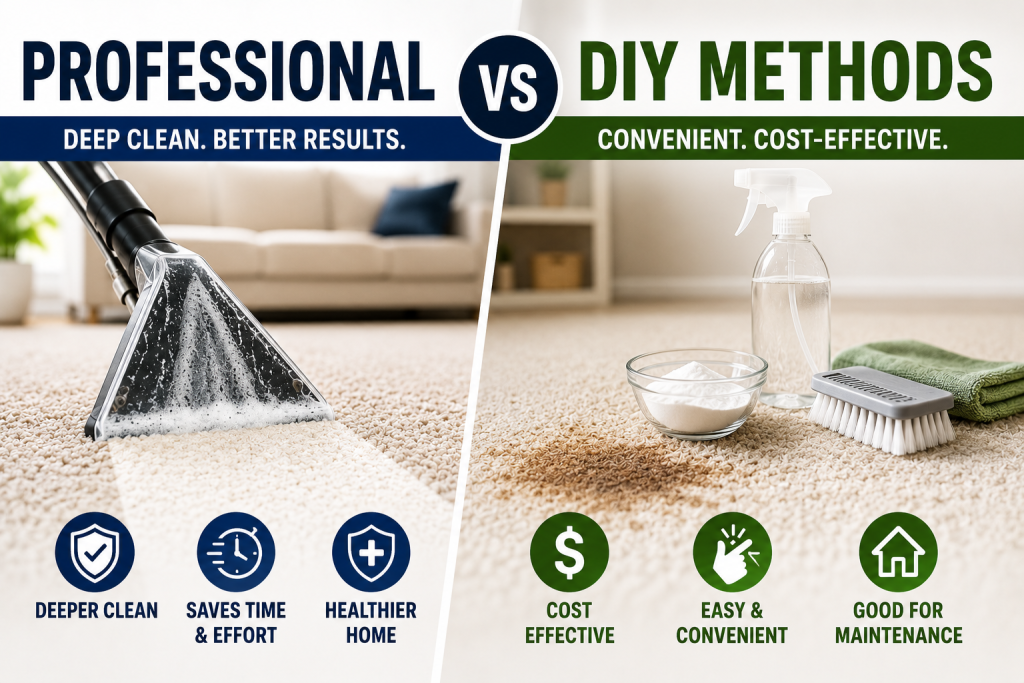
Professional carpet cleaning services use commercial-grade equipment designed to provide deeper extraction and more effective stain removal. They can address stubborn stains, pet-related issues, and heavily soiled carpets that may not respond to household cleaning methods. While professional services cost more upfront, they can extend carpet lifespan and improve indoor air quality. For most homeowners, combining regular DIY maintenance with professional cleaning every 12 to 18 months is one of the most effective carpet cleaning tips for achieving the best balance between cost, cleanliness, and long-term carpet performance.
| Factor | DIY Cleaning | Professional Cleaning |
| Cost | Lower | Higher |
| Deep Cleaning Ability | Moderate | Excellent |
| Equipment Quality | Consumer Grade | Commercial Grade |
| Stain Removal Success | Limited | Advanced |
| Drying Efficiency | Variable | Typically Faster |
| Long-Term Results | Moderate | Superior |
When It’s Time to Replace Your Carpet
Even with proper maintenance and regular cleaning, every carpet eventually reaches the end of its useful life. Following recommended carpet cleaning tips can extend carpet longevity, but they cannot prevent eventual replacement. Knowing when to replace your carpet can help prevent ongoing maintenance expenses and improve the overall comfort, appearance, and value of your home. One of the clearest signs that replacement is necessary is the presence of permanent stains that no longer respond to professional cleaning. Persistent odors that remain after multiple cleaning attempts may indicate contamination within the carpet padding or subfloor. Excessive wear in high-traffic areas, visible fiber deterioration, and widespread matting can also signal that the carpet has lost its structural integrity.
Water damage is another major concern. If a carpet has been exposed to significant flooding or prolonged moisture, mold and mildew may develop beneath the surface, creating potential health risks. Homeowners should also consider replacement when the carpet is more than 10 to 15 years old and requires frequent repairs. While repairs can address isolated problems, even the best carpet cleaning tips cannot fully restore carpets with extensive damage, making replacement the more practical and cost-effective long-term solution.
Conclusion
Carpets play an important role in the comfort, appearance, and functionality of a home, but they require consistent care to remain in good condition. From handling spills and eliminating odors to addressing wear and tear, understanding common carpet problems allows homeowners to take action before minor issues become costly repairs. Following proven carpet cleaning tips can help protect carpet fibers, improve indoor air quality, and extend the lifespan of your flooring investment. Regular vacuuming, prompt stain treatment, seasonal maintenance, and periodic professional cleaning all contribute to healthier, longer-lasting carpets. Homeowners with pets, children, or high-traffic living spaces should be especially proactive about preventive care. By combining effective cleaning practices with timely repairs and maintenance, you can keep your carpets looking fresh, performing well, and adding value to your home for many years to come.
Frequently Asked Questions
How often should carpets be professionally cleaned?
Most carpet manufacturers recommend professional cleaning every 12 to 18 months. Homes with pets, children, allergy sufferers, or heavy foot traffic may benefit from cleaning every 6 to 12 months to maintain appearance and indoor air quality.
What is the best method for carpet stain removal?
The best approach depends on the type of stain. In most cases, blotting immediately and using a suitable cleaning solution can prevent permanent discoloration. Avoid scrubbing, as it can damage carpet fibers and spread the stain further.
Can carpet odor problems be removed permanently?
Yes, many carpet odor problems can be eliminated permanently if the source is properly treated. Enzyme-based cleaners are especially effective for pet accidents, while professional deep cleaning may be required for severe or long-standing odors.
Is steam cleaning safe for all carpet types?
Steam cleaning is safe for most modern carpets when performed correctly. However, certain natural fiber carpets may require specialized cleaning methods. Always follow the manufacturer’s care recommendations before using steam-cleaning equipment.
How long does carpet typically last?
Most residential carpets last between 10 and 15 years, depending on material quality, maintenance habits, and household traffic levels. Regular cleaning and preventive maintenance can help maximize carpet lifespan
Are DIY carpet cleaners as effective as professional services?
DIY carpet cleaners work well for routine maintenance and minor stains, but professional services generally provide deeper cleaning, better stain removal, and improved extraction of dirt, allergens, and moisture.
What can homeowners do to extend carpet life?
Regular vacuuming, prompt stain treatment, the use of entry mats, furniture rotation, and periodic professional cleaning are among the most effective ways to extend carpet life and maintain its appearance.