

The Complete Carpet Flooring Guide for US Homeowners
Carpet remains one of the most popular flooring choices for homeowners across the United States because it combines comfort, warmth, sound absorption, and affordability in one flooring solution. While hardwood and luxury vinyl flooring dominate many remodeling trends, carpet continues to perform exceptionally well in bedrooms, upstairs living spaces, family rooms, and finished basements where softness and insulation matter most. This complete carpet flooring guide explains everything homeowners should know before investing in new carpet, including carpet styles, materials, installation methods, maintenance, and room-by-room recommendations.
Whether you are remodeling a suburban home in Dallas, upgrading bedrooms in Chicago, or improving comfort in a finished basement in Denver, choosing the right carpet can improve daily comfort and long-term home value. Modern carpet technology has also evolved significantly over the last decade. Leading manufacturers like Shaw Floors and Mohawk Industries now produce carpets with better stain resistance, lower VOC emissions, and improved durability for active family households.
Why Does Carpet Flooring Guide Still Matter in American Homes?
Even with the growing popularity of hardwood, tile, and luxury vinyl plank flooring, carpet continues to be a preferred option in many American homes because of its comfort and practicality. As this carpet flooring guide explains, carpet creates a warmer and quieter environment compared to hard surfaces, making it especially valuable in bedrooms, nurseries, upstairs hallways, and family spaces where comfort is a priority. One of the biggest advantages of residential carpet flooring is its ability to improve insulation and reduce indoor noise. In colder Northern states like Minnesota and Colorado, carpet helps retain indoor warmth during winter months, potentially improving energy efficiency.

In multi-story homes, carpet also reduces footstep noise and echoing, which is important for growing families and open-concept floor plans. Modern carpet products are also more durable and easier to maintain than older generations. Brands like Stainmaster now offer advanced stain-resistant technology that performs well in homes with children and pets. As highlighted throughout this carpet flooring guide, carpet continues to deliver long-term value, comfort, and everyday functionality for homeowners seeking practical soft flooring solutions.
Understanding the Most Popular Carpet Styles
Choosing the right carpet styles is one of the most important parts of selecting flooring for your home. As this carpet flooring guide explains, different carpet textures and pile constructions affect durability, comfort, appearance, and long-term maintenance requirements. Understanding these differences helps homeowners choose carpet that matches both their lifestyle and interior design goals.
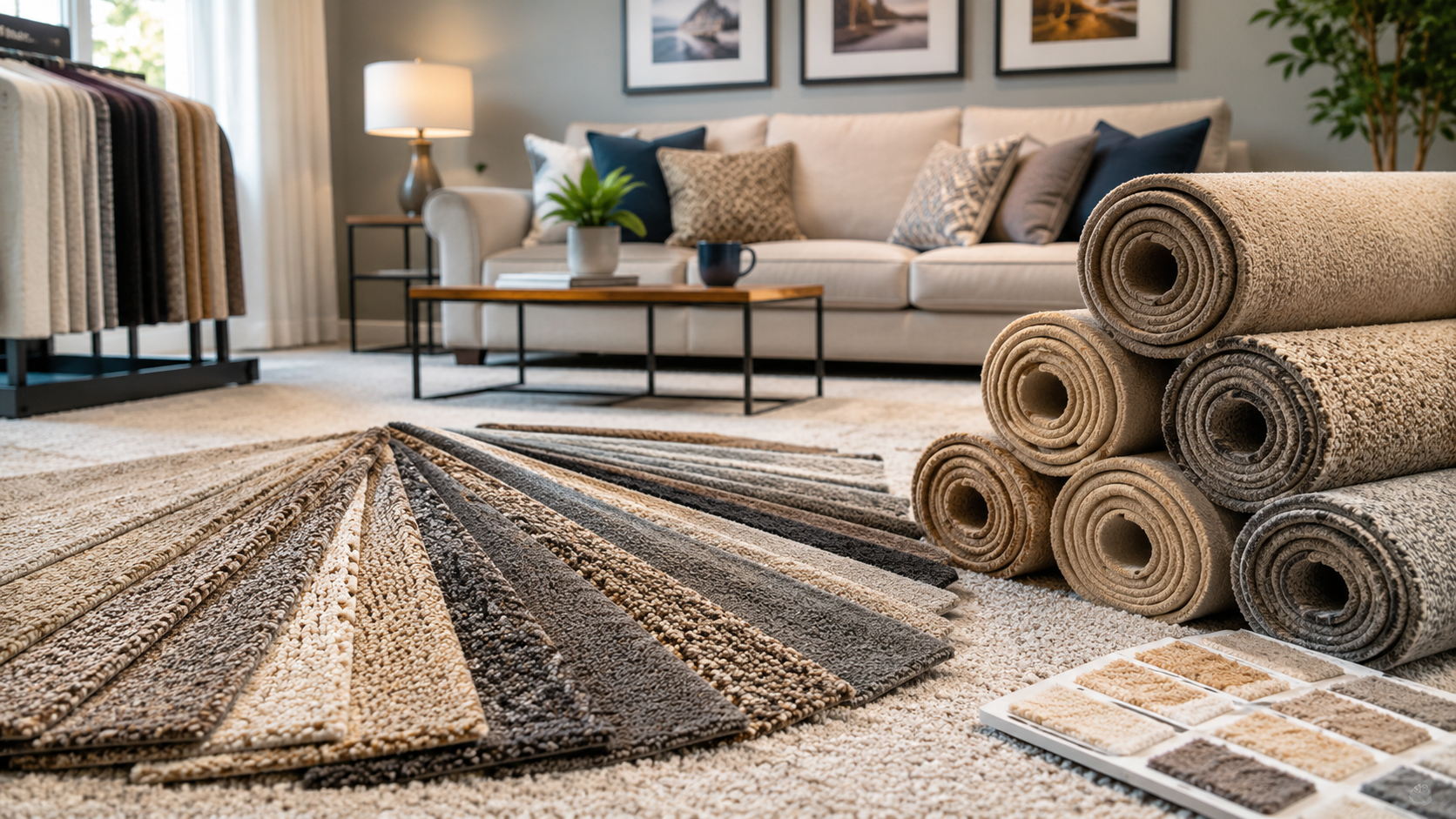
Plush carpet creates a soft and luxurious appearance that works well in formal living rooms and primary bedrooms. Textured carpet remains one of the most popular options in American homes because it hides footprints and vacuum marks effectively. Berber carpet features looped fibers designed for durability, making it ideal for hallways, stairs, and high-traffic family areas. Frieze carpet uses tightly twisted fibers to create a casual look with strong resistance to wear and tear. As this carpet flooring guide highlights, each carpet style offers unique advantages that make it better suited for specific rooms and household needs. In warmer climates like Houston and coastal regions of Florida, homeowners should prioritize moisture-resistant carpet fibers and padding systems that can handle humidity more effectively. Selecting the right carpet style improves both comfort and long-term flooring performance.
Best Carpet Materials for Different Rooms
Different carpet materials perform differently depending on room usage, moisture exposure, foot traffic, and household activity. Choosing the right fiber is essential because it directly impacts durability, comfort, stain resistance, and maintenance needs over time. As this carpet flooring guide explains, homeowners should always match carpet material to the function of each room rather than selecting one option for the entire house.

Nylon is widely considered the most durable carpet fiber and works well in high-traffic spaces like hallways, family rooms, and stairs. Polyester offers excellent softness and vibrant color at a lower price point, making it popular for bedrooms and lower-traffic areas. Olefin performs well in moisture-prone environments such as finished basements because it resists mildew and staining. Wool carpet provides premium comfort and natural insulation but requires more maintenance and a larger budget. As this carpet flooring guide demonstrates, selecting the right fiber is essential for balancing durability, comfort, maintenance, and overall value. In colder regions like Colorado or Michigan, thicker carpet and upgraded padding help improve indoor warmth during winter. Choosing room-specific materials helps homeowners maximize both flooring lifespan and everyday comfort.
Wall-to-Wall Carpet vs Area Rugs
Many homeowners comparing flooring solutions often debate between installing wall-to-wall carpet or using area rugs over hard flooring surfaces. Both options offer comfort and visual warmth, but they serve different purposes depending on lifestyle, budget, and long-term remodeling goals. Wall-to-wall carpet creates a fully covered flooring surface that improves insulation, reduces noise transfer, and delivers consistent softness throughout the room. It remains highly popular in bedrooms, upstairs living spaces, finished basements, and family rooms where comfort matters most. Carpet also provides added safety by reducing slip risks and cushioning falls, which is beneficial for households with young children or older adults. As highlighted in this carpet flooring guide, these advantages continue to make carpet a practical flooring choice for many American homes.
Area rugs provide greater flexibility because they can be replaced, cleaned, or repositioned easily without changing the entire floor. Many homeowners in cities like Phoenix and Austin combine hardwood flooring with rugs to balance durability and comfort. As this carpet flooring guide highlights, the right option depends on maintenance expectations, household activity, and overall interior design preferences.
What Homeowners Should Know About Carpet Installation?
Professional carpet installation plays a major role in determining how long carpet lasts and how well it performs over time. Poor installation can lead to wrinkles, uneven seams, loose edges, and premature wear that reduce the lifespan of the flooring. As this carpet flooring guide explains, contractors should inspect the subfloor carefully for moisture damage, squeaking, uneven surfaces, or structural problems before new carpet is installed. Carpet padding is equally important because it affects comfort, insulation, and durability. High-density padding generally provides better support and helps carpet maintain its appearance longer in high-traffic areas. In humid climates such as coastal regions or Southern states, moisture-resistant padding can also help reduce mold and mildew risks beneath the flooring. As this carpet flooring guide emphasizes, selecting the right padding is just as important as choosing the carpet itself for long-term performance and comfort.
Many professional installers now recommend low-VOC carpet materials supported by indoor air quality standards connected to the Environmental Protection Agency. Homeowners should also ask about furniture moving, old flooring removal, installation warranties, and post-installation cleanup before beginning a carpet replacement project. As this carpet flooring guide highlights, understanding these installation details can help ensure a smoother renovation process and better long-term flooring performance.
Carpet Maintenance Tips for Long-Term Durability
Following proper carpet maintenance tips can significantly extend the life of your flooring while preserving its appearance and comfort. Regular vacuuming is one of the most important maintenance tasks because dirt particles trapped inside carpet fibers gradually cause wear over time. Most homeowners should vacuum at least once or twice weekly, while high-traffic areas may require more frequent cleaning. As this carpet flooring guide emphasizes, consistent maintenance is essential for protecting your investment and maximizing the lifespan of your carpet. Professional deep cleaning every 12 to 18 months helps remove embedded dirt, allergens, and stains that household vacuums cannot fully eliminate. Homeowners should also clean spills immediately to prevent permanent discoloration or odor buildup. Entry mats near exterior doors help reduce the amount of dirt, moisture, and debris tracked onto carpet surfaces throughout the year.
As recommended in this carpet flooring guide, these simple maintenance practices can significantly extend the life and appearance of your carpet. In humid states like Florida, controlling indoor humidity is important for preventing mold growth beneath carpet padding. During snowy winters in Northern regions, homeowners should also monitor salt, slush, and moisture accumulation to avoid long-term carpet fiber damage and staining. As this carpet flooring guide highlights, climate-specific maintenance practices can play a major role in preserving carpet performance and appearance over time.
Home Carpet Ideas for Modern Interior Design
Today’s home carpet ideas focus on combining comfort with clean, modern interior design trends that support both functionality and resale appeal. As this carpet flooring guide explains, neutral carpet colors such as gray, beige, taupe, and greige remain popular because they pair well with contemporary kitchens, white trim, and open-concept layouts commonly found in newer American homes. Many homeowners now use carpet selectively instead of installing it throughout the entire house. Bedrooms, nurseries, home offices, and upstairs living areas often benefit most from carpet because these spaces prioritize warmth, quietness, and comfort underfoot. Textured carpets are especially popular in active households because they hide footprints and wear patterns more effectively than smooth finishes.
As this carpet flooring guide explains, choosing the right locations for carpet installation can maximize both comfort and long-term performance. Luxury remodels increasingly feature patterned carpet, premium wool blends, and designer textures inspired by upscale custom homes. In competitive housing markets like Charlotte and Nashville, homeowners often choose versatile carpet styles that improve interior appeal while maintaining broad buyer interest for future resale opportunities.
Is Carpet Flooring Right for Your Home?
This complete carpet flooring guide shows why carpet continues to be one of the most practical and comfortable flooring choices for American homeowners. Carpet provides warmth, sound insulation, safety benefits, and visual softness that many hard flooring materials cannot fully replicate, especially in bedrooms and family-oriented living spaces. The best carpet for your home depends on factors such as lifestyle, climate, maintenance expectations, and household activity levels. Families with children and pets often prioritize stain resistance and durability, while homeowners in colder climates may focus more on insulation and comfort during long winters. Premium carpet products can also help reduce indoor noise and improve overall comfort in multi-story homes. As this carpet flooring guide demonstrates, evaluating these factors carefully can help you choose the flooring solution that best fits your home’s needs.
By understanding carpet styles, material durability, professional carpet installation, and ongoing maintenance requirements, homeowners can make smarter flooring decisions that improve both daily living and long-term property value. Selecting the right carpet carefully helps create a home environment that feels warmer, quieter, and more welcoming year-round.
Final Thoughts
Carpet remains one of the most comfortable and practical flooring solutions for homeowners across the United States because it combines warmth, noise reduction, safety, and design flexibility in a way many hard flooring materials cannot. From cozy bedrooms in Chicago to family-friendly living spaces in Dallas, carpet continues to support comfortable everyday living in homes of every size. Modern carpet technology has improved significantly over the past decade, with manufacturers like Shaw Floors and Mohawk Industries offering better stain resistance, durability, and indoor air quality performance than older carpet products. Homeowners now have access to a wide range of textures, colors, and materials that fit both modern interior trends and long-term practical needs. By understanding carpet styles, installation quality, maintenance requirements, and room-specific material choices, homeowners can confidently invest in flooring that improves comfort, supports durability, and enhances long-term property appeal.
Frequently Asked Questions About Carpet Flooring
What is the most durable carpet material?
Nylon is generally considered the most durable carpet fiber for high-traffic residential areas. It performs well in busy households with children and pets because it resists crushing, wear, and long-term fiber damage better than many other materials.
How long does carpet flooring usually last?
Most residential carpet flooring lasts between 8 and 15 years depending on material quality, foot traffic, installation quality, and maintenance habits. Premium carpet with proper care may last even longer in lower-traffic rooms.
Is carpet a good flooring option for cold climates?
Yes. Carpet provides insulation and warmth, making it highly popular in colder US regions such as the Midwest and Northeast. Thicker carpet padding can also improve indoor comfort and help reduce heat loss during winter months.
How often should carpet be professionally cleaned?
Most carpet manufacturers recommend professional deep cleaning every 12 to 18 months to remove embedded dirt, allergens, bacteria, and stains that regular vacuuming cannot fully eliminate.
Does installing new carpet improve home value?
New carpet can improve interior appearance and buyer perception, especially when replacing old or heavily worn flooring before listing a property for sale.