


Best Cheapest Roofing Materials For US Homeowners
What’s the cheapest roofing material? Asphalt shingles, specifically 3-tab at $1–$2 per sq ft, are the lowest-cost option for most homes, with rolled roofing even cheaper for sheds and low-slope structures. But the cheapest roof replacement isn’t always the cheapest long-term: a roof that lasts 10 years costs more per year than one lasting 25. This guide ranks the most affordable roofing materials by upfront cost and cost-per-year, so you can pick the best value for your climate and budget.
Budget Roofing Materials Ranked by Cost
When evaluating the cheapest roofing materials, homeowners should look beyond the purchase price alone. Material costs, labor expenses, maintenance requirements, and expected lifespan all affect the true cost of ownership. While premium roofing products such as slate and clay tiles can last for decades, they often require a much larger upfront investment than many homeowners are prepared to make.
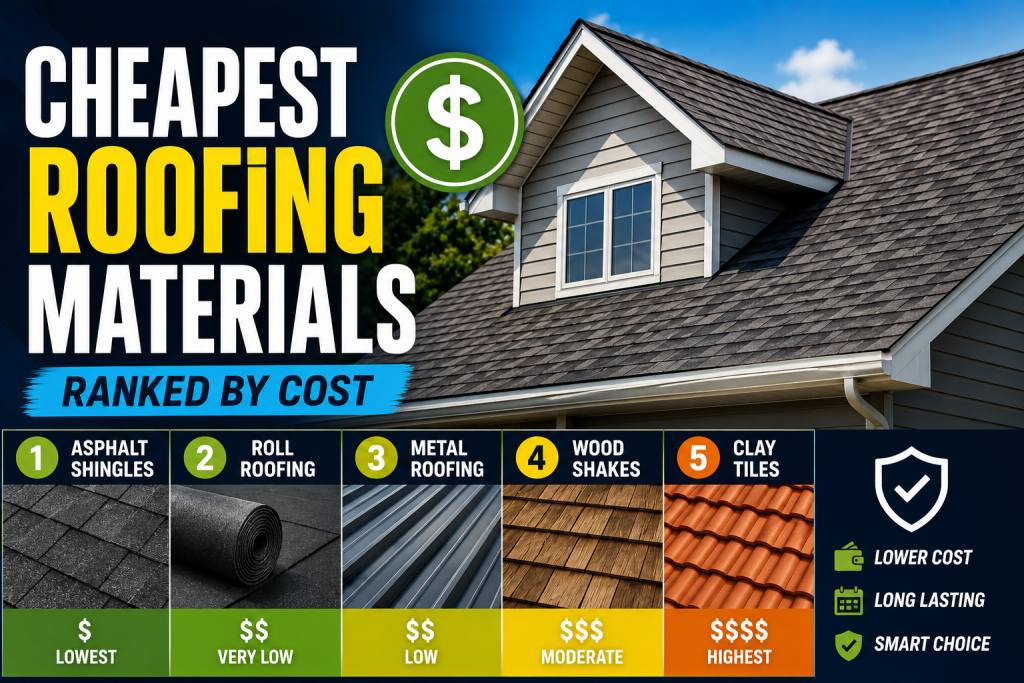
The most common budget roofing materials include asphalt shingles, rolled roofing, and corrugated metal panels. These options are widely available throughout the United States and are suitable for many residential applications. Their popularity stems from a combination of affordability, accessibility, and relatively straightforward installation. The sections below compare the lowest-cost roofing choices currently available, helping homeowners determine which material delivers the best balance of cost, durability, and long-term performance for their specific needs.
Asphalt Shingles
Asphalt shingles remain the most popular residential roofing material in the United States and are often the first choice for homeowners seeking a low-cost roof replacement. Their widespread availability, simple installation process, and reliable performance make them a practical solution for a wide range of homes. Most asphalt shingle roofs cost significantly less than premium materials such as metal, slate, or clay tile. They are available in multiple styles and colors, allowing homeowners to improve curb appeal without exceeding their renovation budget.
In regions such as Texas, Ohio, and North Carolina, asphalt shingles continue to dominate the market because they offer a strong balance between affordability and durability, making them one of the most popular cheapest roofing materials for residential homes. While their lifespan is generally shorter than higher-end roofing systems, quality architectural shingles can still last 20 to 30 years with proper maintenance. For homeowners focused on value, asphalt shingles often provide the best combination of upfront savings and long-term performance.
Rolled Roofing
Rolled roofing is one of the least expensive roofing products available and is commonly used on sheds, garages, workshops, and low-slope residential roofs. Made from asphalt-based materials similar to traditional shingles, it is sold in large rolls that can be installed quickly, reducing labor costs for homeowners and contractors. Among the cheapest roofing materials, rolled roofing is often the most affordable option for non-living structures and utility buildings. One reason rolled roofing remains attractive is its potential for inexpensive roof installation.
Because the material covers large areas with fewer seams, installation is often faster than many other roofing systems. This can help lower overall project costs, especially for secondary structures where appearance is not the primary concern. However, rolled roofing generally has a shorter lifespan than asphalt shingles or metal roofing. It is more vulnerable to weather-related wear and may require replacement sooner in areas that experience heavy storms, extreme heat, or frequent freeze-thaw cycles. Even so, it remains a practical choice for homeowners prioritizing immediate cost savings.
Corrugated Metal Panels
Corrugated metal panels have become increasingly popular among homeowners looking for durable yet cost-conscious roofing solutions. While they typically cost more upfront than asphalt shingles or rolled roofing, they often deliver better long-term value because of their extended lifespan and lower maintenance requirements. Many homeowners comparing the cheapest roofing materials are surprised to learn that certain metal roofing products can be competitively priced, especially for simple roof designs.
Corrugated panels are commonly installed on homes, barns, workshops, and rural properties throughout states such as Texas, Oklahoma, and Arizona, where resistance to heat and severe weather is an important consideration. Most corrugated metal roofs can last 40 years or longer when properly installed. They also reflect solar heat more effectively than many traditional roofing products, which may help reduce cooling costs during hot summers. For homeowners balancing affordability with durability, corrugated metal roofing remains a strong option worth considering.
How Much Does the Cheapest Roof Cost in 2026?
Understanding current roofing prices is essential before planning a replacement project. While labor rates and regional market conditions vary across the United States, the cheapest roofing materials continue to offer homeowners a cost-effective path to protecting their property without exceeding their budget. In 2026, asphalt shingles remain among the lowest-cost options for residential roofs, while rolled roofing typically offers the lowest upfront material expense. Corrugated metal panels generally require a higher initial investment but may deliver greater long-term value due to their durability and extended lifespan.
Among the cheapest roofing materials, these options continue to dominate the market because they balance affordability with practical performance. Factors such as roof size, pitch, accessibility, and local labor costs can significantly influence the final project price. Before selecting a roofing product, homeowners should compare both material and installation expenses. A roofing system with a slightly higher purchase price may ultimately prove more economical if it lasts longer and requires fewer repairs over time.
Material Cost Per Square Foot
Roofing material costs can vary based on product quality, manufacturer, regional demand, and supply chain conditions. However, understanding average price ranges can help homeowners establish a realistic renovation budget before requesting contractor estimates. For many homeowners, asphalt shingles pricing remains one of the biggest advantages of choosing this roofing material. Standard three-tab shingles generally represent the lowest-cost residential option, while architectural shingles cost more but offer improved durability and appearance.
Rolled roofing is often the least expensive material on a per-square-foot basis, though it is primarily used for low-slope structures rather than full residential roofs. Corrugated metal panels typically cost more upfront than asphalt-based products but can offset their higher purchase price through longer service life. When evaluating roofing costs, homeowners should compare both material expenses and expected lifespan to determine the true value of each roofing option.
Installation Cost Factors
Material costs represent only part of a roofing project’s total expense. Labor charges often account for a significant percentage of the final bill, especially on larger homes or roofs with complex designs. When budgeting for the cheapest roofing materials, homeowners should account for installation expenses alongside material costs to avoid unexpected surprises. The roof’s pitch, accessibility, number of valleys, and overall square footage all influence installation pricing. Homes with steep slopes generally require additional safety equipment and more labor hours, increasing project costs.
Geographic location also plays a major role, as labor rates vary considerably between regions such as the Northeast, Midwest, and Southern states. Although many homeowners focus primarily on material costs, some economical roofing systems can become more expensive when installation requirements are complex. Obtaining multiple quotes from licensed contractors and comparing detailed estimates can help identify the best overall value while avoiding unexpected expenses during the project.
Cheapest Upfront vs Best Long-Term Value
Choosing the cheapest roofing materials does not always result in the lowest lifetime cost. While upfront pricing is important, homeowners should also evaluate durability, maintenance requirements, energy efficiency, and replacement frequency before making a final decision. A roofing material with a lower purchase price may need repairs or replacement much sooner than a premium alternative. For example, rolled roofing generally costs less initially but often has a shorter service life than asphalt shingles or metal roofing. Over several decades, multiple replacements can increase the total amount spent on the roof.
Long-term value is especially important for homeowners planning to stay in their property for many years. Factors such as weather resistance, curb appeal, insurance considerations, and resale value can all influence the return on investment. Evaluating both immediate savings and future expenses helps ensure the selected roofing system aligns with long-term homeownership goals.
Lifespan Comparison
A proper roofing material comparison should always include expected lifespan, not just purchase price. While lower-cost roofing products can reduce upfront expenses, their durability often varies significantly depending on the material and local climate conditions. Rolled roofing typically has the shortest lifespan, often lasting between 5 and 15 years depending on weather exposure and maintenance. Standard asphalt shingles generally provide 15 to 30 years of service, while architectural shingles can last even longer. Corrugated metal roofing frequently exceeds 40 years when installed correctly and maintained properly, making it one of the most durable options among the cheapest roofing materials.
Climate also affects longevity. Homes in hurricane-prone regions such as Florida, humid Southern states, or snow-heavy northern areas may experience different wear patterns than properties in dry regions like Arizona or Nevada. Understanding how long a roofing material is expected to perform helps homeowners calculate its true value and avoid unexpected replacement costs in the future.
Maintenance Requirements
Maintenance plays a major role in determining the overall cost of a roofing system. Even a roof with a low purchase price can become expensive over time if it requires frequent repairs, inspections, or premature replacement. When comparing the cheapest roofing materials, homeowners should factor in ongoing maintenance costs rather than focusing solely on the initial investment. Rolled roofing generally requires the most attention because it is more susceptible to cracking, water intrusion, and weather-related damage. Homeowners may need to perform repairs more frequently, particularly in areas exposed to heavy rain, snow, or intense sunlight.
Asphalt shingles typically require moderate maintenance and benefit from regular inspections to identify damaged or missing shingles before leaks develop. Metal roofing systems often have the lowest maintenance requirements among common residential roofing materials. Their resistance to rot, insects, and moisture-related deterioration can help reduce long-term upkeep expenses. Regardless of the material chosen, annual roof inspections and prompt repairs can extend service life and protect the home’s structural integrity.
Best Budget Roof for Your Climate
The best roofing material is not always the same across the country. Climate conditions have a direct impact on roof performance, maintenance requirements, and lifespan. Homeowners should consider local weather patterns before selecting from the cheapest roofing materials available on the market. Factors such as extreme heat, heavy snowfall, high humidity, strong winds, and hurricane exposure can influence how well a roofing system performs over time. A material that works well in Arizona may not be the best choice for a home in Minnesota or Florida.
Regional climate differences make it essential to balance affordability with long-term durability. By matching roofing materials to local environmental conditions, homeowners can maximize their investment while reducing maintenance costs and extending roof life. The following sections highlight cost-effective roofing choices for some of the most common climate zones across the United States.
Southern and Hurricane-Prone States
Homeowners in states such as Florida, Louisiana, Alabama, and coastal Texas face unique roofing challenges. High humidity, intense sunlight, heavy rainfall, and hurricane-force winds can accelerate roof wear and increase maintenance needs. When evaluating the cheapest roofing materials, homeowners should also consider wind resistance and weather performance to ensure long-term protection. Architectural asphalt shingles remain a popular option because they offer a balance between affordability and wind resistance. Many modern shingles are designed to withstand stronger wind loads than older products, making them suitable for many Southern markets.
Metal roofing is another strong contender due to its durability and ability to shed rain efficiently during severe weather events. Before selecting a roofing system, homeowners should review local building codes, insurance requirements, and manufacturer wind ratings. Investing in a material designed for hurricane-prone conditions can help reduce future repair costs and improve long-term roof performance in challenging coastal environments.
Northern Snow Regions
In northern states such as Minnesota, Michigan, Wisconsin, and New York, roofing systems must withstand heavy snow loads, ice dams, and repeated freeze-thaw cycles. These conditions can place significant stress on roofing materials and shorten their lifespan if the wrong product is selected. When comparing the cheapest roofing materials, homeowners should consider how well each option performs in harsh winter conditions rather than focusing solely on upfront cost. Architectural asphalt shingles remain a common choice because they offer solid performance at a reasonable cost.
However, homeowners should ensure proper attic insulation and ventilation to minimize ice dam formation during winter. Metal roofing is also highly effective in snowy climates because its smooth surface allows snow to slide off more easily, reducing excess weight on the roof structure. Regular winter inspections and prompt removal of damaged shingles can help prevent moisture intrusion and costly repairs. By choosing a roofing material suited to cold-weather conditions, homeowners can improve durability while maintaining a cost-effective roofing solution for long-term protection.
Hot Desert Climates
Homeowners in Arizona, Nevada, New Mexico, and parts of inland California face roofing challenges that differ significantly from those in colder regions. Prolonged sun exposure, extreme temperatures, and intense UV radiation can accelerate material deterioration and affect overall roof performance. Among the cheapest roofing materials, some products perform better in desert climates due to their ability to withstand prolonged heat and intense sunlight. Reflective metal roofing performs particularly well in desert environments because it helps reduce heat absorption and can lower cooling demands during the hottest months of the year.
High-quality asphalt shingles designed for solar resistance are also widely used and can provide dependable performance when properly installed and maintained. Ventilation is especially important in desert climates. Excess attic heat can shorten the lifespan of roofing materials and increase energy costs throughout the summer. Homeowners should consider both material durability and energy efficiency when selecting a roofing system. Choosing a product designed to withstand prolonged heat exposure can improve long-term value while reducing maintenance concerns in arid regions.
Roofing Material Comparison Table
| Roofing Material | Typical Cost Range | Expected Lifespan | Maintenance Level | Best For |
| Rolled Roofing | Lowest | 5–15 Years | High | Sheds, garages, low-slope roofs |
| Asphalt Shingles | Low | 15–30 Years | Moderate | Most residential homes |
| Architectural Shingles | Moderate | 20–35 Years | Moderate | Improved curb appeal and durability |
| Corrugated Metal Panels | Moderate | 40+ Years | Low | Rural homes, harsh climates |
| Standing Seam Metal Roofing | Higher | 40–70 Years | Low | Long-term ownership and energy efficiency |
| Clay or Concrete Tiles | High | 50+ Years | Low to Moderate | Warm climates and premium homes |
| Slate Roofing | Highest | 75–100+ Years | Low | Luxury homes and historic properties |
The cheapest roofing materials generally occupy the top portion of this table, offering the lowest upfront costs. However, homeowners should evaluate more than just initial pricing. Lifespan, maintenance expenses, energy performance, and local weather conditions can significantly influence the total cost of ownership over time. For many homeowners, asphalt shingles continue to provide the best balance between affordability and durability, while metal roofing often delivers stronger long-term value despite higher initial costs.
When a Low-Cost Roof Replacement Makes Sense
A budget-friendly roof replacement can be a smart financial decision in several situations. Homeowners preparing to sell their property, renovating an investment home, or working within a limited remodeling budget often prioritize immediate cost savings over maximum lifespan. In these scenarios, selecting from the cheapest roofing materials may provide adequate protection while helping control project expenses. Asphalt shingles, for example, are frequently chosen because they offer dependable performance, broad availability, and an attractive appearance at a relatively low cost. For detached garages, workshops, or storage buildings, rolled roofing may also be a practical solution.

However, homeowners planning to remain in their property for decades should carefully evaluate long-term ownership costs. A roof with a higher upfront price may require fewer repairs and replacements over its lifetime, resulting in better overall value. The key is aligning the roofing investment with the home’s purpose, ownership timeline, and future maintenance expectations.
How to Save Money on Roof Installation
Reducing roofing costs does not necessarily mean sacrificing quality. With careful planning and informed decision-making, homeowners can significantly lower project expenses while still achieving a durable and attractive result.
Here are several practical ways to save money on a roofing project:
- Obtain at least three estimates from licensed and insured contractors.
- Schedule roofing work during slower seasons when contractor demand may be lower.
- Compare material options based on lifespan and maintenance requirements, not just purchase price.
- Address minor roof issues early to prevent more expensive structural damage.
- Verify whether local rebates, energy-efficiency incentives, or insurance discounts are available.
- Choose a roofing material that performs well in your regional climate to reduce future repair costs.
When evaluating the cheapest roofing materials, remember that installation quality is just as important as material selection. Even the best roofing product can underperform if it is installed incorrectly. Working with a qualified contractor helps ensure long-term performance and protects your investment.
Conclusion
Choosing the right roofing material involves more than simply finding the lowest price. While the cheapest roofing materials can help reduce upfront expenses, homeowners should also consider durability, maintenance requirements, climate suitability, and long-term value before making a decision. For most residential properties, asphalt shingles continue to offer the strongest balance of affordability, appearance, and performance. Rolled roofing remains a practical solution for secondary structures and low-slope applications, while corrugated metal panels can provide decades of reliable service with minimal maintenance.
Each option has advantages and trade-offs that should be evaluated based on the home’s location, budget, and ownership goals. By comparing costs, expected lifespan, and regional performance factors, homeowners can make a more informed roofing decision. The best roofing choice is often the one that balances immediate savings with dependable long-term protection, helping safeguard both the home and its resale value for years to come.
Frequently Asked Questions
What is the cheapest roofing material available?
Rolled roofing is typically the least expensive roofing material on the market. It is commonly used on sheds, garages, and low-slope roofs because of its low upfront cost and straightforward installation process. However, it generally has a shorter lifespan than asphalt shingles or metal roofing.
Are asphalt shingles still the best value for homeowners?
For many homeowners, asphalt shingles remain one of the most practical roofing choices. They combine affordability, availability, and reliable performance, making them a popular option for residential roof replacements across the United States.
Which of the cheapest roofing materials lasts the longest?
Among the cheapest roofing materials, corrugated metal roofing often provides the longest service life. While it usually costs more initially than asphalt shingles or rolled roofing, it can last 40 years or more with proper installation and maintenance.
Is metal roofing worth the higher upfront cost?
Metal roofing can be worth the investment for homeowners focused on long-term value. Its durability, energy efficiency, and low maintenance requirements often offset the higher initial cost over the life of the roof.