


City Permit vs HOA Approval
Planning a home renovation can be exciting, but many homeowners are surprised to learn that getting approval is not always a one-step process. Before replacing a roof, installing new windows, building a deck, or updating exterior siding, you may need permission from more than one authority. Understanding the difference between city permit vs HOA approval is essential because each serves a different purpose. A city permit focuses on safety, building codes, zoning compliance, and structural requirements enforced by local governments. HOA approval, on the other hand, is designed to maintain community appearance, property values, and neighborhood standards established by a homeowners association. Failing to obtain the correct approval can result in fines, project delays, mandatory corrections, or even legal disputes. Knowing when you need one approval, or both, can help ensure your renovation project moves forward smoothly and remains fully compliant.
Understanding the Difference Between City Permit vs HOA Approval
Many homeowners assume that receiving permission from their HOA automatically means they can begin construction. Others believe that obtaining a city permit is enough to satisfy every requirement. In reality, these approvals serve different functions and are issued by separate authorities. When comparing city permit vs HOA approval, the key distinction is jurisdiction. Local governments regulate construction standards through building departments, inspections, and zoning regulations.
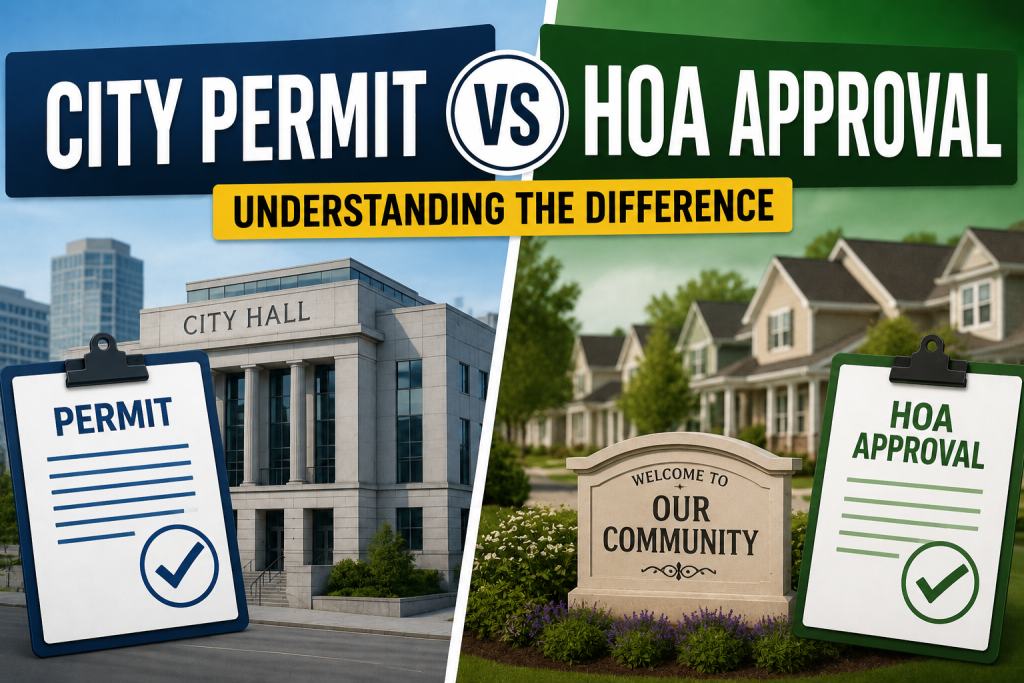
These requirements help ensure renovations meet safety standards established under codes such as the International Residential Code (IRC). An HOA, however, focuses on community appearance and compliance with governing documents such as Covenants, Conditions, and Restrictions (CC&Rs). The association may review factors like exterior colors, roofing materials, landscaping changes, and architectural consistency. Because their responsibilities differ, homeowners often need to satisfy both requirements before work can begin. Understanding this distinction early can prevent costly mistakes and unnecessary project delays.
What Is a City Permit?
A city permit is an official authorization issued by a local building department that allows specific construction or renovation work to proceed legally. Its primary purpose is to ensure that projects comply with local building codes, zoning regulations, electrical standards, plumbing requirements, and structural safety rules. Projects that commonly require permits include room additions, major electrical upgrades, deck construction, roof replacements, and certain window or siding installations.
Depending on the municipality, homeowners may also need permits for fences, detached garages, or accessory dwelling units (ADUs). One of the most important aspects of the permit process involves city inspection requirements. Building inspectors review completed work at various stages to verify compliance and identify potential safety concerns before a project is finalized.Failing to obtain a required permit can lead to fines, delays during future home sales, insurance complications, and costly corrective work.
What Is HOA Approval?
HOA approval is the formal review process required by a homeowners association before certain property modifications can begin. Unlike city permits, HOA approvals are not focused on structural safety or code compliance. Instead, they help preserve neighborhood appearance, maintain property values, and enforce community standards. Most associations establish specific HOA remodeling rules that govern exterior changes visible from the street. These rules may apply to roofing materials, paint colors, landscaping updates, fences, solar panels, window styles, and other architectural features.
Homeowners are typically required to submit plans, drawings, material specifications, or contractor details for review. Many communities rely on an Architectural Review Committee (ARC) to evaluate proposed changes. The committee determines whether a project aligns with the association’s governing documents and design standards. Receiving HOA approval does not eliminate the need for any required government permits, and homeowners should always verify both obligations before starting work.
Why City Permit vs HOA Approval Is Not the Same Thing
A common mistake among homeowners is treating these approvals as interchangeable. While both may be required before a renovation begins, they are issued by different entities and address entirely different concerns. This distinction is what makes city permit vs HOA approval such an important topic for anyone planning home improvements. City governments are responsible for protecting public safety through building codes, zoning regulations, and construction standards.
Their review process focuses on whether a project is built correctly and complies with local laws. Homeowners often encounter this process when seeking home renovation approvals for additions, structural modifications, or major exterior upgrades. HOAs, by contrast, focus on maintaining neighborhood consistency and protecting community aesthetics. Their authority comes from governing documents rather than municipal law. As a result, receiving one approval does not automatically satisfy the requirements of the other.
Legal Authority of Local Governments
Local governments derive their authority from state laws and municipal regulations that govern construction, land use, and public safety. Through building departments and zoning offices, cities and counties establish standards that contractors and homeowners must follow when modifying residential properties. These regulations are designed to protect occupants, neighboring properties, and public infrastructure. For example, building codes may dictate structural loads, fire safety measures, electrical installations, drainage systems, and energy-efficiency requirements.
Organizations such as the Federal Emergency Management Agency and the United States Environmental Protection Agency also influence certain construction practices through floodplain guidance and environmental regulations. When evaluating city permit vs HOA approval, it is important to remember that municipal requirements generally carry legal enforcement authority. If a homeowner proceeds without required permits, local officials may issue stop-work orders, penalties, or mandatory corrections regardless of whether an HOA has already approved the project.
Authority of Homeowners Associations
Homeowners associations operate under legally binding governing documents that property owners agree to follow when purchasing a home within the community. These documents typically include CC&Rs, bylaws, and architectural standards that regulate how properties may be modified or maintained. Unlike local governments, HOAs do not enforce building codes or safety regulations. Their role is to uphold community appearance, protect property values, and ensure consistency throughout the neighborhood.
This is where HOA renovation guidelines often come into play. Associations may regulate roofing styles, exterior paint colors, fencing designs, landscaping features, and other visible improvements. If a homeowner violates association requirements, the HOA may issue warnings, impose fines, suspend certain community privileges, or require unauthorized modifications to be removed. Although an HOA cannot replace government oversight, its approval process remains a critical part of many renovation projects in planned communities across the United States.
When You Need Both City Permit vs HOA Approval
Many renovation projects require homeowners to secure approvals from both their local government and their homeowners association. Understanding when this overlap occurs is one of the most important aspects of navigating city permit vs HOA approval requirements. Exterior improvements are the most common examples. A roof replacement may require a permit to verify code compliance while also needing HOA review to ensure approved materials and colors are used.
The same situation can apply to new windows, home additions, detached structures, and significant landscaping modifications. In many communities, homeowners who obtain only one approval discover their project cannot proceed legally. A city permit does not exempt a property owner from community standards, and HOA consent does not satisfy municipal regulations. Reviewing both requirements before signing a construction contract can help prevent delays, unexpected costs, and disputes that interrupt the renovation timeline.
Roofing Replacement Projects
Roof replacements provide one of the clearest examples of how city permit vs HOA approval can affect a home improvement project. In many U.S. cities, replacing a roof requires a permit because the work may involve structural components, underlayment systems, ventilation requirements, and compliance with current building codes. At the same time, homeowners living in association-governed communities often face additional review requirements.
HOA boards or architectural committees may regulate roofing colors, shingle styles, material types, and overall appearance to maintain neighborhood consistency. This is especially common in regions with strict design standards or weather-related concerns. For example, communities in Florida may review impact-resistant roofing options, while neighborhoods in Colorado may have standards related to snow loads and durability. Before scheduling installation, homeowners should confirm both municipal and HOA requirements to avoid costly delays or post-construction disputes.
Siding and Exterior Remodeling
Siding replacement and exterior upgrades frequently require homeowners to evaluate both municipal regulations and community standards. Whether installing fiber cement siding, engineered wood products, or modern composite materials, the project may trigger requirements related to city permit vs HOA approval. Permit requirements vary by jurisdiction. Some cities require permits when siding work involves structural repairs, moisture barriers, or substantial modifications to the building envelope. Other locations may allow straightforward replacements without formal approval from the building department.
When considering city permit vs HOA approval for a siding project, homeowners should remember that HOAs often review exterior remodeling work regardless of permit status. Many associations establish standards covering siding profiles, trim details, approved colors, and material selections. These neighborhood renovation restrictions are intended to preserve architectural consistency and protect long-term property values. Because siding is one of the most visible parts of a home, homeowners should review community requirements early in the planning process to avoid redesigns, approval delays, or rejected applications.
Window Replacement and Additions
Window replacement projects can range from simple upgrades to major structural modifications, making them another area where homeowners must understand city permit vs HOA approval requirements. Replacing existing windows with similar units may not always require a permit, but enlarging openings, changing structural framing, or adding new windows often triggers municipal review.
Building departments typically evaluate these projects for structural integrity, emergency egress compliance, and energy-efficiency standards. In some jurisdictions, products certified through programs such as ENERGY STAR may help homeowners improve long-term utility performance. From the HOA perspective, window appearance is often just as important as functionality. Associations may regulate frame colors, grille patterns, reflective glass, and exterior trim details. Before ordering materials, homeowners should review applicable standards and submit any required documentation to avoid approval issues after installation has already begun.
Common Projects and Approval Requirements
Because renovation requirements vary by location and community, homeowners should verify approval obligations before beginning any project. The table below provides a general overview of how city permit vs HOA approval commonly applies to popular home improvement projects.
| Project | City Permit Often Required | HOA Approval Often Required |
| Roof Replacement | Yes | Yes |
| Siding Replacement | Sometimes | Yes |
| Window Replacement | Sometimes | Yes |
| Deck Construction | Yes | Yes |
| Room Addition | Yes | Yes |
| Fence Installation | Sometimes | Often |
| Interior Painting | No | No |
| Kitchen Remodel | Sometimes | Rarely |
| Solar Panel Installation | Often | Depends on HOA |
Homeowners should treat this table as a starting point rather than a guarantee. Local building codes, zoning rules, community covenants, and project scope can all influence approval requirements. Reviewing regulations early helps avoid unexpected delays and compliance issues.
Understanding Remodeling Permits vs HOA Requirements
For many homeowners, the confusion begins when trying to determine which approval should be obtained first. The discussion around remodeling permits vs HOA requirements often arises because both processes can apply to the same project but serve entirely different purposes. When evaluating city permit vs HOA approval, it is important to understand that municipal permits focus on construction safety, code compliance, and legal authorization to perform specific work. HOA reviews focus on architectural consistency, visual appearance, and adherence to community standards. Neither approval automatically replaces the other.
A practical approach is to review HOA requirements during the planning phase and obtain any necessary architectural approval before submitting permit applications. This sequence can help prevent situations where a city approves construction plans that later conflict with association restrictions.n mCoordinating both reviews early allows contractors, architects, and homeowners to address potential concerns before construction begins, reducing the likelihood of delays, redesign costs, or compliance disputes later in the project.

Understanding Homeowner Association Rules Before Hiring Contractors
Before signing a construction agreement, homeowners should take time to review all applicable homeowner association rules that may affect the project. Many renovation delays occur because contractors begin work before required documentation has been submitted or approved by the association. mStart by obtaining the community’s governing documents and any architectural review standards. Pay close attention to requirements involving exterior materials, work hours, contractor access, parking restrictions, debris removal, and project timelines. Some associations also require proof of contractor licensing and insurance before granting approval.
When interviewing contractors, ask whether they have experience working in HOA-managed communities. Professionals familiar with association processes are often better equipped to prepare drawings, specifications, and supporting documents needed for review. Taking these steps before construction begins can help streamline approvals, reduce project interruptions, and minimize the risk of violations that could lead to fines or corrective actions.
Conclusion
Understanding the difference between city permit vs HOA approval can save homeowners significant time, money, and frustration during a renovation project. While city permits focus on safety, building codes, and legal compliance, HOA approvals are intended to maintain community standards and protect neighborhood appearance. The most important takeaway is that these approvals are not interchangeable. Many projects including roof replacements, siding upgrades, window installations, decks, and home additions may require both forms of authorization before work can begin.
Skipping either step can result in delays, fines, corrective actions, or unexpected costs. Before hiring a contractor or purchasing materials, review local permit requirements, examine your association’s governing documents, and confirm all approval obligations. Taking a proactive approach helps ensure your renovation proceeds smoothly, remains compliant, and protects the long-term value of your home and investment.
Frequently Asked Questions
Can an HOA stop a renovation when city permit vs HOA approval requirements conflict?
Yes. Understanding city permit vs HOA approval is important because a city permit authorizes work from a building code and safety perspective, but it does not override private community restrictions. If a renovation violates HOA standards or governing documents, the association may require changes, impose penalties, or pursue enforcement actions even after the permit has been issued.
Do I need both approvals for every renovation project?
Not always. Interior projects such as painting, flooring replacement, or cabinet upgrades may not require either approval. However, structural work and most visible exterior modifications often involve some level of review.
What happens if I renovate without the required approvals?
Consequences may include fines, stop-work orders, failed inspections, project delays, legal disputes, or requirements to remove completed work and restore the property to its previous condition.
Which should I check first: the city or the HOA?
Reviewing HOA requirements early is often beneficial, but homeowners should confirm all applicable regulations before construction begins. A coordinated approach helps ensure compliance from both perspectives.