


Best Closet Organization Systems for Bedrooms in 2026
An organized closet can make a significant difference in the functionality and appearance of a bedroom. Whether you’re working with a compact reach-in closet or a spacious walk-in design, having the right closet organization system helps maximize storage space, reduce clutter, and simplify daily routines. Without an effective system in place, clothing, shoes, accessories, and personal items can quickly become difficult to manage.
Today’s homeowners have access to a wide range of organization options, from simple shelving units to fully customized storage solutions. Choosing the right system depends on closet size, storage needs, and personal preferences. Whether you’re looking for better room closet storage, flexible modular components, or premium custom designs, the right approach can transform how your closet functions. This guide explores the best closet organization systems and practical strategies for creating a more organized and efficient bedroom.
Why Closet Organization Systems Matter?
Effective closet organization systems do more than simply keep clothing and accessories tidy. They help homeowners maximize available storage space, improve accessibility, and create a more functional bedroom environment. When every item has a designated place, it becomes easier to maintain order and locate belongings quickly, reducing daily frustration and saving time. A well-organized closet can also make a bedroom feel larger and less cluttered.
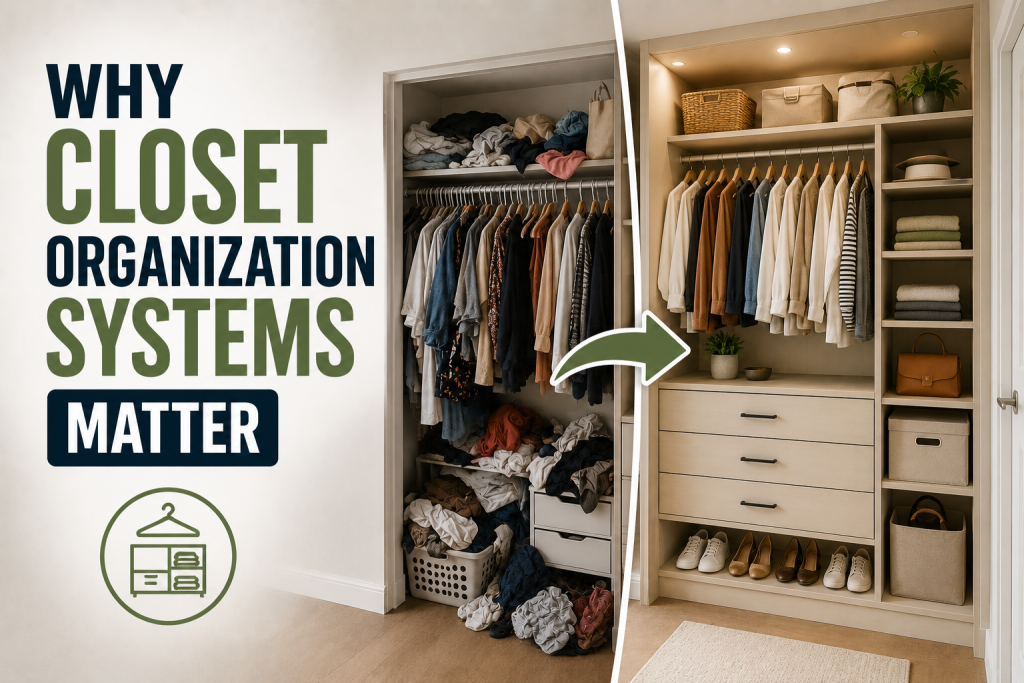
By utilizing shelving, hanging space, drawers, and storage accessories efficiently, homeowners can increase storage capacity without expanding the closet itself. This is especially valuable in smaller homes where every square foot matters. In addition, organized closets contribute to better overall home organization and can enhance a bedroom. Whether through simple upgrades or advanced custom wardrobe systems, investing in better storage solutions can improve both functionality and long-term convenience.
Different Types of Closet Organization
Not all closets have the same storage requirements. The best closet organization systems depend on the size, the amount of storage needed, and the homeowner’s organizational preferences. Understanding the different types of systems available can help you choose the most effective solution for your bedroom.
Reach-In Closet Systems
Reach-in closets are common in many bedrooms and typically benefit from efficient shelving, hanging rods, and drawer organizers. These systems focus on maximizing limited space while keeping clothing and accessories easily accessible.
Walk-In Closet Storage Systems
A walk-in closet organization network provides greater flexibility because they offer more space for customization. Homeowners can incorporate shelving, drawers, shoe storage, islands, and dedicated zones for different categories of clothing and accessories.
Modular Closet System
Modular closet systems use interchangeable components that can be adjusted as storage needs change. These systems are popular because they offer flexibility, relatively simple installation, and the ability to expand over time.
Custom Wardrobe Systems
Custom wardrobe systems are designed specifically for a homeowner’s storage needs and closet dimensions. They provide the highest level of personalization and often include premium features such as built-in cabinetry, specialized storage compartments, and custom layouts that maximize every inch of available space.
Best Closet Organization Systems for Small Bedrooms
Small bedrooms often come with limited closet space, making efficient organization essential. The right closet organization systems can help homeowners maximize storage capacity while keeping clothing, shoes, and accessories neatly arranged. Even compact closets can become highly functional with the proper layout and storage components. Vertical storage is one of the most effective strategies for smaller closets. Adding extra shelving above hanging rods or installing floor-to-ceiling storage units helps utilize space that often goes unused. Drawer organizers, storage bins, and slim hangers can also improve efficiency by reducing clutter and making items easier to access.
For homeowners seeking better room closet storage, modular systems offer flexibility without requiring a complete renovation. Adjustable shelves and removable components allow the system to adapt as storage needs change over time. By combining smart organization techniques with space-efficient storage solutions, small bedroom closets can provide significantly more functionality without requiring additional square footage.
Walk-In Closet Storage Ideas
A walk-in closet provides more storage potential than a standard reach-in closet, but without a clear organization strategy, it can quickly become cluttered and inefficient. Implementing effective walk-in closet system techniques helps maximize available space while making clothing, shoes, and accessories easier to access. One of the most effective approaches is creating dedicated storage zones. Separating clothing by category, season, or frequency of use can improve organization and simplify daily routines. Shoes, handbags, jewelry, and accessories should also have designated storage areas to prevent clutter.
Shelving, drawer systems, and hanging rods can be combined to create a balanced storage layout that accommodates different types of belongings. Homeowners may also benefit from adding storage islands, built-in cabinets, or specialized accessory organizers when space allows. When integrated into well-designed closet organization systems, these strategies help transform walk-in closets into highly functional storage spaces that support long-term organization and improve overall bedroom efficiency.
Closet Shelving Tips That Maximize Space
Shelving is one of the most important components of effective closet organization systems because it helps to utilize available space while keeping belongings organized and accessible. The right shelving layout can significantly increase storage capacity, especially in smaller closets where every inch matters. Adjustable shelving is a popular option because it allows homeowners to customize storage as their needs change. Shelves can be repositioned to accommodate folded clothing, shoes, handbags, storage bins, and seasonal items.
This flexibility makes adjustable systems suitable for a wide variety of closet layouts. Floor-to-ceiling shelving is another effective solution for maximizing storage. By utilizing vertical space, homeowners can create additional storage areas without expanding the closet footprint. Corner shelving can also help take advantage of areas that might otherwise go unused. These closet shelving ideas not only improve organization but also contribute to more functional and efficient bedroom storage solutions. When properly planned, shelving systems can dramatically enhance a closet’s overall usability.
Room Closet Storage Accessories Worth Considering
The effectiveness of closet organization systems often depends on more than shelving and hanging rods. Storage accessories can help maximize available space, improve accessibility, and keep belongings neatly organized. Even small additions can make a significant difference in the functionality of a bedroom closet. Drawer organizers are useful for separating smaller items such as socks, belts, jewelry, and accessories.
Shoe racks help keep footwear organized while preventing clutter from accumulating on the closet floor. Storage baskets and bins provide convenient spaces for seasonal clothing, handbags, and items that are not used daily. Hanging organizers are another practical option for increasing storage capacity without requiring additional shelving. These accessories can accommodate folded clothing, shoes, and other personal items while making use of vertical space. When integrated into well-planned room closet storage systems, these accessories help create a more organized, efficient, and user-friendly closet environment.
Custom Wardrobe Systems vs Modular Closet System
When choosing between custom wardrobe systems and modular closet systems, homeowners should consider factors such as budget, flexibility, storage needs, and long-term goals. Both options can improve organization, but they offer different advantages depending on the closet layout and desired level of customization. Custom closet systems are designed specifically for a homeowner’s space and storage requirements. They maximize every inch of available room and often include premium features such as built-in drawers, specialized compartments, and custom shelving configurations.
While these systems typically require a larger investment, they provide a highly personalized storage solution. Modular closet storage offers greater flexibility and is often more affordable. Because they use interchangeable components, homeowners can adjust shelves, drawers, and storage accessories as their needs change. These systems are also easier to upgrade over time. Both options can be effective closet organization systems. The best choice depends on whether homeowners prioritize customization, adaptability, budget considerations, or long-term storage efficiency.
Closet Design Tips for Better Organization
A well-designed closet should do more than store clothing; it will make daily routines easy and improve overall bedroom functionality. Thoughtful closet design ideas can help homeowners maximize storage capacity while creating a more organized and visually appealing space.
Create Dedicated Storage Zones
One of the most effective design strategies is dividing the closet into specific zones. Separate areas for hanging clothes, folded garments, shoes, accessories, and seasonal items help maintain order and make belongings easier to locate.
Incorporate Proper Lighting
Good lighting can dramatically improve closet usability. LED strip lights, recessed fixtures, and motion-sensor lighting make it easier to find items while enhancing the overall appearance.
Maximize Vertical Space
Many closets have unused space above shelving and hanging rods. Extending storage upward with additional shelves or cabinets helps increase capacity without expanding the closet footprint.
Prioritize Accessibility
Frequently used items should be placed within easy reach, while seasonal or less frequently used belongings can be stored higher or in less accessible areas. This approach improves efficiency and supports long-term organization.
When combined with effective closet organization systems, these design principles can transform an ordinary closet into a functional storage space that supports organization.
Common Closet Organization Mistakes to Avoid
Even the best closet organization systems can become ineffective when common storage mistakes are overlooked. One of the most frequent errors is overcrowding the closet with clothing, shoes, and accessories that are rarely used. Excessive clutter reduces accessibility and makes it difficult to maintain an organized space. Another common mistake is failing to utilize vertical storage. Many homeowners focus only on eye-level shelving and hanging space while leaving valuable upper storage areas unused. This can significantly limit the closet’s overall storage capacity.
Poor shelving placement can also create organizational challenges. Shelves that are too high, too deep, or poorly positioned may make items difficult to access and reduce the efficiency of the storage system. In addition, neglecting regular decluttering often leads to overcrowded storage areas and unnecessary disorganization. Avoiding these mistakes helps homeowners maximize the effectiveness of their room closet storage while maintaining a cleaner, more functional, and easier-to-manage closet environment.
Maintaining Closet Organization Long-Term
Installing effective closet organization systems is only the first step toward creating a functional and organized bedroom. Maintaining that organization over time requires consistent habits and regular evaluations of storage needs. Without ongoing maintenance, even the most well-designed closet can gradually become cluttered and difficult to manage. One of the most effective strategies is conducting seasonal closet reviews. Removing clothing and accessories that are no longer worn helps free up valuable storage space and prevents unnecessary accumulation.
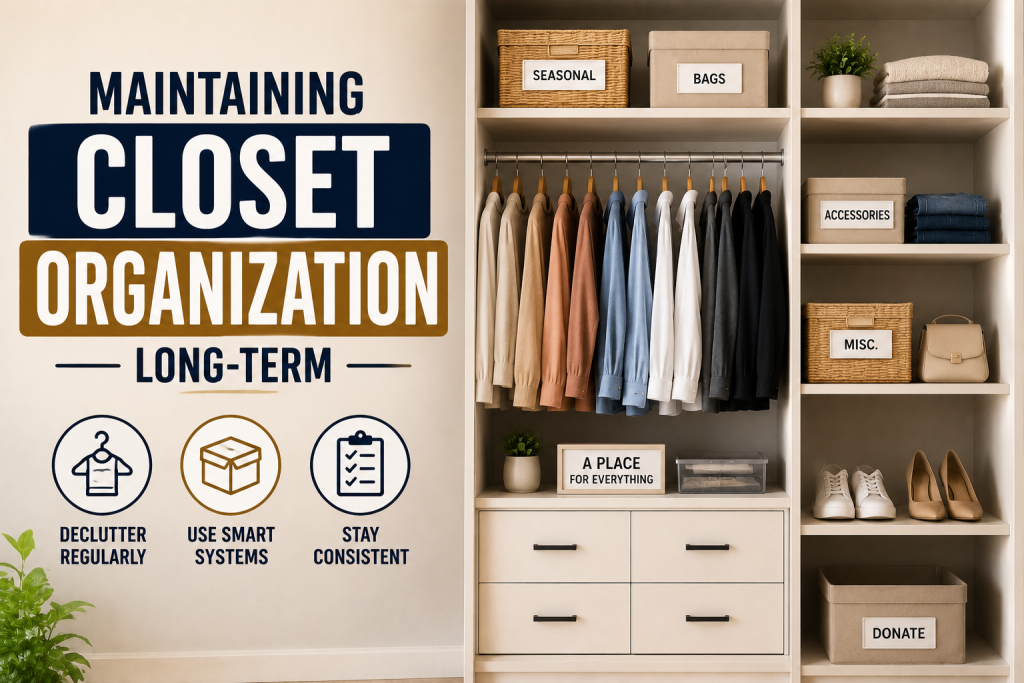
Reorganizing items based on seasonal use can also improve accessibility and make daily routines more efficient. Homeowners should also ensure that every item has a designated storage location. Returning belongings to their proper place after use helps maintain order and prevents clutter from spreading throughout the closet. Combined with periodic decluttering and thoughtful storage adjustments, these habits help keep this organization systems functional, efficient, and easy to maintain for years to come.
Closet Organization Systems Checklist
Creating an organized closet begins with understanding your storage needs and choosing a system that matches your available space. Homeowners should evaluate the clothing, shoes, and accessories they need to store before selecting shelving, drawers, hanging rods, or other storage components. Choosing the right layout helps ensure that the closet remains functional and easy to use.
It is also important to maximize vertical storage, utilize storage accessories, and create designated areas for different categories of belongings. Regular decluttering and seasonal organization reviews can help prevent overcrowding and maintain efficiency over time. Whether using custom wardrobe systems or a modular closet system, the goal is to create a storage solution that supports daily routines and long-term organization. By following these principles, homeowners can get the most value from their closet organization systems while creating a cleaner, more efficient bedroom environment.
Conclusion
Choosing the right closet organization systems can significantly improve bedroom functionality, maximize storage space, and simplify everyday routines. Whether you opt for custom wardrobe systems, a modular closet system, or a combination of shelving and storage accessories, an organized closet helps reduce clutter and improve accessibility. By incorporating smart closet style ideas, utilizing vertical space, and maintaining consistent organization habits, homeowners can create a storage system that remains effective over the long term. The key is selecting solutions that fit your storage needs, available space, and lifestyle. With thoughtful planning and regular maintenance, a well-organized closet can provide lasting convenience and contribute to a cleaner, more efficient bedroom.
Frequently Asked Questions
What are the best closet organization systems?
The best closet organization depend on your storage needs, closet size, and budget. Popular options include modular shelving systems, custom closet installations, adjustable shelving units, and storage accessories designed to maximize available space.
Are custom wardrobe systems worth it?
For many homeowners, custom wardrobe systems are worth the investment because they are tailored to specific storage requirements and maximize every inch of available space. They often provide greater functionality and a more polished appearance than standard storage solutions.
How do I organize a small bedroom closet?
Start by decluttering unnecessary items and utilizing vertical storage. Adjustable shelving, slim hangers, storage bins, and efficient bedroom closet storage accessories can help maximize space in smaller closets.
What is the difference between modular and custom closets?
A modular closet system uses adjustable, interchangeable components that can be modified over time, while a custom wardrobe system is built specifically for a particular space and storage requirement. Custom systems offer more personalization, while modular systems provide greater flexibility.
How often should I reorganize my closet?
Most homeowners benefit from reviewing and reorganizing their closets at least twice a year. Seasonal assessments help remove unused items, improve accessibility, and ensure that closet organization systems continue to function efficiently.