


Common Home Lighting Problems and Solutions
Lighting plays a crucial role in the comfort, safety, and functionality of a home. When lighting systems fail to perform as expected, homeowners may experience issues ranging from minor inconveniences to more serious electrical concerns. Understanding the causes of common home lighting errors can help identify effective solutions and prevent future issues.
Problems such as flickering lights, dim rooms, uneven illumination, and buzzing fixtures are often linked to faulty bulbs, outdated fixtures, wiring concerns, or improper lighting design. While some issues can be resolved with simple maintenance or upgrades, others may require professional electrical assistance. This guide explores the most common home lighting problems, explains their potential causes, and provides practical solutions homeowners can use to improve lighting performance, enhance comfort, and maintain a safer living environment.
What Causes Common Home Lighting Problems?
Many home lighting problems can be traced to a combination of electrical issues, outdated fixtures, improper bulb selection, or poor lighting design. Identifying the root cause is the first step toward finding an effective solution and preventing recurring problems. In some cases, lighting issues result from loose wiring connections, overloaded circuits, or incompatible dimmer switches. These electrical concerns can affect light performance and may create safety risks if left unaddressed.
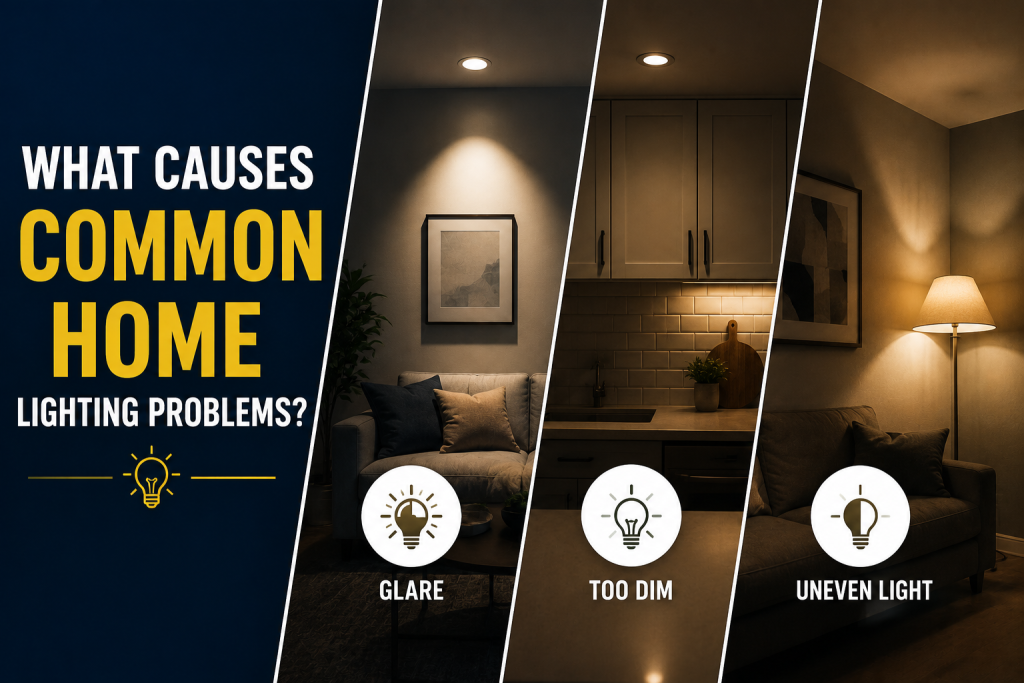
Other problems stem from aging fixtures, low-quality bulbs, or components that have reached the end of their lifespan. Design-related factors can also contribute to lighting challenges. Insufficient fixture placement, inadequate light output, and poor room planning may lead to uneven illumination and uncomfortable living spaces. Understanding these common causes helps homeowners diagnose issues more accurately and determine whether a simple fix or professional assistance is needed to restore proper lighting performance. Poor room planning can also contribute to common home storage problems, especially when available space is not used efficiently.
Most Common Home Lighting Problems
Many homeowners encounter recurring lighting issues that affect comfort, visibility, and energy efficiency. Understanding the most common home lighting problems can make troubleshooting easier and help prevent larger electrical concerns.
Flickering Lights
Flickering lights often caused by loose bulbs, faulty switches, incompatible dimmer switches, or wiring issues. While some cases are minor, persistent flickering should be investigated promptly to identify and address any underlying electrical problems.
Dim Rooms
Insufficient lighting can result from low-output bulbs, poor fixture placement, or a lack of layered lighting. Dim rooms often feel smaller and less inviting.
Uneven Lighting
Many homes experience uneven lighting issues when certain areas receive significantly more illumination than others. This can create visual discomfort and reduce functionality.
Frequent Bulb Burnouts
Bulbs that burn out quickly may indicate voltage fluctuations, overheating fixtures, or poor-quality products. Repeated failures should not be ignored.
Buzzing Fixtures
Buzzing sounds may occur due to loose components, incompatible bulbs, or electrical problems within the fixture itself. Professional evaluation may be necessary if the issue persists.
Flickering Lights Fixes Homeowners Should Try
Flickering lights are among the most frustrating home lighting problems because they can range from simple maintenance issues to more serious electrical concerns. Fortunately, several troubleshooting steps can help homeowners identify and resolve the problem. Many flickering lights solutions begin with checking the bulb itself. A loose bulb is one of the most common causes and can often be fixed by tightening it securely. If the problem continues, replacing the bulb with a compatible, high-quality alternative may resolve the issue. Homeowners should also inspect switches and dimmer controls.
Incompatible dimmers, particularly when paired with LED bulbs, frequently cause flickering. If multiple fixtures flicker simultaneously, the issue may be related to wiring connections or circuit problems. Persistent flickering should never be ignored. When basic troubleshooting does not solve the issue, contacting a licensed electrician is the safest way to diagnose and correct potential electrical hazards. During broader interior upgrades, homeowners can also explore interior storage solutions to improve organization and make better use of available space.
Dark Room Lighting Fixes for Better Visibility
Poor illumination can make a room feel smaller, less welcoming, and more difficult to use. Many home lighting problems related to insufficient brightness can be resolved through strategic upgrades and better lighting design. One of the most effective dim room lighting fixes is increasing the overall light output within the space. Replacing low-lumen bulbs with brighter alternatives can often produce immediate results. Homeowners should also verify that fixtures are designed to support the desired bulb wattage and brightness levels.
Adding multiple light sources is another effective solution. Combining overhead lighting with table lamps, floor lamps, and wall sconces helps distribute light more evenly throughout the room. Reflective surfaces such as mirrors and lighter wall colors can also improve brightness by maximizing available light. By addressing both fixture placement and light output, homeowners can create a more comfortable, functional, and visually appealing living environment.
Electrical Lighting Errors That Require Professional Help
While some lighting issues can be resolved with simple maintenance, certain electrical lighting problems require immediate attention from a qualified electrician. Ignoring these warning signs can increase the risk of electrical damage, equipment failure, or potential fire hazards. One common concern is repeated circuit breaker trips associated with lighting fixtures. This may indicate overloaded circuits, faulty wiring, or problems within the electrical panel. Homeowners should also be cautious if lights dim unexpectedly when large appliances operate, as this can signal voltage irregularities.
Burning odors, discolored outlets, sparking switches, and unusually hot fixtures are additional warning signs that should never be ignored. These symptoms often indicate underlying electrical issues that require professional diagnosis and repair. Because some home lighting problems involve hidden wiring or electrical components, attempting complex repairs without proper training can be dangerous. Consulting a licensed electrician helps ensure that problems are resolved safely and in compliance with local electrical codes.
Poor Indoor Lighting and Its Impact on Comfort
Lighting affects far more than visibility. Poor lighting choices can influence comfort, productivity, mood, and the overall functionality of a home. Many home lighting problems are directly linked to lighting designs that fail to meet the needs of the space.
Home Lighting Problems Caused by Poor Design
In many cases, lighting issues are not electrical at all. Insufficient fixtures, improper bulb selection, and poor fixture placement can create uncomfortable living environments.
Reduced Visual Comfort
Bad indoor lighting can contribute to eye strain, headaches, and visual fatigue, particularly in rooms used for reading, working, or entertainment.
Negative Impact on Room Appearance
Poor lighting can make paint colors appear dull, create unwanted shadows, and reduce the visual appeal of furniture and décor.
Lower Functionality
Rooms with inadequate lighting often feel less practical and may not adequately support everyday activities. Proper illumination improves both comfort and usability. By addressing these issues and implementing layered lighting strategies, homeowners can create spaces that feel brighter, more welcoming, and better suited to daily living.
Preventing Home Lighting Problems Before They Start
Preventive maintenance is one of the most effective ways to reduce home lighting problems and extend the lifespan of lighting systems. Many issues develop gradually and can often be identified before they become major concerns. Homeowners should routinely inspect fixtures, replace aging bulbs, and ensure that switches and dimmers operate properly.
Keeping fixtures clean can also improve light output and reduce unnecessary strain on lighting components. In addition, using high-quality LED bulbs and compatible dimmer switches can help prevent performance issues. Scheduling periodic electrical inspections is another proactive measure, particularly in older homes. Identifying worn wiring, overloaded circuits, or outdated electrical components early can help avoid more expensive repairs and improve overall household safety.
When to Use Professional Lighting Repair Services?
While basic maintenance can resolve some issues, certain situations require expert attention. Following professional lighting repair ideas can help homeowners determine when it is time to contact a licensed electrician rather than attempting repairs themselves. Persistent flickering, repeated circuit breaker trips, buzzing fixtures, burning odors, and sparking switches are all warning signs that should be evaluated.
These symptoms may indicate underlying electrical issues that cannot be safely addressed through simple troubleshooting. Professional electricians have the tools and expertise needed to diagnose hidden wiring problems, inspect electrical panels, and ensure repairs meet local safety requirements. Seeking professional assistance when necessary helps protect both the home’s electrical system and the safety of its occupants.
Lighting Problem and Solution Tips for Homeowners
Many home lighting problems can be identified through a systematic troubleshooting process. While professionals handle electrical concerns, homeowners can often diagnose basic issues before deciding whether repairs are necessary. Start by checking bulbs, switches, and fixtures for obvious signs of wear or damage. Replacing a faulty bulb or tightening a loose connection may resolve the issue quickly. Homeowners should also verify that bulbs are compatible with dimmer switches and fixture specifications. Lighting placement and fixture selection are also important parts of a well-planned bedroom design, helping create a space that is both functional and comfortable.
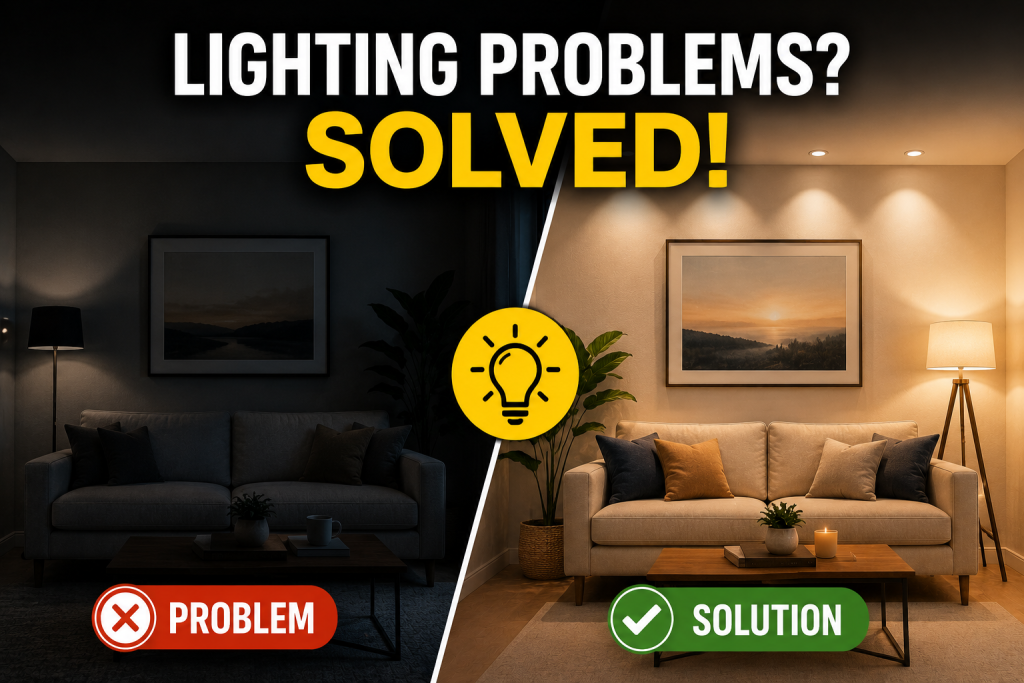
These lighting troubleshooting steps can help identify common causes of poor lighting performance:
- Inspect bulbs for damage or improper installation.
- Test switches and dimmers for functionality.
- Check circuit breakers for tripped circuits.
- Look for signs of overheating or discoloration around fixtures.
- Confirm that fixtures are using compatible bulbs.
- Monitor recurring issues that may indicate wiring concerns.
Following these basic troubleshooting practices can help homeowners address minor lighting issues while recognizing when professional assistance is needed.
Conclusion
Understanding common home lighting problems can help homeowners maintain a safer, more comfortable, and more functional living environment. Issues such as flickering lights, dim rooms, uneven illumination, and electrical concerns often have identifiable causes and practical solutions. While many lighting problems can be resolved through basic troubleshooting and routine maintenance, some situations require professional electrical expertise. By addressing lighting issues promptly and improving overall lighting design, homeowners can enhance visibility, energy efficiency, and everyday comfort. Regular inspections, proper fixture selection, and timely repairs help ensure that home lighting systems continue to perform reliably while supporting the needs of modern households.
Frequently Asked Questions
What are the most common home lighting problems?
Common home lighting problems include flickering lights, dim rooms, uneven illumination, buzzing fixtures, and bulbs that burn out frequently.
What causes lights to flicker in a house?
Flickering lights often caused by loose bulbs, faulty switches, incompatible dimmers, or wiring issues. Many light solutions start with checking these basic components.
How can I improve lighting in a dim room?
Popular dark room lighting fixes include using higher-lumen bulbs, adding multiple light sources, and improving fixture placement throughout the room.
When should I call an electrician for lighting issues?
Homeowners should contact an electrician if they experience recurring electrical lighting errors, burning odors, sparking fixtures, or repeated circuit breaker trips.
What are some lighting repair ideas homeowners can follow?
Basic lighting repair tips include checking bulb connections, replacing damaged bulbs, testing switches, verifying dimmer compatibility, and inspecting fixtures for visible signs of wear or overheating.