


Common Roof Problems: 10 Issues Every Homeowner Should Know
Your roof is one of the most important systems protecting your home from rain, wind, heat, snow, and moisture. Yet many homeowners don’t notice roofing issues until they become expensive repairs. Small signs of wear can quickly develop into structural damage, higher energy bills, interior water stains, and even mold growth. Understanding the most common roof problems can help you identify warning signs early and avoid costly surprises. Whether you live in a hurricane-prone area like Florida, a snow-heavy state such as Minnesota, or a hot climate like Texas or Arizona, roofing systems face different environmental challenges throughout the year.
Many common roof problems develop gradually due to aging materials, poor installation, severe weather, or a lack of routine inspections. Asphalt shingles, flashing components, gutters, and roof decking can all deteriorate over time, reducing your roof’s ability to protect your property. In this guide, we’ll explore the most common roof problems affecting residential homes, explain their causes, discuss prevention strategies, and help you determine when professional roofing services may be necessary. By recognizing these issues early, homeowners can protect their investment, maintain curb appeal, and extend the lifespan of their roofing system.
Most Common Roof Problems Found in Residential Homes
Many of the common roof problems homeowners face begin with minor damage that goes unnoticed for months. What may seem like a small issue on the roof surface can eventually lead to interior water damage, insulation deterioration, and costly repairs. In many cases, these problems develop because roofing materials naturally age after years of exposure to sunlight, rain, temperature fluctuations, and seasonal storms.

Regular inspections are especially important for homes with asphalt shingle roofs, which remain the most popular roofing material across the United States. Identifying common roof problems early allows homeowners to address concerns before they affect the roof deck or other structural components. The two issues discussed below are among the most frequently reported roofing concerns and are responsible for a significant percentage of residential service calls each year.
Roof Leaks Caused by Aging Materials
Among all roofing concerns, roof leaks remain one of the most common and expensive issues homeowners encounter. As shingles, underlayment, and sealants age, they lose their ability to keep water out. Even a small opening can allow moisture to penetrate the roofing system, eventually causing stained ceilings, damaged drywall, mold growth, and weakened structural materials.
Older roofs are particularly vulnerable because years of UV exposure gradually break down protective roofing components. Homes located in humid regions such as Florida, Louisiana, and coastal areas often experience accelerated wear due to constant moisture exposure. Early warning signs may include water spots in the attic, peeling paint near ceilings, or damp insulation. Prompt repairs can prevent minor leaks from becoming major restoration projects.
Damaged Shingles and Surface Deterioration
Damaged shingles are another leading cause of residential roofing failures. Shingles serve as the first layer of protection against weather, and when they crack, curl, loosen, or lose granules, the roof becomes increasingly vulnerable to water intrusion and wind damage. This issue is especially common in regions that experience intense sunlight, frequent storms, or large temperature swings. Missing or deteriorating shingles can expose underlying materials and shorten the lifespan of the entire roofing system. Homeowners should periodically check for visible signs of wear from the ground and schedule professional inspections after severe weather events. Addressing shingle damage quickly helps reduce the risk of larger and more costly roofing repairs in the future.
Common Roof Problems Related to Flashing and Drainage Systems
Some of the most overlooked common roof problems occur around flashing components and water drainage systems. While shingles receive most of the attention, flashing and gutters play a critical role in directing water away from vulnerable areas of the roof. When these components fail, moisture can enter through joints, roof penetrations, and transitions, causing hidden damage that may remain undetected for long periods.
Homeowners often discover these common roof problems only after water stains appear inside the home or sections of roofing materials begin to deteriorate prematurely. Regular inspections of flashing, gutters, and drainage pathways can significantly reduce the likelihood of water-related damage and help extend the overall lifespan of the roofing system.
Roof Flashing Problems Around Chimneys and Vents
Roof flashing problems commonly develop around chimneys, skylights, plumbing vents, and roof valleys. Flashing is designed to create a waterproof seal where different roofing surfaces meet, but exposure to weather, expansion and contraction, and aging sealants can weaken these connections over time. When flashing becomes loose, corroded, or improperly installed, water can bypass the roofing material and enter the structure beneath. This type of damage often starts small but can eventually affect insulation, drywall, and wood framing. Homeowners should pay close attention to rusted metal, cracked sealant, or visible gaps around roof penetrations, as these are often early indicators of flashing failure.
Clogged Gutters and Water Backup Issues
Gutters are essential for moving rainwater safely away from the roof and foundation. However, leaves, twigs, and other debris can block water flow, causing gutters to overflow during heavy rainfall. When water backs up onto the roof, it can seep beneath shingles and contribute to moisture-related deterioration. This issue is particularly common in neighborhoods with mature trees where debris accumulates throughout the year. Overflowing gutters can also increase the risk of fascia damage, foundation problems, and landscape erosion. Cleaning gutters regularly and ensuring proper drainage helps prevent water accumulation and reduces the likelihood of long-term roofing complications.
Structural Common Roof Problems Homeowners Should Never Ignore
While some roofing concerns affect only the surface, structural common roof problems can threaten the stability and safety of an entire home. These issues often develop gradually, making them difficult to detect without a professional inspection. Excess moisture, aging materials, inadequate support systems, and long-term neglect can all contribute to structural deterioration beneath the visible roofing layer.
Unlike cosmetic damage, structural common roof problems rarely resolve on their own and typically become more expensive as time passes. Identifying warning signs early can help homeowners avoid extensive repairs and protect the long-term value of their property. Two of the most serious structural concerns involve roof sagging and poor attic ventilation.
Sagging Roof Issues and Decking Failure
Sagging roof issues are often a sign that the roof’s structural support system has been compromised. Excessive moisture, deteriorated roof decking, overloaded roofing materials, or weakened framing members can all contribute to a roofline that appears uneven or droops in certain areas. A sagging roof should never be ignored because it may indicate hidden structural damage beneath the surface. In severe cases, prolonged deterioration can affect the integrity of the home’s framing system. Homeowners who notice dips, low spots, or visible sagging should schedule an inspection immediately to determine the underlying cause and prevent further structural decline.
Poor Attic Ventilation and Moisture Buildup
Proper attic ventilation plays a critical role in maintaining a healthy roofing system. When warm, humid air becomes trapped inside the attic, condensation can form on wood components and insulation. Over time, this moisture can encourage mold growth, wood rot, and premature deterioration of roofing materials. Ventilation problems are especially common in homes with blocked vents, insufficient airflow, or poorly designed attic systems. In warmer climates, inadequate ventilation can also increase attic temperatures, placing additional stress on roofing materials and raising cooling costs. Maintaining balanced intake and exhaust ventilation helps protect the roof structure while improving energy efficiency throughout the home.
Weather-Related Common Roof Problems Across the United States
Severe weather is responsible for many common roof problems experienced by homeowners throughout the United States. Different regions face unique environmental challenges that can gradually weaken roofing materials or cause sudden damage during extreme weather events. From powerful hurricanes along the Gulf Coast to heavy snowfall in northern states and hailstorms across the Midwest, weather remains one of the leading causes of roofing deterioration.
Many weather-related common roof problems may not be immediately visible after a storm. Hidden damage can develop beneath shingles or around vulnerable roof components, allowing moisture to enter the home over time. Understanding how different weather conditions affect roofing systems can help homeowners identify potential issues before they become costly repairs.
Storm Roof Damage From Wind and Hail
Storm roof damage frequently occurs after strong winds, hail, or severe thunderstorms. High winds can lift shingles, loosen flashing, and expose underlying roofing materials to moisture intrusion. Hail can create impact marks that weaken shingles and reduce their ability to protect the home from future weather events. States such as Texas, Oklahoma, Colorado, and Florida often experience significant roofing damage due to seasonal storms. Even when damage appears minor from the ground, hidden issues may shorten the lifespan of the roofing system. Scheduling a professional inspection after a major storm can help identify concerns early and support potential insurance claims when covered damage is present.
Ice Dams in Northern States
Ice dams form when heat escaping from the attic melts snow on the roof, allowing water to flow toward colder roof edges where it refreezes. As ice accumulates, it creates a barrier that prevents proper drainage and forces water beneath roofing materials. This issue is particularly common in northern climates such as Minnesota, Wisconsin, Michigan, and parts of New England. Over time, trapped water can damage shingles, roof decking, insulation, and interior finishes. Improving attic insulation and ventilation can significantly reduce the risk of ice dam formation and help maintain the long-term performance of the roofing system during winter months.
How to Prevent Common Roof Problems Before They Become Expensive Repairs
Preventing common roof problems is far less expensive than repairing major damage after it occurs. Many homeowners focus on roofing issues only when leaks or visible deterioration appear, but a proactive approach can significantly extend the life of a roofing system. Regular inspections, seasonal maintenance, and prompt attention to minor concerns help reduce the likelihood of costly structural damage and unexpected repair bills. Most common roof problems begin as small defects that worsen over time. By implementing a consistent maintenance routine, homeowners can identify potential trouble spots early and protect their investment. Preventive care is especially important in areas that experience frequent storms, extreme temperatures, or heavy seasonal rainfall.
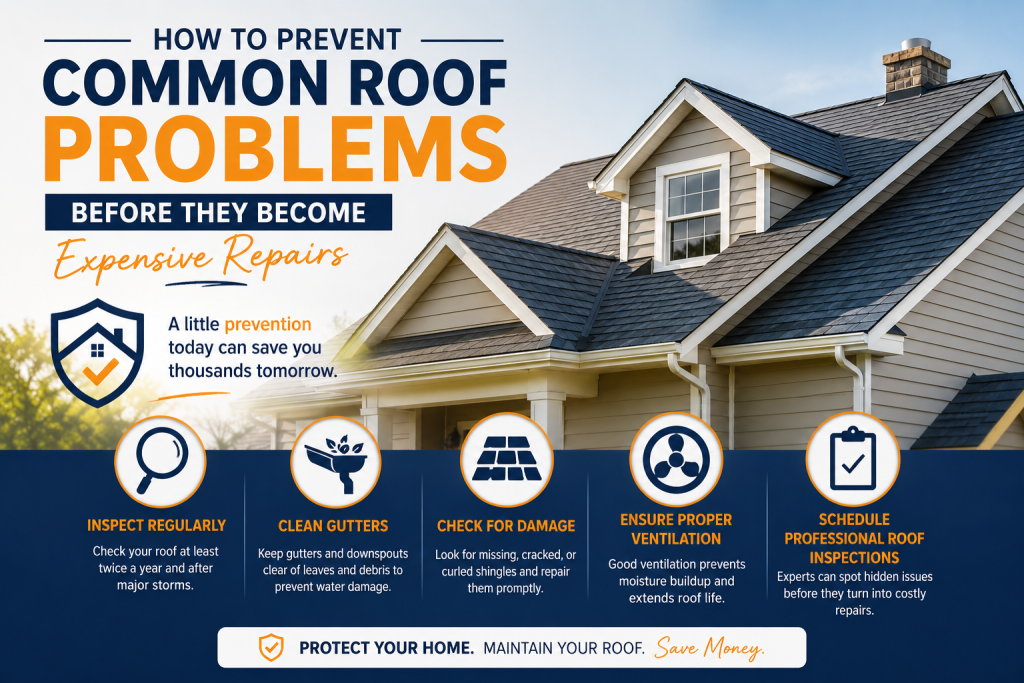
Seasonal Roof Inspection Checklist
A roof inspection should be performed at least twice each year, typically during the spring and fall. Homeowners should look for missing shingles, loose flashing, clogged gutters, signs of water intrusion, and visible wear around roof penetrations. It is also important to inspect the attic for moisture, mold growth, or daylight entering through the roof structure. Following severe weather events, an additional inspection can help identify hidden damage before it develops into a larger problem. Professional roofing inspections provide a more comprehensive evaluation and can uncover issues that may not be visible from the ground.
Routine Roof Maintenance Problems Homeowners Can Avoid
Many roof maintenance problems result from neglect rather than sudden damage. Allowing debris to accumulate on the roof, ignoring clogged gutters, postponing minor repairs, and failing to trim overhanging tree branches can all contribute to premature roof deterioration. Homeowners who invest in routine maintenance often experience fewer unexpected repairs and longer roof lifespans. Simple tasks such as keeping drainage systems clear, removing debris, and scheduling periodic inspections can help prevent moisture-related damage and preserve the overall performance of the roofing system. Consistent maintenance also helps protect curb appeal and supports long-term property value.
When Residential Roofing Repairs Are Necessary
Even with regular inspections and preventive maintenance, some roofing issues eventually require professional attention. Certain common roof problems can be addressed with minor repairs, while others may indicate deeper structural concerns that demand immediate action. Understanding when to call a roofing contractor can help homeowners avoid further damage and make informed decisions about their property’s long-term protection. Delaying repairs is one of the biggest reasons common roof problems become more expensive over time. Small defects often spread beyond the affected area, increasing labor costs and the scope of necessary work. Knowing the warning signs can help homeowners act before minor damage turns into a major roofing project.
Signs You Need Professional Help
There are several indicators that professional residential roofing repairs may be necessary. Persistent leaks, recurring water stains on ceilings, missing shingles, visible sagging, mold growth in the attic, and unusually high energy bills can all point to underlying roofing issues. Homeowners should also pay attention to granule loss on asphalt shingles, damaged flashing, and signs of moisture infiltration around vents or chimneys. If multiple roofing problems appear simultaneously, a comprehensive inspection is often the best way to determine the extent of the damage and identify the most effective solution.
Repair vs. Roof Replacement Decision
One of the most important decisions homeowners face is whether to repair an existing roof or replace it entirely. The answer often depends on the roof’s age, the extent of the damage, and the overall condition of the roofing system. Repairs are generally the most cost-effective option when damage is isolated and the roof still has substantial service life remaining. However, if widespread deterioration, recurring leaks, or structural concerns are present, replacement may provide better long-term value. Consulting a qualified roofing professional can help homeowners evaluate costs, expected lifespan, and future maintenance needs before making a final decision.
Conclusion
Common roof problems such as leaks, damaged shingles, poor drainage, and inadequate maintenance can significantly affect the safety, durability, and value of a building if left unaddressed. Regular roof inspections, timely repairs, and proper maintenance are essential for identifying issues early and preventing costly damage. By understanding the most common roofing problems and taking proactive measures to resolve them, homeowners and property managers can extend the lifespan of their roofs, improve energy efficiency, and ensure long-term protection against harsh weather conditions.
Frequently Asked Questions
What are the most common roof problems homeowners face?
The most common roofing issues include leaks, damaged shingles, flashing failures, poor attic ventilation, clogged gutters, and weather-related damage. Many of these problems develop gradually and can become more expensive if they are not addressed early.
How often should a roof be inspected?
Most roofing professionals recommend inspecting your roof at least twice a year, typically during the spring and fall. Additional inspections are also a good idea after severe storms, high winds, or hail events that may have caused hidden damage.
Can a small roof leak become a major problem?
Yes. Even a minor leak can allow moisture to enter the home and damage insulation, drywall, wood framing, and other structural components. Over time, untreated leaks can also contribute to mold growth and indoor air quality concerns.
What causes a roof to sag?
Roof sagging is often caused by prolonged moisture exposure, deteriorated roof decking, weakened support structures, excessive roof loads, or aging materials. A sagging roof should be inspected immediately because it may indicate underlying structural issues.
Does homeowners insurance cover roof damage?
Homeowners insurance often covers sudden and accidental damage caused by events such as windstorms, hail, or fallen trees. However, damage resulting from normal wear and tear, lack of maintenance, or aging materials is typically not covered. Coverage details vary by insurer and policy.
How long does a residential roof typically last?
Roof lifespan depends on the material, installation quality, climate, and maintenance practices. Asphalt shingle roofs commonly last between 20 and 30 years, while metal, tile, and slate roofing systems may last significantly longer with proper care.
When should a roof be repaired instead of replaced?
Repairs are usually appropriate when damage is limited to a specific area and the roof still has a substantial remaining lifespan. Replacement may be the better option when the roof is nearing the end of its service life or has widespread deterioration affecting multiple components.