


Composite Decking vs Wood Cost: Which Offers Better Value?
Understanding composite decking vs wood cost is one of the most important decisions homeowners face when planning a new outdoor upgrade. In 2026, rising material prices and growing demand for durable low-maintenance decking have made this comparison even more relevant across the United States. The choice between composite and wood directly impacts both upfront expenses and long-term ownership costs.
While traditional wood decks often appear more affordable initially, pressure-treated wood deck cost remains one of the most budget-friendly options for homeowners planning a new outdoor space. Composite systems, however, offer reduced maintenance and longer lifespans, which can change the overall value equation. By the end, you’ll have a clear, practical view of which material fits your budget, climate, and lifestyle needs.
Composite Decking Cost vs Wood Decking Cost Overview
When comparing decking materials, the biggest difference comes down to upfront price versus long-term value. Composite materials generally require a higher initial investment, but they are engineered for durability, moisture resistance, and reduced maintenance over time. This shifts the cost equation beyond installation and into lifecycle performance. Wood decking, especially pressure-treated options, typically has a lower starting price, making it appealing for budget-conscious homeowners.
However, it often requires ongoing maintenance such as staining, sealing, and repairs, which can increase total ownership expenses. Over time, these recurring costs can narrow the overall difference between material options. The decision is not only financial but also lifestyle-based. Homeowners in humid, coastal, or high-traffic environments may prioritize durability, while those focused on short-term affordability may lean toward wood. Understanding this balance is essential before moving into detailed pricing breakdowns.
Composite Deck Pricing Explained
When evaluating composite decking vs wood cost, it’s important to understand how composite materials are priced in the US market. Composite deck pricing is generally calculated per square foot and varies based on brand, board quality, color selection, and performance features like UV resistance and moisture protection. Premium brands such as Trex, TimberTech, and Fiberon typically sit at the higher end of the pricing spectrum due to their enhanced durability and warranty coverage. Installation costs also influence overall pricing, as composite boards require precise spacing, specialized fasteners, and proper framing to prevent warping or expansion issues.
While composite deck pricing is higher upfront than wood, it often reduces long-term maintenance expenses, which can balance overall ownership costs over time. Regional labor rates, design complexity, and additional features like railings or built-in seating further impact final project pricing, making composite decks a customizable but higher-investment option for homeowners.
Wood Deck Installation Cost Breakdown
When comparing composite decking vs wood cost, understanding traditional wood pricing is essential. The wood deck installation cost is typically lower upfront, especially when using pressure-treated lumber, which remains the most common choice for budget-focused homeowners across the United States. This lower entry price is one of the main reasons wood continues to dominate in entry-level outdoor projects. However, the wood deck installation cost includes more than just materials. Labor, framing, footings, fasteners, and finishing work all contribute to the total investment.
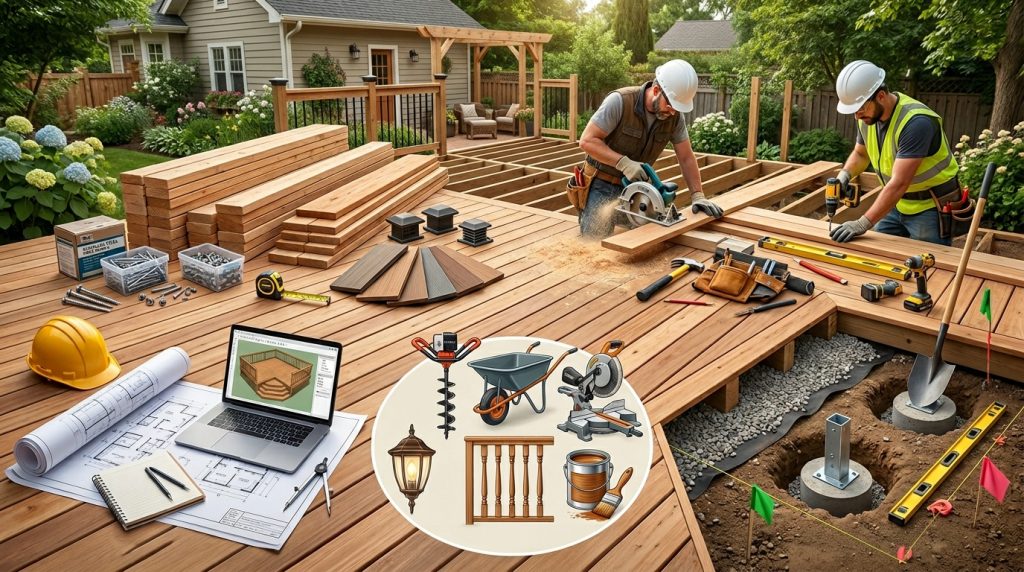
Unlike composite systems, wood decks often require additional steps such as sealing or staining shortly after installation, which adds to early lifecycle expenses. Regional factors also influence pricing, with labor rates in coastal cities or high-cost states significantly increasing total project budgets. While wood is affordable initially, homeowners should consider ongoing maintenance when evaluating its true long-term value compared to composite alternatives.
Deck Material Comparison: Composite Decking vs Wood Cost + Performance
A clear deck material comparison helps homeowners understand how composite decking vs wood cost translates into real-world performance and long-term value. While wood decking offers a lower upfront investment, it typically requires regular maintenance such as sealing, staining, and repairs to maintain appearance and structural integrity. Composite materials, on the other hand, are engineered for durability and consistency, reducing the need for ongoing upkeep. In terms of performance, composite boards provide better resistance to moisture, fading, and insect damage, making them ideal for humid or high-traffic environments.
Wood delivers a more natural appearance and can be easier to customize, but its lifespan is heavily dependent on maintenance habits and climate exposure. From a cost perspective, the initial savings of wood can diminish over time, while composite materials often balance higher upfront pricing with reduced long-term ownership expenses, creating a different value equation for homeowners.
Trex Decking Cost vs Traditional Wood Decks
When evaluating composite decking vs wood cost, brand-specific pricing provides a clearer real-world comparison. Trex decking cost is generally higher than traditional pressure-treated wood due to its engineered composition, enhanced durability, and long-term warranty coverage. As one of the most recognized composite brands in the United States, Trex is often chosen for homeowners prioritizing low maintenance and consistent appearance. Traditional wood decks, by contrast, offer a lower upfront investment, making them appealing for initial budget constraints.
However, unlike Trex decking cost, wood expenses extend beyond installation, as ongoing maintenance such as staining, sealing, and board replacement can accumulate over time. While Trex requires a higher initial spend, it delivers improved resistance to fading, moisture, and insect damage, reducing long-term upkeep. This makes it a strong option for homeowners seeking durability and predictable maintenance costs compared to conventional wood decking systems.
Long-Term Maintenance & Ownership Costs
When analyzing composite decking vs wood cost, long-term maintenance is where the financial gap becomes most noticeable. Wood decks require consistent upkeep, including sealing, staining, sanding, and occasional board replacement. These recurring tasks add to lifetime ownership expenses and can vary depending on climate exposure, especially in humid or high-UV regions of the United States. Composite decking significantly reduces ongoing maintenance demands. Most systems only require periodic cleaning with soap and water to maintain appearance and performance. This difference in upkeep directly impacts total cost of ownership, even if initial installation prices are higher for composite materials.
Homeowners comparing composite decking vs wood cost often prioritize convenience, which makes low-maintenance decking a key decision factor. Composite and PVC materials are designed to reduce ongoing upkeep, eliminating the need for regular staining, sealing, or sanding that traditional wood decks require. This makes them especially appealing for busy households or vacation properties. Composite decking offers a balanced mix of natural appearance and durability, while PVC options provide even greater resistance to moisture and staining. Both materials significantly reduce long-term maintenance efforts compared to pressure-treated wood, which continues to require periodic treatment to prevent weather damage and surface wear. However, wood decking still appeals to homeowners who value its authentic look and lower upfront cost. The tradeoff lies in time and maintenance commitment. Choosing the right material depends on whether homeowners prioritize lower initial investment or reduced long-term maintenance responsibilities.
Decking ROI and Home Value Impact: Composite Decking vs Wood Cost
When evaluating composite decking vs wood cost, homeowners should also consider long-term return on investment. decking ROI depends on how much value a deck adds to resale price, buyer appeal, and overall usability of outdoor space. In many US housing markets, a well-designed deck can significantly improve curb appeal and make a property more competitive. Composite decks often appeal to buyers due to their durability and low maintenance requirements, which can increase perceived value during resale.
Wood decks, while more affordable upfront, may require visible upkeep that can slightly reduce buyer confidence if not properly maintained. Ultimately, decking ROI is influenced by design quality, material choice, and regional demand for outdoor living features. In markets where outdoor spaces are highly valued, both wood and composite decks can deliver strong returns when properly built and maintained, but composite often holds an edge in long-term appeal.
Regional Cost Differences in the US
When comparing composite decking vs wood cost, location plays a major role in final project pricing. Across the United States, labor rates, material availability, and climate requirements can significantly shift overall installation expenses. In high-cost regions such as California and the Northeast, both composite and wood decks tend to be more expensive due to higher contractor rates and stricter building codes.
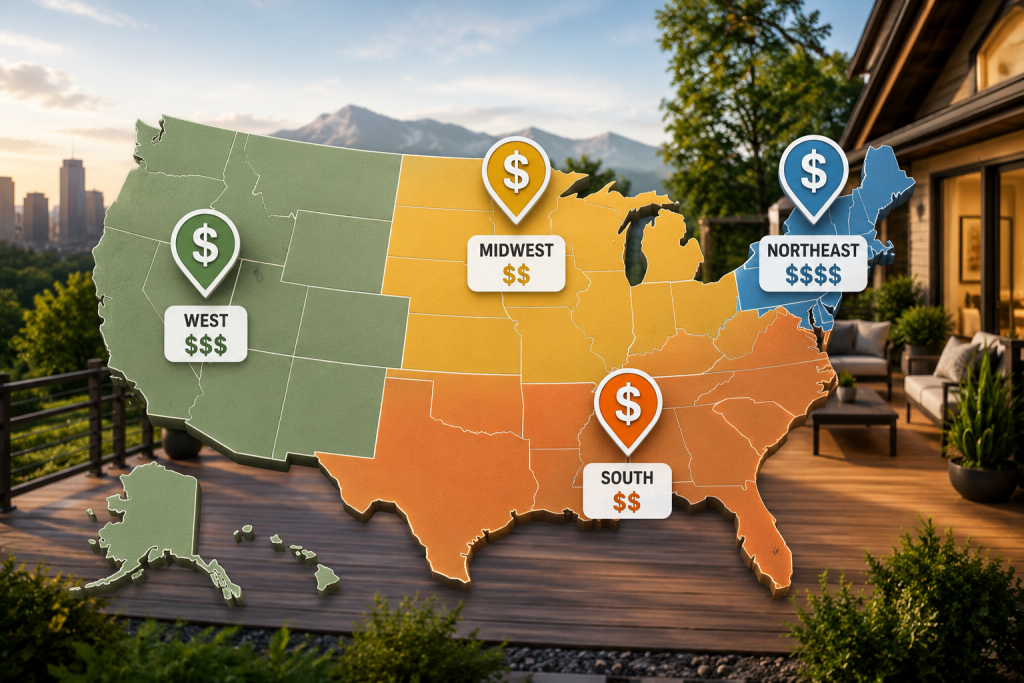
In warmer states like Florida and Texas, material selection often leans toward composite due to humidity, UV exposure, and storm resistance needs. This can increase upfront costs but reduce long-term maintenance. In contrast, Midwest and inland regions may see more wood deck installations because of lower initial pricing and moderate climate conditions. Regional differences also affect permitting requirements and structural standards, which can influence framing complexity and overall build cost. Understanding local conditions helps homeowners make more accurate budgeting decisions when planning a new deck project.
Which Is Better for Your Home?
Choosing between materials when evaluating composite decking vs wood cost ultimately comes down to budget, lifestyle, and long-term expectations. There is no universal answer, but there is a clear decision framework that helps homeowners select the right option for their needs. Wood decking is often the better choice for homeowners focused on lower upfront investment or those planning a shorter-term property hold. It offers flexibility in design and a natural aesthetic that fits many traditional American homes. However, it requires consistent maintenance, which adds time and long-term cost considerations. Composite decking is better suited for homeowners prioritizing durability and reduced upkeep. It performs well in challenging climates and offers a more predictable long-term cost structure. While the initial investment is higher, many homeowners find the tradeoff worthwhile for convenience and longevity. The best choice depends on whether you value upfront savings or long-term stability.
Conclusion
When evaluating composite decking vs wood cost, the right choice depends on how you balance upfront budget with long-term ownership expectations. Wood decking remains attractive for homeowners seeking lower initial investment and a traditional aesthetic, while composite options appeal to those prioritizing durability, consistency, and reduced maintenance over time. Across the United States, climate, labor rates, and material preferences all influence final pricing and performance outcomes. In many cases, the true difference in composite decking vs wood cost becomes clearer over a 10–20 year lifespan, where maintenance and repair expenses play a major role in total value. Ultimately, both materials can be excellent choices when matched to the right home and environment. The best decision comes down to lifestyle, budget, and how much ongoing upkeep you’re willing to manage in exchange for long-term performance and outdoor enjoyment.
Frequently Asked Questions
How does composite decking vs wood cost compare?
In most cases, composite decking vs wood cost is higher upfront because composite materials cost more initially. However, composite decking often reduces long-term maintenance expenses and provides better durability, which can help balance total ownership costs over time.
How long does each decking material last?
Composite decking can last 25–30 years or more with minimal upkeep, while wood decks generally last 10–20 years depending on maintenance and climate exposure.
What affects wood deck installation cost the most?
The wood deck installation cost is influenced by material quality, labor rates, design complexity, and regional pricing differences across the United States.
Which option has better long-term value?
Composite materials often provide better long-term value due to lower maintenance requirements, especially in humid or high-weather-impact regions.
Do decks improve home resale value?
Yes, both materials can improve resale value when properly built, but composite decks are often more appealing to buyers due to reduced upkeep needs.