


Cost to Install Custom Storage Solutions for Modern US Homes
As homeowners look for ways to improve organization and maximize usable space, custom storage systems have become an increasingly popular home upgrade. From walk-in closets and built-in shelving to garage cabinets and mudroom storage, these solutions can make everyday living more convenient while enhancing a home’s appearance and functionality.
However, before starting a project, it’s important to understand the custom storage installation cost and the factors that influence pricing. Costs can vary significantly based on materials, design complexity, storage location, and labor requirements. Whether you’re considering a simple closet organizer or a fully customized storage system, knowing what to expect can help you budget more effectively. This guide breaks down average costs, compares different storage options, and explains how homeowners can make informed decisions when planning their next storage upgrade.
Average Custom Storage Installation Price
The average custom storage installation cost varies depending on the project, the materials selected, and the level of customization involved. In most cases, homeowners can expect to spend anywhere from a few hundred dollars for basic storage upgrades to several thousand dollars for fully customized systems. Simple closet organizers and shelving units are typically the most affordable options, while built-in cabinetry, walk-in closets, and large garage storage systems tend to require a higher investment.
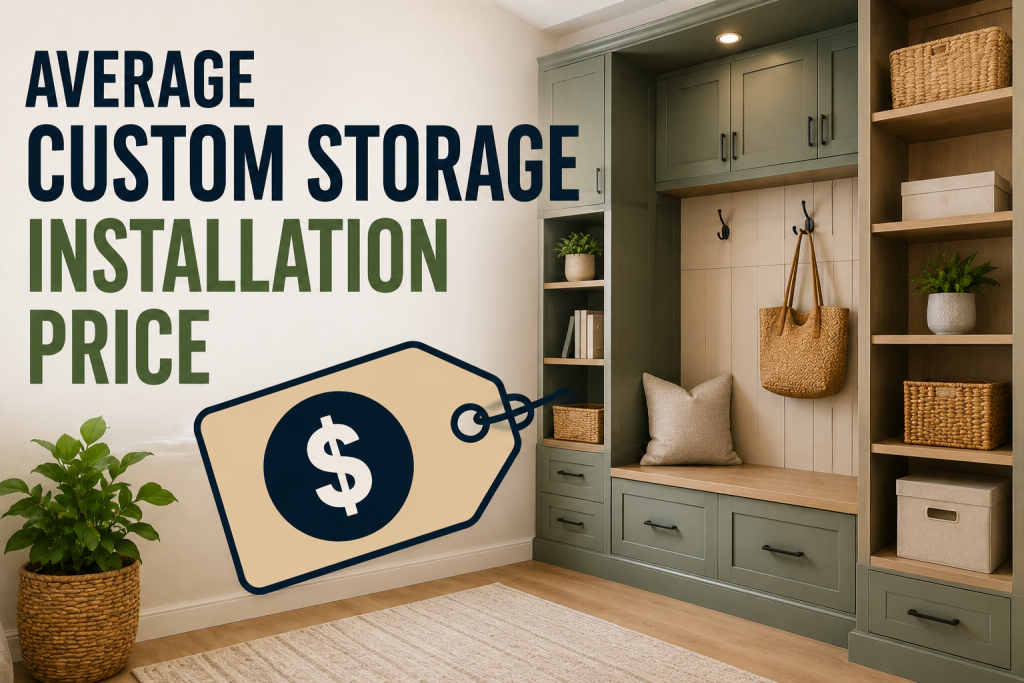
Projects that include premium materials, custom millwork, soft-close hardware, or specialized storage features generally cost more than standard installations. Labor expenses can also account for a significant portion of the total budget, especially for complex designs that require professional installation. Understanding the typical custom storage installation price helps homeowners establish realistic expectations and compare storage solutions based on both functionality and long-term value.
What Affects Custom Storage Installation Cost?
Several factors influence the final custom storage installation cost, making it important for homeowners to understand how their budget is allocated. The size of the project is only one piece of the equation. Materials, labor, design complexity, and installation location have an impact on overall pricing.
Materials Used
The materials selected for a storage project are often one of the biggest cost drivers. Basic laminate and MDF systems are generally more affordable, while plywood, hardwood, and premium finishes increase costs. Custom hardware, specialty shelving, and decorative trim can also raise the total investment.
Labor Costs
Professional installation expenses vary depending on project scope and local labor rates. Simple storage systems may require minimal installation time, while custom-built cabinetry and complex storage solutions often involve skilled carpentry, increasing labor costs.
Design Complexity
The more customized a storage system becomes, the more expensive it typically is. Features such as built-in lighting, adjustable shelving, hidden compartments, and specialized organizational accessories require additional materials and labor.
Storage Location
The location of the storage project also affects pricing. Closets, garages, mudrooms, home offices, and entertainment centers all have unique installation requirements. Certain areas may require electrical work, structural modifications, or custom fitting, which can increase the overall custom storage installation price.
Custom Closet Worth Breakdown
For many homeowners, closets are the most common starting point for custom storage projects. The total custom closet cost depends on the closet size, storage features, materials, and level of customization. A basic reach-in closet with shelving and hanging rods is typically less expensive than a fully customized walk-in closet designed to maximize organization and accessibility.
Walk-in closets often include features such as built-in drawers, shoe racks, accessory organizers, islands, and adjustable shelving systems. While these upgrades increase functionality, they also contribute to a higher overall custom storage installation cost. Material selection plays a major role as well, with laminate systems generally costing less than hardwood or premium custom cabinetry. Homeowners should also consider future needs when designing a closet system. Investing in flexible storage components can help accommodate changing storage requirements over time. When properly designed, custom closets provide long-term organization benefits while enhancing the overall usability and value of the home.
Built-In Space Pricing for Living Spaces
Built-in storage systems offer a seamless way to increase organization while enhancing the appearance of a home. Unlike freestanding furniture, built-ins are designed to fit specific dimensions, creating a customized look that blends with the room’s architecture. As a result, built-in storage pricing is often higher than standard storage solutions due to the additional design, materials, and labor involved.
Common built-in projects include bookshelves, entertainment centers, window seats with storage, and home office cabinetry. Costs vary based on size, material quality, and customization level. Simple built-in shelving may require a modest investment, while large entertainment walls and custom office storage systems can significantly increase the overall custom storage installation cost. Although built-in storage typically requires a larger upfront budget, it often provides greater functionality and a more polished appearance. Many homeowners view built-ins as a valuable long-term investment because they maximize space efficiency while contributing to a home’s overall appeal and usability.
Garage Storage Setup Cost
Garage storage installation cost can vary widely depending on the type of storage system being installed and the amount of organization required. Since garages often serve multiple purposes, including vehicle storage, tool organization, seasonal item storage, and workshop space, many homeowners invest in customized solutions to maximize functionality and reduce clutter. Common garage storage upgrades include wall-mounted shelving, overhead storage racks, cabinets, pegboard systems, and slatwall panels.
Basic shelving and storage racks are generally more affordable, while custom cabinetry and fully integrated garage organization systems can significantly increase the overall custom storage installation cost. Material selection also affects pricing, with heavy-duty steel and premium cabinetry costing more than standard shelving options. A well-designed garage storage system not only improves organization but also frees up valuable floor space and makes everyday items easier to access. For homeowners seeking practical home storage upgrades, the garage is often one of the most impactful areas to improve.
Home Organization System Cost by Room
The overall home organization system cost often depends on which areas of the home are being upgraded. Different rooms have unique storage requirements, and some spaces require more customization than others. Understanding these differences can help homeowners prioritize projects and allocate their budgets more effectively.
Pantry Storage Systems
Custom pantry storage can improve kitchen organization by creating designated spaces for food, appliances, and household supplies. Features such as pull-out shelves, storage baskets, and adjustable shelving increase convenience but may also increase the overall custom storage installation cost.
Custom Storage Installation Cost for Mudroom Storage
Mudrooms are often used to store shoes, coats, backpacks, and outdoor gear. Built-in benches, cubbies, hooks, and storage cabinets are popular additions that help keep entryways organized while providing easy access to everyday essentials.
Laundry Room Storage
Laundry rooms benefit from cabinets, shelving, folding stations, and storage systems designed to keep cleaning supplies organized. Custom storage solutions in these spaces can improve functionality while making routine household tasks efficient. By evaluating storage needs room by room, homeowners can choose the most practical upgrades and better understand how different projects contribute to the total home organization system’s worth.
Custom Cabinetry vs Prefabricated Systems Pricing
When evaluating storage upgrades, homeowners often compare custom cabinetry with the cost of prefabricated storage systems. While both options can improve organization, they differ significantly in terms of cost, customization, durability, and overall appearance. Prefabricated systems are typically the more affordable choice because they are mass-produced and available in standard sizes. These systems can work well for basic storage needs and are often easier to install. However, they may not fully utilize available space, especially in rooms with unusual layouts or specific storage requirements.
Custom cabinetry, on the other hand, is built to fit exact dimensions and homeowner preferences. This level of customization allows for greater storage efficiency, a more seamless appearance, and higher-quality materials. Although custom options usually increase the overall custom storage installation cost, they often provide better long-term value through improved functionality and durability. For homeowners planning major house storage upgrades, the decision often comes down to balancing budget considerations with the desire for a tailored, long-lasting storage solution.
DIY vs Professional Installation Costs
One of the biggest decisions homeowners face when planning a storage project is whether to install the system themselves or hire a professional. This choice can have a significant impact on the overall custom storage installation cost and the quality of the finished result. DIY installation is often the more budget-friendly option because it eliminates labor expenses. Many prefabricated shelving units, closet organizers, and garage storage systems are designed for straightforward assembly. For homeowners with basic carpentry skills, a DIY approach can provide substantial savings while still improving organization and functionality.
Professional installation, however, offers several advantages. Experienced contractors can ensure accurate measurements, proper fitting, and high-quality workmanship, particularly for custom cabinetry, built-ins, and complex storage systems. Professional installers can also address structural challenges and make modifications that may be difficult for homeowners to complete on their own. While hiring a professional increases upfront costs, it can reduce installation errors and help maximize the long-term value of a storage project. The right choice depends on the project’s complexity, budget, and the homeowner’s experience level.
Are Custom Storage Solutions Worth the Cost?
For many homeowners, the benefits of custom storage systems extend far beyond organization alone. While the initial custom storage installation price may seem significant, these upgrades can improve daily functionality, maximize usable space, and create a more efficient living environment. Well-designed storage systems help reduce clutter, make belongings easier to access, and support better household organization over the long term.
Custom storage solutions can also contribute to a home’s overall appeal. Features such as built-in shelving, walk-in closets, garage organization systems, and custom cabinetry are often viewed as desirable upgrades by potential buyers. In some cases, these improvements may positively influence resale value by making the home feel more organized and functional. The true value of a storage project depends on the homeowner’s needs and goals. For households struggling with limited storage space or ongoing clutter, investing in quality house storage upgrades can provide lasting benefits that justify the cost over time.
How to Reduce Storage Renovation Price?
Reducing storage renovation costs does not necessarily mean sacrificing quality or functionality. With careful planning, homeowners can create effective storage systems while staying within budget. One of the simplest ways to lower expenses is to prioritize the most important storage areas first and complete projects in phases rather than upgrading multiple spaces at once.

Material selection also plays a major role in overall costs. Choosing laminate or MDF instead of premium hardwood can significantly reduce the custom storage installation cost while still providing durability and organization benefits. Homeowners can further control spending by a combination of custom and prefabricated storage components. Comparing multiple contractor estimates, simplifying design features, and reusing existing cabinetry where possible can also help reduce expenses. By focusing on practical upgrades and thoughtful planning, homeowners can achieve functional storage improvements without exceeding their renovation budget.
Custom Storage Installation Cost Checklist
Before beginning a storage project, homeowners should take time to evaluate their needs, available space, and budget. Understanding how the storage system will be used helps ensure that the final design delivers both functionality and long-term value. It is also important to determine whether a prefabricated solution or a fully customized installation is the better fit for the project. Homeowners should carefully consider material choices, storage capacity requirements, and any special features they may want to include, such as built-in lighting, adjustable shelving, or specialized organizational accessories.
Obtaining multiple contractor estimates can provide a clearer picture of the expected custom storage installation price and help identify the most competitive pricing. Planning for future storage needs is equally important. A well-designed system should accommodate lifestyle changes and provide flexibility as storage requirements evolve. Taking these factors into account can help homeowners make informed decisions and maximize the return on their storage investment.
Conclusion
Understanding the custom storage installation cost is an important step when planning any home organization project. Factors such as materials, labor, design complexity, and installation location all influence the final investment. Whether you’re considering a custom closet, built-in shelving, garage organization system, or other house storage upgrades, careful planning can help you choose solutions that fit both your needs and budget. While custom storage often requires a higher upfront cost than standard options, it can deliver long-term benefits through improved organization, functionality, and home appeal. By evaluating your priorities and comparing available options, you can make a confident investment that adds lasting value to your home.
Frequently Asked Questions
How much does a custom storage installation cost?
The custom storage installation cost varies depending on the size of the project, materials used, and level of customization. Basic storage systems may cost a few hundred dollars, while large custom closets, built-ins, and garage storage systems can cost several thousand dollars.
What is the average custom closet’s worth?
The average custom closet’s worth depends on whether the project involves a reach-in or walk-in closet. Factors such as shelving, drawers, accessories, and material quality all influence the final price.
Is custom storage worth the investment?
For many homeowners, custom storage is worth the investment because it improves organization, maximizes available space, and enhances daily functionality. In some cases, well-designed storage systems may also contribute to increased home appeal and resale value.
How much does a garage storage setup cost?
The garage storage setup cost depends on the type of storage solution selected. Basic shelving systems are generally more affordable, while custom cabinets, overhead racks, and fully integrated garage organization systems require a larger investment.
Can I reduce the cost of custom cabinetry?
Yes. Homeowners can lower custom cabinetry pricing by selecting cost-effective materials, simplifying design features, combining custom and prefabricated components, and comparing multiple contractor estimates before beginning a project.