


Complete Deck Building & Remodeling Guide: The Ultimate Deck Building Guide
A well-designed deck can transform an ordinary backyard into a functional extension of your home. Whether you’re planning a brand-new project or upgrading an aging structure, this deck building guide covers everything homeowners need to know about planning, construction, remodeling, and long-term maintenance. Modern decks are no longer just simple platforms for outdoor furniture. Today’s homeowners are investing in sophisticated outdoor living spaces that support entertaining, dining, relaxation, and even outdoor kitchens.
From traditional wood structures to low-maintenance composite materials, the right deck can significantly improve curb appeal while increasing property value. In this guide, you’ll discover practical deck installation tips, explore inspiring backyard deck ideas, compare popular materials, and learn when deck remodeling may be a better investment than a full replacement. You’ll also find regional recommendations for different U.S. climates, maintenance best practices, and expert advice to help you make informed decisions before starting your project.
Understanding Modern Residential Deck Construction
Successful residential deck construction goes far beyond installing boards and railings. A modern deck must be structurally sound, code-compliant, and designed to withstand local weather conditions while meeting the homeowner’s lifestyle needs. Key components include properly sized footings, durable framing, secure ledger connections, and safe railing systems that comply with the International Residential Code (IRC). Homeowners today can choose from several deck styles, including attached decks, freestanding decks, multi-level layouts, and wraparound designs.
A well-planned deck building guide helps homeowners evaluate which option best fits available yard space, budget, and intended use. In areas such as Florida and the Gulf Coast, moisture-resistant materials are often preferred, while homeowners in Minnesota or Colorado may prioritize snow-load performance and freeze-thaw durability. As outdoor living trends continue to evolve, decks are increasingly being designed as complete entertainment spaces with integrated lighting, built-in seating, pergolas, and outdoor kitchens, making them one of the most valuable home improvement investments.
Planning Your Deck Project
Proper planning is the foundation of every successful deck building guide. Before selecting materials or gathering contractor estimates, homeowners should define how the deck will be used. Some families prioritize outdoor dining and entertaining, while others want a quiet retreat or an expanded area around a pool. Establishing clear goals helps determine the ideal deck size, layout, and features. Next, evaluate your property’s available space, drainage conditions, and any restrictions from local zoning regulations or homeowners associations (HOAs). A deck that complements your home’s architecture and traffic flow will provide greater functionality and long-term value.
Permits are another critical consideration. Most municipalities require permits and inspections for deck projects to ensure compliance with local building codes and safety standards. Factoring permit costs, material pricing, labor expenses, and future maintenance into your budget early can help avoid costly surprises and keep your project on track from start to finish.
Choosing the Best Decking Materials
Material selection plays a major role in the appearance, durability, and maintenance requirements of your deck. A well-planned deck building guide should evaluate both upfront costs and long-term performance before selecting materials. Traditional pressure-treated lumber remains one of the most affordable options and is widely used throughout the United States. Cedar and redwood offer natural beauty and insect resistance but typically require more ongoing maintenance.

Composite decking products from brands such as Trex, TimberTech, and Fiberon have become increasingly popular because they resist moisture, fading, and rot while requiring minimal upkeep. PVC decking provides even greater moisture resistance, making it a strong choice for coastal and humid climates such as Florida and the Gulf Coast. When comparing materials, homeowners should consider upfront cost, lifespan, maintenance requirements, and local climate conditions. While wood decks generally cost less initially, composite and PVC products often deliver better long-term value through lower maintenance expenses and extended service life, making them attractive options for modern outdoor living spaces.
Backyard Deck Ideas for Every Home Style: A Practical Deck Building Guide
The best backyard deck ideas balance functionality, aesthetics, and the unique character of your home. For smaller properties, a compact deck with built-in benches and vertical planters can maximize usable space without overwhelming the yard. Larger homes often benefit from multi-level layouts that create dedicated areas for dining, lounging, and entertaining. Many homeowners are embracing modern deck designs that feature clean lines, cable railings, composite decking, and integrated LED lighting. Covered decks and pergolas are also gaining popularity because they provide shade and extend outdoor usability during hot summers. For homes with pools, a surrounding deck can create a seamless transition between recreation and relaxation areas.
Additional features such as outdoor kitchens, fire pits, privacy screens, and built-in seating can elevate a standard deck into a complete outdoor retreat. A thoughtful deck building guide should include these upgrades as part of long-term planning rather than last-minute additions. Strategic design choices not only improve daily enjoyment but can also increase curb appeal and strengthen long-term resale value.
Step-by-Step Deck Installation Tips
Following proven deck installation tips can help ensure a safer, longer-lasting structure. The process begins with site preparation, including grading, drainage assessment, and utility location checks. Proper planning at this stage helps prevent future moisture issues and foundation problems. Next, contractors install footings and support posts designed to meet local building code requirements and regional load conditions. Once the foundation is complete, framing components such as beams, joists, and ledger boards are secured to create a stable structure. Accurate spacing and fastening are critical for long-term performance.
After framing, decking boards are installed according to manufacturer specifications, followed by railings, stairs, and safety features. Homeowners should also consider integrated lighting and built-in amenities during this phase. Before using the deck, a final inspection should verify structural integrity, code compliance, and proper drainage to ensure the project is both safe and durable for years to come.
Deck Remodeling vs Deck Replacement
Many homeowners eventually face the decision between deck remodeling and complete replacement. The right choice depends on the deck’s structural condition, age, and long-term goals. If the framing, footings, and support posts remain in good condition, remodeling can be a cost-effective way to improve appearance, safety, and functionality without rebuilding the entire structure. Common remodeling projects include replacing worn deck boards, upgrading railings, expanding the deck footprint, adding built-in seating, or switching from wood to composite materials. These improvements can modernize the space while extending its useful life.
However, replacement may be the smarter investment when a deck has significant structural damage, extensive rot, unstable footings, or repeated maintenance issues. Although replacement typically requires a larger upfront investment, it provides an opportunity to redesign the layout, improve code compliance, and incorporate modern features that enhance both usability and home value.
Regional Deck Design Recommendations Across the United States
Climate plays a major role in determining the best materials and design choices for any deck project. In Florida and along the Gulf Coast, high humidity, salt exposure, and hurricane risks make composite and PVC decking popular options due to their moisture resistance and durability. Homeowners in Texas and Arizona often prioritize heat-resistant materials and covered deck designs that provide shade during long summers.
In colder regions such as Minnesota, Wisconsin, and Colorado, decks must withstand snow loads and repeated freeze-thaw cycles. Durable framing systems and moisture-resistant materials can help reduce weather-related damage. The Pacific Northwest presents different challenges, with frequent rainfall requiring careful attention to drainage, ventilation, and mold prevention. Selecting materials and construction methods that match regional conditions can significantly improve deck longevity, reduce maintenance costs, and protect your investment. A climate-specific approach ensures your deck performs reliably while maintaining its appearance for many years.
Deck Maintenance Guide for Long-Term Performance: A Complete Deck Building Guide
A consistent deck maintenance guide routine is essential for protecting your investment and extending the life of your outdoor structure. Regardless of whether you have wood, composite, or PVC decking, seasonal inspections help identify early signs of wear such as loose fasteners, surface cracking, fading, or moisture damage. For traditional wood decks, cleaning and sealing should typically be performed every 1–3 years depending on climate exposure. Homeowners in humid regions or areas with heavy rainfall may need more frequent treatment to prevent rot and mold growth. Composite decking requires less maintenance but still benefits from periodic washing to remove dirt, pollen, and mildew buildup.
It’s also important to check railings, stairs, and structural connections annually to ensure safety and stability. Clearing debris between boards improves drainage and reduces long-term moisture retention. A proactive maintenance routine, as recommended in any quality deck building guide, helps preserve both appearance and structural integrity, reducing the likelihood of costly repairs or early replacement.
Deck Building Costs and ROI
Understanding cost is a key part of any deck building guide, especially for homeowners evaluating long-term value. In the United States, new deck construction costs can vary widely based on size, materials, and design complexity. Pressure-treated wood decks are generally the most affordable option, while composite and PVC decks require a higher upfront investment but often deliver lower lifetime maintenance costs. Labor expenses, permit fees, and regional pricing differences also influence total project cost. For example, urban areas like Chicago or Los Angeles typically see higher installation rates compared to rural regions.
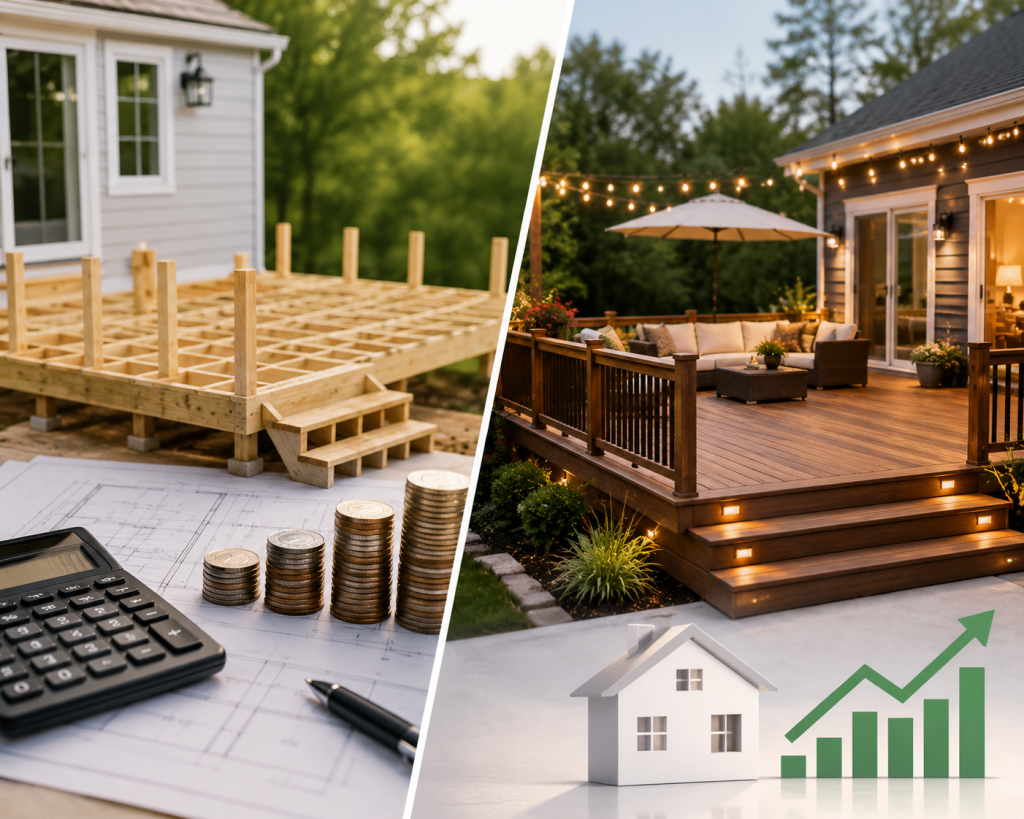
Features such as multi-level layouts, built-in seating, and lighting systems can further increase overall budget requirements. Despite the cost, decks often provide strong return on investment by enhancing curb appeal and improving outdoor usability. In many U.S. housing markets, a well-designed deck can significantly boost resale value, making it one of the more financially rewarding exterior home improvements when properly planned and maintained.
Common Deck Building Mistakes to Avoid
Even a well-planned deck building guide can fail if common construction mistakes are overlooked. One of the most frequent issues is improper drainage, which can lead to water pooling, wood rot, and premature structural failure. Ensuring proper slope and spacing between boards is essential for long-term durability. Another major mistake is underestimating load requirements. Inadequate footings or undersized joists can compromise safety, especially in regions with heavy snow or high occupancy use. Ignoring local building codes or skipping permit approvals can also lead to costly delays or forced rebuilds. Material selection errors are equally common. Choosing low-quality wood without proper treatment or using incompatible fasteners can shorten a deck’s lifespan. Finally, many homeowners overlook long-term maintenance planning, which results in faster deterioration and higher repair costs. Avoiding these mistakes helps ensure a safer, more durable, and more valuable outdoor structure.
Conclusion
A well-planned deck building guide is essential for creating a durable, functional, and visually appealing outdoor space. From initial planning and material selection to construction, remodeling, and long-term care, every stage plays a role in the final performance and value of your deck. Homeowners who invest time in selecting the right materials, following proper deck installation tips, and adapting designs to regional climates can significantly improve both longevity and usability. Whether you choose a traditional wood structure or a modern composite system, the goal is to create a safe, comfortable extension of your home. Regular maintenance, timely repairs, and thoughtful upgrades ensure your deck continues to perform well for years while enhancing curb appeal and supporting outdoor living. With the right approach, your deck becomes more than just a structure—it becomes a long-term investment in your home’s lifestyle and value.
Frequently Asked Questions
How much does it cost to build a deck according to a deck building guide?
Costs vary based on size, materials, and design complexity. In a typical deck building guide, pressure-treated wood is usually the most budget-friendly option, while composite and PVC materials increase upfront cost but reduce long-term maintenance expenses.
What is the best decking material?
There is no single best option. Wood offers affordability, while composite and PVC provide durability and low maintenance. The right choice depends on climate, budget, and usage.
Does a deck increase home value?
Yes, a well-built deck can improve curb appeal and resale value, particularly in markets where outdoor living spaces are highly desirable.
How long does a deck last?
Wood decks may last 10–20 years with proper care, while composite decks can last 25–30 years or more.
Can I remodel an old deck instead of replacing it?
Yes, if the structural foundation is sound. Many homeowners choose deck remodeling to upgrade surfaces, railings, and design features without full reconstruction.