


Common Deck Problems Homeowners Face
Understanding common deck issues is essential for homeowners who want to protect their outdoor living space and avoid costly repairs. Across the United States, these problems are among the most common maintenance issues found in residential properties, especially in regions with heavy rain, snow, or high humidity. Most issues develop gradually due to exposure to moisture, temperature changes, and lack of routine maintenance. What begins as minor wear can quickly turn into structural concerns if ignored.
Homeowners often overlook early warning signs, which leads to more expensive repairs or even full deck replacement. This guide breaks down the most common deck problems, their causes, and practical solutions so homeowners can maintain safety, extend deck lifespan, and protect property value through proper care and timely intervention. Understanding and addressing deck issues early can help reduce long-term repair costs and preserve outdoor living spaces.
Most Common Deck Problems Homeowners Face
When evaluating common issues, homeowners in the US typically encounter a consistent set of problems that develop over time due to weather exposure, aging materials, and lack of maintenance. These issues often begin subtly but can escalate if not addressed early. Common deck problems include surface wear, moisture-related deterioration, shifting structural components, and weakened fasteners.
Seasonal changes especially freeze-thaw cycles in northern states and high humidity in southern regions—can accelerate these deck issues, making routine inspection essential. In many cases, these issues are preventable with regular upkeep such as cleaning, sealing, and checking structural connections. Identifying issues early not only improves safety but also helps homeowners avoid expensive repairs or full deck replacement in the future.
Rotting Deck Boards Causes and Fixes
Among the most serious issues, structural decay is one of the most common concerns homeowners face. Rotting boards typically develop when moisture is absorbed into untreated or poorly maintained wood over time. In regions with heavy rainfall or high humidity, this issue can accelerate quickly if the deck is not properly sealed. The main causes of rotting deck boards include standing water, poor drainage, and lack of protective coatings.
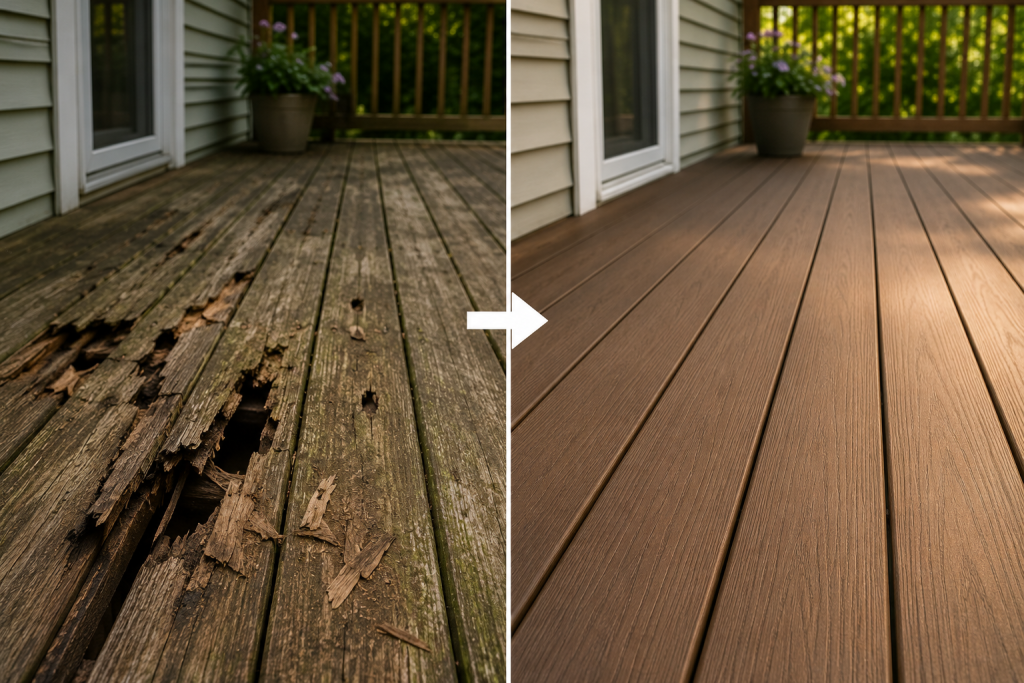
Once rot begins, it can spread and weaken the surface, creating safety hazards and reducing structural integrity. Fixing rotting deck boards usually involves replacing damaged sections and addressing the root cause of moisture exposure. Preventative steps like sealing, improving ventilation, and routine inspections can significantly reduce the likelihood of recurring issues related to wood decay.
Loose Deck Railings and Safety Risks
Among the most concerning deck problems, structural instability in railings can create serious safety hazards for homeowners and guests. loose deck railings often develop over time due to repeated pressure, weather exposure, and weakened fasteners that no longer hold the structure securely in place. In many US homes, loose deck railings are caused by wood expansion and contraction, corrosion of metal connectors, or improper original installation.
These issues can make the railing unstable, increasing the risk of falls, especially on elevated decks.Addressing loose deck railings typically involves tightening or replacing hardware, reinforcing support posts, or rebuilding sections where structural integrity has been compromised. Since this is a direct safety issue, it should be repaired immediately to ensure safe outdoor use.
Deck Water Damage Explained
Among common deck problems, moisture intrusion is one of the most persistent and damaging issues homeowners face. deck water damage occurs when rain, snow, or humidity penetrates the deck surface and begins affecting the wood structure, fasteners, or underlying framing.In many US climates, deck water damage develops due to poor drainage, clogged gaps between boards, or lack of protective sealing.
Over time, this moisture can lead to wood swelling, mold growth, and weakened structural components that compromise overall stability. Preventing water damage requires regular maintenance such as sealing the surface, keeping drainage paths clear, and ensuring proper airflow beneath the deck. When left untreated, this type of issue can escalate quickly, leading to costly repairs or full structural replacement.
Composite Decking Issues
While many homeowners assume composite materials eliminate all deck problems, composite decking issues can still occur under certain conditions. Although composite decks are designed for durability and low maintenance, they are not completely immune to wear, environmental stress, or installation errors. Common composite decking issues include surface fading from prolonged UV exposure, minor expansion and contraction due to temperature changes, and staining from grease or organic materials if not cleaned properly.
In some cases, improper installation can also lead to spacing problems or drainage inefficiencies.Addressing composite decking issues typically involves proper cleaning routines and following manufacturer maintenance guidelines. While these concerns are generally less severe than traditional wood-related issues, understanding them helps homeowners maintain long-term performance and appearance.
Deck Maintenance Problems Over Time
Many long-term issues develop gradually due to inconsistent upkeep, making routine care essential for homeowners. Maintenance problems often arise when cleaning, sealing, and inspections are skipped over multiple seasons, allowing minor issues to compound into larger structural concerns. Over time, deck maintenance problems can include surface discoloration, loose fasteners, clogged drainage gaps, and early signs of wood deterioration.
In regions with harsh winters or humid summers across the US, these issues tend to appear faster without proper seasonal maintenance.Preventing maintenance issues requires a consistent care schedule that includes washing debris, checking for structural movement, and resealing wood surfaces when necessary. Addressing small concerns early helps reduce the likelihood of serious structural problems that require costly repairs or partial rebuilds later on.
Deck Repair Tips for Homeowners
When dealing with deck problems, having practical deck repair tips can help homeowners address issues early before they escalate into costly structural damage. Many common repairs can be managed with basic tools, especially when problems are caught during routine inspections. Effective deck repair tips include tightening loose fasteners, replacing damaged boards, and applying sealant to exposed or vulnerable areas.
For more serious issues, such as structural weakening or widespread rot, it may be necessary to consult a professional to ensure safety and compliance with building standards. Following reliable repair tips not only restores function but also extends the lifespan of the deck. By responding quickly to visible damage, homeowners can reduce long-term issues and maintain a safer, more durable outdoor living space.
Outdoor Deck Safety Checklist
Ensuring outdoor deck safety is a critical step in preventing serious issues and protecting everyone who uses the space. A regular safety checklist helps homeowners identify early warning signs before they turn into structural hazards or costly repairs. Key outdoor deck safety checks include inspecting railings for stability, examining boards for soft spots or rot, and ensuring that fasteners and connectors are secure.

It’s also important to look for water pooling, cracks in support posts, and any signs of shifting or movement in the structure. Maintaining outdoor deck safety should be done seasonally, especially after harsh weather conditions such as heavy rain or snow. Consistent inspections reduce the risk of accidents and help prevent minor issues from developing into major deck problems that compromise the integrity of the entire structure.
How to Prevent Deck Problems
Preventing issues is far more cost-effective than repairing them after damage occurs. Homeowners across the US can significantly extend the lifespan of their outdoor structures by following a consistent maintenance and inspection routine tailored to their climate conditions. Regular cleaning is one of the most effective prevention methods, as it removes debris that traps moisture and accelerates wear. Applying protective sealants, checking for loose fasteners, and ensuring proper drainage all help reduce the likelihood of issues developing over time.
Seasonal inspections—especially after winter or heavy rain—are also essential for early detection.Material selection plays a major role in prevention as well. Pressure-treated wood, composite decking, and PVC options all respond differently to weather exposure. By combining proper materials with routine care, homeowners can minimize structural issues and maintain a safer, longer-lasting outdoor living space.
Conclusion
Understanding deck problems is essential for maintaining a safe, durable, and long-lasting outdoor living space. Most issues start small but can quickly escalate if ignored, especially in climates with heavy rain, snow, or humidity across the US. By identifying issues early—such as rot, water damage, or loose structural components homeowners can take timely action to prevent costly repairs and safety hazards. Regular maintenance, proper materials, and seasonal inspections all play a key role in extending deck lifespan. Ultimately, most of these issues are preventable with consistent care and attention. A well-maintained deck not only improves outdoor usability but also helps protect property value and ensures a safer environment for everyday use.
FAQs
What are the most common deck problems?
The most common deck problems include wood rot, loose railings, water damage, and surface wear caused by weather exposure and lack of maintenance. Identifying these deck issues early can help prevent structural deterioration and reduce long-term repair costs.
How often should a deck be inspected?
Most experts recommend inspecting for these issues at least once per year, ideally before and after harsh seasonal weather conditions.
Can deck issues be repaired easily?
Many minor issues can be fixed with basic maintenance like tightening hardware, replacing boards, and sealing surfaces, but structural issues may require professional repair.
When should a deck be replaced instead of repaired?
If structural integrity, widespread rot, or safety concerns are affected, replacement is often more cost-effective than repeated repairs.
How can deck issues be prevented long-term?
Regular cleaning, sealing, and seasonal inspections are the best ways to reduce these issues and extend deck lifespan.