


DIY Roof Repair vs Professional Roof Repair
A damaged roof can quickly turn from a minor inconvenience into a costly problem for homeowners. Whether it’s a few missing shingles after a storm or a persistent leak that appears during heavy rain, deciding how to address the issue is often the biggest challenge. Many homeowners consider handling repairs themselves to save money, while others prefer the expertise and protection that comes with hiring a professional contractor. When evaluating DIY roof repair vs professional roof repair, the right choice depends on several factors, including the extent of the damage, safety risks, long-term costs, and the age of the roof. While some minor repairs can be manageable for experienced homeowners, more complex issues often require specialized knowledge, proper equipment, and adherence to industry standards.
Across the United States, roofing problems vary significantly based on climate conditions. Homeowners in Florida may deal with hurricane damage, while those in Colorado often face snow-related wear and tear. Understanding the advantages and limitations of each approach can help you protect your investment, maintain your home’s value, and avoid expensive mistakes. This guide breaks down the key differences between DIY and professional repairs, helping you determine which option makes the most sense for your situation.
DIY Roof Repair vs Professional Roof Repair: Understanding the Key Differences
Before choosing between a do-it-yourself approach and hiring a contractor, it’s important to understand what each option actually involves. The debate around DIY roof repair vs professional roof repair often comes down to balancing cost savings against expertise, safety, and long-term performance.
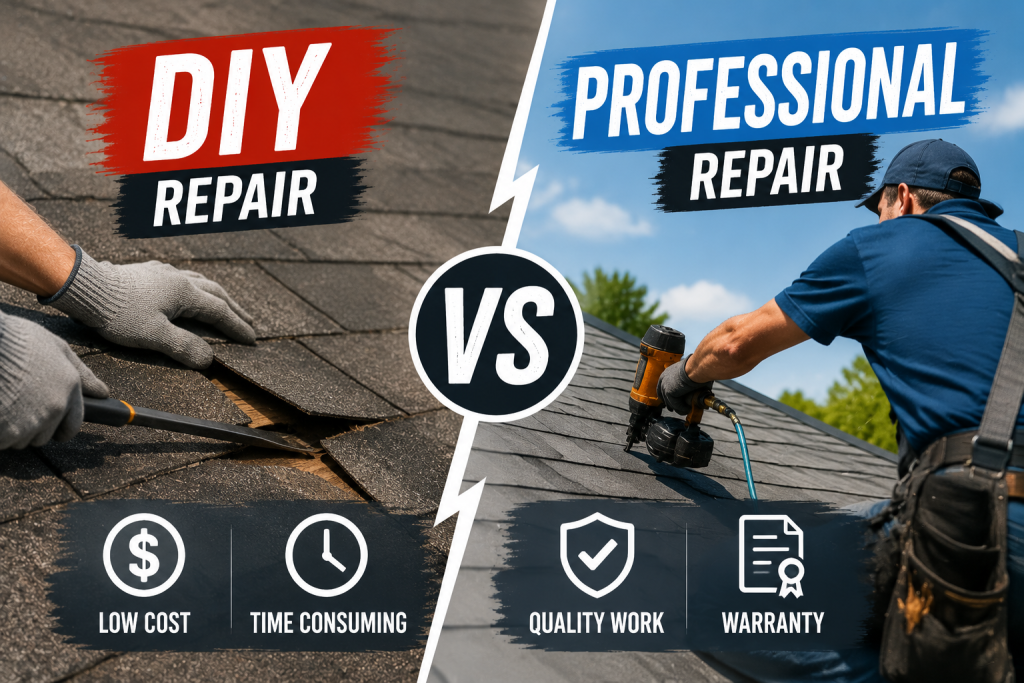
What Counts as a DIY Roof Repair?
DIY roof repairs typically involve minor tasks that homeowners can complete using basic tools and materials. Examples include replacing a few damaged shingles, sealing small gaps around flashing, cleaning debris from roof valleys, or addressing minor wear before it develops into a larger issue. These projects can be appealing because they eliminate labor costs and allow homeowners to address problems quickly. However, successful DIY work requires a clear understanding of roofing systems. Even small mistakes can allow moisture to penetrate beneath roofing materials, leading to hidden damage that may not become apparent for months.
What Do Professional Roofing Services Include?
Unlike DIY projects, professional roofing services provide access to trained crews, specialized equipment, and extensive roofing knowledge. Professional roofers can accurately diagnose underlying problems, identify structural concerns, and ensure repairs meet local building codes and manufacturer requirements. Professionals also have experience working with different roofing materials, including asphalt shingles, metal roofing, tile, and synthetic products. For many homeowners, the added expertise and workmanship guarantees make professional repairs a more reliable long-term solution, especially when dealing with complex or widespread damage.
DIY Roof Repair vs Professional Roof Repair: Cost Comparison for US Homeowners
One of the biggest reasons homeowners compare DIY roof repair vs professional roof repair options is the potential difference in expenses. At first glance, DIY repairs appear significantly cheaper because there are no labor charges involved. Homeowners only need to purchase materials, tools, and safety equipment required for the project. However, the true picture is often more complicated. While basic repairs may cost relatively little when completed independently, mistakes can lead to additional damage, premature material failure, or even structural issues that require extensive corrective work. In many cases, an improperly completed repair ends up costing more than hiring a contractor from the beginning.
Average roof repair costs in the United States vary based on roof type, accessibility, damage severity, and local labor rates. Professional repairs typically include inspections, workmanship guarantees, proper installation methods, and compliance with building standards. These added benefits increase the upfront investment but can reduce future maintenance expenses and extend the lifespan of the roofing system. For homeowners evaluating long-term value rather than immediate savings, the decision often comes down to risk tolerance, repair complexity, and confidence in completing the work correctly the first time.
When DIY Roof Repairs Can Be a Practical Choice
Not every roofing issue requires professional intervention. In certain situations, homeowners with basic repair skills can safely address minor problems and prevent them from becoming more expensive concerns. The key is understanding the limits of a DIY project and recognizing when the damage exceeds your experience level.
Minor Shingle Replacement
Replacing a small number of missing or damaged shingles is one of the most common DIY roofing tasks. If the affected area is easily accessible and there is no evidence of water intrusion beneath the roofing materials, homeowners may be able to complete the repair using manufacturer-approved materials and proper installation techniques.
Basic Homeowner Roof Maintenance
Regular homeowner roof maintenance can help extend the life of a roofing system and reduce the likelihood of major repairs. Tasks such as removing leaves from valleys, cleaning gutters, checking flashing around vents, and inspecting for visible damage after storms can often be performed without specialized training. While these preventative measures can be beneficial, homeowners should avoid climbing onto steep, wet, or visibly damaged roofs. Even routine maintenance should be approached carefully to prevent accidents or unintentional damage to roofing materials.
When Professional Roof Repair Is the Better Investment
While DIY repairs may work for minor issues, certain roofing problems require professional expertise. Complex damage often extends beyond what is visible from the surface, making accurate diagnosis and proper repairs critical for protecting the home. In these situations, hiring a qualified roofing contractor can prevent costly mistakes and provide greater peace of mind.
Roof Leak Repair and Structural Issues
A recurring leak is rarely as simple as replacing a few shingles. Effective roof leak repair often requires identifying the underlying source of water intrusion, which may involve damaged flashing, deteriorated underlayment, ventilation problems, or hidden structural deterioration. Professional roofers have the training and equipment needed to uncover these issues before they worsen.
Storm Damage and Emergency Situations
Severe weather can create roofing problems that demand immediate attention. Hail, high winds, falling tree limbs, and heavy storms may leave a roof vulnerable to additional damage if repairs are delayed. In these circumstances, an emergency roof repair performed by experienced professionals can help minimize water intrusion and protect the home’s interior. For homeowners facing significant damage, the long-term benefits of professional workmanship, warranty protection, and accurate problem assessment often outweigh the initial cost savings associated with a DIY approach.
Roofing Safety Risks Every Homeowner Should Know
Safety should be a major consideration when evaluating DIY roof repair vs professional roof repair options. While saving money is appealing, roofing work consistently ranks among the most hazardous home improvement activities. A single misstep can result in serious injuries, costly medical bills, or property damage.
Falls and Injury Hazards
Falls remain the most common roofing-related accident. Sloped surfaces, loose shingles, uneven footing, and unexpected roof deterioration can increase the risk significantly. Even experienced homeowners may underestimate how quickly conditions can change when working several feet above the ground.
Electrical and Weather Risks
Roof work often takes place near power lines, satellite equipment, and electrical components that can create additional hazards. Weather conditions also play a major role. Wind, rain, frost, and excessive heat can make roofing surfaces slippery or unstable, increasing the likelihood of accidents. Following basic roofing safety tips, such as using proper fall protection, wearing non-slip footwear, inspecting ladders before use, and avoiding roof work during adverse weather, can reduce risk. However, professional roofing crews typically receive specialized safety training and have access to equipment designed specifically for working at heights, making them better prepared to handle challenging repair conditions.
DIY Roof Repair vs Professional Roof Repair: Warranty, Insurance, and Resale Considerations
Beyond repair expenses, homeowners should consider how their decision may affect warranties, insurance coverage, and future property value. These factors are often overlooked during the DIY roof repair vs professional roof repair decision-making process, yet they can have significant financial consequences over time. Many roofing manufacturers provide warranties that require materials to be installed or repaired according to specific guidelines. Improper repairs may void warranty coverage, leaving homeowners responsible for future replacement costs. This is particularly important for premium roofing systems from manufacturers such as GAF, Owens Corning, and CertainTeed.
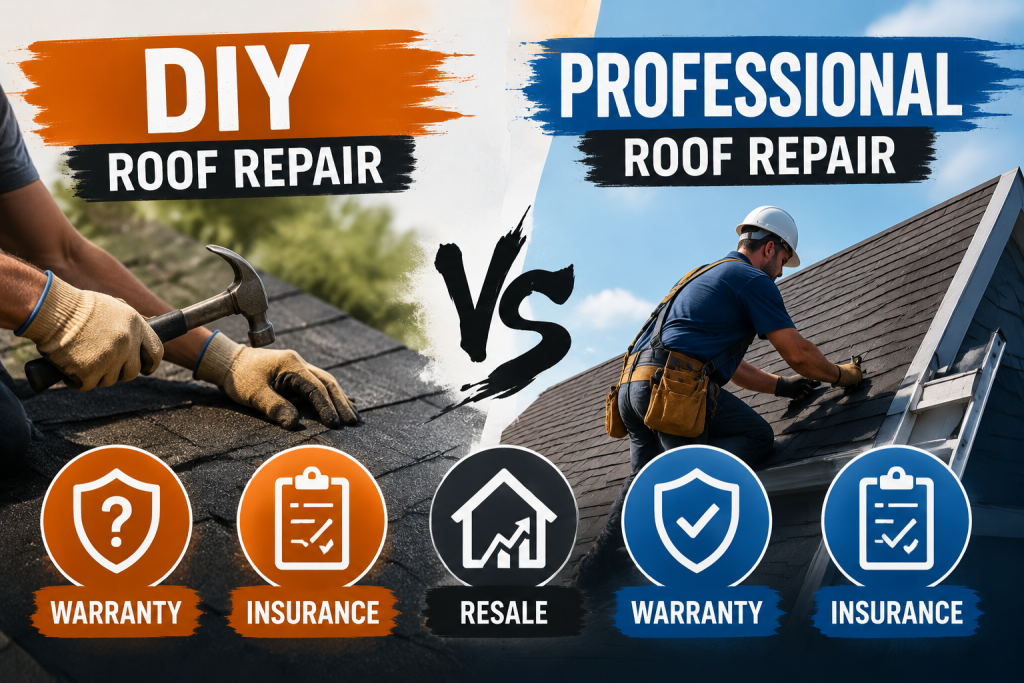
Insurance considerations can be equally important. After major storm events, insurance providers may request documentation showing that repairs were completed correctly and that additional damage was not caused by improper workmanship. Professional repair records can simplify the claims process and provide valuable evidence when disputes arise. Resale value is another factor worth considering. Potential buyers often view professionally maintained roofs as a sign that the property has been properly cared for. A documented repair history can increase buyer confidence, support inspection results, and help preserve overall home value in competitive real estate markets.
Roofing Contractor Comparison: What to Look for Before Hiring
If you decide that professional assistance is the best option, selecting the right contractor becomes just as important as the repair itself. A thorough roofing contractor comparison can help homeowners avoid poor workmanship, unexpected costs, and future roofing problems. Start by verifying that any contractor you consider is properly licensed, insured, and experienced with your specific roofing material. When evaluating DIY roof repair vs professional roof repair, choosing a qualified contractor is essential if you decide that professional assistance is the better option. Whether your home has asphalt shingles, metal roofing, or another system, proven experience can make a significant difference in repair quality and longevity.
Homeowners should also review online ratings, customer testimonials, and local references. Reputable contractors are typically willing to provide examples of recent projects and explain their repair process in detail. Written estimates should clearly outline labor, materials, warranties, and projected timelines. Professional certifications can provide additional confidence. Contractors who work with major manufacturers often receive specialized training and may offer enhanced warranty options. During the DIY roof repair vs professional roof repair decision process, taking the time to evaluate qualifications, communication, and reputation can help ensure that your roofing investment delivers long-term value and dependable protection.
Final Verdict
Choosing between DIY roof repair vs professional roof repair ultimately depends on the scope of the damage, your experience level, and the risks involved. For minor maintenance tasks and small, easily accessible repairs, a DIY approach may provide short-term savings and help homeowners address issues quickly. However, larger roofing problems often require more than basic tools and materials. Leaks, storm damage, structural concerns, and repairs involving warranties or insurance claims typically benefit from professional expertise. Trained contractors can identify underlying issues, complete repairs according to industry standards, and help prevent recurring problems that may become more expensive over time.
When evaluating DIY roof repair vs professional roof repair, homeowners should consider more than the initial cost. Safety, workmanship quality, warranty protection, and long-term roof performance all play important roles in determining the best option. A repair completed the first time correctly can extend the life of the roof, protect the home’s value, and reduce the likelihood of future expenses. For most homeowners, the smartest approach is to reserve DIY work for simple maintenance tasks and rely on qualified professionals when repairs involve safety risks, extensive damage, or specialized roofing knowledge.
Frequently Asked Questions
Is DIY roof repair cheaper than hiring a professional roofer?
In many cases, DIY roof repairs cost less upfront because homeowners avoid labor charges. However, incorrect repairs can lead to additional damage, higher future expenses, and reduced roof lifespan. The true cost depends on the complexity of the repair and whether it is completed correctly.
Can DIY roof repairs void a roof warranty?
Yes. Many roofing manufacturers require repairs and installations to follow specific guidelines. Improper workmanship or the use of incompatible materials may void warranty coverage, leaving homeowners responsible for future repair or replacement costs.
In the DIY roof repair vs professional roof repair debate, when should I call a professional roofer immediately?
When comparing DIY roof repair vs professional roof repair, homeowners should contact a professional roofer immediately if the roof has widespread storm damage, active water intrusion, structural concerns, sagging sections, or damage that cannot be safely accessed. In these situations, professional repairs can help prevent further deterioration, protect the home’s structure, and reduce the risk of costly interior damage.
How long do roof repairs typically last?
The lifespan of a roof repair depends on the quality of the workmanship, the materials used, weather exposure, and the overall condition of the roof. Properly completed repairs can often last for many years when supported by routine inspections and maintenance.
In the DIY roof repair vs professional roof repair comparison, does professional roof repair increase home value?
Yes. When evaluating DIY roof repair vs professional roof repair, professional repairs can improve buyer confidence by showing that the roof has been properly maintained and repaired according to industry standards. Documented repair records, warranty information, and evidence of quality workmanship may help support property value, strengthen inspection results, and simplify the home-selling process.
What is the safest way to inspect a roof?
Homeowners should begin with a ground-level visual inspection using binoculars when possible. Walking on a roof can be dangerous, especially on steep slopes or after severe weather. If significant damage is suspected, a professional inspection is generally the safest option.