


DIY vs Professional Floor Maintenance (2026 US Homeowner Guide)
Deciding between DIY vs professional floor maintenance is a common challenge for US homeowners trying to balance cost, convenience, and long-term floor protection. Every flooring type, whether hardwood, vinyl, laminate, or tile, requires ongoing care, but the method of maintenance can significantly impact both performance and lifespan. DIY maintenance is often appealing because it reduces upfront costs and allows homeowners to handle routine tasks like cleaning and minor touch-ups.
However, it also comes with limitations in skill, equipment, and product knowledge, which can sometimes lead to accidental damage or uneven results. On the other hand, professional services offer advanced tools, experience, and deep-cleaning or restoration capabilities that go beyond basic upkeep. The choice between DIY and hiring experts often depends on floor condition, material type, and long-term goals for residential floor maintenance and home value preservation.
What DIY Vs Professional Floor Maintenance Includes
Understanding DIY vs professional floor maintenance starts with what homeowners can realistically handle on their own. DIY maintenance typically covers everyday tasks that keep floors clean, presentable, and protected without requiring specialized tools or training. Most DIY floor repair and maintenance work includes sweeping, vacuuming, mopping, and spot-cleaning spills before they cause stains or moisture damage. Homeowners may also handle minor scratch touch-ups, furniture pad installation, and simple cleaning routines tailored to specific flooring types like hardwood, vinyl, or tile.
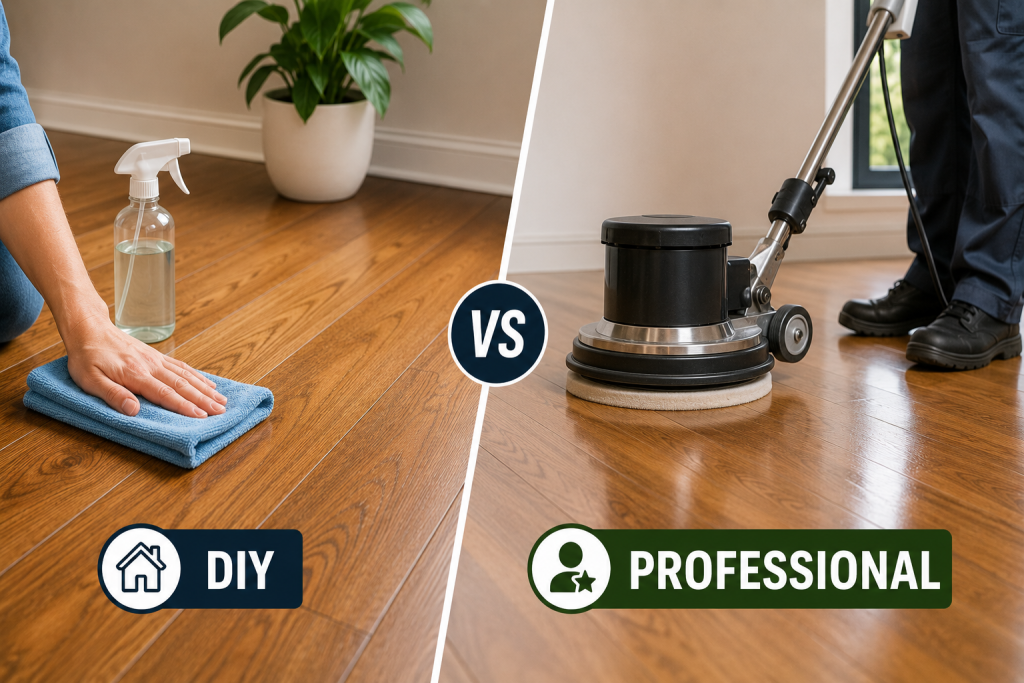
The biggest advantage of DIY maintenance is cost savings and convenience. Homeowners can manage upkeep on their own schedule without booking appointments or paying service fees. However, results depend heavily on using the correct products and techniques, since improper cleaning methods can lead to dull finishes, surface wear, or long-term damage. While DIY care works well for routine residential floor maintenance, it is generally limited when deeper restoration or specialized equipment is required.
Professional Floor Care Services Explained
When comparing DIY vs professional floor maintenance, professional services represent the higher level of care designed for deep cleaning, restoration, and long-term flooring protection. These services go beyond routine upkeep and are typically performed by trained technicians using specialized equipment and commercial-grade products. professional floor care often includes deep cleaning, stain removal, polishing, and refinishing depending on the flooring type. For example, hardwood floors may be sanded and refinished, tile floors may undergo grout restoration, and carpets may receive steam extraction to remove embedded dirt and allergens.
Companies such as Stanley Steemer and other floor cleaning services providers use industrial equipment that achieves deeper results than standard household tools. This level of service is especially valuable for older floors, heavily stained surfaces, or homes preparing for resale. While professional care comes at a higher upfront cost, it often extends the life of flooring systems and helps maintain property value over time, making it a strategic investment in residential floor maintenance.
Floor Cleaning Services vs DIY Cleaning
When evaluating DIY vs professional floor maintenance, one of the clearest comparisons comes from routine cleaning versus hiring floor cleaning services. Both approaches aim to maintain appearance and hygiene, but they differ significantly in depth, consistency, and long-term impact. DIY cleaning is ideal for day-to-day upkeep. Homeowners can easily handle sweeping, vacuuming, and light mopping to control dust, debris, and surface dirt. This approach is cost-effective and works well for maintaining general residential floor maintenance, especially in low-traffic areas.
Professional floor cleaning services, however, go deeper. They use specialized equipment that removes embedded dirt, grease, and allergens that household tools often miss. This is especially useful in high-traffic homes, commercial-style spaces, or properties with pets and children where buildup occurs faster. While DIY cleaning saves money, professional services provide more consistent results and can help restore floors to a near-original condition, making them a strong option for periodic deep maintenance rather than daily care.
Floor Refinishing Comparison – DIY vs Pro
A key part of DIY vs professional floor maintenance is understanding the difference in floor refinishing comparison, especially for hardwood and high-end flooring systems. Refinishing is not just cleaning, it involves restoring the surface layer of a floor to improve appearance, durability, and longevity. DIY refinishing is possible for experienced homeowners, but it comes with risks. It typically involves renting sanding equipment, applying stains, and sealing the surface. While this can reduce upfront costs, mistakes such as uneven sanding or improper sealing can permanently damage the flooring and lead to higher repair expenses later.
Professional refinishing services, on the other hand, use commercial-grade equipment that delivers more consistent results and smoother finishes. Experts can also better match stains and protect the floor against future wear. This level of professional floor care is especially important for older hardwood floors or high-value homes where appearance significantly impacts resale value. In most cases, professionals are preferred for refinishing due to the skill and precision required.
Residential Floor Maintenance Cost Breakdown
Understanding flooring upkeep costs is a key part of evaluating DIY vs professional floor maintenance, especially for homeowners trying to balance budget with long-term floor protection. Costs can vary widely depending on flooring type, home size, and whether routine care or deep restoration is needed. DIY maintenance is generally the most affordable option. Homeowners mainly spend on cleaning supplies, basic tools, and occasional product replacements. This makes it a cost-effective approach for ongoing residential floor maintenance, especially for routine tasks like sweeping, mopping, and minor touch-ups.
Professional services, however, involve higher upfront costs. Floor cleaning services typically charge based on square footage, while more intensive floor restoration services like refinishing or deep cleaning can significantly increase expenses. Hardwood refinishing, for example, is one of the most expensive maintenance tasks due to labor and equipment requirements. While DIY reduces short-term spending, professional care often delivers better long-term value by extending floor lifespan and preventing costly repairs down the line.
Floor Restoration Services – When You Need Experts
Knowing when to rely on floor restoration services is a critical part of the DIY vs professional floor maintenance decision. While DIY care is effective for routine upkeep, there are situations where professional intervention becomes necessary to prevent permanent damage or costly replacements. Restoration services are typically required when floors show deep scratches, widespread staining, water damage, or structural issues. For example, hardwood floors that have warped or lost their finish often need sanding and refinishing that only trained professionals can properly execute. Similarly, tile floors with damaged grout or cracked sections may require specialized repair techniques.
Professional floor restoration services also become important after major incidents such as flooding or long-term neglect. In these cases, experts use industrial-grade equipment to restore both appearance and structural integrity. While these services come at a higher flooring upkeep costs, they often help avoid full replacement, making them a valuable investment when damage goes beyond basic DIY repair capabilities.
Pros and Cons of DIY vs Professional Maintenance
When comparing DIY vs professional floor maintenance, it’s important to clearly understand the strengths and limitations of each approach before deciding what works best for your home. DIY maintenance offers clear advantages such as lower cost, convenience, and full control over scheduling. Homeowners can handle routine cleaning, minor DIY floor repair, and basic upkeep without hiring outside help. However, the downside is the risk of improper cleaning techniques, limited tools, and potential for accidental damage, especially on sensitive surfaces like hardwood.

Professional professional floor care provides deeper cleaning, advanced restoration, and more consistent results. Experts use specialized equipment and techniques that can significantly improve floor appearance and lifespan. The drawback is higher cost and the need to schedule services in advance. Ultimately, DIY works best for regular maintenance, while professional services are more suitable for deep cleaning, restoration, and complex damage. Many US homeowners find a hybrid approach to be the most effective long-term solution.
Best Strategy for US Homeowners
The most effective approach to DIY vs professional floor maintenance is not choosing one over the other, but combining both into a practical long-term strategy. Most US homeowners benefit from a hybrid system that balances cost savings with professional expertise. DIY maintenance should handle routine tasks such as sweeping, mopping, and quick spill cleanup as part of regular residential floor maintenance. This keeps floors in good condition day-to-day and prevents dirt buildup that can lead to long-term wear.
Professional services should be scheduled periodically for deeper needs such as floor cleaning services, stain removal, or floor restoration services. This ensures that embedded dirt, hidden damage, and wear patterns are properly addressed using specialized tools and techniques. By combining both methods, homeowners can extend flooring lifespan, reduce long-term flooring upkeep costs, and maintain better overall appearance without overpaying for unnecessary services.
Final Verdict
When weighing DIY vs professional floor maintenance, the best choice ultimately depends on the condition of your flooring, your budget, and how much long-term value you want to preserve. There is no universal answer, but there is a clear pattern that works for most US homeowners. DIY maintenance is the most cost-effective option for everyday care. Tasks like cleaning, basic DIY floor repair, and routine upkeep help maintain appearance and prevent early wear without adding significant flooring upkeep costs. However, DIY has limits when it comes to deep damage, refinishing, or restoring older floors. Professional services, including professional floor care and floor restoration services, are more expensive but provide higher precision, deeper cleaning, and longer-lasting results. They are especially valuable for hardwood refinishing, severe stains, or post-damage recovery. In most cases, the smartest approach is a balanced one: handle daily maintenance yourself and invest in professionals when the floor’s condition requires expert intervention.
FAQs
What is the main difference between DIY vs professional floor maintenance?
The main difference is that DIY focuses on routine cleaning and minor upkeep, while professionals provide deep cleaning, restoration, and advanced professional floor care.
Is DIY floor maintenance enough for most homes?
Yes, for regular residential floor maintenance, DIY is usually enough for cleaning, spill management, and minor DIY floor repair tasks.
When should I hire floor cleaning services?
You should hire floor cleaning services when dirt buildup, stains, or wear cannot be removed with standard household cleaning methods.
What does floor restoration services include?
Floor restoration services may include sanding, refinishing, deep cleaning, grout repair, and repairing damage from water or heavy wear.
Are professional floor care services worth the cost?
Yes, professional floor care is often worth it for extending floor lifespan and improving appearance, especially for hardwood and high-traffic areas.
How much do flooring upkeep costs usually add up to?
Flooring upkeep costs vary, but DIY is low-cost while professional services depend on square footage and service type.
What is the best long-term strategy?
A hybrid approach works best, DIY for daily care and professionals for periodic deep maintenance and restoration.