

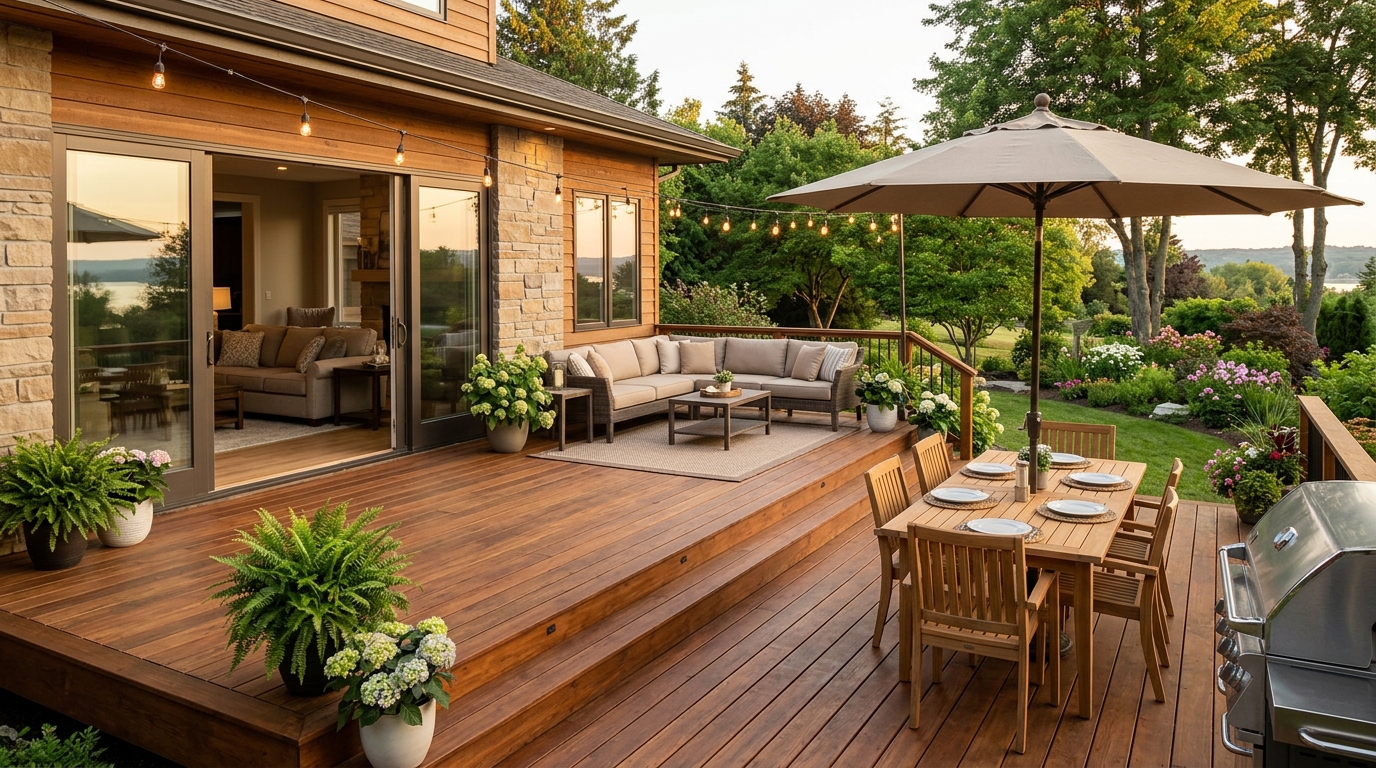
Does a Deck Add Value to Your Home?
Many homeowners ask the same question before starting an outdoor project: does a deck add value to a home in the United States? With the rise of outdoor living trends, this question has become more important in today’s housing market.The simple answer is that value impact depends on several factors, including location, materials, design quality, and overall market demand.In many US regions, especially suburban neighborhoods, decks are considered a highly desirable feature that improves both lifestyle and resale potential. However, not every deck delivers the same financial return. Poor design, overbuilding, or low-quality construction can reduce potential gains. This guide breaks down how and when a deck adds real value, what influences return on investment, and how homeowners can make smarter renovation decisions based on market expectations.
Deck ROI Explained
Understanding deck ROI is essential when evaluating whether does a deck add value in real estate terms. Return on investment for a deck refers to how much of the project cost is recovered through increased home value at resale. In many US markets, deck ROI typically falls within a moderate range, depending on material quality, design, and local buyer demand. A well-built deck can increase usable living space, which is a major driver of perceived value among buyers.
However, deck ROI is influenced heavily by execution—overbuilding for the neighborhood or using low-quality materials can reduce returns. Conversely, a properly scaled, well-finished outdoor space can significantly improve market appeal. While deck ROI may not always equal 100% of construction costs, it often delivers strong lifestyle value alongside financial benefits, making it a popular exterior upgrade for homeowners seeking both enjoyment and resale potential.
Backyard Renovation ROI Factors
When analyzing does a deck add value, it’s important to understand the key drivers behind backyard renovation ROI. Not all outdoor upgrades deliver the same financial return, and decks are especially sensitive to design, location, and material choices. Backyard renovation ROI is influenced by several factors, including property location, neighborhood standards, and overall home condition. In higher-demand suburban areas, outdoor living spaces tend to increase buyer interest, while in lower-demand markets, returns may be more modest.
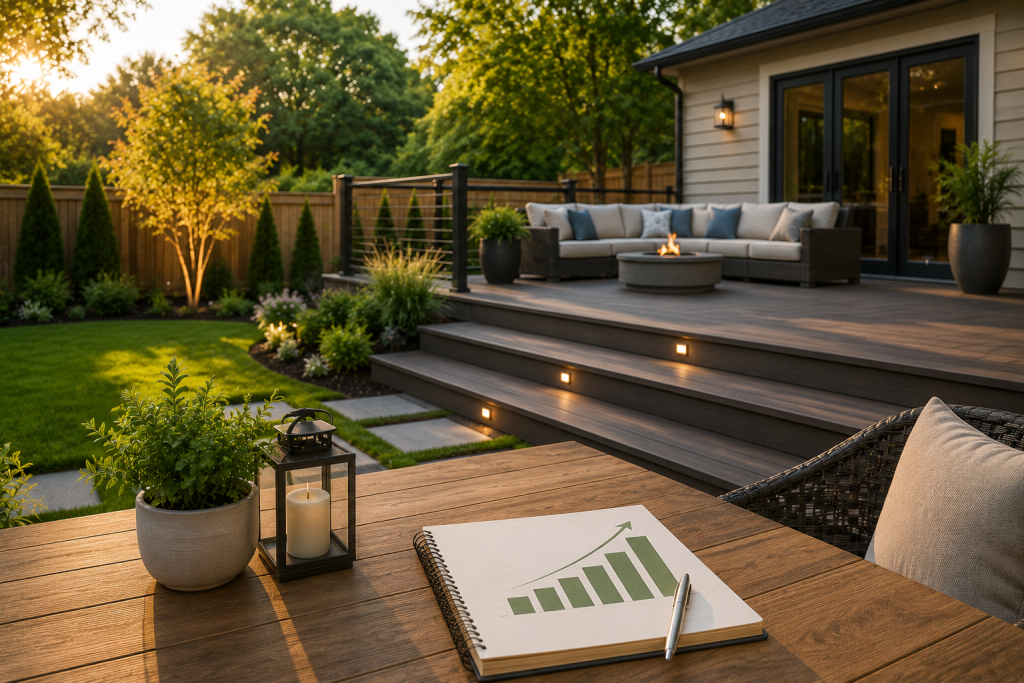
The size and functionality of the deck also matter—oversized or poorly integrated structures can reduce perceived value. Material quality plays a major role as well. Durable, low-maintenance materials often improve backyard renovation ROI by reducing future upkeep concerns for buyers. Ultimately, the return depends on how well the deck complements the home and meets local market expectations.
Outdoor Living Resale Value Impact
When evaluating outdoor living resale value in today’s US housing market, one of the strongest influences is how buyers perceive expanded living space. Buyers increasingly view outdoor spaces as extensions of the home, especially in suburban and warm-weather regions where outdoor entertaining is a key lifestyle priority. A well-designed deck can significantly improve outdoor living resale value by expanding usable square footage perception, even if it is not fully enclosed.
Features like seating areas, lighting, and integrated design with the backyard can further increase buyer appeal. In competitive markets, these elements often help listings stand out and attract more interest. However, the impact of outdoor living resale value depends heavily on quality and condition. A poorly maintained or outdated deck can have the opposite effect, reducing perceived value. When properly executed, though, it remains one of the most effective exterior upgrades for enhancing buyer interest.
Deck Replacement Value vs New Build
When homeowners ask does a deck add value, it’s important to distinguish between deck replacement value and building a brand-new structure. These two scenarios often produce very different return outcomes in the US housing market. Deck replacement value is typically lower in ROI compared to new construction because buyers often view replacement as maintenance rather than an upgrade.
However, replacing an old, unsafe, or outdated deck can still improve marketability by removing a negative feature and restoring usable outdoor space. In contrast, a new deck build usually has stronger perceived value, especially when it expands functional living space and enhances curb appeal. The impact on deck replacement value depends heavily on the condition of the original structure and how well the new design aligns with neighborhood expectations and overall home quality.
Home Improvement ROI Comparison
When evaluating does a deck add value, it helps to compare it against other common upgrades through the lens of home improvement ROI. Not all renovation projects deliver the same financial return, and outdoor projects often sit in the middle range depending on market conditions. Home improvement ROI studies in the US typically show that kitchen and bathroom remodels may outperform decks in pure percentage return, but decks often provide stronger lifestyle and visual appeal per dollar spent.
This makes them especially effective in suburban markets where outdoor living is a priority. Compared to interior renovations, home improvement ROI from decks is highly dependent on curb appeal and outdoor usability. While they may not always deliver the highest resale percentage, decks consistently enhance buyer interest and can help homes sell faster in competitive markets.
Does a Deck Add Value? Curb Appeal Benefits
When homeowners consider does a deck add value, one of the most immediate impacts is deck curb appeal. A well-designed deck can significantly enhance the visual impression of a home, making the exterior feel more complete, inviting, and functional. Strong deck curb appeal is especially important in suburban US neighborhoods where buyers form opinions quickly based on exterior presentation.
A clean, well-integrated deck can make a property stand out in listing photos and increase showing interest. Elements such as railings, color coordination with siding, and seamless backyard integration all contribute to stronger appeal. However, deck curb appeal can also work against a property if the structure is outdated, poorly maintained, or oversized for the home. When done correctly, though, it remains one of the most effective ways to improve first impressions and support overall property desirability.
Exterior Renovation Benefits Beyond ROI
When evaluating does a deck add value, it’s important to look beyond pure financial return and consider exterior renovation benefits that impact daily living and long-term satisfaction. A deck often transforms underused backyard space into a functional extension of the home. Exterior renovation benefits include improved outdoor entertainment space, increased family usability, and better connection between indoor and outdoor living areas.
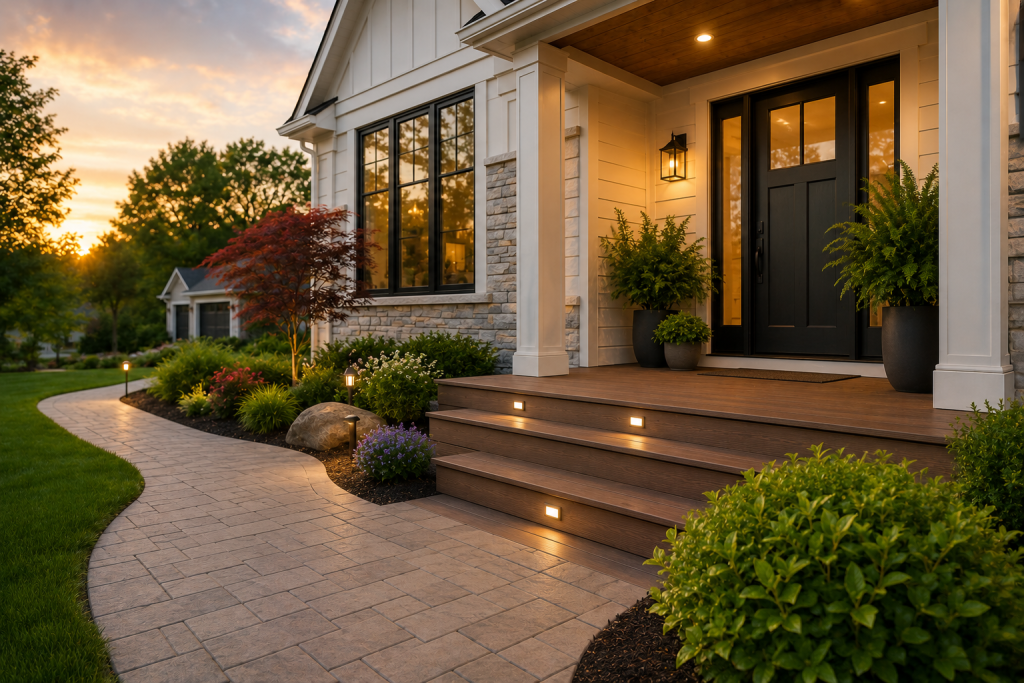
In many US households, this added functionality is just as important as resale value, especially for homeowners planning to stay long-term. While ROI is a key factor, exterior renovation benefits also include lifestyle upgrades such as dining outdoors, hosting gatherings, and creating relaxation spaces. These non-financial advantages often justify the investment even when full cost recovery is not guaranteed at resale.
When a Deck Does NOT Add Value
While many homeowners ask does a deck add value, the answer is not always positive in every situation. There are clear cases where a deck may provide little to no financial return, or even reduce perceived property value in the US housing market. Poor construction quality is one of the biggest factors. A poorly built or aging deck can raise safety concerns for buyers and lead to lower offers. Overbuilding is another issue—an oversized deck that dominates a small yard or does not match neighborhood standards can negatively impact appeal. In some regions, especially where outdoor living is less emphasized due to the climate, the contribution of a deck to value may be limited. If maintenance is neglected or materials are low quality, the deck may be viewed as a liability rather than an asset, reducing overall home attractiveness.
Conclusion
The true impact depends on factors like construction quality, materials, climate, and how well the deck fits the home’s overall design. While it may not always deliver full cost recovery, it often improves buyer interest and strengthens listing competitiveness in suburban markets. The true impact of does a deck add value depends on factors like construction quality, materials, climate, and how well the deck fits the home’s overall design. While it may not always deliver full cost recovery, it often improves buyer interest and strengthens listing competitiveness in suburban markets. Ultimately, homeowners benefit most when they view a deck as both a lifestyle investment and a potential resale advantage. When planned correctly, it remains one of the most effective ways to improve outdoor living and overall property appeal.
FAQs
How much does a deck add value to a home?
The impact of does a deck add value varies by region, but many homes see moderate resale improvements when the deck is well-built, properly maintained, and aligned with neighborhood expectations. Factors such as material choice, design quality, and local buyer demand can influence how much value a deck adds.
Is a deck a good return on investment?
In many cases, a deck adds value through both lifestyle benefits and partial cost recovery, though it rarely returns 100% of the construction cost.
What type of deck adds the most value?
High-quality materials, functional design, and low-maintenance features tend to maximize value and buyer appeal.
Do decks increase home appraisal value?
A deck can positively influence appraisal when it adds usable outdoor living space and is in good condition.
Does location affect deck value?
Yes, climate and regional buyer preferences significantly impact whether a deck adds value in a meaningful way.