


Farmhouse Interior Design: Complete Guide for American Homes
Farmhouse interior design has become one of the most influential and widely adopted styles in American homes, blending rustic charm with modern comfort. Rooted in traditional rural living, this design approach emphasizes natural materials, neutral tones, and a warm, lived-in aesthetic that feels both functional and inviting. In today’s American farmhouse interiors, the style has evolved beyond its country origins. Homeowners now combine vintage-inspired elements like reclaimed wood and shiplap with cleaner lines and updated finishes, creating what is commonly known as modern farmhouse decor. This design style is especially popular in suburban and rural US homes because it balances practicality with visual warmth. It works well in open-concept layouts, where consistency in materials and color palettes helps maintain cohesion throughout the space. This guide breaks down the key principles, variations, and decorating strategies behind farmhouse interiors to help you create a timeless and comfortable home environment.
What Is Farmhouse Interior Design?
Farmhouse interior design is a style rooted in practicality, comfort, and simplicity, inspired by traditional rural American homes. At its core, it emphasizes functional living spaces built with natural materials, neutral tones, and a warm, welcoming atmosphere. The farmhouse home ideas behind this style prioritize livability over luxury, making it one of the most approachable design aesthetics for homeowners. Modern interpretations of farmhouse design blend old and new elements.
While classic versions focus on rustic details like exposed beams and distressed wood, modern farmhouse decor introduces cleaner lines, brighter spaces, and updated finishes. This combination creates a balanced look that feels both timeless and current. In many American farmhouse interiors, the style is defined by open layouts, soft color palettes, and a strong connection to nature. It works particularly well in US homes where spacious kitchens, large living areas, and natural light can enhance the overall warmth and character of the design.
Key Elements of Modern Farmhouse Decor
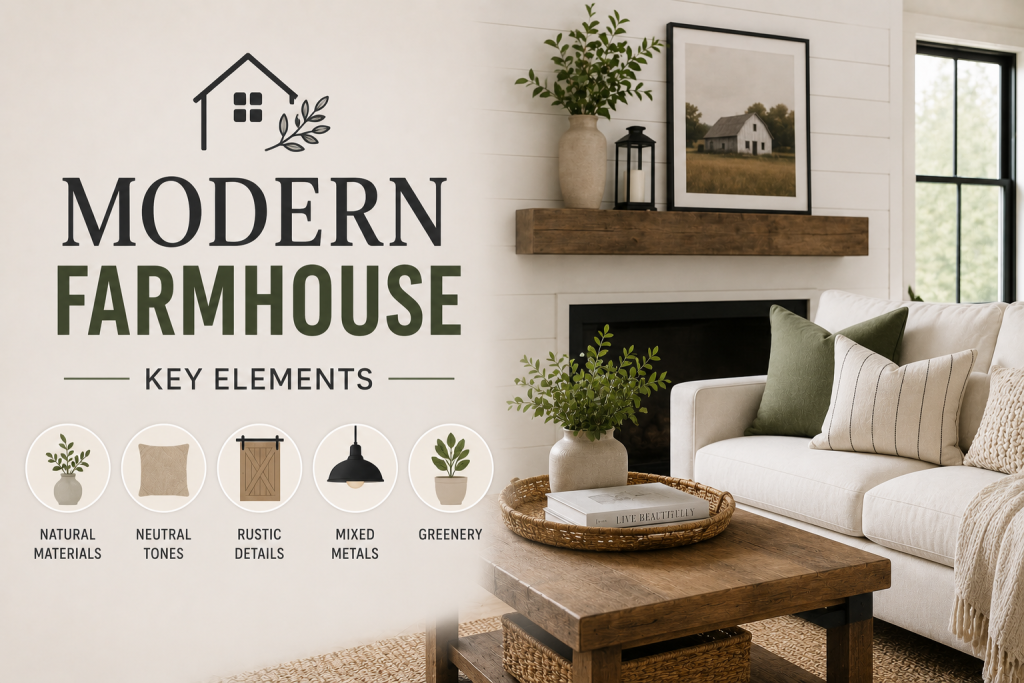
Modern farmhouse decor blends rustic charm with clean, updated design elements to create a balanced and livable aesthetic. The foundation of farmhouse interior design is built on natural materials, neutral colors, and functional simplicity, but modern updates refine these elements for today’s American homes. One of the most recognizable features is the use of natural wood, often in the form of reclaimed beams, oak flooring, or distressed furniture.
These textures add warmth and authenticity while maintaining a grounded, organic feel. Another key element is the use of shiplap or wood paneling, which adds subtle architectural interest without overwhelming the space. Neutral farmhouse home ideas typically rely on whites, creams, soft grays, and warm beiges. These tones create a light, airy backdrop that enhances natural light and supports a calm atmosphere. Metal accents—such as black iron fixtures or matte finishes—add contrast and structure. Together, these elements define a style that is both cozy and contemporary.
Rustic Farmhouse Style Explained
Rustic farmhouse style is the more traditional and texture-rich interpretation of farmhouse interior design, focusing heavily on raw materials, aged finishes, and a strong connection to rural living. Unlike more refined modern versions, this approach embraces imperfections, natural wear, and handcrafted character. In many American farmhouse interiors, rustic design elements include reclaimed wood beams, stone accents, distressed furniture, and vintage-inspired décor. These features create a sense of history and authenticity, making spaces feel lived-in rather than staged.
The goal is not perfection, but warmth and personality. Color palettes in rustic farmhouse style are typically grounded in earthy tones such as warm browns, soft whites, muted greens, and faded neutrals. These shades reinforce the natural aesthetic and complement organic textures throughout the home. This style works especially well in larger rural homes or suburban spaces that want to emphasize comfort, tradition, and a strong sense of homely character while still maintaining a cohesive design structure.
Cozy Farmhouse Design Principles
Cozy farmhouse design focuses on creating warm, inviting interiors that prioritize comfort, softness, and everyday livability within farmhouse interior design. Unlike more formal styles, this approach is centered on how a space feels rather than how strictly it follows design rules. One of the core principles is layering textures. Soft textiles like linen, cotton, and wool are combined with natural wood and subtle metal accents to create depth and warmth.
This layering effect is essential in achieving authentic farmhouse home ideas that feel lived-in and approachable. Lighting also plays a major role. Warm ambient lighting, such as table lamps, pendant lights, and soft-glow fixtures, helps enhance the relaxed atmosphere typical of cozy farmhouse design. Harsh lighting is avoided in favor of softer, diffused illumination. Neutral and muted tones dominate the palette, reinforcing calmness and continuity across spaces. These choices ensure that the home feels comfortable, grounded, and visually cohesive from room to room.
Farmhouse Color Palettes for US Homes
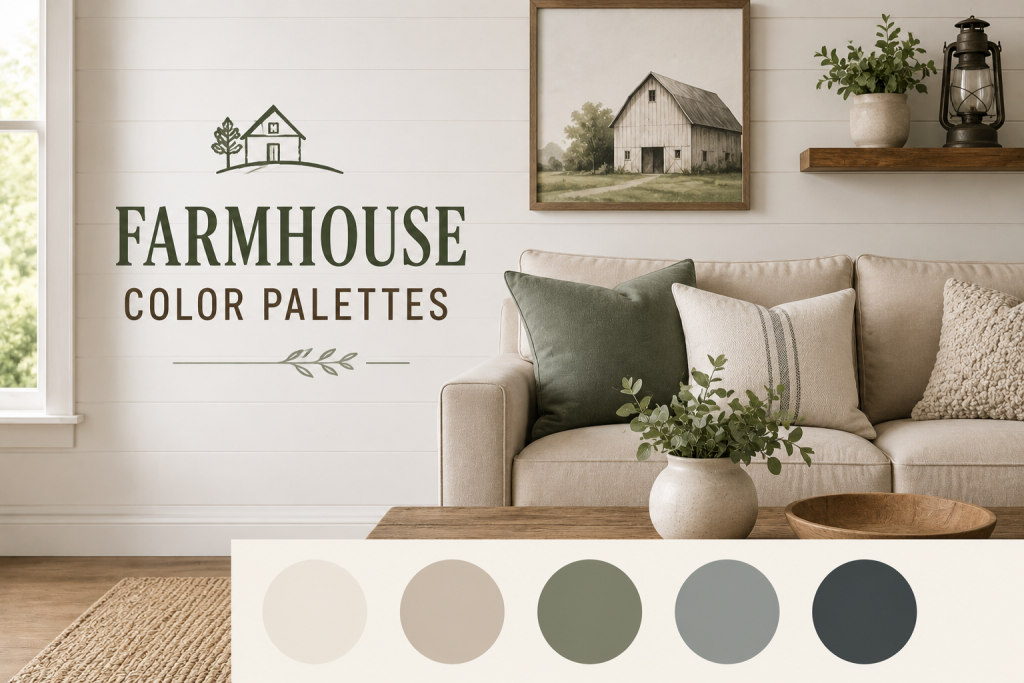
Color plays a foundational role in farmhouse interior design, shaping the warmth, brightness, and overall character of a space. In most American farmhouse interiors, the palette is rooted in soft neutrals that create a calm and inviting backdrop for everyday living. Common farmhouse color palettes include warm whites, creamy beiges, soft grays, and muted taupes. These tones reflect natural light well and help open up interior spaces, especially in open-concept US homes.
Subtle earthy accents like sage green, dusty blue, and warm clay are often introduced to add depth without disrupting the overall harmony. In modern farmhouse decor, contrast is typically achieved through materials rather than bold color choices. For example, black metal fixtures, dark wood accents, or matte finishes are used to define structure while maintaining a soft overall palette. Paint brands like Sherwin-Williams and Benjamin Moore frequently offer curated neutral collections that align with farmhouse home ideas, making it easier for homeowners to achieve a cohesive, timeless look across multiple rooms.
Farmhouse Decorating Ideas for Every Room
Bedrooms lean into cozy farmhouse design principles with soft linens, upholstered headboards, and muted tones that promote relaxation. Bathrooms often incorporate white subway tile, matte black fixtures, and wood accents for contrast. Dining areas highlight rustic tables, mixed seating, and simple centerpiece décor that reflects farmhouse home ideas focused on simplicity and function. Across all rooms, the goal is to balance comfort, practicality, and subtle rustic character while maintaining a unified design language.
Modern vs Country Farmhouse Style
Within farmhouse interior design, there are two dominant interpretations: modern farmhouse and country farmhouse style. While both share similar roots in rural American living, they differ in execution, tone, and visual weight. Modern farmhouse decor focuses on clean lines, minimal clutter, and a refined neutral palette. It blends rustic materials like wood and metal with contemporary finishes such as smooth surfaces, black accents, and open layouts. This version is highly popular in new US suburban homes because it feels updated, bright, and easy to maintain.
In contrast, country farmhouse style leans more traditional and decorative. It emphasizes vintage furnishings, layered textiles, and a slightly more lived-in aesthetic. This style often incorporates floral patterns, antique décor, and richer textures that enhance its nostalgic feel. Both approaches are part of broader farmhouse home ideas, but the choice depends on whether homeowners prefer a streamlined modern look or a more traditional, character-rich environment. Many homes today blend both styles for a balanced result.
Common Mistakes in Farmhouse Interior Design
Even though farmhouse interior design is known for its simplicity and warmth, homeowners often make mistakes that disrupt the balance of the style. One of the most common issues is overusing rustic elements, which can make a space feel outdated or overly themed instead of naturally cohesive. Another frequent mistake is mixing too many conflicting textures or finishes without a clear plan. In American farmhouse interiors, balance is essential—too much distressed wood, heavy décor, or competing patterns can overwhelm the calm foundation the style is known for.
A lack of consistent color strategy is also a problem. While modern farmhouse decor relies on neutral palettes, adding inconsistent accent colors can break visual flow between rooms. This weakens the unity of the overall farmhouse home ideas concept. Finally, many homeowners neglect lighting, using fixtures that are either too harsh or too decorative, which can reduce the warm, inviting atmosphere that defines a successful farmhouse space.
Conclusion
Farmhouse interior design continues to be one of the most popular styles in American homes because it blends warmth, simplicity, and functionality. Whether you prefer modern farmhouse decor or a more traditional rustic farmhouse style, the key is maintaining balance through natural materials, neutral tones, and cohesive design choices. By applying thoughtful farmhouse home ideas and consistent styling principles, homeowners can create spaces that feel timeless, comfortable, and visually connected.
FAQ – Farmhouse Interior Design
What defines farmhouse interior design?
Farmhouse interior design is a style focused on comfort, natural materials, and neutral tones, inspired by traditional rural American homes with a modern, livable twist.
What is modern farmhouse decor?
Modern farmhouse decor blends rustic elements like wood and metal with clean lines, neutral palettes, and minimal clutter for a more updated look.
How is rustic farmhouse style different?
Rustic farmhouse style emphasizes aged textures, vintage décor, and heavier use of natural materials for a more traditional, lived-in feel.
What colors work best for farmhouse interiors?
Most farmhouse color palettes use warm whites, soft grays, beige, and muted earthy tones to create a cozy and cohesive atmosphere.