


Finished vs Unfinished Basement (What Homeowners Should Know)
When comparing finished vs unfinished basement spaces, homeowners are essentially deciding between usable living space and flexible storage potential. In many US homes, the basement represents one of the largest untapped areas of square footage, and how it is used can significantly affect both daily comfort and long-term property value. A finished basement is designed to function as an extension of the home, often including living rooms, bedrooms, offices, or entertainment areas. An unfinished basement, on the other hand, typically remains a raw space used for storage, utilities, or mechanical systems.
This basement comparison is not just about appearance, it directly impacts basement home value, usability, and potential return on investment. Factors like renovation cost, maintenance, and lifestyle needs all play a role in the decision-making process. This guide breaks down the real differences, benefits, and tradeoffs so homeowners can confidently decide whether finishing their basement is the right move.
What Is a Finished Basement?
A finished basement is a fully renovated lower-level space that has been converted into usable, livable square footage as part of the home. In most US properties, this type of upgrade transforms a raw concrete area into functional rooms such as family lounges, bedrooms, offices, or entertainment zones. The key feature of a finished basement is that it meets residential living standards under the International Residential Code (IRC). This typically includes proper flooring, insulated walls, finished ceilings, electrical wiring, lighting, heating or cooling integration, and in many cases, plumbing for bathrooms or wet bars.
One of the main finished basement benefits is the increase in usable living space without expanding the home’s footprint. This added square footage can improve comfort and make the home more attractive to future buyers. Finished basements are also designed with aesthetics and functionality in mind, making them feel like a natural extension of the main living areas rather than an underground utility space.
What Is an Unfinished Basement?
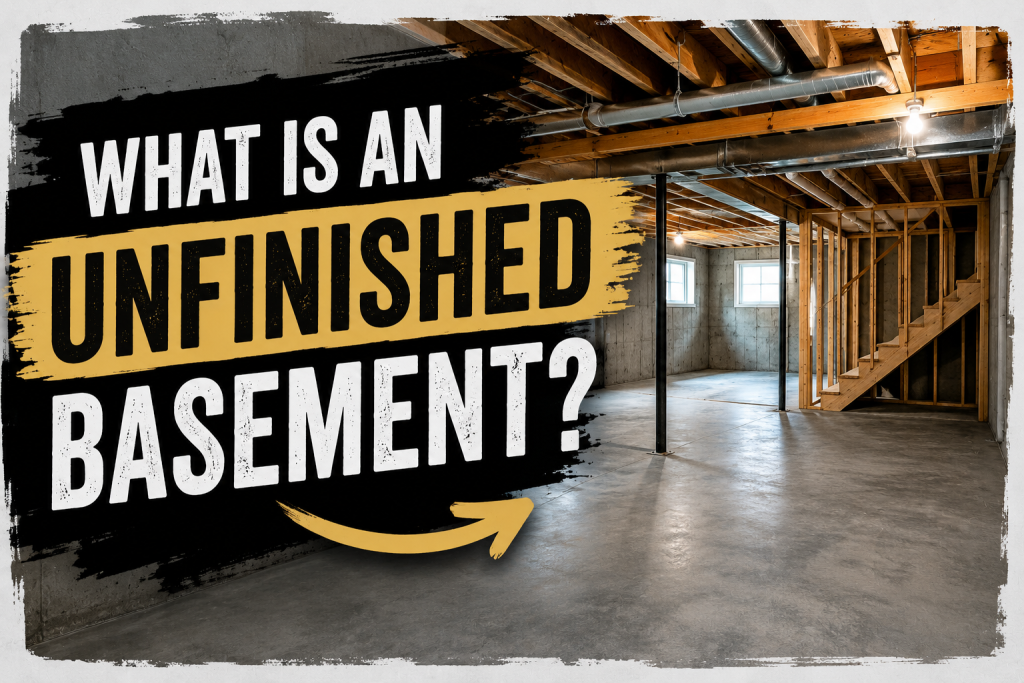
An unfinished basement is a below-grade space that has not been converted into livable living areas and remains in its original or partially developed state. In most US homes, this means exposed concrete floors, open ceiling joists, visible plumbing or electrical systems, and minimal interior finishes. Unlike a finished basement, an unfinished space is primarily used for storage, mechanical equipment such as HVAC systems, water heaters, and laundry appliances. This makes it a highly functional utility area even if it is not designed for everyday living.
Many homeowners also explore unfinished basement ideas to improve organization and usability without fully remodeling the space. Simple upgrades like shelving, moisture control, and better lighting can significantly improve functionality while keeping costs low. From a value perspective, an unfinished basement typically does not contribute the same level of basement home value as a finished one, but it offers flexibility for future renovation. It can be converted later when budget, time, or lifestyle needs change.
Key Differences Between Finished vs Unfinished Basement
Understanding the basement comparison between a finished and unfinished basement comes down to functionality, comfort, cost, and long-term value. In US homes, both options serve very different purposes and impact how the space contributes to daily living. A finished basement is designed as livable space, with flooring, drywall, lighting, insulation, and climate control. It becomes an extension of the home and can support bedrooms, offices, or entertainment areas. An unfinished basement, by contrast, remains a raw utility zone with exposed surfaces and minimal comfort features.
Another major difference is usability. Finished basements increase basement livable square footage, which directly improves day-to-day functionality. Unfinished basements are primarily used for basement storage space, mechanical systems, and occasional utility tasks. Cost is also a defining factor. Finished basements require significant investment and must meet building standards under the International Residential Code (IRC), while unfinished basements require little to no renovation expense. Ultimately, the choice depends on whether homeowners prioritize immediate living space or flexible, low-maintenance storage.
Impact on Basement Home Value
One of the biggest factors in the finished vs unfinished basement decision is how each option affects basement home value in the US real estate market. In general, a finished basement adds more perceived and appraised value because it increases usable living space, which buyers often view as an extension of the main home. Real estate platforms like Zillow and Realtor.com consistently show that homes with finished basements tend to attract more buyer interest, especially in regions where additional living space is highly desirable due to weather or housing density.
A finished basement can improve a home’s appeal by adding functional rooms such as family areas, guest suites, or home offices. This expanded usability can make the property more competitive in the market compared to similar homes with unfinished lower levels. However, an unfinished basement still holds value in terms of flexibility. Buyers may see it as potential future living space or as useful basement storage space, which can also be appealing depending on lifestyle needs. Overall, while finished basements typically boost market value more directly, unfinished basements still contribute to long-term property utility.
Basement Renovation ROI Explained
When evaluating finished vs unfinished basement, one of the most important considerations is basement renovation ROI, the potential return on investment from converting unused space into livable square footage. In many US housing markets, finishing a basement can provide one of the stronger ROI opportunities in home improvement, especially when compared to exterior additions. A finished basement increases functional living space without changing the home’s footprint, which is highly attractive to buyers. This added basement livable square footage often translates into a higher appraisal value, particularly when the space includes bedrooms, bathrooms, or entertainment areas.
However, ROI is not guaranteed at a fixed percentage. It depends on location, quality of workmanship, and how well the basement integrates with the rest of the home. In higher-demand markets, finished basements may deliver stronger returns, while in lower-demand areas, the payoff may be more modest. Unfinished basements still offer indirect ROI value by providing flexible basement storage space and lower upfront costs, but they generally do not contribute as much to resale pricing unless future finishing potential is clearly recognized.
Livable Space vs Storage Space Tradeoffs
A major part of the basement comparison between a finished and unfinished basement comes down to how the space is used: basement livable square footage versus basement storage space. This tradeoff directly affects both lifestyle convenience and long-term property value. A finished basement prioritizes livable space. It transforms the lower level into functional rooms such as living areas, guest suites, home offices, or entertainment zones. This approach maximizes usable square footage and improves daily comfort, especially for larger households or homes needing extra room.
An unfinished basement, however, prioritizes utility and flexibility. It provides open space for storage, mechanical systems, seasonal items, and household overflow. While it lacks comfort features, it offers practical advantages such as easier maintenance and lower renovation costs. Homeowners often struggle with deciding between immediate usability and long-term flexibility. Converting everything into finished space increases comfort but reduces storage capacity. Leaving it unfinished preserves storage but limits lifestyle expansion. This balance is a key factor in determining the true value of finished vs unfinished basement decisions in US homes.
When You Should NOT Finish a Basement
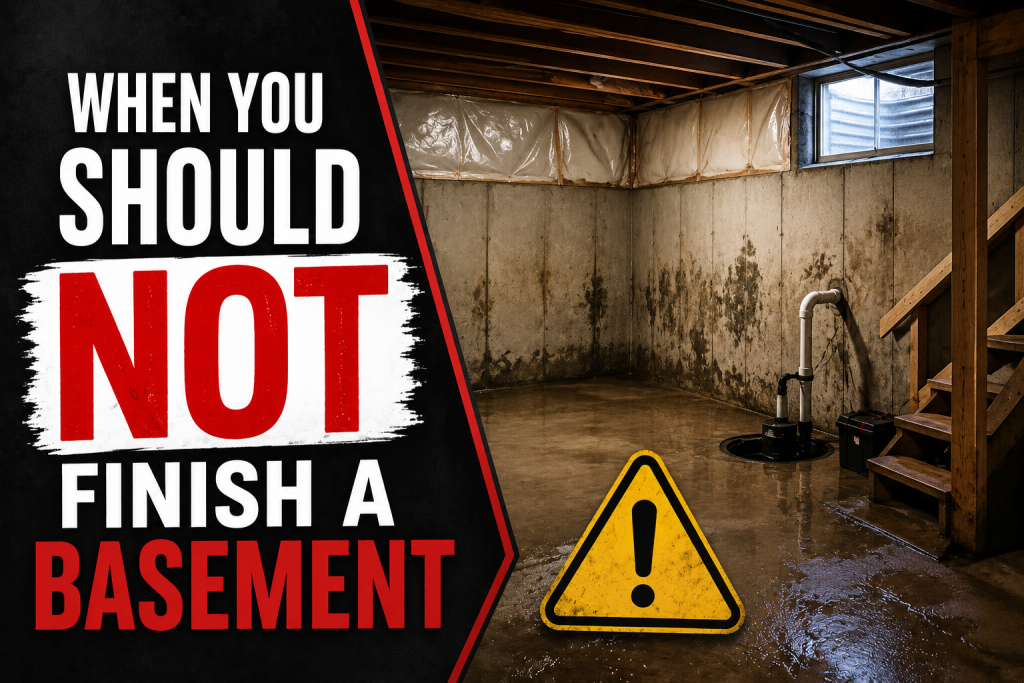
While a finished basement can increase usable space and improve basement home value, it is not always the right investment for every homeowner. In some cases, keeping a basement unfinished is the more practical and financially responsible decision in a finished vs unfinished basement comparison. One situation where you may avoid finishing is persistent moisture or flooding risk. If a basement has ongoing water intrusion issues, addressing drainage, waterproofing, and structural repairs should come first before any cosmetic upgrades. Otherwise, a finished space can quickly develop damage and costly maintenance problems.
Another factor is low ceiling height or structural limitations. If the space cannot reasonably meet building requirements under the International Residential Code (IRC), finishing it may not be cost-effective or even permitted in some areas. Budget constraints also play a major role. If renovating the basement would strain finances or divert funds from higher-priority home improvements, it may be better to delay the project. In these cases, an unfinished basement can still serve as valuable basement storage space while preserving future renovation potential.
Cost vs Benefit Analysis
When deciding between a finished vs unfinished basement, the cost vs benefit analysis is often the deciding factor for most US homeowners. Finishing a basement requires a significant upfront investment, but it can also deliver long-term functional and financial returns when done correctly. On the cost side, a finished basement includes expenses for framing, insulation, flooring, electrical work, lighting, HVAC adjustments, and compliance with the International Residential Code (IRC). Depending on size and finish level, costs can escalate quickly, especially if plumbing or structural changes are involved.
On the benefit side, a finished basement increases basement livable square footage, which enhances day-to-day comfort and can improve resale appeal. It also allows homeowners to create dedicated spaces such as entertainment rooms, guest suites, or home offices, adding flexibility that an unfinished basement cannot provide. An unfinished basement, however, has its own financial advantage. It requires little to no investment, offers strong basement storage space, and keeps future renovation options open. This makes it a low-risk choice for homeowners not ready for a full remodel. Ultimately, the best choice depends on balancing upfront cost with long-term lifestyle and value goals.
Final Verdict
Deciding on a finished vs unfinished basement ultimately comes down to lifestyle needs, budget, and long-term goals for your home. There is no universal answer, but there is a clear direction based on how you plan to use the space and what value you expect in return. A finished basement is the best choice for homeowners who want to maximize basement livable square footage and create functional spaces like family rooms, guest suites, or home offices. It enhances comfort, improves usability, and can positively influence basement home value, especially in competitive US housing markets where extra living space is highly desirable.
An finished vs unfinished basement basement, on the other hand, is ideal for homeowners who prioritize basement storage space, lower upfront costs, and flexibility for future renovation. It also avoids the maintenance and investment required to fully comply with residential finishing standards under the International Residential Code (IRC). In many cases, the best decision is not permanent, homeowners often start with an unfinished basement and gradually upgrade it over time as budget and needs evolve. The right choice depends on balancing immediate function with long-term value.
FAQs
What is the main difference between a finished vs unfinished basement?
A finished vs unfinished basement differs mainly in usability. A finished basement is livable space with flooring, walls, and utilities, while an unfinished basement is primarily used for storage and mechanical systems.
Does a finished basement increase home value?
Yes, a finished basement can increase basement home value because it adds usable living space, which is attractive to buyers in many US real estate markets.
Is it worth finishing a basement for ROI?
Basement renovation ROI depends on location and quality of work, but finished basements often provide strong value when used as functional living space.
What are unfinished basement ideas to improve usability?
Common unfinished basement ideas include shelving, lighting upgrades, moisture control, and organizing basement storage space without full renovation.
What counts as livable basement space?
Basement livable square footage includes areas that meet building codes with proper flooring, insulation, ceiling height, ventilation, and safe access.