


Flat Roof Design Trends for Contemporary Homes
Modern residential architecture continues to evolve, and few design elements have gained as much attention as flat roofs. Once associated mainly with commercial buildings, flat roofs are now a defining feature of upscale custom homes, urban residences, and contemporary suburban properties across the United States. From California’s modern hillside homes to luxury developments in Texas and Arizona, homeowners are embracing clean rooflines and multifunctional outdoor spaces. The latest flat roof design trends focus on more than appearance alone. Today’s homeowners want roofs that improve energy efficiency, support outdoor living, accommodate solar technology, and enhance long-term property value.
Architects are also using flat roof systems to create sleek profiles that complement open floor plans and large glass facades. As sustainability, curb appeal, and functional design become increasingly important, flat roof design trends are influencing how new homes are built and how existing properties are renovated. This guide explores the most important trends shaping residential flat roof architecture and what they mean for homeowners planning their next exterior upgrade.
Top Flat Roof Design Trends Transforming Modern Homes
One of the biggest reasons homeowners are drawn to modern roof systems is their ability to create a clean, sophisticated appearance while supporting practical lifestyle upgrades. Many of today’s flat roof design trends emphasize simplicity, flexibility, and seamless integration with the rest of a home’s exterior. Whether building a new custom residence or updating an existing property, homeowners are increasingly choosing designs that balance aesthetics with performance.
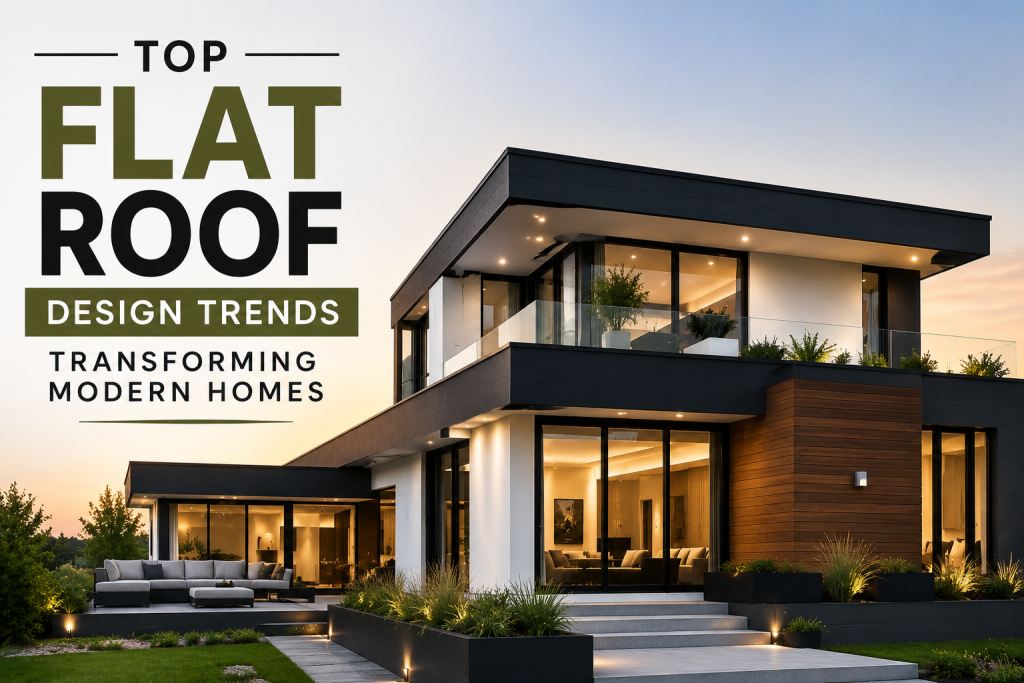
Minimalist Rooflines and Clean Architectural Profiles
Minimalism continues to dominate residential architecture throughout the United States. Many modern flat roof homes feature simple geometric forms, uncluttered rooflines, and expansive glass surfaces that create a striking visual impact. Flat roofs naturally complement this design approach by eliminating unnecessary visual complexity and allowing other architectural features to stand out.
A minimalist roof profile can also improve curb appeal by giving homes a more timeless and upscale appearance. This style is especially popular in California, Colorado, and Arizona, where contemporary architecture remains a strong influence on residential construction.
Mixed-Material Exterior Designs
Another notable trend is the combination of multiple exterior materials to create texture and contrast. Homeowners are pairing flat roofs with fiber cement siding, natural stone, engineered wood, and architectural metal accents to achieve a more customized look. These combinations help prevent modern homes from appearing overly simplistic while maintaining a refined appearance.
This approach works particularly well with flat roof architecture, where the clean roofline provides a neutral framework for showcasing premium exterior materials. The result is a balanced design that feels modern, durable, and visually distinctive.
Flat Roof Design Trends That Improve Functionality
Beyond aesthetics, many of today’s flat roof design trends are driven by the desire to maximize usable space and improve everyday living. Homeowners increasingly view their roofs as an extension of the home rather than simply a protective structure. As a result, architects and builders are incorporating features that add both convenience and long-term value while supporting modern lifestyles.
Rooftop Living Spaces and Outdoor Entertainment Areas
The demand for outdoor living areas continues to grow, especially in urban neighborhoods where yard space may be limited. One of the most popular rooftop patio ideas involves transforming an unused roof surface into a functional gathering area. These spaces can include lounge seating, dining areas, fire features, outdoor kitchens, and even small garden installations.
Rooftop living areas are particularly attractive in cities where homeowners want additional entertaining space without expanding the home’s footprint. When properly engineered, a rooftop patio can become one of the most valuable and frequently used areas of the property.
Solar-Ready Roof Configurations
As energy costs continue to rise, homeowners are looking for practical ways to improve efficiency. Many current flat roof design trends prioritize roof layouts that can easily accommodate solar panel systems. Flat roofs often allow installers greater flexibility in positioning panels for optimal sun exposure.
This approach is especially popular in states such as Arizona, Texas, and California, where abundant sunlight can significantly improve solar performance. Planning for solar integration during the design stage can reduce future installation costs while helping homeowners lower utility bills and increase the overall efficiency of their property.
Flat Roof Design Trends Focused on Sustainability
Sustainability has become a major factor in residential design decisions, and many emerging flat roof design trends reflect this shift. Homeowners are looking for roofing solutions that reduce energy consumption, improve environmental performance, and support long-term savings. Modern flat roof systems offer several opportunities to achieve these goals while maintaining an attractive architectural appearance.
Green Roof Systems for Residential Homes
Green roofs are gaining attention among environmentally conscious homeowners. These systems incorporate vegetation layers above the roofing assembly, helping manage stormwater runoff, improve insulation, and reduce heat absorption. In densely populated areas, green roofs can also contribute to improved air quality and lower urban heat levels.
Many architects incorporate green roof concepts into a low-slope roof design, allowing homeowners to combine sustainable building practices with modern aesthetics. While installation costs are higher than traditional roofing systems, the long-term environmental and energy benefits can be substantial.
Reflective Roofing Materials and Energy Efficiency
Reflective roofing technologies continue to influence flat roof design trends across warm-weather regions of the United States. These materials are engineered to reflect a greater percentage of solar radiation, helping reduce roof surface temperatures and lowering cooling demands during hot summer months.
Many modern roofing products meet efficiency standards promoted by organizations such as the ENERGY STAR program and recommendations from the Department of Energy. For homeowners in states like Florida, Texas, and Arizona, reflective roofing can contribute to lower energy bills while extending the lifespan of roofing materials. This combination of performance and sustainability makes contemporary flat roofing an increasingly attractive option for modern residential construction.
Modern Exterior Design Trends Influencing Flat Roof Architecture
Residential design continues to move toward open, connected living environments, and many current flat roof design trends reflect this preference. Homeowners increasingly want spaces that feel larger, brighter, and more connected to the outdoors. Flat roof systems support these goals by complementing contemporary architectural features that emphasize simplicity, functionality, and visual openness.
Indoor-Outdoor Living Integration
One of the strongest influences on modern home design is the desire to blur the line between interior and exterior spaces. Large sliding glass doors, covered patios, and transitional living areas allow homeowners to enjoy greater flexibility throughout the year. Flat roofs help support these features by creating clean overhangs and uninterrupted sightlines.
Many architects pair these layouts with minimalist roof styles to maintain a cohesive appearance. The result is a home that feels spacious, modern, and well-suited to both everyday living and entertaining guests.
Large Windows and Open Sightlines
Expansive windows have become a defining feature of contemporary residential architecture. By maximizing natural light and outdoor views, large glass surfaces can make homes feel more welcoming and visually connected to their surroundings. Flat roof designs naturally complement this approach because their horizontal profile emphasizes openness and architectural balance.
These design principles are among the most influential modern exterior trends in today’s housing market. In addition to improving aesthetics, increased daylight exposure can enhance comfort, reduce reliance on artificial lighting, and contribute to a more enjoyable living environment for homeowners.
Choosing the Right Flat Roof Design for Your Climate
While aesthetics are important, homeowners should also consider regional weather conditions when evaluating flat roof design trends. Climate plays a major role in determining roofing performance, maintenance requirements, and long-term durability. A flat roof system that performs exceptionally well in Arizona may require different design considerations in Colorado or the Midwest. Understanding these factors can help homeowners make smarter investment decisions and avoid costly issues in the future.
Design Considerations for Warm Southern States
Homes located in warm climates often face intense sunlight, high temperatures, heavy rainfall, or hurricane-related weather events. Roofing materials with reflective properties can help reduce heat gain and improve energy efficiency. Proper drainage systems are also critical in regions that experience frequent storms.
In coastal areas such as Florida and the Gulf Coast, homeowners should consider roofing assemblies designed to meet local wind-resistance requirements and recommendations from organizations such as FEMA. These measures can improve resilience and help protect the home’s exterior envelope during severe weather events.
Design Considerations for Northern Climates
Northern states present a different set of challenges, including snow accumulation, ice formation, and repeated freeze-thaw cycles. In these regions, proper structural engineering and drainage design are essential to prevent water-related damage and premature roof deterioration.
Homeowners should also ensure their roofing system complies with applicable requirements outlined in the International Residential Code (IRC) and local building regulations. Adequate insulation, moisture control, and drainage planning can significantly improve roof performance and help maintain long-term durability in colder climates.
Future Flat Roof Design Trends Homeowners Should Watch
As residential construction continues to evolve, the next generation of flat roof design trends will focus on technology, flexibility, and enhanced homeowner convenience. Architects and builders are increasingly designing roofs that serve multiple purposes while incorporating innovative systems that improve monitoring and maintenance. These advancements are expected to play a larger role in both new construction and major remodeling projects throughout the coming years.

Smart Roof Technology
Technology is becoming an important component of modern roofing systems. Advanced sensors can monitor moisture levels, detect leaks, and identify potential maintenance issues before they become costly repairs. Some systems even provide real-time alerts through mobile applications, allowing homeowners to respond quickly to developing problems.
As smart home adoption continues to increase across the United States, roofing technology is expected to become more integrated with broader home management systems. This added visibility can help homeowners protect their investment while reducing unexpected maintenance expenses.
Multi-Purpose Roof Spaces
Future residential designs will place greater emphasis on maximizing every available square foot of usable space. Rather than functioning solely as protective structures, roofs are increasingly being designed to support multiple activities and lifestyle needs.
Depending on local building requirements and structural capacity, homeowners may use roof areas for outdoor lounges, wellness spaces, container gardens, remote work environments, or recreational gathering areas. Many emerging flat roof design trends focus on creating adaptable spaces that can evolve alongside changing homeowner preferences, making flat roofs both practical and valuable long-term assets.
Conclusion
Flat roofs have evolved far beyond their traditional role, becoming a defining feature of modern residential architecture across the United States. From energy-efficient roofing systems and rooftop living spaces to sustainable materials and smart technology integration, today’s design innovations offer homeowners more flexibility than ever before. The most successful projects balance aesthetics, functionality, and climate-specific performance. Whether you’re planning a new custom build, upgrading an existing home, or exploring ways to improve curb appeal, understanding current roofing innovations can help you make informed decisions that support long-term value.
As homeowner preferences continue to shift toward cleaner architectural lines, outdoor living, and energy-conscious design, flat roof systems are likely to remain a popular choice for years to come. By selecting the right materials, drainage solutions, and design features for your region, you can create a roof that enhances both the appearance and performance of your home.
Frequently Asked Questions
Are flat roofs a good choice for residential homes?
Yes. Flat roofs are a practical option for many residential properties, especially those designed with contemporary architecture. They provide a clean appearance, support outdoor living spaces, and can accommodate solar panels and other modern features. When properly designed and maintained, flat roofs can deliver excellent long-term performance.
What Are the Most Popular Flat Roof Materials Used in Modern Flat Roof Design Trends?
Common residential flat roof materials used in today’s flat roof design trends include TPO (Thermoplastic Polyolefin), EPDM rubber roofing, PVC roofing membranes, modified bitumen, and built-up roofing systems.
Can a flat roof support a rooftop deck?
In many cases, yes. However, the roof must be specifically engineered to handle the additional structural load of furniture, occupants, and other amenities. Homeowners should consult a qualified contractor or structural engineer before planning a rooftop deck installation.
How Long Do Flat Roofs Last in Modern Flat Roof Design Trends?
The lifespan of a flat roof varies depending on the material, installation quality, and maintenance routine. In most flat roof design trends, modern roofing systems typically last between 20 and 30 years, while premium roofing membranes may exceed that range when professionally installed and properly maintained.
Do flat roofs increase home value?
A well-designed flat roof can contribute to property value by improving curb appeal, creating usable outdoor space, and supporting energy-efficient upgrades. The impact on value depends on the home’s location, design quality, and overall market demand.
Are flat roofs energy efficient?
Flat roofs can be highly energy efficient when paired with reflective roofing materials, quality insulation, and proper ventilation strategies. Many homeowners also use flat roof systems to support solar panel installations, which can further reduce energy costs over time.