

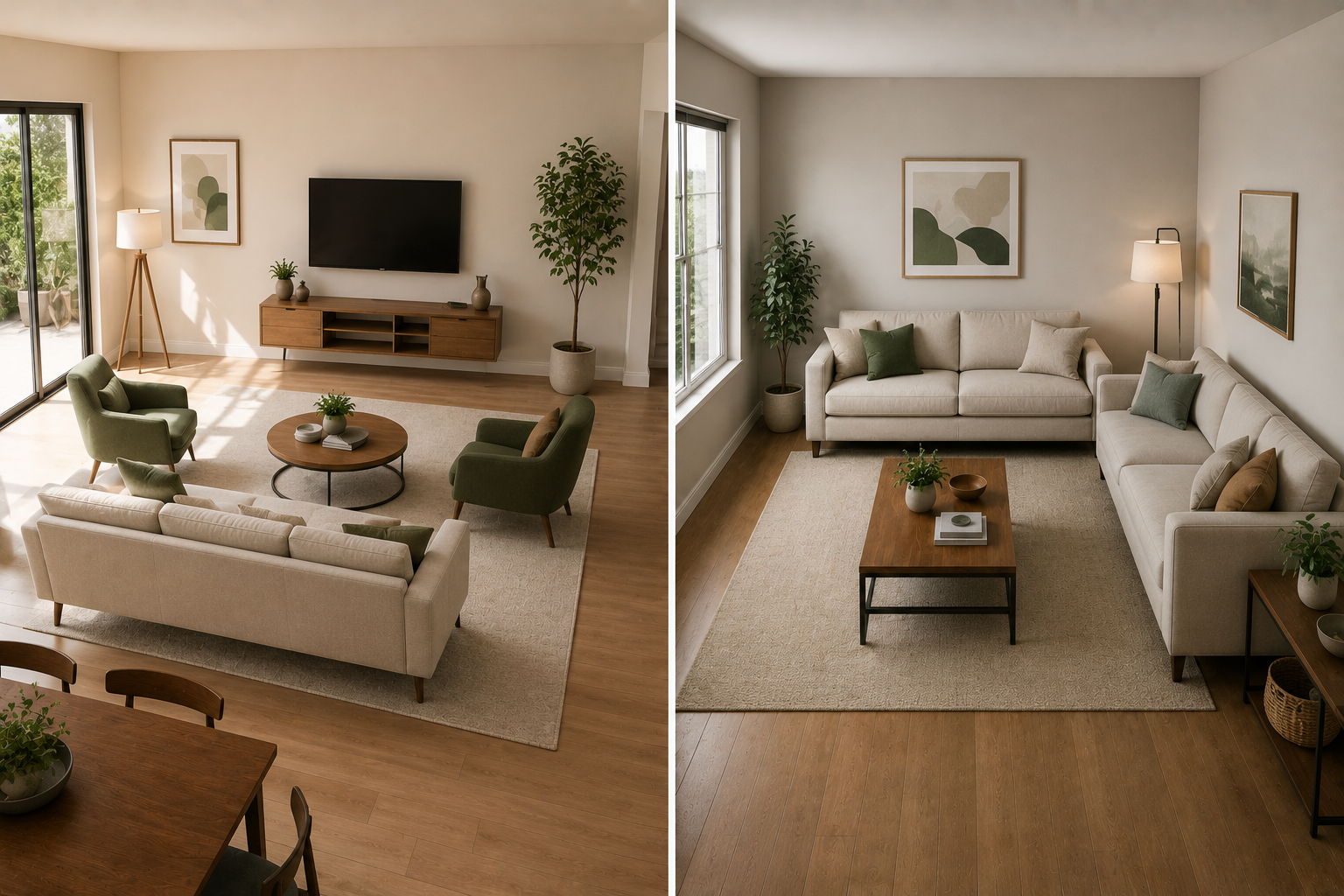
Floating Furniture vs Wall-Aligned Furniture Explained
Furniture placement has a major influence on how a room looks and functions. Understanding strategies for floating furniture vs wall-aligned furniture can help homeowners create spaces that feel more comfortable, balanced, and visually appealing. Both approaches have advantages, and choosing the right one often depends on room size, traffic flow, and personal preferences.
Some homeowners prefer the openness created by floating furniture, while others favor the simplicity and space-saving qualities of wall-aligned arrangements. Learning the strengths and limitations of each style makes it easier to design rooms that support everyday living. This guide explores the key differences between floating vs wall-aligned furniture layouts and explains when each approach works best.
Understanding Floating Furniture vs Wall-Aligned Furniture
The debate over floating vs wall-aligned furniture centers on how furniture is positioned within a room. Floating layouts place furniture away from the walls to create defined conversation areas and improve visual balance, while wall-aligned arrangements position major pieces directly against the room perimeter to maximize open floor space. Floating furniture is commonly used in larger rooms and open-concept homes because it helps establish distinct zones and encourages interaction.
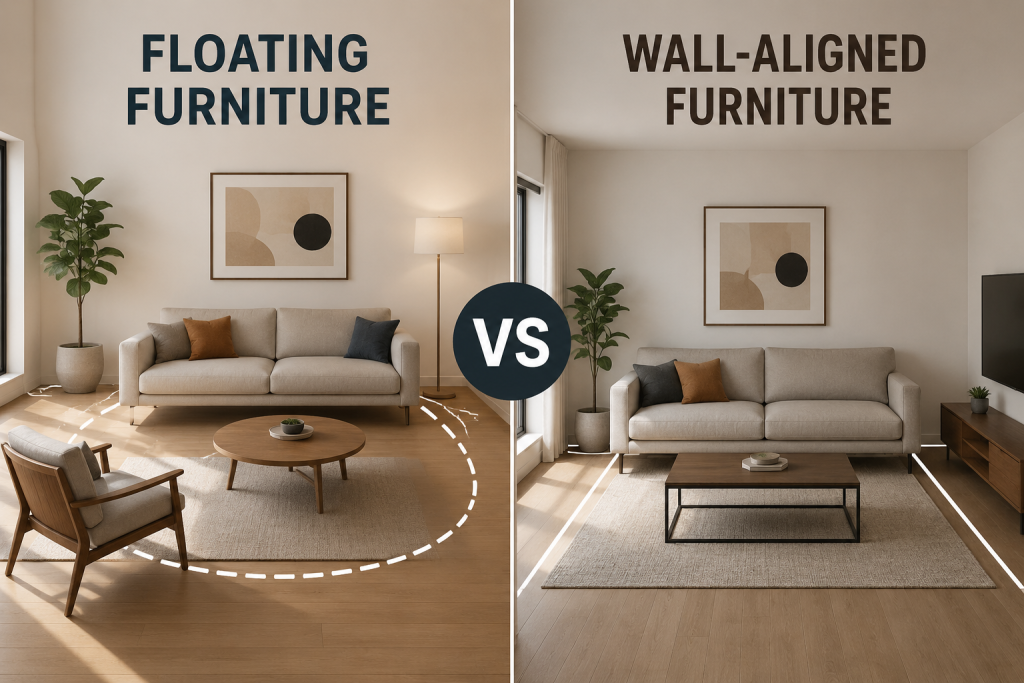
Wall-aligned layouts are often preferred in smaller spaces where homeowners want to preserve as much usable floor area as possible. Neither approach is universally better, as each serves different functional and aesthetic goals. Understanding principles of floating furniture vs wall-aligned furniture allows homeowners to make more informed design decisions. By considering room size, traffic flow, and lifestyle needs, it becomes easier to choose a layout that enhances both comfort and functionality.
Floating Furniture Design Benefits
A well-planned floating furniture design can make a room feel more inviting, balanced, and functional. Instead of pushing every piece against the walls, this approach positions furniture away from the perimeter to create defined areas that encourage conversation and improve overall flow. One major advantage of floating furniture is its ability to establish clear zones within larger rooms and open-concept spaces. Area rugs, coffee tables, and seating groups help anchor these zones and create a sense of purpose.
Floating arrangements can also improve visual balance by preventing large empty spaces in the center of the room. Understanding styles of floating furniture vs wall-aligned furniture helps homeowners determine when a floating layout makes sense. In many cases, moving furniture away from the walls creates a more intimate atmosphere and allows the room to feel more thoughtfully designed without sacrificing functionality.
Wall-Aligned Furniture: Pros and Cons
Many homeowners rely on wall-hugging furniture arrangements because they are simple, practical, and effective in smaller rooms. Placing sofas, chairs, and other large pieces directly against the walls can maximize open floor space and make compact areas feel less crowded. One advantage of wall-aligned layouts is that they create wider pathways and leave more room for movement. This approach can also simplify furniture placement and work well in apartments or rooms with limited square footage.
However, positioning everything against the walls may cause larger rooms to feel disconnected or create excessive space in the center. Understanding strategies for floating furniture vs wall-aligned furniture helps homeowners recognize the strengths and limitations of each style. While wall-hugging arrangements can improve efficiency in smaller spaces, they may not always provide the sense of balance and intimacy that floating layouts offer.
Furniture Arrangement Ideas for Different Homes
Different furniture arrangement styles work better in certain homes depending on room size, floor plans, and lifestyle needs. Choosing the right approach can improve both functionality and visual appeal.
Small Homes and Apartments
Compact spaces often benefit from wall-aligned layouts because they maximize floor space and maintain clear pathways. Multifunctional furniture can further enhance usability in smaller rooms.
Open-Concept and Larger Homes
Floating furniture arrangements are commonly used in larger homes because they help define separate living areas and create more inviting conversation zones.
Floating Furniture vs Wall-Aligned Furniture Considerations
Understanding styles of floating and wall-aligned furniture allows homeowners to adapt layouts according to the specific needs of their homes. In many cases, combining elements of both approaches can provide the best balance between comfort, efficiency, and aesthetics.
Living Room Seating Tips That Improve Comfort
Thoughtful living room seating ideas can make a space feel more inviting while improving functionality and encouraging conversation. The way seating is arranged has a direct impact on comfort, traffic flow, and the overall atmosphere of the room. One effective strategy is to position sofas and chairs so they face one another, creating a natural conversation area. Accent chairs, ottomans, and sectional sofas can be used to add flexibility and accommodate different activities.
Area rugs and coffee tables help anchor seating groups and establish visual balance. Maintaining adequate spacing between pieces ensures that movement throughout the room remains comfortable and unobstructed. Understanding floating furniture vs wall-aligned furniture principles can help homeowners choose the best seating arrangement for their needs. Whether creating an intimate conversation area or maximizing floor space, proper seating placement contributes significantly to the comfort and usability of a room.
Center Room Furniture Arrangement Explained
Strategic center room furniture placement is a common feature of floating layouts and can dramatically change the way a space feels. Instead of relying on walls to organize the room, furniture positioned toward the center creates defined zones and encourages interaction. This approach is particularly effective in open-concept homes and larger living rooms where space in the middle can make the room feel disconnected.
Positioning sofas, chairs, and coffee tables around a central focal point helps establish comfortable conversation areas and improves visual balance. Area rugs often play an important role by anchoring furniture and creating clear boundaries. Understanding floating furniture vs wall-aligned furniture layouts helps homeowners determine whether center placement is appropriate for their space. When executed properly, this strategy can create a more welcoming and cohesive room while maintaining functionality and good traffic flow.
Room Flow Tips for Better Functionality
Practical room flow ideas can make a space feel more comfortable, organized, and easier to navigate. Regardless of room size, maintaining clear pathways and arranging furniture to support everyday activities are essential for creating a functional layout. One effective strategy is to identify natural traffic patterns and avoid placing furniture where it blocks movement. Leaving adequate space between seating areas and tables helps improve accessibility while reducing visual clutter.
In larger rooms, furniture groupings can be used to create separate zones without interrupting the overall flow of the space. Lighting, rugs, and accent pieces can also help guide movement and establish visual connections throughout the room. Understanding floating furniture vs wall-aligned furniture approaches allows homeowners to optimize room flow based on their specific needs. Thoughtful furniture placement can improve comfort, enhance usability, and make any room feel more inviting.
Furniture Spacing Ways Every Homeowner Should Know
Effective furniture spacing techniques are essential for creating rooms that feel comfortable, functional, and visually balanced. Proper spacing improves traffic flow, prevents overcrowding, and helps furniture arrangements feel intentional rather than cramped. Homeowners should leave enough space between furniture pieces to allow easy movement while maintaining comfortable conversation distances. Coffee tables should be positioned within convenient reach of seating areas, and major walkways should remain clear of obstacles.
In larger rooms, grouping furniture thoughtfully can help define spaces without making them feel disconnected. Scale and proportion also play an important role, as oversized furniture can overwhelm a room if not spaced correctly. Understanding floating furniture vs wall-aligned furniture principles makes it easier to apply these spacing techniques effectively. Whether furniture is positioned in the center of the room or against the walls, proper spacing contributes significantly to comfort, functionality, and overall room design.
Common Furniture Placement Mistakes
Even attractive furniture can create an uncomfortable room when it is arranged improperly. Avoiding these common mistakes can help homeowners achieve better functionality and visual balance.
- Pushing every furniture piece directly against the walls.
- Blocking natural traffic pathways with oversized furniture.
- Leaving excessive space in the center of large rooms.
- Choosing furniture that is out of scale with the room.
- Ignoring the room’s focal point when arranging seating.
- Using rugs that are too small for the furniture grouping.
- Overcrowding the space with unnecessary pieces.
- Failing to create comfortable conversation areas.
- Neglecting proper spacing between furniture items.
- Prioritizing appearance over comfort and functionality.
Recognizing these mistakes allows homeowners to create layouts that feel more inviting, organized, and practical while making better use of available space.
How to Choose Between Floating Furniture vs Wall-Aligned Furniture?
Choosing between floating vs wall-aligned furniture depends on the size of the room, the desired atmosphere, and how the space is used on a daily basis. Both approaches offer advantages, and the best choice often comes down to functionality and personal preference. Floating layouts are ideal for larger rooms and open-concept spaces because they help define conversation areas and create a more intimate setting.
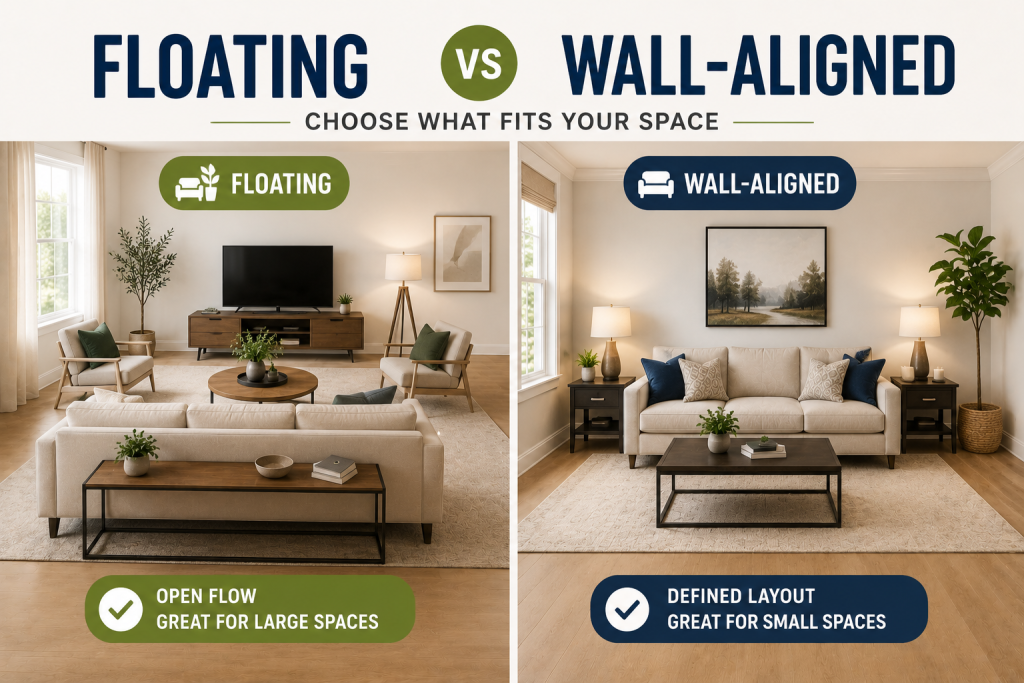
Wall-aligned arrangements, on the other hand, work particularly well in smaller rooms where maximizing floor space and maintaining clear pathways are top priorities. Homeowners should also consider traffic flow, focal points, and furniture scale when planning a layout. In many cases, combining elements of both styles produces the best results. By evaluating the room’s dimensions and lifestyle needs, homeowners can create a space that feels balanced, comfortable, and visually appealing.
Conclusion
Choosing between floating furniture vs wall-aligned furniture ultimately depends on the size of the room, your lifestyle, and the atmosphere you want to create. Floating layouts can make larger spaces feel more intimate and organized, while wall-aligned arrangements are often ideal for maximizing floor space in smaller rooms. Both styles offer unique advantages, and many homeowners successfully combine elements of each to achieve the perfect balance. By considering traffic flow, furniture scale, and room functionality, you can create a layout that enhances comfort, improves usability, and makes your home feel more inviting and visually appealing.
Frequently Asked Questions
Which is better, floating furniture or wall-aligned furniture?
The best choice depends on room size, traffic flow, and personal preferences. Both layouts can create comfortable and functional spaces.
What is a floating furniture design?
A floating furniture layout places sofas, chairs, and tables away from the walls to create conversation areas and improve visual balance.
Does wall-aligned furniture make a room look bigger?
In smaller rooms, wall-aligned arrangements can create more open floor space and improve movement throughout the room.
Can you combine both furniture styles?
Yes. Many homeowners use a combination of floating and wall-aligned furniture to achieve a balance between comfort and functionality.
How do I choose between floating furniture vs wall-aligned furniture?
Choosing floating furniture vs wall-aligned furniture depends on your room size, lifestyle, and design goals. Evaluating traffic flow and furniture scale can help determine which approach works best.