


Why Regular Floor Maintenance Protects Home Value (2026 US Guide)
The connection between flooring maintenance benefits and home value is stronger than most homeowners realize. In US real estate markets, flooring is one of the first features buyers notice, and it heavily influences perceived property condition, even before structural details are evaluated. Well-maintained floors create an immediate impression of cleanliness, care, and long-term stability. On the other hand, scratched hardwood, stained carpets, or worn vinyl can quickly reduce buyer confidence and lower perceived value. This is why consistent upkeep plays a direct role in home value protection.
Regular maintenance does more than improve appearance, it also extends the life of flooring systems, reducing the need for costly repairs or full replacements. Over time, this contributes to stronger flooring ROI, as homeowners preserve both functionality and resale appeal. Understanding this relationship helps homeowners treat flooring care as an investment rather than just routine cleaning.
How Flooring Impacts Property Value
Flooring plays a major role in shaping a buyer’s first impression, which directly influences property value in the US housing market. Even before buyers assess layout or square footage, they often evaluate the condition of visible surfaces like floors to judge how well a home has been maintained. Clean, well-kept floors signal strong upkeep and reduce perceived renovation costs, which supports stronger offers and faster sales. This is where flooring maintenance benefits become especially important, as consistent care helps preserve a home’s overall presentation.
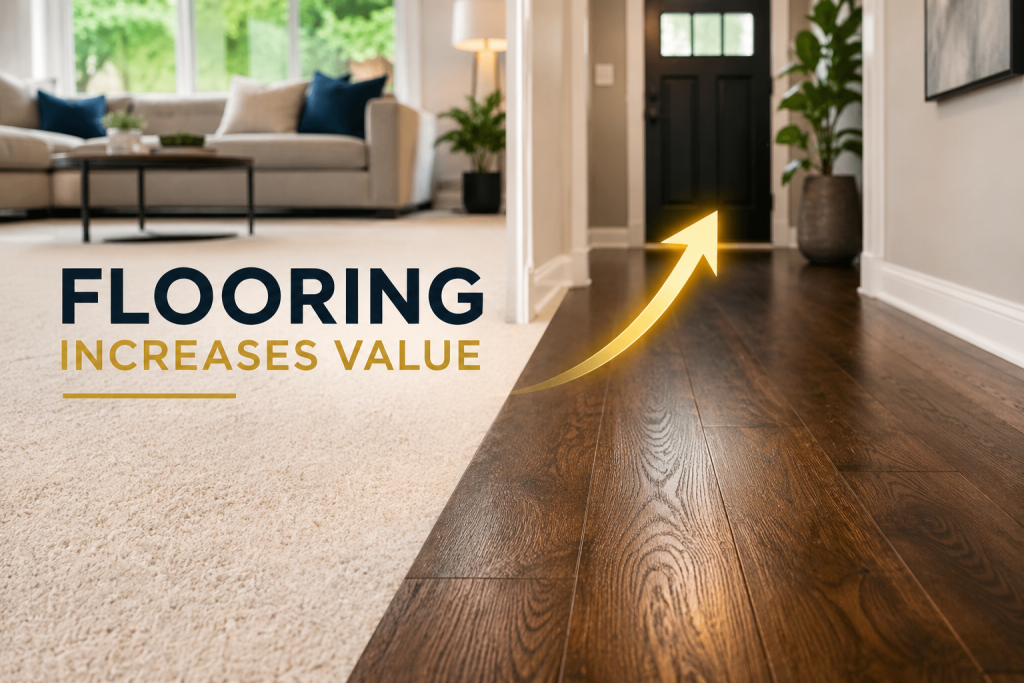
Different materials also impact value differently. Hardwood flooring is often associated with higher-end homes, while clean vinyl and tile can still deliver strong appeal when properly maintained. Poorly maintained flooring, however, can make even updated homes feel outdated or neglected. Ultimately, flooring acts as a visual anchor in every room, meaning its condition can significantly affect buyer confidence and overall home value protection.
Flooring ROI – Maintenance vs Replacement
Understanding flooring ROI is essential when evaluating how maintenance impacts long-term home value. In most US homes, regular upkeep is far more cost-effective than full flooring replacement, especially when damage is caught early and addressed through routine care. Consistent maintenance helps homeowners delay major expenses such as hardwood refinishing, carpet replacement, or tile restoration. This extends the lifespan of materials and improves overall home value protection, since buyers are more likely to pay a premium for floors that don’t require immediate work.
For example, a relatively small investment in cleaning, polishing, and protective treatments can preserve flooring appearance for years, whereas neglect can lead to accelerated wear and expensive repairs. This difference significantly affects long-term returns. In real estate terms, well-maintained flooring reduces perceived renovation costs, which improves negotiation power during resale. This is why maintenance is often viewed as a strategic investment rather than just an expense.
Hardwood Floor Preservation and Value
Hardwood floor preservation is one of the strongest contributors to long-term property value, especially in US homes where hardwood is often seen as a premium feature. Well-maintained hardwood floors immediately elevate a home’s interior appeal and can significantly influence buyer perception during resale. Regular maintenance helps prevent common issues such as surface scratches, dull finishes, and moisture damage. These problems, if ignored, can lead to costly refinishing or even partial replacement. By protecting the surface early through cleaning, refinishing when needed, and using proper care techniques, homeowners preserve both aesthetics and structure.
From a value perspective, hardwood floors that look clean and well-kept are often associated with higher-quality homes, which directly supports stronger offers in competitive real estate markets. This is where consistent flooring maintenance benefits become clear, as ongoing care helps maintain both beauty and market desirability. In many cases, preserved hardwood flooring can be a deciding factor for buyers choosing between similar properties.
Clean Flooring Benefits for Home Appeal
The clean flooring benefits go far beyond appearance, they directly influence how buyers and guests perceive the overall condition of a home. In US real estate markets, clean, well-maintained floors are often associated with better upkeep, lower repair risk, and higher property value. When floors are consistently cleaned and maintained, they retain their original color, texture, and finish for longer periods. This enhances visual appeal across all flooring types, whether hardwood, vinyl, tile, or carpet. Clean floors also improve indoor hygiene by reducing dust, allergens, and buildup that can accumulate in high-traffic areas.
From a resale perspective, spotless flooring helps create a “move-in ready” impression, which is highly attractive to buyers and can reduce negotiation pressure. This reinforces the importance of flooring maintenance benefits as part of a broader home value strategy. Ultimately, maintaining clean floors is one of the simplest yet most effective ways to strengthen both aesthetic appeal and long-term home value protection.
Flooring Longevity Tips That Increase Value
Applying the right flooring longevity tips is one of the most practical ways homeowners can strengthen long-term property value without major renovation costs. In US homes, flooring is constantly exposed to foot traffic, furniture movement, and environmental changes, so small preventative habits make a significant difference over time. One of the most effective strategies is routine maintenance, including regular cleaning and immediate spill removal. This prevents stains, moisture damage, and surface wear that can shorten flooring lifespan. Using protective items such as furniture pads and entry mats also reduces scratches and debris buildup, especially in high-traffic areas.
Climate control is another key factor. Maintaining stable indoor humidity helps prevent expansion or contraction in materials like hardwood and laminate, reducing long-term structural stress. These consistent habits support stronger flooring maintenance benefits by preserving both appearance and durability. When combined, these simple actions reduce repair frequency and help maintain stronger home value protection over the long run.
Floor Maintenance Checklist for Homeowners
A structured floor maintenance checklist helps homeowners turn general upkeep into a consistent system that supports long-term home value protection. Instead of reacting to damage, this approach ensures flooring remains in strong condition year-round, reinforcing the overall flooring maintenance benefits. On a weekly basis, homeowners should focus on basic cleaning tasks such as sweeping, vacuuming, and removing surface dirt or debris. These simple actions prevent scratches and buildup that can gradually reduce floor quality and appearance. High-traffic areas may require more frequent attention, especially in busy US households.
Monthly maintenance should include deeper cleaning tailored to flooring type, gentle wood-safe cleaners for hardwood, residue-free solutions for vinyl, and grout-focused cleaning for tile. This helps maintain both cleanliness and visual appeal. Seasonal checks are also important. These include inspecting for wear, checking for moisture issues, and ensuring protective measures like mats and pads are still effective in preserving flooring longevity.
Property Value Upgrades Through Flooring Care
Strategic flooring care can function as a subtle but powerful property value upgrades strategy, especially in competitive US housing markets where buyers closely inspect interior condition. Well-maintained floors reduce perceived renovation needs, which can directly influence offers and overall market appeal. Consistent maintenance enhances both appearance and durability, reinforcing long-term flooring maintenance benefits. Clean, polished, and damage-free flooring signals that the home has been properly cared for, which builds buyer confidence and supports stronger valuation during resale.
Simple actions like periodic deep cleaning, timely refinishing, and protective treatments can significantly extend flooring lifespan. This reduces the likelihood of costly repairs and helps maintain a fresh, updated interior look without full replacement expenses. From a real estate perspective, flooring condition is one of the fastest visual indicators of home quality. By maintaining floors properly, homeowners effectively improve presentation, reduce negotiation pressure, and strengthen overall home value protection.
Common Mistakes That Reduce Home Value
Even though flooring maintenance benefits are well known, many homeowners unintentionally reduce their property value by making avoidable flooring care mistakes. These errors often lead to premature wear, higher repair costs, and lower buyer appeal in the US housing market. One of the most common mistakes is neglecting routine cleaning. Dirt, grit, and spills left untreated can damage surface finishes and gradually degrade flooring materials. Over time, this leads to visible wear that negatively impacts home value protection. Another issue is using incorrect cleaning products.
Harsh chemicals or abrasive tools can strip protective coatings on hardwood, dull vinyl surfaces, or damage tile grout. These mistakes often accelerate deterioration instead of preventing it. Ignoring early signs of damage, such as scratches, loose planks, or discoloration, is also costly. Small issues that are not addressed quickly can grow into major repairs that reduce both flooring lifespan and overall property value. Avoiding these mistakes is essential for maintaining long-term flooring quality and maximizing investment returns.
Final Verdict
When looking at flooring maintenance benefits from a long-term perspective, the conclusion is clear: consistent care is not just upkeep, it is a direct home value strategy. In US real estate, flooring condition strongly influences buyer perception, pricing power, and time on market. Homeowners who prioritize routine maintenance, timely repairs, and periodic deep care consistently achieve stronger home value protection compared to those who delay upkeep. Clean, well-maintained floors reduce visible wear, prevent structural deterioration, and eliminate the need for sudden costly replacements. Instead of viewing flooring care as an expense, it should be treated as an investment in flooring ROI. Small, ongoing efforts compound over time, preserving both aesthetic appeal and structural integrity. This is especially important for high-value materials like hardwood, where preservation directly impacts resale desirability. Ultimately, a proactive maintenance approach ensures floors remain a strong selling point rather than a liability in the housing market.
FAQs
What are the main flooring maintenance benefits?
The main flooring maintenance benefits include longer floor lifespan, improved appearance, fewer repairs, and stronger home value protection during resale.
How does flooring maintenance improve home value?
Regular care keeps floors looking new, reduces visible wear, and increases buyer confidence, which directly supports higher property valuation.
What is flooring ROI?
Flooring ROI refers to the return homeowners get from maintenance and upgrades in the form of increased resale value and reduced repair costs.
Does hardwood floor preservation really increase value?
Yes, hardwood floor preservation is highly valuable because hardwood is a premium feature that significantly impacts buyer perception.
What are clean flooring benefits for homeowners?
Clean flooring benefits include better hygiene, improved aesthetics, and stronger first impressions for potential buyers.
What is included in a floor maintenance checklist?
A floor maintenance checklist includes daily cleaning, monthly deep cleaning, and seasonal inspections for damage or wear.
Can flooring maintenance be considered a property upgrade?
Yes, consistent care contributes to property value upgrades by maintaining appearance and reducing the need for costly replacements.