


Complete Flooring Maintenance Guide for Homeowners (US 2026)
A well-structured flooring maintenance guide is essential for any US homeowner who wants to protect their investment and extend the life of their floors. Whether it’s hardwood, laminate, vinyl, or tile, every flooring type experiences daily wear from foot traffic, furniture movement, spills, and seasonal climate changes. Without proper care, even high-quality flooring can lose its appearance and structural integrity much faster than expected. Scratches, stains, moisture damage, and dull surfaces are often the result of neglected upkeep rather than poor material quality.
This is why consistent residential floor maintenance plays a major role in long-term home value. Good maintenance doesn’t just improve appearance, it also reduces repair costs and prevents premature replacement. With the right home flooring protection habits, homeowners can keep floors looking new for years while avoiding unnecessary expenses tied to damage and wear.
Essential Flooring Maintenance Guide Care Tips for Every Home
Effective floor care tips are the foundation of any strong flooring maintenance guide, especially for US homeowners managing busy households. No matter the flooring type, consistent daily and weekly habits make a major difference in preventing long-term damage and maintaining appearance. The most important step is regular cleaning to remove dust, dirt, and debris that can act like sandpaper underfoot. Sweeping or vacuuming high-traffic areas helps reduce surface scratches across all flooring types. Spills should always be cleaned immediately to prevent staining or moisture penetration, particularly in laminate and hardwood floors.
Using the right cleaning products is equally important. Harsh chemicals can damage finishes, while excessive water can lead to swelling or warping in certain materials. Instead, homeowners should use manufacturer-approved cleaners and lightly damp mops when needed. Adding entry mats and furniture pads also supports home flooring protection, helping reduce daily wear and extend the life of residential flooring systems.
Residential Flooring Maintenance Guide by Flooring Type
Effective residential floor maintenance depends heavily on the type of flooring installed in the home, since each material responds differently to moisture, traffic, and cleaning methods. A one-size-fits-all approach can often lead to damage rather than protection. For laminate flooring, maintenance focuses on keeping moisture to a minimum. Light sweeping and damp mopping are usually sufficient, but excess water should always be avoided to prevent swelling or warping. Vinyl flooring, on the other hand, is more forgiving and can handle more frequent wet cleaning, making it ideal for kitchens and high-traffic areas.
Hardwood floors require more delicate care, including controlled humidity levels and periodic refinishing to maintain their appearance. Tile flooring is the most water-resistant, but grout lines need regular cleaning to prevent discoloration and buildup. Understanding these differences allows homeowners to apply the right floor care tips for each surface, improving durability and maintaining long-term home flooring performance.
Hardwood Floor Maintenance Best Practices
Proper hardwood floor maintenance is essential for preserving both appearance and structural integrity over time. Unlike other flooring types, hardwood is more sensitive to moisture, scratches, and humidity changes, making consistent care a key part of any flooring maintenance guide. One of the most important practices is controlling indoor humidity. In many US homes, seasonal changes can cause wood to expand or contract, leading to gaps or cupping if not properly managed. Using humidifiers in dry winters and dehumidifiers in humid summers helps stabilize conditions.
Regular cleaning should focus on dry methods such as sweeping or vacuuming with a soft-brush attachment to prevent surface scratches. When deeper cleaning is needed, a lightly damp microfiber mop with wood-safe cleaner is recommended. To protect the surface, homeowners should also use rugs in high-traffic areas and install furniture pads. Over time, periodic refinishing may be necessary to restore the floor’s original finish and extend its lifespan.
Vinyl Floor Care and Cleaning Methods
Proper vinyl floor care is one of the simplest parts of any flooring maintenance guide, which is why vinyl remains popular in many US households. Its synthetic surface is designed to handle moisture, spills, and frequent cleaning without significant wear, making it a low-stress option for busy families. Routine maintenance typically involves sweeping or vacuuming to remove dust and grit that can dull the surface over time. For deeper cleaning, a damp mop with a mild, non-abrasive cleaner is usually sufficient. Unlike hardwood or laminate, vinyl can tolerate more frequent wet cleaning, which makes it especially practical for kitchens, entryways, and bathrooms.
However, even with its durability, homeowners should avoid harsh chemicals or abrasive scrubbers that can damage the protective wear layer. Placing furniture pads under heavy items and using rugs in high-traffic areas can further extend the floor’s lifespan. With consistent care, vinyl flooring maintains its appearance easily and requires minimal effort compared to many other residential flooring types.
Tile Floor Cleaning and Grout Maintenance
Proper tile floor cleaning is a critical part of any complete flooring maintenance guide, especially in high-moisture areas like kitchens, bathrooms, and entryways. While tile itself is extremely durable and water-resistant, the grout lines between tiles require more attention to prevent discoloration and buildup over time. Regular sweeping or vacuuming helps remove dirt and debris that can scratch the tile surface. For routine cleaning, a pH-neutral cleaner and warm water mop are usually sufficient to maintain shine without damaging the finish. Unlike wood or laminate, tile can handle frequent wet cleaning, making it one of the easiest flooring types to maintain in busy US homes.
Grout maintenance is equally important. Over time, grout can absorb moisture, dirt, and stains, leading to a dull or dirty appearance. Periodic deep cleaning with a grout brush and specialized cleaner helps restore its original color. Applying a grout sealer can also provide long-term home flooring protection by reducing moisture absorption and staining.
Home Flooring Protection Strategies
Strong home flooring protection strategies are essential for extending the life of any surface, making them a key part of a complete flooring maintenance guide. While regular cleaning is important, prevention is what truly reduces long-term wear and costly repairs in US homes. One of the most effective methods is using protective accessories such as furniture pads, area rugs, and entry mats. These help reduce scratches, trap dirt before it reaches the floor, and minimize impact in high-traffic zones. This is especially important in households with pets or children, where daily movement increases surface stress.
Controlling indoor humidity is another important factor. Seasonal changes across the US can cause expansion or contraction in flooring materials like hardwood and laminate, so maintaining stable indoor conditions helps prevent warping or gaps. Choosing the right cleaning habits also contributes to protection. Avoiding excess water and harsh chemicals ensures that protective finishes remain intact, preserving both appearance and durability over time.
Flooring Upkeep Checklist (Weekly to Yearly)
A structured flooring upkeep checklist helps homeowners stay consistent with residential floor maintenance and prevents small issues from turning into expensive repairs. Breaking tasks into weekly, monthly, and yearly routines ensures every flooring type receives the right level of care. On a weekly basis, homeowners should focus on basic cleaning such as sweeping, vacuuming, and spot-cleaning spills. This removes dirt and debris that can cause scratches or dull surfaces over time. High-traffic areas may require more frequent attention, especially in busy US households.
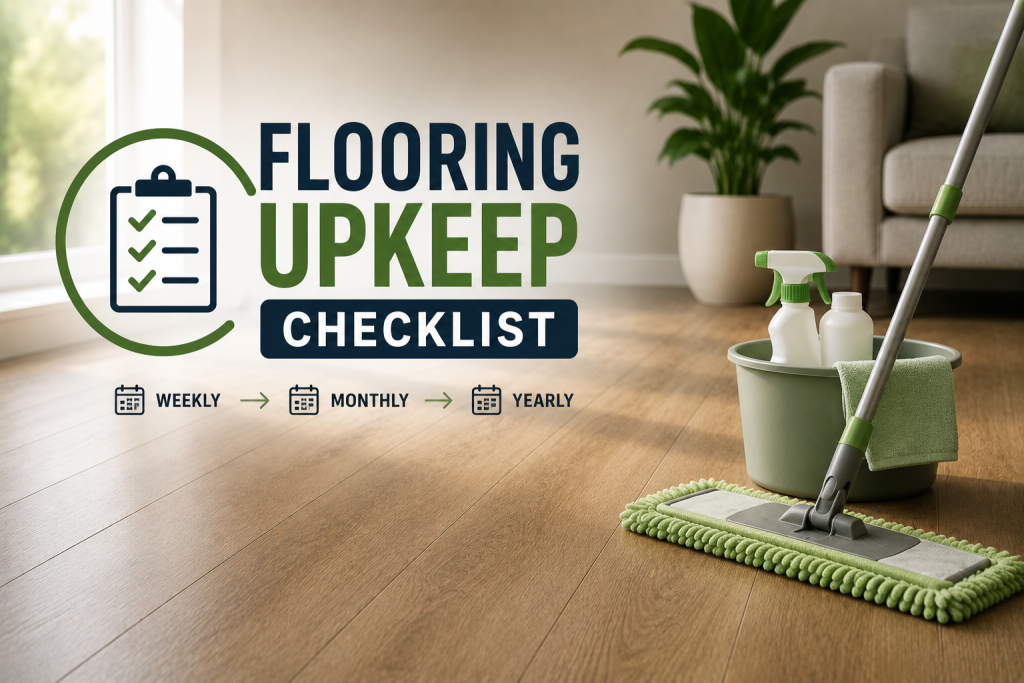
Monthly maintenance includes deeper cleaning using appropriate products for each flooring type, such as vinyl-safe solutions, wood cleaners, or tile-friendly detergents. This step helps maintain shine and hygiene while supporting long-term home flooring protection. Yearly tasks are more preventive, such as inspecting floors for damage, checking grout lines, evaluating finish wear on hardwood, and addressing any needed repairs. This long-term approach ensures flooring remains durable, attractive, and functional for years.
Common Flooring Mistakes Homeowners Make
Even with a solid flooring maintenance guide, many homeowners unintentionally shorten the lifespan of their floors by making avoidable mistakes. These errors often lead to premature wear, unnecessary repairs, or reduced performance across different flooring types. One of the most common mistakes is using excessive water during cleaning. This is especially damaging for laminate and hardwood, where moisture can seep into seams and cause swelling or warping. Another frequent issue is using harsh or incorrect cleaning products that strip protective finishes or leave residue buildup.
Skipping routine floor care tips like sweeping or vacuuming also allows dirt and grit to accumulate, which gradually scratches and dulls surfaces. Heavy furniture without protective pads can also cause permanent dents or surface damage over time. Finally, ignoring humidity control is a major issue in many US homes. Seasonal changes can cause flooring materials to expand or contract, leading to gaps, buckling, or cracking if not properly managed.
Final Verdict
Extending the lifespan of any surface comes down to consistency, making this flooring maintenance guide most effective when treated as a long-term routine rather than occasional upkeep. Across all flooring types in US homes, hardwood, laminate, vinyl, and tile, the same principle applies: prevention is more important than repair. A combination of daily cleaning habits, proper home flooring protection, and climate control plays the biggest role in long-term durability. Simple actions like removing debris regularly, cleaning spills immediately, and using protective pads under furniture can significantly reduce wear over time. Following structured residential floor maintenance routines also ensures that small issues are addressed early before they become costly problems. Seasonal checks for humidity changes, surface wear, and grout or seam condition further help maintain flooring integrity. Ultimately, homeowners who stay consistent with proper care not only preserve appearance but also maximize return on their flooring investment for many years.
FAQs
What is the best overall flooring maintenance guide for homeowners?
A strong flooring maintenance guide includes regular cleaning, proper product use, humidity control, and preventive protection like rugs and furniture pads.
How often should I follow floor care tips?
Basic floor care tips like sweeping or vacuuming should be done weekly, while deeper cleaning can be done monthly depending on traffic levels.
What is included in residential floor maintenance?
Residential floor maintenance includes cleaning, inspections, damage prevention, humidity control, and occasional deep cleaning based on flooring type.
How do I maintain hardwood floors properly?
Hardwood floor maintenance requires dry cleaning methods, humidity control, and periodic refinishing to preserve appearance and structure.
Is vinyl flooring easy to maintain?
Yes, vinyl floor care is simple and includes sweeping, mopping, and avoiding harsh chemicals to preserve the protective surface layer.
What is the best way to clean tile floors?
Tile floor cleaning involves regular sweeping and mopping, along with grout cleaning to prevent buildup and discoloration.
How can I protect my floors long-term?
Strong home flooring protection includes using rugs, furniture pads, controlling humidity, and following a consistent maintenance schedule.