


Most Common Flooring Maintenance Mistakes to Avoid (2026 US Guide)
Understanding flooring maintenance mistakes is essential for homeowners who want to protect both the appearance and lifespan of their floors. In many US households, flooring damage doesn’t happen overnight; it builds gradually through small, repeated errors in cleaning, product use, and upkeep routines. What makes these mistakes costly is that they often go unnoticed until visible damage appears. Issues like dull finishes, warped boards, stained grout, or peeling vinyl are frequently the result of improper care rather than material failure.
This is why proper residential flooring upkeep plays such an important role in long-term home maintenance. Different flooring types, hardwood, vinyl, tile, and laminate, each react differently to moisture, chemicals, and cleaning tools. A method that works for one surface can easily damage another. By identifying common mistakes early, homeowners can prevent expensive repairs and maintain stronger flooring performance over time.
Improper Floor Cleaning and Its Effects
One of the most common flooring maintenance mistakes homeowners make is improper floor cleaning. This includes using the wrong products, over-wetting surfaces, or scrubbing too aggressively, all of which can cause long-term damage across different flooring types. Improper floor cleaning is especially harmful to hardwood floors, where excess moisture can lead to swelling, warping, or finish breakdown. Even small amounts of standing water can seep into seams and weaken the structure over time. On vinyl floors, harsh chemicals may strip the protective wear layer, leaving the surface dull or uneven.
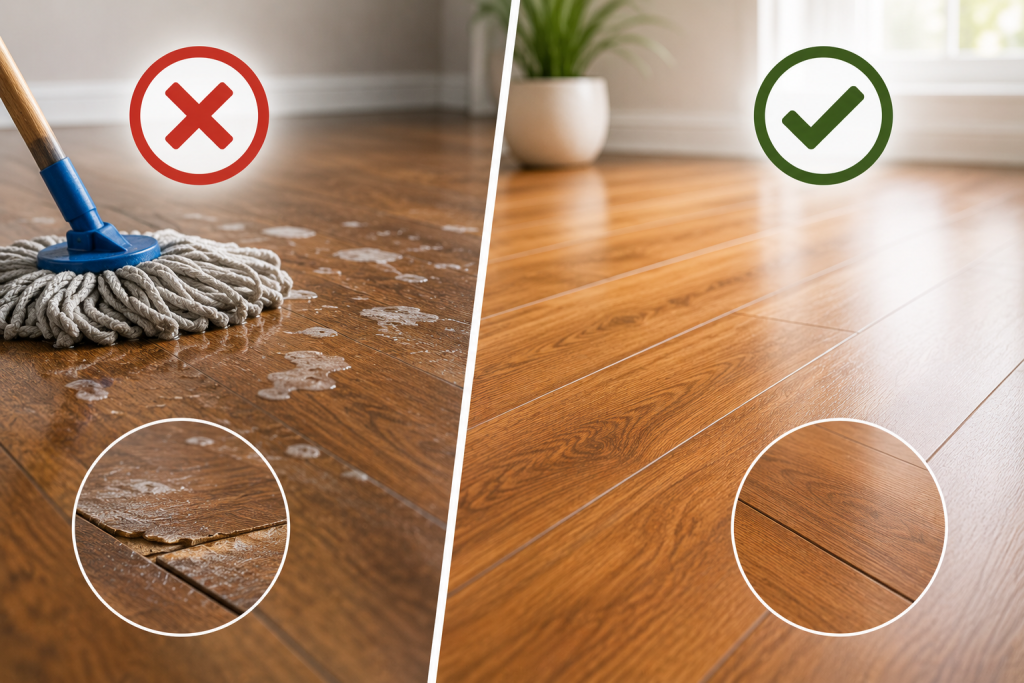
Tile floors are more resistant, but using acidic or abrasive cleaners can damage grout lines and cause discoloration. Laminate flooring is particularly sensitive to moisture, meaning even slightly damp mopping done incorrectly can lead to edge swelling. These issues often develop gradually, making them hard to detect early. However, consistent correct cleaning practices are a key part of effective residential flooring upkeep and long-term floor protection.
Hardwood Floor Damage from Common Errors
Among all flooring maintenance mistakes, errors involving hardwood floors tend to be the most costly because damage is often permanent or requires professional refinishing. Hardwood is durable but highly sensitive to moisture, abrasive tools, and improper cleaning products. One of the biggest contributors to hardwood floor damage is excessive water use during cleaning. Even sealed hardwood can absorb moisture through seams, leading to warping, cupping, or long-term structural weakening. Another frequent issue is using harsh chemical cleaners that strip protective finishes, leaving the surface dull and vulnerable to scratches.
Scrubbing with rough pads or vacuuming with incorrect attachments can also create micro-scratches that accumulate over time, reducing the floor’s natural shine. Furniture dragged without protective pads adds further surface wear. These mistakes often force homeowners into early refinishing or repair cycles, increasing long-term maintenance costs. Proper cleaning techniques and product selection are essential for preserving hardwood floors and maintaining overall residential flooring upkeep quality.
Vinyl Floor Cleaning Mistakes to Avoid
Vinyl flooring is known for being low-maintenance, but several common flooring maintenance mistakes can still cause premature wear and dullness. Many homeowners assume vinyl is “damage-proof,” which often leads to improper care habits that reduce its lifespan. One major issue is using abrasive cleaners or wax-based products. These can leave behind residue or damage the protective wear layer, resulting in a cloudy or uneven finish. Another frequent problem is excessive scrubbing, which can gradually erode the surface texture.
A key part of preventing vinyl floor cleaning mistakes is avoiding harsh chemicals like ammonia or bleach unless specifically recommended by the manufacturer. These can break down the surface coating and reduce stain resistance over time. Over-wetting is another concern. While vinyl is water-resistant, standing water can seep into seams and edges, especially in older installations, leading to lifting or adhesive weakening. Proper cleaning with pH-neutral solutions and soft mops is essential for maintaining durability and appearance.
Tile Floor Maintenance Errors Explained
Even though tile is one of the most durable flooring materials, several flooring maintenance mistakes can still lead to long-term issues, especially in grout lines and surface finishes. Many homeowners assume tile is indestructible, but improper care can still reduce its appearance and hygiene. One of the most common tile floor maintenance errors is neglecting grout cleaning. Grout is porous, meaning it absorbs dirt, moisture, and stains over time. Without regular cleaning, it can discolor and become difficult to restore. Using overly harsh chemicals is another mistake, as acidic cleaners can weaken grout and cause it to crumble or fade.
Improper scrubbing tools also contribute to damage. Steel wool or overly abrasive brushes can scratch glazed tile surfaces, reducing their shine. In addition, skipping sealant applications on grout can allow moisture penetration, especially in kitchens and bathrooms. Consistent, gentle cleaning and periodic sealing are key to maintaining both appearance and durability in tiled flooring systems.
Laminate Flooring Mistakes Homeowners Make
Laminate flooring is popular in US homes because it offers a hardwood-like appearance at a lower cost, but several common flooring maintenance mistakes can significantly reduce its lifespan. Unlike hardwood, laminate has a fiberboard core that is highly sensitive to moisture and cannot be refinished once damaged. One of the most damaging laminate flooring mistakes is using excess water during cleaning. Even small amounts of standing moisture can seep into seams, causing swelling, bubbling, or edge lifting. Another frequent issue is using steam mops, which introduce heat and moisture simultaneously, both harmful to laminate surfaces.
Harsh cleaners and abrasive tools can also dull the protective wear layer, making the floor look worn much faster. Additionally, dragging heavy furniture without protective pads can lead to visible scratches that cannot be repaired. Proper care involves dry or lightly damp cleaning methods, along with consistent preventive maintenance to preserve both appearance and structural integrity over time.
Floor Care Troubleshooting Guide
A practical floor care troubleshooting approach helps homeowners identify and fix issues caused by common flooring maintenance mistakes before they turn into expensive repairs. Instead of treating symptoms randomly, it’s important to connect visible problems to their likely causes. For example, dull hardwood floors often result from using harsh cleaners or excessive moisture, both of which break down the protective finish. On vinyl flooring, streaking or cloudiness usually points to residue buildup from improper cleaning products. In tile flooring, dark grout lines typically indicate missed deep cleaning or lack of sealing.
Laminate flooring issues such as bubbling or edge lifting are commonly linked to water exposure or steam mopping. Recognizing these patterns early allows homeowners to adjust their maintenance routine and prevent further deterioration. Effective troubleshooting is a key part of long-term residential flooring upkeep, helping extend floor life and reduce unnecessary repair costs by correcting habits instead of only fixing damage.
Residential Flooring Upkeep Best Practices
Strong residential flooring upkeep habits are the most effective way to prevent long-term flooring maintenance mistakes and preserve both appearance and durability across all flooring types. In US homes, consistent routines matter more than occasional deep cleaning, especially in high-traffic areas. One of the most important best practices is maintaining a regular cleaning schedule using appropriate methods for each surface. Hardwood requires gentle, low-moisture cleaning, vinyl benefits from pH-neutral solutions, tile needs grout-focused care, and laminate should always avoid excess water exposure. Matching the right method to the material prevents unnecessary wear.

Preventive steps also play a major role. Using entry mats, furniture pads, and humidity control helps reduce scratches, moisture damage, and surface deterioration. These simple habits significantly reduce the risk of hardwood floor damage, vinyl wear, and tile grout issues. By combining proper cleaning techniques with preventive care, homeowners can extend flooring lifespan and minimize repair needs over time.
Cost of Ignoring Maintenance Mistakes
Ignoring common flooring maintenance mistakes may seem harmless at first, but over time it leads to significantly higher repair and replacement costs for homeowners. Small issues that go untreated often escalate into structural or surface-level damage that requires professional intervention. For example, repeated improper floor cleaning can weaken protective coatings on hardwood and vinyl, eventually requiring refinishing or full replacement. In tile flooring, neglected grout lines can allow moisture penetration, leading to cracking or mold issues that are expensive to restore. Laminate flooring mistakes, especially water exposure, often result in irreversible swelling that cannot be repaired.
The financial impact is not limited to repairs. Damaged flooring can also reduce overall home appeal, affecting resale value and increasing time on the market. Buyers are quick to notice worn or poorly maintained floors, which can lead to lower offers. Proper residential flooring upkeep is far more cost-effective than correcting damage after it occurs, making prevention a key financial strategy.
Final Verdict
Avoiding flooring maintenance mistakes is ultimately about building consistent habits rather than reacting to damage after it appears. In most US homes, long-term floor protection comes from a balanced approach that combines correct cleaning methods, preventive care, and timely repairs. Each flooring type has its own vulnerabilities, hardwood is sensitive to moisture, vinyl can be damaged by harsh chemicals, tile relies on grout integrity, and laminate is highly affected by water exposure. Understanding these differences is essential for effective residential flooring upkeep. The most reliable strategy is prevention first: use proper cleaning tools, avoid over-wetting surfaces, and protect high-traffic areas with mats and furniture pads. When issues do appear, addressing them early prevents small problems from turning into costly repairs or replacements. Ultimately, maintaining floors correctly is not just about appearance, it directly impacts durability, maintenance costs, and long-term home value.
FAQs
What are the most common flooring maintenance mistakes?
The most common flooring maintenance mistakes include using too much water, harsh chemicals, incorrect cleaning tools, and ignoring early signs of damage.
How does improper floor cleaning damage floors?
Improper floor cleaning can weaken protective coatings, cause warping in wood, leave residue on vinyl, and damage grout in tile flooring.
What causes hardwood floor damage the most?
The main causes of hardwood floor damage are excess moisture, abrasive cleaning tools, and harsh chemical cleaners.
What are vinyl floor cleaning mistakes to avoid?
Common vinyl floor cleaning mistakes include using wax-based products, ammonia cleaners, and overly abrasive scrubbing methods.
What are tile floor maintenance errors homeowners make?
Frequent tile floor maintenance errors include neglecting grout cleaning, skipping sealing, and using acidic cleaning products.
Can laminate flooring mistakes be repaired?
Some laminate flooring mistakes like minor surface wear can be managed, but water damage and swelling are usually permanent.
What is the best way to avoid flooring maintenance mistakes?
The best approach is consistent residential flooring upkeep using proper products, correct cleaning methods, and preventive care habits.