


Common Garage Door Problems and Fixes
Garage doors are one of the hardest-working systems in a home, yet they are often overlooked until something stops working properly. From unexpected movement issues to worn mechanical components, even minor problems can affect convenience, safety, energy efficiency, and daily routines. Many common garage door issues start with small warning signs that become more expensive if ignored.
Strange sounds, delayed movement, uneven operation, or inconsistent opening and closing can all signal developing problems. Understanding common garage door problems helps homeowners identify issues earlier and make smarter maintenance and repair decisions. This guide explains the most frequent garage door concerns, what typically causes them, and the practical steps homeowners can take to restore reliable performance and reduce future disruptions.
Why Garage Door Problems Should Not Be Ignored?
Garage door issues rarely improve on their own. What begins as minor wear, slower movement, or inconsistent operation can eventually develop into more expensive repairs and unexpected interruptions. Because garage doors combine moving parts, mechanical systems, and daily use, even small performance changes may indicate developing problems behind the scenes. Ignoring those early warning signs can increase strain on connected components and shorten the lifespan of the overall system.
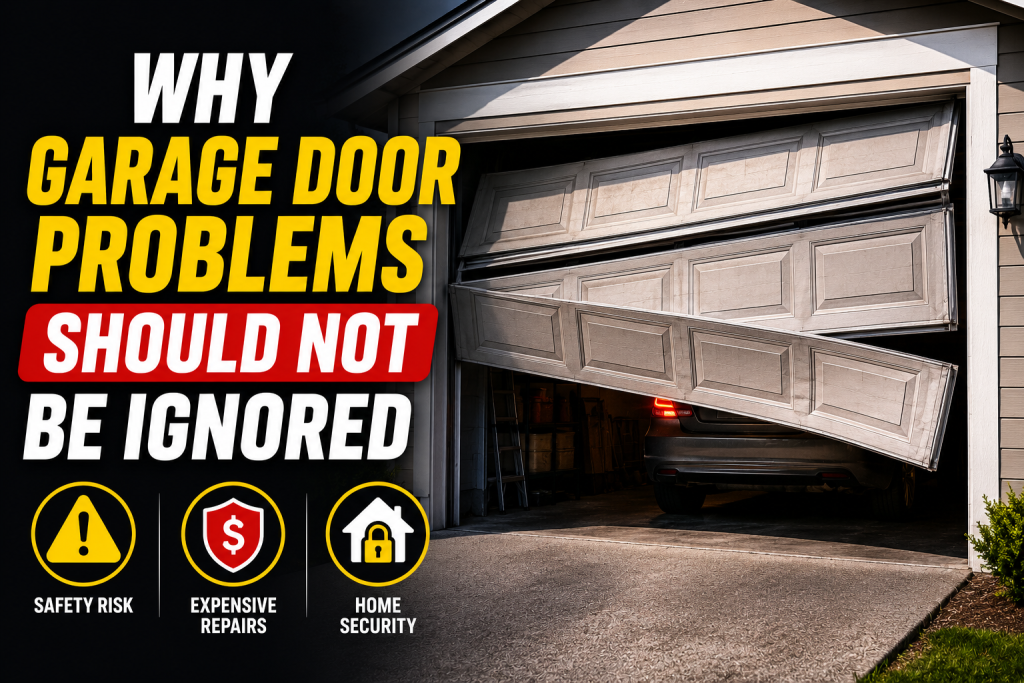
One of the most important reasons to address garage door problems early is protecting both convenience and household safety. A malfunctioning door can affect vehicle access, reduce energy efficiency, and create unnecessary wear on surrounding hardware. Routine inspections and timely action often help homeowners avoid larger repair costs and maintain reliable performance throughout the year.
Garage Door Won’t Open or Close Properly
One of the most frustrating issues homeowners experience is a garage door that refuses to open or close consistently. This problem may appear suddenly or develop gradually over time as components begin to wear. Common causes include blocked safety sensors, track misalignment, damaged rollers, power interruptions, or settings that need adjustment. In some cases, opener communication problems may also affect operation. If a garage door won’t close, start by checking whether the sensor area is clear and confirming that nothing is interrupting alignment. Homeowners should also inspect visible tracks for debris and confirm that the opener is receiving power.
Unusual Noise During Operation
Garage doors naturally produce some sound during operation, but sudden increases in noise often signal developing mechanical issues. Grinding, rattling, squeaking, or popping sounds may indicate worn components or improper movement. Common causes include loose hardware, dry rollers, track friction, aging hinges, or unbalanced door movement. Seasonal temperature changes can also affect material expansion and contribute to unusual operation.
If a noisy garage door becomes more noticeable over time, inspect visible hardware and check for signs of wear or misalignment. Lubricating approved moving parts and tightening accessible fasteners may improve performance in some situations. Among recurring garage door problems, unusual noise is often an early warning sign that should be addressed before larger mechanical issues develop.
Slow or Uneven Movement
A garage door should move smoothly and consistently during operation. When movement becomes slower than usual or appears uneven, it may indicate increasing resistance within the system. Several issues can contribute to this condition, including worn rollers, track obstruction, imbalance, hardware deterioration, or reduced opener performance. In some cases, environmental factors such as temperature shifts and accumulated debris can also affect movement.
Homeowners should observe whether the door hesitates, jerks, or appears uneven while opening and closing. Identifying patterns early may help prevent unnecessary strain on connected components. Among common garage door problems, slow or inconsistent movement is often overlooked because the system continues functioning temporarily. Addressing changes early can help reduce long-term wear and maintain reliable performance.
Remote or Opener Malfunctions
Garage door openers and remote systems play a major role in everyday convenience, which makes performance issues especially noticeable. When commands stop responding consistently, the cause may not always be the opener itself. Common reasons include weak remote batteries, interrupted power supply, signal interference, worn internal components, or settings that need adjustment. In some cases, sensor communication can also affect overall system behavior.
Homeowners experiencing garage door opener problems should begin with simple checks such as replacing batteries, confirming power connections, and testing controls from different distances. Among recurring garage door problems, opener-related issues are often easier to diagnose early before unnecessary stress affects other parts of the system.
Broken Springs and Cable Garage Door Problems
Garage door springs and cables help manage the weight and controlled movement of the door. Because these components operate under constant tension, wear can develop gradually and eventually affect performance. Signs of spring or cable issues may include uneven movement, sudden stopping, visible gaps in spring coils, unusual sounds, or difficulty opening the door.

When tension-related components begin failing, the entire system can become less stable and more difficult to operate. A broken garage door spring is one of the more common mechanical failures homeowners encounter and is often accompanied by noticeable changes in movement or balance. Among serious garage door problems, spring and cable failures should not be ignored because continued operation may increase wear on connected components and lead to more extensive repairs.
Weather-Related Wear and Damage
Garage doors are exposed to changing weather conditions throughout the year, which can gradually affect performance and durability. Temperature swings, humidity, moisture, and seasonal expansion can place additional stress on moving components and protective materials. In colder climates, freezing conditions may affect seals and movement consistency. In warmer regions, heat exposure can contribute to material wear and faster deterioration of certain components. Moisture can also encourage corrosion and reduce long-term reliability. Homeowners should periodically inspect weather seals, visible hardware, tracks, and exterior surfaces to identify signs of wear before problems become more severe.
Preventive Maintenance Tips
Preventive maintenance is one of the most effective ways to reduce unexpected garage door issues and extend the lifespan of the system. Small inspections performed throughout the year can help identify wear before it develops into larger repairs.
Homeowners can improve long-term performance by following a few simple practices:
- Inspect visible hardware regularly
- Keep tracks free from debris
- Test balance and movement consistency
- Check weather seals seasonally
- Lubricate approved moving components
- Monitor unusual sounds and delayed operation
Consistent garage door maintenance can help reduce unnecessary strain and improve everyday reliability. Because many garage door problems develop gradually, routine maintenance often becomes the simplest and most cost-effective way to maintain smooth operation over time.
Conclusion
Garage doors play an important role in convenience, security, energy performance, and everyday household function. While many issues begin as small changes in movement or sound, early attention can often prevent larger disruptions and unnecessary repair costs. Understanding the most common garage door problems allows homeowners to recognize warning signs sooner and make more informed decisions about maintenance and repairs.
Frequently Asked Questions
How do I know if I have garage door problems?
Common warning signs of garage door problems include unusual sounds, uneven movement, delayed response, visible wear, or inconsistent opening and closing. Addressing these symptoms early can help prevent larger system issues and reduce long-term repair costs.
Can I fix common garage door issues myself?
Basic inspections and maintenance tasks may be manageable for homeowners, but repairs involving tension components, cables, or internal mechanisms usually require additional caution.
How often should a garage door be inspected?
Most homeowners benefit from inspecting visible components and overall performance at least a few times per year, especially before seasonal weather changes.
What causes garage doors to stop working suddenly?
Unexpected issues may result from power interruptions, worn components, sensor interference, mechanical imbalance, or normal long-term wear.
When should a garage door be replaced instead of repaired?
Replacement may become more practical when recurring failures, extensive wear, structural damage, or repeated repair costs begin affecting long-term reliability and performance.