


Home Remodeling Budget Planning Guide (2026 Cost Strategy)
A well-structured home remodeling budget is the foundation of any successful renovation project. Without clear financial planning, even small upgrades can quickly escalate into unexpected costs, delays, and unfinished work. This is why proper renovation budget planning is considered just as important as design or material selection. Homeowners often underestimate how many variables affect home remodel costs, including labor rates, material quality, permit requirements, and regional pricing differences across the United States. These factors can significantly impact the final cost of a project if not accounted for early.
Budget planning is not just about setting a spending limit; it’s about creating a roadmap for how money will be allocated across different stages of the remodel. This includes demolition, structural work, plumbing, electrical systems, finishes, and contingency reserves. A strong financial plan helps homeowners prioritize needs over wants, avoid overspending, and make informed decisions throughout the renovation process. In the long run, effective budgeting improves project outcomes and reduces financial stress during construction.
Home Remodeling Budget Overview
Understanding home remodel costs is a critical first step in building a realistic home remodeling budget, because renovation expenses can vary widely based on project size, location, and material quality. In the United States, even similar remodels can differ significantly depending on labor rates and regional construction demand. Most homeowners discover that costs fall into three main categories: labor, materials, and permits. Labor often represents the largest portion of the budget, especially for projects involving plumbing, electrical work, or structural changes. Materials can range from budget-friendly options to premium finishes, which heavily influence total spending.
Another major factor affecting home renovation expenses is the scope of work. A cosmetic update, such as painting, flooring, and fixture replacement, costs significantly less than a full structural remodel involving layout changes or system upgrades. Unexpected expenses are also common, particularly in older homes where hidden issues like outdated wiring or water damage may be uncovered during demolition. For this reason, professionals often recommend adding a contingency buffer to any home remodeling budget to ensure financial stability throughout the project.
Renovation Budget Planning Step-by-Step
Effective renovation budget planning requires a structured approach that breaks the project into clear financial stages rather than treating it as a single lump-sum expense. This method helps homeowners maintain control over their home remodeling and reduce the risk of overspending. The first step is defining project scope. Homeowners should clearly identify what areas will be remodeled and whether the work is cosmetic, structural, or full-scale. This directly determines overall home remodel costs and helps set realistic expectations.
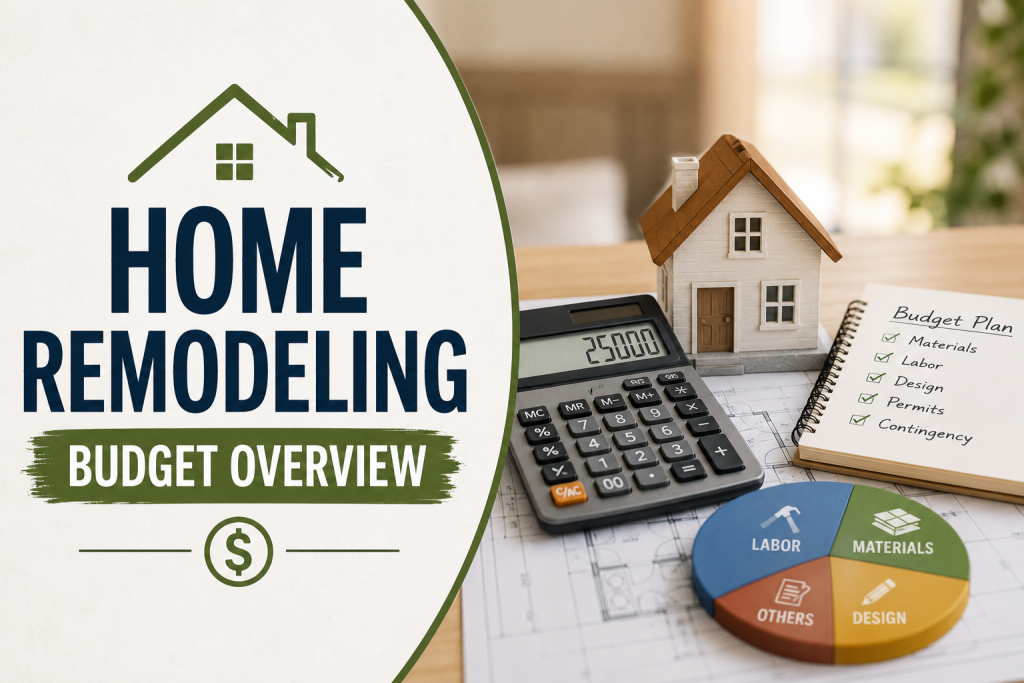
Next, allocate your budget across major categories: demolition, labor, materials, permits, and finishing work. Labor typically consumes the largest share, especially when plumbing or electrical systems are involved. Materials should be selected based on durability and long-term value, not just initial price. After setting allocations, include a contingency fund, typically 10–20%, to cover unexpected home renovation expenses such as hidden damage or code upgrades discovered during construction. Finally, track spending throughout the project. Regular monitoring ensures the home remodeling budget stays aligned with actual costs and prevents financial surprises during later stages of the renovation.
Remodeling Budget Checklist for Homeowners
A detailed remodeling budget checklist is one of the most effective tools for keeping a remodeling budget under control. It ensures every cost is accounted for before work begins, reducing the risk of unexpected financial pressure during the project. Start by listing all major project phases: demolition, structural work, plumbing, electrical, installation, and finishing. Each phase contributes differently to total home remodel costs, and missing even one category can distort your overall budget planning.
Next, itemize materials separately from labor. This distinction is essential because material choices, such as tile quality, cabinetry, or fixtures, can significantly increase home renovation expenses depending on the level of finish selected.
Permits and inspection fees should also be included in the checklist. Many homeowners overlook these administrative costs, but they are often required for structural or plumbing changes and can vary by location. Finally, always include a contingency line item. Unexpected issues like water damage, outdated wiring, or code compliance upgrades are common in renovation projects and can quickly impact the home remodeling budget if not planned for in advance.
Hidden Home Renovation Expenses to Expect
One of the biggest challenges in managing a home remodeling budget is accounting for hidden costs that often appear once construction begins. These home renovation expenses are not always visible during initial planning but can significantly impact total project spending. A common hidden expense is structural damage discovered during demolition. Older homes frequently reveal issues such as water damage, mold, or outdated framing that must be repaired before new work can proceed. These repairs can quickly increase overall home remodel costs.
Another overlooked category is code compliance upgrades. When walls are opened, contractors may need to bring electrical or plumbing systems up to current building standards, which adds unplanned labor and material costs. Delivery delays and material substitutions can also affect the budget. If selected products are unavailable, homeowners may need to choose higher-priced alternatives or pay additional shipping fees. Finally, labor overruns are common when projects take longer than expected due to complexity or unforeseen issues. Including a contingency fund in the home remodeling is essential to absorb these financial surprises without disrupting the entire renovation plan.
Remodeling Cost Estimator – How Professionals Calculate Costs
A remodeling cost estimator is a structured method professionals use to calculate a realistic home remodeling budget before construction begins. Unlike rough homeowner guesses, professional estimates are built using detailed breakdowns of labor, materials, and project complexity. Contractors typically start by measuring the scope of work, including square footage, number of fixtures, and any required structural changes. These measurements directly influence home remodel costs, especially when plumbing or electrical systems must be relocated.
Next, labor costs are calculated based on trade specialization. Skilled work such as tile installation, plumbing, and electrical wiring is priced higher due to expertise and time requirements. Labor often represents the largest portion of overall home renovation expenses. Material selection is then added to the estimate, ranging from budget-grade finishes to premium products. Even small changes, such as switching tile types or upgrading fixtures, can significantly shift the final budget. Finally, professionals add contingency allowances to account for unknown conditions discovered during demolition. This ensures the home remodeling remains realistic and adaptable throughout the project lifecycle.
Renovation Financial Planning Strategies
Effective renovation financial planning goes beyond setting a basic home remodeling budget; it involves structuring spending decisions to maximize value while controlling risk. Homeowners who plan financially with strategy in mind are better able to manage home remodel costs and avoid unnecessary overspending. One of the most effective strategies is prioritizing spending based on impact. Structural and system-related upgrades such as plumbing, electrical work, and waterproofing should always come first, as they directly affect safety and long-term durability. Cosmetic upgrades can then be layered on based on remaining budget.
Another important approach is phased remodeling. Instead of completing the entire project at once, homeowners can break renovations into stages, allowing better cash flow management and reducing financial pressure. This is especially useful for large-scale renovations. It is also important to align spending with long-term value. Investing in durable materials and energy-efficient fixtures can reduce future home renovation expenses while improving property appeal. Professional guidance from contractors or designers can further improve budgeting accuracy and help ensure the home remodeling budget is allocated efficiently across all project areas.
House Remodel Budgeting by Project Type
Effective house remodel budgeting depends heavily on the type of renovation being completed, since different projects carry very different home remodel costs and resource requirements. Understanding these differences helps homeowners set a more accurate budget and avoid unrealistic expectations. Kitchen and bathroom remodels are typically the most expensive due to plumbing, electrical work, and fixture upgrades. These projects often require specialized labor, which increases overall home renovation expenses compared to simpler updates like painting or flooring replacement.
Basement remodels and room additions also fall into higher-cost categories because they involve structural changes, insulation, and sometimes new HVAC or plumbing systems. These projects require careful budgeting and often include larger contingency allowances. On the lower end, cosmetic upgrades such as painting, cabinet refacing, and fixture replacement are more affordable and easier to manage within a fixed home remodeling budget. These projects are ideal for homeowners seeking noticeable improvements without major structural changes. By categorizing projects correctly, homeowners can better prioritize spending and allocate funds where they deliver the highest value and impact.
Cost-Saving Strategies Without Reducing Quality
Managing a home remodeling budget effectively is not just about cutting costs, it’s about spending smarter to maintain quality while reducing unnecessary home renovation expenses. Strategic cost-saving decisions can significantly improve project efficiency without compromising long-term durability or design appeal. One of the most effective strategies is selecting mid-range materials that balance affordability and performance. Instead of choosing the cheapest options, homeowners should focus on durable, low-maintenance materials that reduce replacement and repair costs over time, helping stabilize overall home remodel costs.
Another approach is keeping the existing layout whenever possible. Avoiding major plumbing or electrical relocations can dramatically reduce labor expenses, which often represent the largest portion of a renovation budget . Homeowners can also save by sourcing materials during seasonal sales or through bulk purchasing at retailers like Home Depot and Lowe’s. Finally, prioritizing essential upgrades over cosmetic changes ensures that the remodeling budget is allocated to improvements that add real functionality and long-term value rather than short-term aesthetics.

Final Recommendation
A successful home remodeling budget is built on smart allocation, not just total spending. The most effective strategy is to divide funds based on impact, ensuring that essential systems and high-value upgrades receive priority over purely cosmetic changes. This approach helps control home remodel costs while maximizing long-term return. A practical rule is to allocate the largest portion of the budget to structural and mechanical work. This includes plumbing, electrical systems, and waterproofing, which form the foundation of any renovation. Without strong fundamentals, even high-end finishes will fail to perform well over time. Next, invest in durable materials for high-use areas. Bathrooms and kitchens should receive priority because they contribute significantly to both daily comfort and resale value. These choices directly influence long-term home renovation expenses by reducing maintenance and replacement needs. Finally, reserve a contingency fund of at least 10–20% to handle unexpected issues. This protects the overall budget from disruptions caused by hidden damage or scope adjustments. Smart allocation ensures the renovation is both financially controlled and structurally sound, delivering better performance and value over time.
FAQs
What is a realistic home remodeling budget?
A realistic home remodeling budget depends on project size, materials, and location, but most homeowners should plan for both labor and materials plus a 10–20% contingency for unexpected home renovation expenses.
How do I estimate home remodel costs accurately?
Accurate home remodel costs are best estimated by breaking the project into categories like labor, materials, permits, and contingency, or using a professional remodeling cost estimator.
What is the biggest mistake in renovation budgeting?
One of the biggest mistakes is failing to include hidden costs such as structural repairs or code updates, which can significantly increase home renovation expenses.
How much should I save for a remodel contingency?
Experts typically recommend setting aside 10–20% of your home remodeling budget to cover unexpected issues during construction.
Can I reduce remodeling costs without lowering quality?
Yes, by choosing mid-range materials, keeping existing layouts, and planning carefully, you can control home remodel costs without sacrificing durability or performance.