


Interior House Painting Cost in 2026: Full Room-by-Room Breakdown
Understanding interior house painting cost in 2026 starts with recognizing that pricing is not fixed, it varies based on several structural, material, and labor-related factors. No two homes receive the same quote because every space has different preparation needs, surface conditions, and design requirements. One of the biggest cost drivers is room size and surface area. Larger rooms require more paint, more labor hours, and more preparation work, which directly increases the overall room painting price. Ceiling height and architectural details like trims, baseboards, and crown molding also add complexity.
Another major factor is surface condition. Walls that require patching, sanding, or priming increase interior paint labor price, since preparation takes more time than actual painting in many cases. Older homes or previously unmaintained surfaces typically fall into higher-cost categories. Paint quality and brand selection also influence total cost. Premium options from brands like Sherwin-Williams or Benjamin Moore can raise material expenses but often provide better coverage and durability. Finally, regional labor rates across the United States can significantly shift pricing, making a proper painting estimate lead essential before starting any project.
Average Interior house painting cost in the US
When breaking down interior house painting cost in 2026, one of the largest components is interior paint labor cost, which often accounts for more than half of the total project price in professional jobs. Labor pricing varies widely across the United States depending on region, experience level, and project complexity. On average, professional painters in the US charge either by square foot or by hour. Per-square-foot pricing is more common for full-home projects, while hourly rates are often used for smaller or highly detailed work. This directly impacts the final home repaint price, especially in homes with multiple rooms or complex layouts.
Labor costs also increase when preparation work is required. Tasks like wall repair, sanding, priming, and masking significantly extend project time. In many cases, preparation takes longer than actual painting, particularly in older homes or spaces with damaged surfaces. This is a key reason why price to paint walls can vary so much between similar-sized rooms. Ceiling height, trim work, and architectural details also raise labor intensity. Rooms with crown molding, built-in shelving, or textured walls require more precision and time, increasing overall room painting price. In general, labor is not just about painting, it includes preparation, detail work, cleanup, and finishing, all of which contribute to the final professional estimate.
Price to paint walls: Materials vs Labor Breakdown
When estimating interior house painting cost, it’s important to separate the two main components: materials and labor. Understanding this split helps homeowners see where their money is going and how different choices affect the final price to paint walls. Materials typically include paint, primer, tape, rollers, brushes, drop cloths, and minor repair supplies. In most US homes, paint itself is the most significant material expense, especially when using premium brands like Sherwin-Williams or Benjamin Moore. Higher-quality paints usually cost more upfront but often require fewer coats and deliver better long-term durability. Labor, however, usually makes up the larger portion of the total home repaint price. This includes surface preparation, priming, cutting in edges, rolling walls, applying multiple coats, and cleanup. Even simple rooms can require several hours of labor depending on condition and complexity.
The balance between materials and labor can shift depending on the project. For example, a DIY project may lower labor costs significantly but increase material waste if mistakes occur. On the other hand, professional work raises interior paint labor price but typically ensures faster completion and more consistent results. Ultimately, a clear painting estimate lead should always show a breakdown of both materials and labor so homeowners understand the true structure of their investment.
Bedroom painting price
When evaluating interior house painting cost, bedrooms are usually one of the most predictable and budget-friendly spaces to estimate. The bedroom painting cost is generally lower compared to larger living areas because bedrooms tend to have fewer architectural details, simpler layouts, and smaller wall surface areas. In most cases, bedroom pricing is influenced by square footage, wall condition, and the number of coats required. A standard bedroom with smooth walls and minimal prep work will fall on the lower end of the room painting price range. However, costs can increase if there are repairs needed, textured walls, or accent color changes that require extra coats.
Paint selection also plays a role. Using premium paints from brands like Sherwin-Williams or Benjamin Moore may increase material costs slightly, but it often improves coverage and reduces the need for multiple layers, which can balance out the overall price to paint walls. Labor remains the biggest variable. Professional interior paint labor price for bedrooms includes prep, cutting in edges, rolling, and cleanup. Bedrooms with closets, trim work, or vaulted ceilings may take longer and increase pricing. Overall, bedrooms are often the most efficient rooms to repaint, making them a common starting point for homeowners planning a full home repaint price project or gradual interior updates.
Living Room Painting pricing Breakdown
When reviewing interior house painting cost, the living room is often one of the most expensive individual spaces due to its size, visibility, and design complexity. The living room painting price is typically higher than bedrooms because this space usually requires more paint, more labor hours, and more detailed finishing work. Living rooms often include larger wall surfaces, higher ceilings, and architectural features such as accent walls, built-in shelving, fireplaces, or trim detailing. Each of these elements increases both preparation time and application effort, which directly impacts room painting price.
Lighting also plays a role in cost considerations. Since living rooms typically have multiple light sources and large windows, painters must ensure even coverage and consistent finish quality under different lighting conditions. This can increase interior paint labor price, especially when precision cutting and multiple coats are required. Material choice also influences the final cost to paint walls. Premium paints from brands like Sherwin-Williams and Benjamin Moore are commonly used in living areas because they provide better durability and washability, but they may increase upfront material expenses. Overall, the living room is often treated as a focal point in a home repaint cost project, making it one of the most carefully estimated and detail-intensive areas in interior painting.
Room painting price by Size and Complexity
When estimating interior house painting cost, one of the most reliable ways to understand pricing is by breaking it down into room size and complexity. The overall room painting price is not just about square footage; it also depends on how difficult the space is to prepare and paint. Smaller rooms, such as compact bedrooms or home offices, typically fall on the lower end of the cost spectrum. They require less paint, fewer labor hours, and simpler setup. However, even small spaces can increase in price if walls need significant prep work, which raises interior paint labor price. Medium-sized rooms like standard living rooms or dining areas often represent the baseline for most estimates. These spaces usually include moderate wall area, standard ceiling height, and some trim work, which keeps the price to paint walls relatively balanced.
Large or complex rooms introduce additional pricing factors. High ceilings, staircases, vaulted areas, and architectural details such as crown molding or built-ins significantly increase labor time and difficulty. These elements directly impact the overall home repaint price because they require more precision and extended work hours. Complexity also affects material usage. Uneven surfaces or textured walls may require additional coats of paint, especially when using premium products from brands like Sherwin-Williams or Benjamin Moore. Ultimately, room size sets the baseline, but complexity determines how far the final cost moves above or below that baseline.
Home repaint price for Full Interiors
When evaluating interior house painting cost, a full-home project introduces a different scale of planning compared to single-room pricing. The overall home repaint price is influenced not only by square footage but also by consistency requirements across multiple rooms, hallways, ceilings, and trim work. One of the biggest cost drivers in whole-home repainting is scale efficiency. While larger projects may reduce the per-room rate slightly, they often increase total labor hours due to extended preparation, color transitions, and sequencing work between spaces. This is where interior paint labor price becomes a major factor in final estimates. Color strategy also impacts cost. Using a consistent palette throughout the home can reduce complexity and speed up application, while multiple accent colors or finish changes increase time and material handling. This directly affects the overall price to paint walls across different areas.
Preparation is another major consideration. Full repaints often involve patching, sanding, priming, and cleaning across every surface, especially in older homes. This level of preparation significantly influences the final room painting price when multiplied across the entire property. Material selection also plays a role. High-quality paints from brands like Sherwin-Williams and Benjamin Moore are commonly used for whole-home projects to ensure consistent finish quality and long-term durability. Overall, full interior repainting is less about individual rooms and more about system-wide planning, where efficiency, consistency, and preparation define the final investment.
Painting estimate lead for Homeowners
A reliable interior house painting cost estimate starts with understanding how professionals build pricing, not just the final number. A proper painting estimate guide breaks the project into measurable components so homeowners can clearly see how the total home repaint price is calculated. Most estimates begin with square footage. Contractors measure total wall surface area, then apply a per-square-foot rate that includes both labor and materials. This forms the baseline for the price to paint walls, but it is only the starting point, not the final price. Next, preparation requirements are evaluated. Walls that need patching, sanding, or priming increase interior paint labor price, since prep work often takes longer than painting itself. Older homes or previously unmaintained surfaces typically receive higher estimates for this reason.
Paint selection is another key factor. Premium products from brands like Sherwin-Williams or Benjamin Moore may raise material costs, but they can reduce the number of coats needed, which may balance overall pricing. Room complexity is also included in the estimate. Features like vaulted ceilings, trim work, stairwells, and accent walls increase labor time and raise the final room painting price. A complete estimate should always provide a clear breakdown of labor, materials, prep work, and scope so homeowners can compare quotes accurately and avoid hidden costs.
How to Reduce Interior House Painting Cost Without Sacrificing Quality?
Reducing interior house painting cost doesn’t mean cutting corners; it means making smarter decisions before and during the project so you avoid unnecessary labor, wasted materials, and avoidable rework. With the right approach, homeowners can significantly lower their overall home repaint price while still achieving a professional finish.
Interior House painting cost: Plan Everything Before Buying Paint
One of the most effective ways to control price to paint walls is to finalize color choices, room order, and finish types before purchasing materials. Last-minute changes often lead to wasted paint and additional trips, which increases total project cost.
Prepare Walls Yourself When Possible
Doing basic prep work can reduce interior paint labor price significantly. Cleaning walls, moving furniture, and handling minor patchwork can save hours of professional labor while still allowing experts to focus on application quality.
Stick to a Simple Color Strategy
Using fewer interior paint colors across multiple rooms reduces complexity and speeds up the job. Consistent palettes also reduce the risk of mistakes, repainting, and extra labor associated with color transitions.
Choose High-Coverage Paints
Premium paints from brands like Sherwin-Williams and Benjamin Moore often provide better coverage in fewer coats. This can lower both material usage and labor time, especially in large-scale projects.
Schedule Work Strategically
Timing matters. Coordinating rooms efficiently and avoiding unnecessary downtime helps reduce the total room painting price, especially in larger homes where sequencing impacts labor flow.
DIY vs Professional Painting Cost Comparison
When breaking down interior house painting cost, one of the most important decisions homeowners face is whether to handle the project themselves or hire professionals. The difference between DIY interior painting and professional work is not just price; it’s also time, quality, and long-term value. DIY painting is often chosen to reduce upfront expenses. Homeowners typically save on interior paint labor prices, which is usually the largest portion of a professional quote. However, they still need to purchase all materials, including rollers, brushes, primer, tape, and quality paints from brands like Sherwin-Williams or Benjamin Moore. Mistakes, extra coats, and wasted materials can also increase the final price to paint walls in unexpected ways.
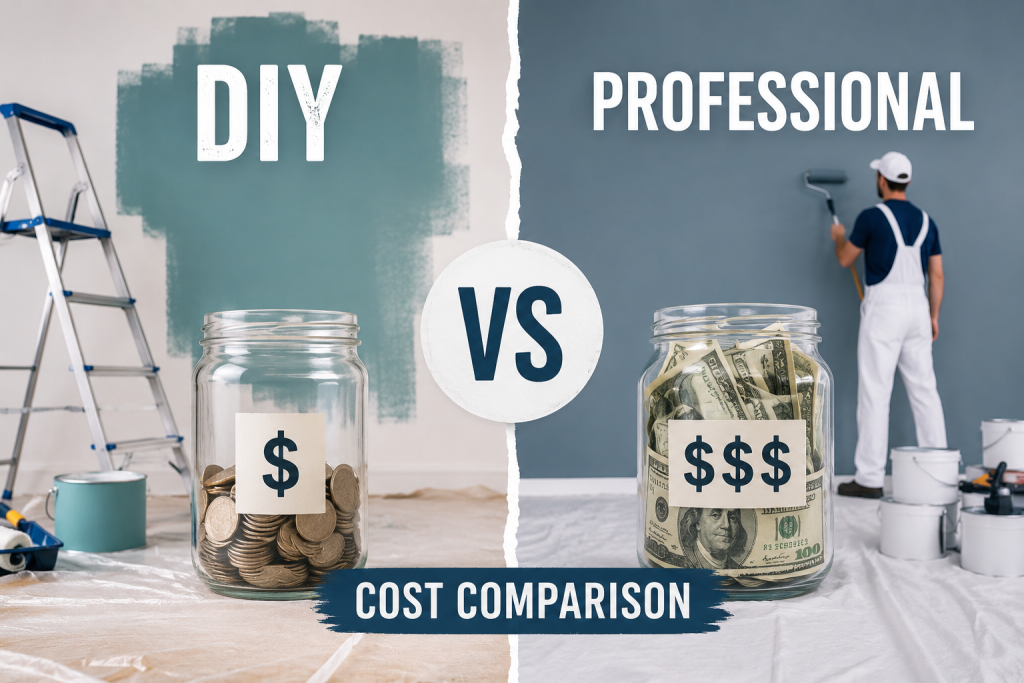
Professional painting, on the other hand, comes with higher upfront labor costs but delivers efficiency and consistency. Experienced painters follow a structured process that reduces errors, improves coverage, and speeds up completion. This often results in a more predictable home repaint price, especially for larger or more complex projects. Time is another major factor. A DIY project can take several weekends depending on skill level, while professionals can complete the same room painting price scope in a fraction of the time with a dedicated crew. Ultimately, the decision comes down to budget flexibility versus quality assurance and time efficiency.
Common Interior Painting Mistakes
When planning interior house painting cost, many homeowners unintentionally increase their overall budget by making avoidable mistakes during preparation or application. These errors often lead to extra labor, wasted materials, and higher home repaint price than originally expected.
- One of the most common mistakes is skipping proper surface preparation. Failing to clean, patch, or sand walls can cause poor paint adhesion, leading to uneven coverage and the need for additional coats. This directly increases interior paint labor price and extends project timelines.
- Another frequent issue is underestimating material needs. Not buying enough paint, or choosing the wrong finish, can result in color inconsistencies and multiple store runs, raising the overall price to paint walls. Premium paints from brands like Sherwin-Williams or Benjamin Moore can help reduce this risk due to better coverage.
- Poor planning around room sequencing is also a costly mistake. Painting rooms in the wrong order or without considering drying times can slow down progress and increase labor inefficiency, which affects the total room painting price. Finally, ignoring lighting conditions during color selection can lead to dissatisfaction and repainting. Without proper testing, homeowners may end up changing colors after application, significantly increasing overall project expense.
Avoiding these mistakes is one of the simplest ways to control budget and achieve a more predictable painting outcome.
Final Thoughts
Understanding interior house painting cost in 2026 is less about finding a single number and more about understanding how preparation, materials, and labor work together to shape the final budget. Every decision, from color choice to surface condition, directly influences the overall home repaint price. One of the most effective ways to control expenses is through proper planning. A clear painting estimate lead helps homeowners anticipate both visible and hidden costs, including prep work, material quantity, and interior paint labor price. When these elements are understood early, it becomes easier to avoid surprises during the project. Another key factor is consistency in decision-making. Choosing fewer colors, standard finishes, and a clear room-by-room strategy helps stabilize the room painting price across the entire home. Complex designs, multiple accent walls, and frequent changes can quickly increase labor time and total expenses. Material selection also plays a long-term role. High-quality paints from brands like Sherwin-Williams and Benjamin Moore may cost more upfront but often reduce repaint frequency and improve coverage efficiency, balancing the price to paint walls over time. Ultimately, controlling painting costs comes down to preparation, clarity, and smart choices, not just cutting corners. A well-planned project delivers better results, longer durability, and stronger value for every dollar spent.
Frequently Asked Questions
What is the average interior house painting cost in 2026?
The average interior house painting cost in 2026 depends on home size, prep work, and location. Most projects are priced per square foot, with additional charges for complex layouts, repairs, and premium finishes.
What affects room painting price the most?
The biggest factors in room painting price are wall condition, ceiling height, paint quality, and labor requirements. Rooms needing heavy prep work will always cost more than clean, ready-to-paint spaces.
How much is interior paint labor price in the US?
interior paint labor price typically makes up the largest portion of a project. It includes prep work, cutting in, rolling, and cleanup. Rates vary based on region and contractor experience.
What is included in a painting estimate lead?
A painting estimate lead usually includes labor, materials, surface preparation, number of coats, and total square footage. It may also include optional costs like trim or ceiling painting.
Is DIY interior painting cheaper than hiring professionals?
Yes, DIY interior painting can reduce labor costs, but homeowners still pay for materials and tools. However, mistakes or extra coats can sometimes increase the overall price to paint walls if not done correctly.