


Types of Interior Paint Finishes Explained for Home Value
Understanding interior paint finishes is the foundation of choosing the right look and performance for any room in a home. While paint color defines style, the finish determines how that color behaves on the wall, especially in terms of light reflection, durability, and maintenance. Every paint finish falls under different paint sheen levels, which control how much light is absorbed or reflected. Lower-sheen options like flat and matte absorb more light, creating a soft, smooth appearance that helps hide wall imperfections. Higher-sheen finishes like satin and semi-gloss reflect more light, making surfaces more durable but also more likely to show surface flaws.
This is why choosing the right interior wall finishes is just as important as selecting the color itself. A poorly matched finish can make even high-quality paint look uneven, especially under natural daylight or strong indoor lighting. For example, matte paint on walls is often chosen for living rooms and bedrooms because it creates a calm, modern aesthetic with minimal glare.
Paint Sheen Levels (From Flat to Gloss)
When comparing interior paint finishes, understanding paint sheen levels is essential because each level directly affects how a surface looks, feels, and performs over time. A clear paint sheen chart typically ranges from flat at the lowest end to high-gloss at the highest, with matte, satin, and semi-gloss in between.
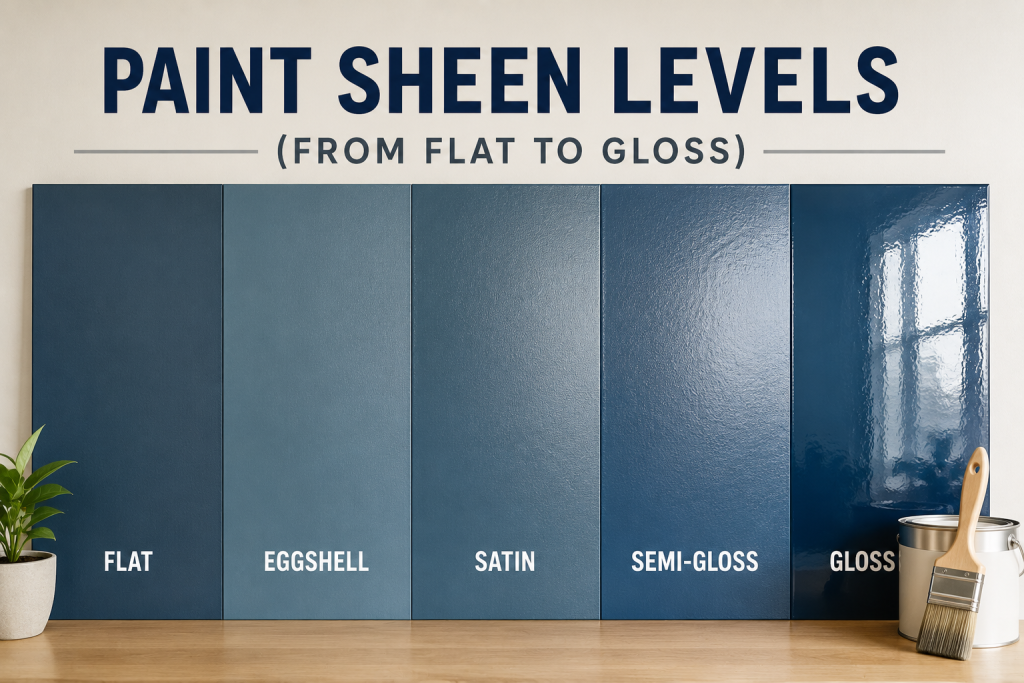
Flat Paint Finish (Lowest Sheen)
A flat paint finish absorbs nearly all light, creating a smooth, non-reflective surface. This makes it excellent for hiding drywall imperfections, patches, and uneven textures. However, it has the lowest durability and is not ideal for frequent cleaning or high-traffic areas.
Matte Paint Walls (Soft Modern Look)
Matte paint walls offer a slightly more refined version of flat paint. They still maintain a low-sheen appearance but with improved washability. This makes matte a popular choice for modern living rooms and bedrooms where a clean, soft aesthetic is preferred without too much reflection.
Satin Paint Guide (Balanced Performance)
A satin paint guide typically highlights satin as the most versatile finish. It offers a soft glow, better stain resistance, and higher durability than matte or flat. This makes it ideal for hallways, family rooms, and other moderately busy areas.
Semi-Gloss Paint Uses (High Durability)
At the higher end of the sheen scale, semi-gloss paint uses are focused on durability and easy cleaning. It is commonly used for trim, doors, kitchens, and bathrooms because it resists moisture and stands up well to frequent scrubbing. Premium systems from Sherwin-Williams, Benjamin Moore, and Behr offer all sheen levels, allowing homeowners to match finish type precisely to room function. Each level serves a specific purpose, and choosing correctly ensures both visual harmony and long-term durability throughout the home.
Flat Paint Finish: Pros and Cons
The flat paint finish sits at the lowest end of the paint sheen levels scale and is widely used in interior design where hiding surface imperfections is more important than durability. In most paint sheen charts, flat is considered the least reflective option, making it a go-to choice for smooth, soft-looking walls. One of the biggest advantages of a flat paint finish is its ability to conceal flaws. It effectively hides drywall patches, uneven textures, and minor surface imperfections by absorbing light instead of reflecting it. This makes it especially useful in older homes or spaces where walls are not perfectly smooth. However, the main drawback is durability. Flat paint is more prone to scuffs, stains, and wear, and it does not handle frequent cleaning well. Even light scrubbing can sometimes affect the surface, which limits its use in high-traffic or high-contact areas.
Because of this, flat finishes are typically best suited for ceilings, formal spaces, or low-traffic rooms where walls are rarely touched. It is less ideal for kitchens, hallways, or children’s rooms where maintenance and cleaning are more frequent. Premium paint lines from Sherwin-Williams and Benjamin Moore often improve coverage and application smoothness in flat finishes, while Behr provides more budget-friendly options for general residential use. Overall, flat paint works best when visual softness and imperfection-hiding ability are the top priorities over washability and long-term durability.
Matte Paint Walls: Modern Look with Soft Texture
Matte paint walls have become one of the most popular choices in modern interior paint finishes because they strike a balance between the softness of flat paint and the improved durability needed for everyday living. In most paint sheen chart comparisons, matte sits just above flat, offering a refined, low-sheen appearance without heavy reflectivity. One of the key benefits of matte finishes is their modern aesthetic. They create a smooth, elegant surface that reduces glare from natural and artificial lighting, making rooms feel calm and visually balanced. This is especially valuable in open-concept spaces where lighting changes throughout the day. Matte paint also performs well at hiding minor imperfections. Small wall dents, patches, and uneven textures are less noticeable compared to higher-sheen finishes. This makes it a strong choice for living rooms, dining areas, and bedrooms where visual comfort is a priority.
However, while matte is more durable than flat paint, it still has limitations in heavy-use environments. It is not as resistant to frequent scrubbing as satin or semi-gloss finishes, so it performs best in low-to-moderate traffic areas. Premium products from Sherwin-Williams and Benjamin Moore often enhance matte formulations with improved washability, while Behr provides cost-effective options suitable for standard residential interiors. Overall, matte finishes are ideal for homeowners who prioritize a clean, modern look with subtle texture and controlled light reflection.
Satin Paint Guide for Everyday Living Spaces
A satin paint guide is essential for homeowners who want a practical balance between style and durability in their interior paint finishes. Satin sits in the middle of the paint sheen levels, offering a soft, slightly reflective surface that performs well in most everyday living environments. One of the main advantages of satin is its strong balance between appearance and functionality. It reflects just enough light to create a clean, polished look without becoming overly glossy. This makes it a popular choice for living rooms, hallways, and family spaces where both aesthetics and durability matter. Satin also offers improved washability compared to matte and flat finishes. It can handle light scrubbing, fingerprints, and common household stains without quickly breaking down. This makes it especially useful in homes with children, pets, or frequent guests where walls are regularly cleaned.
Another benefit is its versatility across different lighting conditions. Satin performs well in both natural and artificial light, maintaining a consistent appearance throughout the day. However, because it reflects more light than matte, it can reveal wall imperfections if surface preparation is not done properly. Premium options from Sherwin-Williams and Benjamin Moore are widely used for their smooth application and durability, while Behr provides reliable, budget-friendly alternatives. Overall, satin is often considered the most versatile finish in any paint sheen chart, making it a go-to option for balanced, long-term interior performance.
Semi-Gloss Paint Uses in Kitchens and Bathrooms
Semi-gloss paint uses are most common in areas of the home that require maximum durability, moisture resistance, and frequent cleaning. In the hierarchy of paint sheen levels, semi-gloss sits near the top, offering a noticeable shine along with strong protective performance that makes it ideal for functional spaces. One of the main reasons semi-gloss is used in kitchens and bathrooms is its resistance to moisture and stains. The smoother, more sealed surface helps prevent water, grease, and grime from penetrating the wall. This makes it much easier to clean compared to lower-sheen interior paint finishes, which can absorb stains more easily. Semi-gloss is also widely used on trim, doors, and cabinetry. In these applications, it enhances architectural details by creating contrast against softer wall finishes like matte or satin. Its durability makes it especially suitable for surfaces that are frequently touched or handled.
However, semi-gloss is less forgiving when it comes to surface imperfections. Because it reflects more light, it can highlight uneven drywall, patchwork, or texture inconsistencies. Proper preparation is essential before application to achieve a smooth, professional result. Premium products from Sherwin-Williams and Benjamin Moore are commonly used for their strong durability and smooth finish quality, while Behr offers accessible options for standard residential projects. Overall, semi-gloss is best reserved for high-use areas where durability and easy maintenance are more important than hiding surface flaws.
How Interior Wall Finishes Affect Durability and Cleaning?
The choice of interior paint finishes directly impacts how well walls perform over time, especially in terms of durability, maintenance, and resistance to everyday wear. Each level in a paint sheen chart behaves differently once applied, which is why finish selection is just as important as color choice. Lower-sheen finishes like flat paint and matte paint walls are excellent at hiding imperfections but are less resistant to cleaning. They absorb more light and tend to show wear faster in high-traffic areas where frequent wiping or scrubbing is needed. Mid-sheen finishes such as satin provide a more balanced performance. According to most satin paint guide recommendations, satin is ideal for homes that need both washability and a soft visual appearance. It resists fingerprints, light stains, and scuffs better than matte, making it suitable for active living spaces.
Higher-sheen finishes like semi-gloss offer the strongest protection. Semi-gloss paint is best for kitchens, bathrooms, trim, and doors because the surface is more sealed, making it easier to clean and more resistant to moisture and grease buildup. Premium paint systems from Sherwin-Williams and Benjamin Moore are engineered to improve both durability and washability across all sheen levels, while Behr offers budget-friendly options for everyday residential needs. Ultimately, understanding how each finish impacts cleaning and durability helps homeowners choose the right balance of beauty and long-term performance for every room in the home.
Paint Sheen Chart: Which Finish to Use by Room?
A practical paint sheen chart helps simplify the decision-making process when selecting between different interior paint finishes, especially for homeowners planning full-home repaints. Matching the right sheen to each room improves durability, maintenance, and overall visual consistency. For ceilings, a flat paint finish is typically the best choice. It minimizes light reflection and helps hide imperfections, creating a clean, uniform surface overhead where durability is not a major concern. In bedrooms and low-traffic spaces, matte paint walls are often preferred. Matte provides a soft, modern look while still offering enough durability for light daily use, making it ideal for relaxed, comfortable environments. For living rooms, hallways, and family spaces, satin is usually the most balanced option. A satin paint guide approach recommends satin because it offers strong washability while maintaining a smooth, attractive finish that works well in moderately active areas.
For kitchens, bathrooms, trim, and doors, semi-gloss paint uses are the standard. Its higher sheen improves moisture resistance and makes cleaning easier, which is essential in high-use and high-contact areas. Premium paint systems from Sherwin-Williams and Benjamin Moore provide consistent performance across all finishes, while Behr offers budget-friendly alternatives for homeowners. Using a structured sheen chart ensures each room gets the right combination of appearance, durability, and functionality.
Advanced Interior Paint Finishes Strategy (Pro-Level Room Planning)
To fully optimize interior paint finishes, professionals don’t just choose sheen levels; they design a layered system using paint sheen levels, lighting behavior, and room function. This approach ensures every surface in the home works together visually and practically, rather than being selected in isolation.

Create a “Sheen Flow” Across Connected Spaces
One of the most overlooked strategies is maintaining a consistent visual transition between rooms. Instead of jumping randomly between finishes, designers create a gradual shift, such as matte in bedrooms, satin in hallways, and semi-gloss in utility spaces. Using a structured paint sheen chart prevents abrupt visual changes and keeps the home feeling cohesive.
Prioritize Finish Based on Light Exposure
Natural and artificial lighting dramatically changes how interior paint finishes appear. Bright, sun-filled rooms intensify sheen, making satin or semi-gloss more reflective. Lower-light rooms benefit from matte paint walls because they reduce glare and create a softer atmosphere. Always test finishes in real lighting conditions before committing.
Match Finish to Real Wear Patterns (Not Just Room Labels)
Instead of labeling rooms as “kitchen” or “bedroom,” evaluate how the space is actually used. A rarely used dining room may work with a flat finish, while a busy bedroom with kids may need a satin paint guide approach for better durability. This ensures paint sheen levels match real-life usage, not just design assumptions.
Use Semi-Gloss Strategically, Not Everywhere
Semi-gloss paint use should be intentional, not default. It performs best on trim, doors, cabinetry, and moisture-prone areas, but overusing it on large wall surfaces can make interiors feel overly reflective. Strategic placement improves contrast without overpowering the design.
Always Test Full-Size Samples Before Final Selection
Small swatches rarely show how interior wall finishes behave at scale. Applying larger test patches allows you to evaluate sheen, texture, and color under different lighting conditions. This step reduces costly repainting mistakes and ensures your chosen finish aligns with your overall design system.
How to Choose the Right Interior Paint Finishes?
Choosing the right interior paint finishes is a balance between how a room looks and how it performs in everyday use. Instead of focusing only on color, homeowners should evaluate paint sheen levels, room function, lighting, and maintenance needs before making a final decision.
- Start with how the space is used. High-traffic areas like hallways, kitchens, and family rooms require more durable finishes. In these spaces, satin or semi-gloss paint uses are often recommended because they resist scuffs, stains, and frequent cleaning better than lower-sheen options.
- Next, consider visual appearance. If the goal is a soft, modern look that hides imperfections, matte paint walls or a flat paint finish may be more suitable. These finishes reduce glare and create a smoother, more subtle wall appearance, especially in bedrooms and formal living spaces.
- Lighting also plays a major role. Bright natural light can amplify sheen and reveal wall imperfections, while low-light rooms may benefit from slightly higher sheen levels to enhance brightness and depth. This is why referencing a paint sheen chart is helpful during planning.
- Finally, think about long-term maintenance. Homes with children or pets benefit from more washable finishes, while lower-use rooms can prioritize aesthetics over durability. A satin paint guide approach often provides the best overall balance for most residential interiors.
- Premium paint systems from Sherwin-Williams and Benjamin Moore ensure consistent performance across all finish types, while Behr offers cost-effective solutions for budget-conscious projects.
Ultimately, the best choice comes from aligning finish performance with real-life room usage, not just visual preference.
Common Mistakes
Even with a solid understanding of interior paint finishes, many homeowners still make avoidable mistakes that affect durability, appearance, and long-term maintenance. Most issues come from ignoring how paint sheen levels behave under real lighting and daily use.
- One of the most common mistakes is selecting a finish based only on appearance. For example, choosing matte paint walls for a busy hallway may look great initially, but it often leads to scuff marks and cleaning challenges over time because matte is not designed for heavy wear.
- Another frequent error is overusing semi-gloss paint in large living areas. While semi-gloss is extremely durable, it can highlight wall imperfections, making drywall seams or patchwork more visible than intended in open spaces.
- Many homeowners also skip the paint sheen chart comparison step altogether. Without evaluating finishes side by side, it becomes easy to mix incompatible sheens across connected rooms, resulting in a visually inconsistent home interior.
Avoiding these mistakes ensures better durability, smoother finishes, and a more cohesive interior design throughout the home.
Final Thoughts
Understanding interior paint finishes is ultimately about creating a complete, intentional system rather than choosing finishes in isolation. When properly planned, a home’s paint sheen levels work together to balance aesthetics, durability, and long-term maintenance across every room. A well-structured approach starts with function. A flat paint finish works best for ceilings and low-traffic areas where hiding imperfections matters most. Matte paint walls provide a soft, modern look ideal for bedrooms and calm living spaces. A satin paint guide approach is the most versatile for everyday areas like hallways and family rooms, while semi-gloss paint use is best reserved for kitchens, bathrooms, trim, and doors where cleaning and moisture resistance are essential. Consistency is just as important as selection.
Frequently Asked Questions
What are interior paint finishes?
Interior paint finishes refer to the level of sheen or gloss in paint, which affects how light reflects off walls and how durable the surface is. Common paint sheen levels include flat, matte, satin, and semi-gloss.
What is the best paint finish for walls?
There is no single best option. Matte paint walls are great for a soft, modern look, while satin is more durable and easier to clean. The choice depends on room function and a paint sheen chart approach.
When should I use a flat paint finish?
A flat paint finish is best for ceilings and low-traffic areas because it hides imperfections well but is less resistant to stains and cleaning.
Is satin or semi-gloss better for interiors?
A satin paint guide typically recommends satin for living areas due to its balance of durability and appearance. Semi-gloss paint uses are better for trim, kitchens, and bathrooms where moisture and cleaning are frequent.
How do I choose the right interior wall finishes?
Choosing the right interior wall finishes depends on lighting, room usage, and maintenance needs. High-traffic areas need more durable finishes, while low-traffic rooms can use lower-sheen options.