


Japandi vs Minimalist Interior Design
Understanding Japandi vs minimalist design helps homeowners make better decisions when choosing a clean, modern interior style that fits both lifestyle and space. While both approaches focus on simplicity and reducing clutter, they are not identical in how they create comfort, mood, and visual balance inside a home. The growing interest in Japandi vs minimalist comes from homeowners wanting interiors that feel calm but not empty, stylish but not overwhelming. Minimalist design often emphasizes strict reduction and visual clarity, while Japandi adds warmth through natural materials and soft textures inspired by Japanese and Scandinavian influences. In this guide, we will break down Japandi vs minimalist across philosophy, visuals, emotional impact, and real home applications so you can clearly understand which style fits your space best.
Understanding Japandi vs Minimalist Design
At its core, Japandi vs minimalist design compares two closely related but distinct approaches to creating simple, functional interiors. Minimalist design originates from Western modernism and focuses on reducing spaces to their essential elements, prioritizing clean lines, open layouts, and a strict “less is more” philosophy. It often emphasizes visual clarity and eliminates anything considered non-essential.
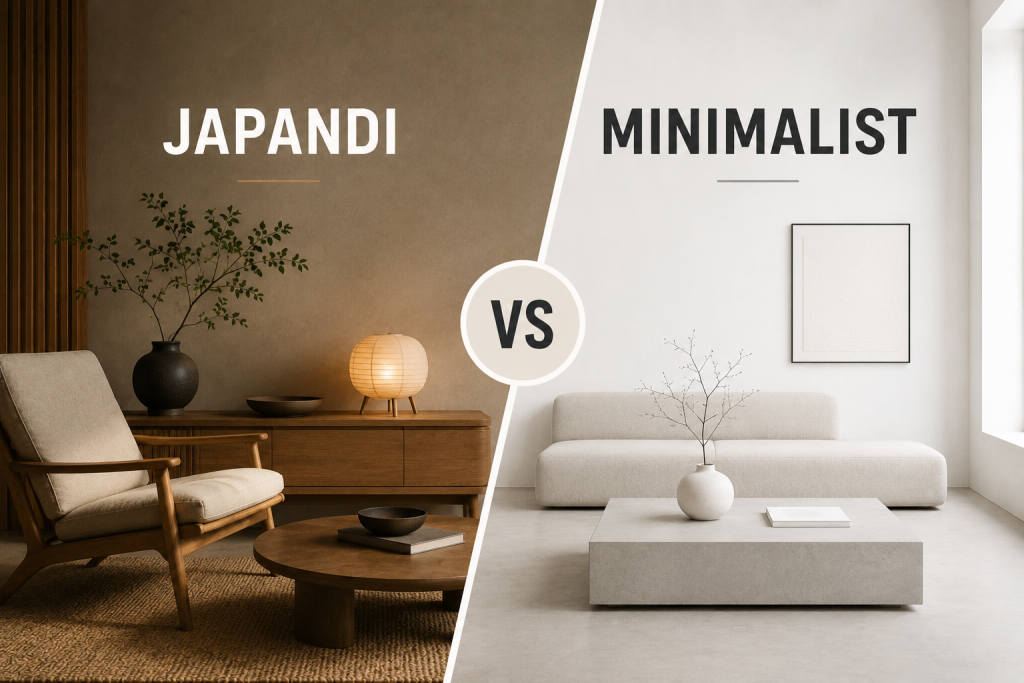
Japandi design, however, blends Japanese interior principles with Scandinavian functionality. It shares minimalism’s simplicity but adds warmth through natural textures, soft tones, and handcrafted details. Instead of feeling strictly reduced, Japandi spaces feel intentional and balanced, with an emphasis on comfort as well as simplicity. When comparing Japandi vs minimalist, the key distinction lies in emotional tone. Minimalism leans toward structured simplicity, while Japandi introduces a softer, more human-centered interpretation of minimal living that feels lived-in and grounded rather than purely aesthetic.
Core Philosophy Differences
When comparing Japandi vs minimalist design, the biggest distinction lies in philosophy and intent behind the space. Minimalist design is rooted in the idea of strict reduction, removing anything unnecessary to achieve visual clarity and order. It often prioritizes function first, with aesthetics emerging from simplicity and repetition. The goal is to eliminate distraction and create a highly controlled environment.
In contrast, Japandi design blends restraint with warmth, focusing on intentional living rather than pure reduction. It values imperfection, craftsmanship, and natural materials, creating a space that feels calm but still emotionally rich. This is where minimalist home decor differs significantly, as it often leans more Japandi vs minimalist design Japandi vs minimalist design starkness and uniformity, while Japandi introduces softness and texture. Overall, the philosophy of Japandi vs minimalist design reflects two different interpretations of simplicity, one structured and analytical, the other organic and emotionally grounded.
Visual Style Comparison
In Japandi vs minimalist design, visual presentation is one of the clearest ways to distinguish the two styles. Minimalist interiors typically rely on a strict palette of whites, blacks, and grays, with sharp lines and very limited decorative variation. The focus is on visual emptiness, where negative space becomes a core design element and every object is intentionally reduced to its simplest form.
Japandi design, however, introduces more warmth and variation through natural materials and softer tones. Wood grains, linen textures, and muted earth colors play a major role in creating depth without clutter. This is where Japandi aesthetics become more expressive, blending structure with subtle organic detail to avoid a sterile appearance. Overall, Japandi vs minimalist differs visually in how each style uses space: minimalism prioritizes emptiness and precision, while Japandi balances simplicity with natural texture and warmth.
Emotional Impact in Homes
When evaluating Japandi vs minimalist design, the emotional experience each style creates is just as important as its visual structure. Minimalist interiors often produce a sense of order and mental clarity by removing distractions and simplifying the environment. This can feel refreshing and focused, especially for individuals who prefer highly structured, uncluttered spaces.
Japandi design, however, introduces a more emotional and grounding experience. It combines simplicity with warmth, making spaces feel calm but also inviting and lived-in. Natural textures and soft lighting help soften the overall atmosphere, creating a sense of balance between relaxation and presence. This is where warm minimalist decor plays a key role, adding comfort without compromising simplicity. Ultimately, Japandi vs minimalist design differs in emotional intent: minimalism emphasizes mental clarity through reduction, while Japandi focuses on emotional comfort through thoughtful restraint and natural warmth.
Which Works Better for US Homes?
When comparing Japandi vs minimalist design, the best choice for U.S. homes often depends on lifestyle, space size, and regional climate. Minimalist interiors work especially well in modern city apartments where homeowners prefer a clean, highly structured environment with very little visual noise. The simplicity of this style also makes it easy to maintain, which appeals to busy urban lifestyles.
Japandi design, however, is increasingly popular in suburban and open-plan homes across the U.S. because it adds warmth and texture without overwhelming the space. It works particularly well in regions with varied climates, where natural materials and softer tones help create a balanced indoor atmosphere. This is especially true in homes inspired by Scandinavian Japanese interiors, which combine comfort with simplicity. Overall, Japandi vs minimalist design suits different needs: minimalism fits structured, fast-paced living, while Japandi supports a more relaxed and emotionally balanced home environment.
Room-by-Room Differences
In Japandi vs minimalist design, the differences become more visible when applied to specific rooms in a home. In living rooms, minimalist interiors focus on open space, clean lines, and very limited furniture, creating a visually controlled environment. Japandi living rooms, on the other hand, introduce softer seating, natural textures, and warmer tones for a more inviting feel.
Bedrooms also highlight the contrast. Minimalist bedrooms emphasize simplicity with minimal decor and neutral bedding, while Japandi bedrooms incorporate layered textiles and natural materials for added comfort. Kitchens follow a similar pattern, with minimalism favoring sleek, uniform surfaces and Japandi focusing on wood accents and subtle texture variation. Across all spaces, modern minimalist interiors prioritize structure and visual clarity, while Japandi design introduces warmth and organic balance. This makes each style suitable for different lifestyles depending on comfort preferences and spatial needs.
Should You Combine Both Styles?
Many homeowners exploring Japandi vs minimalist design find that they do not need to choose just one approach. In fact, combining elements of both styles can create a balanced and highly personalized interior. Minimalism provides structure, clarity, and a clean foundation, while Japandi introduces warmth, texture, and a more human-centered atmosphere.

A blended approach often works well in modern homes where residents want both order and comfort. For example, a minimalist layout can be softened with Japandi-inspired natural wood furniture, linen textiles, and subtle decorative elements. This combination prevents spaces from feeling too sterile while maintaining a sense of simplicity. When thoughtfully combined, Japandi vs minimalist design becomes less about contrast and more about harmony. The key is maintaining restraint while selectively introducing warmth, ensuring the space remains uncluttered yet emotionally inviting and visually balanced.
Final Thoughts
The comparison of Japandi vs minimalist design ultimately comes down to how you want your home to feel on a daily basis. Both styles are rooted in simplicity and intentional living, but they express it in very different ways. Minimalist design focuses on clarity, order, and visual reduction, while Japandi introduces warmth, texture, and a more grounded emotional tone. For many homeowners, Japandi vs minimalist is not about choosing a winner but about understanding which philosophy better aligns with their lifestyle. Those who prefer structured, highly organized environments may gravitate toward minimalism, while those seeking comfort within simplicity often prefer Japandi’s softer approach. In modern interiors, Japandi vs minimalist continues to influence how people think about space, balance, and functionality. Whether used individually or blended together, both styles offer a timeless foundation for creating calm, intentional, and livable homes.
Frequently Asked Questions
What is the difference between Japandi vs minimalist design?
Minimalism focuses on strict simplicity, while Japandi blends simplicity with warmth and natural textures.
Is Japandi more comfortable than minimalist design?
Yes, Japandi often feels warmer and more lived-in due to natural materials and softer tones.
Which style is better for small homes?
Both work well, but Japandi is often preferred for its balance of comfort and functionality.
Can Japandi and minimalist design be combined?
Yes, many modern homes blend both for a balanced, clean yet warm aesthetic.
Is minimalist design too cold for homes?
It can feel stark if not balanced properly, but good lighting and textures can soften it.